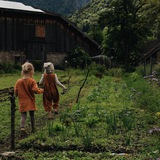
Viscri fortified church, Transylvania, Romania.
The fortified church dating back to the thirteenth century, was built by the German colonists who settled in these parts of the country at the end of the twelfth century and found here a chapel.
This was partially included in the fortified church.The church was first attested in 1400 as “alba ecclesia” and the document is a register of the taxes paid to the episcopate.
In the 14th century the eastern part of the church was rebuilt and in 1525, the first fortifications with towers were added. Two towers were placed outside the yard, on the Eastern and Southern sides. In the other cardinal points other towers were built: on the North one in a trapezoidal shape, in the East the smallest and most similar to a square. They are all provided with holes through which those inside could protect the fortification with medium or high caliber guns or arches with arrows.
The towers are very well preserved creating a sense of greatness to the entire system of fortifications. In the 18th century the church was surrounded by a second defense wall. The rooms in the tower played various roles in time. Some of them were used to store cereals, while others functioned as school.
The fortified church dating back to the thirteenth century, was built by the German colonists who settled in these parts of the country at the end of the twelfth century and found here a chapel.
This was partially included in the fortified church.The church was first attested in 1400 as “alba ecclesia” and the document is a register of the taxes paid to the episcopate.
In the 14th century the eastern part of the church was rebuilt and in 1525, the first fortifications with towers were added. Two towers were placed outside the yard, on the Eastern and Southern sides. In the other cardinal points other towers were built: on the North one in a trapezoidal shape, in the East the smallest and most similar to a square. They are all provided with holes through which those inside could protect the fortification with medium or high caliber guns or arches with arrows.
The towers are very well preserved creating a sense of greatness to the entire system of fortifications. In the 18th century the church was surrounded by a second defense wall. The rooms in the tower played various roles in time. Some of them were used to store cereals, while others functioned as school.
A bracteate discovered on the island of Funen, Denmark features incomprehensible and meaningful text. The bracteate is housed with many others at the National Museum of Denmark. The transcription reads:
ᚺᛟᚢᚨᛉ
houaz
ᛚᚨᚦᚢ
laþu
ᚨᚨᛞᚢᚫᚫᚫᛚᛁᛁᚨ
aaduaaaliia
ᚨ--
a--
What is transcribed as a-- above has been tentatively read as alu. The word houaz has been interpreted as corresponding to Old Norse hávi "the high one", a name of Odin.
ᚺᛟᚢᚨᛉ
houaz
ᛚᚨᚦᚢ
laþu
ᚨᚨᛞᚢᚫᚫᚫᛚᛁᛁᚨ
aaduaaaliia
ᚨ--
a--
What is transcribed as a-- above has been tentatively read as alu. The word houaz has been interpreted as corresponding to Old Norse hávi "the high one", a name of Odin.
The Gold bust of Septimius Severus (194–197 AD)
It was found in 1965 in Greece and it is now kept in the Archaeological Museum of Komotini, in the town of Komotini. It is one of the only two surviving gold busts of a Roman Emperor today, the other being the Golden Bust of Marcus Aurelius.
📸 Archaeological Museum of Komotin, Greece
It was found in 1965 in Greece and it is now kept in the Archaeological Museum of Komotini, in the town of Komotini. It is one of the only two surviving gold busts of a Roman Emperor today, the other being the Golden Bust of Marcus Aurelius.
📸 Archaeological Museum of Komotin, Greece