The Brain’s Hidden Dimensions: A Journey into the Mind’s Cosmic Machinery
Imagine a universe within, a realm where the human brain, that wrinkled marvel nestled in our skulls, spins webs of thought in dimensions beyond the reach of ordinary perception.
According to the Blue Brain Project, a pioneering endeavor by neuroscientists at the École Polytechnique Fédérale de Lausanne, in the familiar three dimensions of space and one of time. No, they dance across a staggering eleven dimensions, crafting exotic topologies, mathematical structures of breathtaking complexity to process the world around us.
This revelation, born from the fusion of neuroscience and a field of mathematics called algebraic topology, unveils a mind capable of feats that feel almost otherworldly: intricate pattern recognition, razor-sharp intuition, predictive wizardry, and the wild leaps of creative genius.
Let’s embark on a voyage to understand this cosmic capacity and explore how we might tap into its boundless potential.
The Blue Brain Project, spearheaded by Henry Markram, set out to digitally recreate the brain, starting with the humble mouse and dreaming of the human mind.
What they discovered was no less than a revolution.
Using supercomputers to simulate neural networks, they found that when the brain tackles a problem, say, recognizing a face in a crowd or predicting the next note in a melody, it doesn’t just fire off random sparks. Instead, neurons band together into "cliques," precise geometric formations that stack and twist into multi-dimensional shapes. These aren’t static sculptures but fleeting sandcastles, rising from the neural sands with each stimulus and crumbling back into chaos once their work is done.
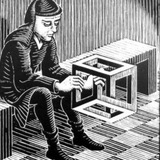
Picture it: a one-dimensional rod of thought grows into a two-dimensional plane, then a three-dimensional cube, and onward, spiraling into realms of 4D, 5D, even 11D spaces our everyday senses can’t grasp but our minds navigate with ease.
This capacity for high-dimensional computation is the secret engine behind the brain’s most fantastic abilities.
Take complex pattern identification: when you spot a friend’s gait in a bustling street or discern a hidden shape in a cloud, your brain is sifting through a tapestry of data, weaving connections across these unseen dimensions.
Intuition, that gut feeling guiding you when logic alone falters, emerges from this same machinery, subtle signals resonating through the brain’s topological depths, whispering truths before conscious thought catches up.
Predictive analytics, too, owes its power to this: whether you’re anticipating a storm from a darkening sky or guessing a plot twist in a novel, your mind is running simulations in a multi-dimensional theater, testing possibilities faster than you can blink.
And then there’s lateral thinking, the spark of creativity that births art, invention, and wild ideas. Here, the brain leaps across these dimensions, linking distant concepts into something new, like a sci-fi engineer rigging a starship from scraps.
But how do we harness this extraordinary resource, this eleven-dimensional engine humming within us?
The first step is to trust it. Intuition and creativity thrive when we quiet the noise of doubt and let the mind roam free. Meditation, for instance, can tune this inner symphony, studies suggest it strengthens neural connections, perhaps amplifying those high-dimensional cliques.
Engage in play: puzzles, music, or even daydreaming coax the brain into flexing its topological muscles, building resilience in its pattern-weaving ways.
Feed it complexity: learn a language, master an instrument, or dive into abstract art for the brain grows stronger when challenged, its dimensional reach expanding with each new frontier.
Imagine a universe within, a realm where the human brain, that wrinkled marvel nestled in our skulls, spins webs of thought in dimensions beyond the reach of ordinary perception.
According to the Blue Brain Project, a pioneering endeavor by neuroscientists at the École Polytechnique Fédérale de Lausanne, in the familiar three dimensions of space and one of time. No, they dance across a staggering eleven dimensions, crafting exotic topologies, mathematical structures of breathtaking complexity to process the world around us.
This revelation, born from the fusion of neuroscience and a field of mathematics called algebraic topology, unveils a mind capable of feats that feel almost otherworldly: intricate pattern recognition, razor-sharp intuition, predictive wizardry, and the wild leaps of creative genius.
Let’s embark on a voyage to understand this cosmic capacity and explore how we might tap into its boundless potential.
The Blue Brain Project, spearheaded by Henry Markram, set out to digitally recreate the brain, starting with the humble mouse and dreaming of the human mind.
What they discovered was no less than a revolution.
Using supercomputers to simulate neural networks, they found that when the brain tackles a problem, say, recognizing a face in a crowd or predicting the next note in a melody, it doesn’t just fire off random sparks. Instead, neurons band together into "cliques," precise geometric formations that stack and twist into multi-dimensional shapes. These aren’t static sculptures but fleeting sandcastles, rising from the neural sands with each stimulus and crumbling back into chaos once their work is done.
Picture it: a one-dimensional rod of thought grows into a two-dimensional plane, then a three-dimensional cube, and onward, spiraling into realms of 4D, 5D, even 11D spaces our everyday senses can’t grasp but our minds navigate with ease.
This capacity for high-dimensional computation is the secret engine behind the brain’s most fantastic abilities.
Take complex pattern identification: when you spot a friend’s gait in a bustling street or discern a hidden shape in a cloud, your brain is sifting through a tapestry of data, weaving connections across these unseen dimensions.
Intuition, that gut feeling guiding you when logic alone falters, emerges from this same machinery, subtle signals resonating through the brain’s topological depths, whispering truths before conscious thought catches up.
Predictive analytics, too, owes its power to this: whether you’re anticipating a storm from a darkening sky or guessing a plot twist in a novel, your mind is running simulations in a multi-dimensional theater, testing possibilities faster than you can blink.
And then there’s lateral thinking, the spark of creativity that births art, invention, and wild ideas. Here, the brain leaps across these dimensions, linking distant concepts into something new, like a sci-fi engineer rigging a starship from scraps.
But how do we harness this extraordinary resource, this eleven-dimensional engine humming within us?
The first step is to trust it. Intuition and creativity thrive when we quiet the noise of doubt and let the mind roam free. Meditation, for instance, can tune this inner symphony, studies suggest it strengthens neural connections, perhaps amplifying those high-dimensional cliques.
Engage in play: puzzles, music, or even daydreaming coax the brain into flexing its topological muscles, building resilience in its pattern-weaving ways.
Feed it complexity: learn a language, master an instrument, or dive into abstract art for the brain grows stronger when challenged, its dimensional reach expanding with each new frontier.
Picture yourself now, standing at the helm of your own mind-ship, a vessel forged in eleven dimensions. The controls are yours: journal your wildest ideas to map the uncharted, seek diverse perspectives to stretch your neural horizons, and rest, yes, rest for sleep is when these sandcastles rebuild, solidifying insights from the day. So, step boldly into its depths. The universe within awaits, ready to spin its next masterpiece, through you.
Giulio Anselmo Barbonari Prado
Giulio Anselmo Barbonari Prado