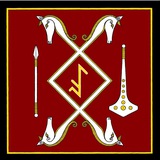
The Germanic Caste System & the Rígsþula
Part 2
A Caste System should not be confused with the more modern Class System that is solely based on financial wealth. An authentic Caste System had far more to do with patrilineal lineage, or adoption by a father of a specific Caste than wealth. You could be a very poor Noble standing next to a far wealthier Freeman, and it would not change your innate characteristics. One was the son of a great Kings or Chieftain, a ruler of men. The other was an (economically successful) average guy. It must also be said that if you clearly showed great talent and promise your position could change (and vice-versa if you were inept).
In the Rígsþula Háma (ON Heimdallr) created the Castes of our peoples. This system is the divinely ordained way to order our society, and thus for those of us that wish to remain true to the Gods should be implemented in some form in our revived communities. Let’s go through each one in turn, and see how this could translate today;
Part 2
A Caste System should not be confused with the more modern Class System that is solely based on financial wealth. An authentic Caste System had far more to do with patrilineal lineage, or adoption by a father of a specific Caste than wealth. You could be a very poor Noble standing next to a far wealthier Freeman, and it would not change your innate characteristics. One was the son of a great Kings or Chieftain, a ruler of men. The other was an (economically successful) average guy. It must also be said that if you clearly showed great talent and promise your position could change (and vice-versa if you were inept).
In the Rígsþula Háma (ON Heimdallr) created the Castes of our peoples. This system is the divinely ordained way to order our society, and thus for those of us that wish to remain true to the Gods should be implemented in some form in our revived communities. Let’s go through each one in turn, and see how this could translate today;
👍7❤2
The Folcsida Ġerímbóc: Part 30
Þrýmeolċemónaþ, Three Milks Month
Sumor 2
Fyðerling Tælmearc, Quarter Date
Fullesdæġ, Full’s Day
Þrýmeolċemónaþ 16, 2023
May 5, 2023
thefrithstead.com
Þrýmeolċemónaþ, Three Milks Month
Sumor 2
Fyðerling Tælmearc, Quarter Date
Fullesdæġ, Full’s Day
Þrýmeolċemónaþ 16, 2023
May 5, 2023
thefrithstead.com
The Germanic Caste System & the Rígsþula
Part 3
“5.
Thence Rig (Háma) uprose, prepared to rest; --
well he knew how to give them counsel --
he laid him down in the middle of the bed
and the home-folk twain upon either side.
Thus he tarried three nights together,
then on he strode in the middle of the road
while thrice three moons were gliding by.
6.
Great-grandmother bore a swarthy boy;
with water they sprinkled him, called him Thrall.
Forthwith he grew and well he throve,
bur tough were his hands with wrinkled skin,
with knuckles knotty and fingers thick;
his face was ugly, his back was humpy,
his heels were long.
Straightway 'gan he to prove his strength,
with bast a-binding loads a-making,
he bore home faggots the livelong day.”
~Olive Bray 1908.
Part 3
“5.
Thence Rig (Háma) uprose, prepared to rest; --
well he knew how to give them counsel --
he laid him down in the middle of the bed
and the home-folk twain upon either side.
Thus he tarried three nights together,
then on he strode in the middle of the road
while thrice three moons were gliding by.
6.
Great-grandmother bore a swarthy boy;
with water they sprinkled him, called him Thrall.
Forthwith he grew and well he throve,
bur tough were his hands with wrinkled skin,
with knuckles knotty and fingers thick;
his face was ugly, his back was humpy,
his heels were long.
Straightway 'gan he to prove his strength,
with bast a-binding loads a-making,
he bore home faggots the livelong day.”
~Olive Bray 1908.
🔥2
The Sacred Stew-Season 2 Episode 3
Runes & Rites Of Passage-Bringing Tradition Into The Now
James & Anthony speak runes & rites of passage. They discuss how the lack of rites of passage have led to the degradation of society & has allowed for the perversion of our native beliefs by those seeking to create new traditions; thus changing that which our ancestors have handed down to us. Join them for yet another deep dive into authentic Germanic theology for the modern Heathen.
Listen on youtube: https://youtu.be/iY0CenXoKgM
Or listen on your favorite podcast player here: https://spotifyanchor-web.app.link/e/9MnVsTOT4sb
The Frithstead endorses The Sacred Stew.
https://linktr.ee/TheFrithstead
Runes & Rites Of Passage-Bringing Tradition Into The Now
James & Anthony speak runes & rites of passage. They discuss how the lack of rites of passage have led to the degradation of society & has allowed for the perversion of our native beliefs by those seeking to create new traditions; thus changing that which our ancestors have handed down to us. Join them for yet another deep dive into authentic Germanic theology for the modern Heathen.
Listen on youtube: https://youtu.be/iY0CenXoKgM
Or listen on your favorite podcast player here: https://spotifyanchor-web.app.link/e/9MnVsTOT4sb
The Frithstead endorses The Sacred Stew.
https://linktr.ee/TheFrithstead
🔥4
Saxon Stand
Sir, I see you walk my land
Mighty sword and shield in hand
To preach this god, this dying man
This person from a different clan
You call him Christ and lord and lamb
I saw your Christ is just a sham
I shall not bow or beg in shame
I shall not call on yahweh’s name
Your god is from a foreign race
But mine are strong and full of grace
You stand as lambs awaiting slaughter
I am the wolf the great marauder
How dare u come into my land
And take with me this warrior stand
Convert or die is what you say
Convert I won’t but die you may
~ Harley severin Richards
https://linktr.ee/TheFrithstead
Sir, I see you walk my land
Mighty sword and shield in hand
To preach this god, this dying man
This person from a different clan
You call him Christ and lord and lamb
I saw your Christ is just a sham
I shall not bow or beg in shame
I shall not call on yahweh’s name
Your god is from a foreign race
But mine are strong and full of grace
You stand as lambs awaiting slaughter
I am the wolf the great marauder
How dare u come into my land
And take with me this warrior stand
Convert or die is what you say
Convert I won’t but die you may
~ Harley severin Richards
https://linktr.ee/TheFrithstead
❤10👍4👎1🔥1
Forwarded from The Chad Pastoralist
Anglo-Saxon England: The Witan
In Anglo-Saxon Britain, it was expected that kings and queens would be counselled by a group of powerful nobles: the Witan. The Witan ('wise men') would gather in an assembly (gemot) to advise the ruler on their decisions.
The Witan was made up of aristocrats from both secular and religious backgrounds; there were noblemen and archbishops, ealdormen and abbots. Their advice was meant to ensure that the rulers laws were just and worthy.
The presence of the Witan meant that lawmaking was a group activity. As with any group project, the better the team worked together, the better the final product. If the king and the Witan had a difficult relationship, the system could break down. If a king was ignoring the Witan and their advice, the Witan might challenge his laws. The king and the Witan needed to find a healthy balance of power between them so that laws could be passed quickly and efficiently.
In Anglo-Saxon Britain, it was expected that kings and queens would be counselled by a group of powerful nobles: the Witan. The Witan ('wise men') would gather in an assembly (gemot) to advise the ruler on their decisions.
The Witan was made up of aristocrats from both secular and religious backgrounds; there were noblemen and archbishops, ealdormen and abbots. Their advice was meant to ensure that the rulers laws were just and worthy.
The presence of the Witan meant that lawmaking was a group activity. As with any group project, the better the team worked together, the better the final product. If the king and the Witan had a difficult relationship, the system could break down. If a king was ignoring the Witan and their advice, the Witan might challenge his laws. The king and the Witan needed to find a healthy balance of power between them so that laws could be passed quickly and efficiently.
🔥2
Forwarded from The Chad Pastoralist
A Germanic tradition pre-dating the Viking Age, known as 'thunderstones' in English and 'dynestein' in Old Norse, refer to Stone Age flint axes/tools (typically dug up from the earth after years beneath the surface) used as protective amulets and sacred objects to our ancestors. They might have a connection with mjölnir pendants and the heart, like life force energy known as Önd to the Norse who Thor is the god of this power.
The second image features a real Stone Age greenstone axehead and grave goods found buried with the Viking Age woman depicted in the first image.
The second image features a real Stone Age greenstone axehead and grave goods found buried with the Viking Age woman depicted in the first image.
👍8
Forwarded from The Chad Pastoralist
SITTING OUT
The Germanic people had a method of gaining spiritual wisdom called útiseta, which literally means 'out sitting'.
The word Útiseta / Sitja Úti comes from a thirteenth-century Icelandic law which said, 'sitting out to provoke or wake up trolls and practice paganism' was to be prohibited.
This practice would involve sitting down in a sacred grove, forest or other special location in nature in order to receive divine wisdom through visions, dreams, or even the appearance of a being such as an elf, deity, or spirit before the meditator.
The Germanic people had a method of gaining spiritual wisdom called útiseta, which literally means 'out sitting'.
The word Útiseta / Sitja Úti comes from a thirteenth-century Icelandic law which said, 'sitting out to provoke or wake up trolls and practice paganism' was to be prohibited.
This practice would involve sitting down in a sacred grove, forest or other special location in nature in order to receive divine wisdom through visions, dreams, or even the appearance of a being such as an elf, deity, or spirit before the meditator.
👍9
Forwarded from Æhtemen
There was a Germanic name for the custom of 'sitting out' recorded in medieval Germany - hliodarsaza, meaning 'hearing-sitting' where 'saza' is believed to come from the same root as 'seta'. Hliodar is cognate with the Old English hleodor or 'hearing'. In Old German there was a similar term hliozan which roughly translated as 'diviner', with an Old English word hleoðor meaning both diviner and sound. Connected to these terms were hlîsa meaning sound, but also rumour or fame.
There was also the Anglo-Saxon custom of 'Waking the Well' where advice was sort from the spirit of a well by sitting next to it all night.
There was also the Anglo-Saxon custom of 'Waking the Well' where advice was sort from the spirit of a well by sitting next to it all night.
👍2🔥1
The Folcsida Ġerímbóc: Part 31
Ǽrra Líða, Early Calm
Sumor 3
“… the month is called … … in our language, Ǽrra Líða, for the sky is quiet and so too the winds. And it is usual to sail upon the sea”
~ Bede
https://linktr.ee/TheFrithstead
Ǽrra Líða, Early Calm
Sumor 3
“… the month is called … … in our language, Ǽrra Líða, for the sky is quiet and so too the winds. And it is usual to sail upon the sea”
~ Bede
https://linktr.ee/TheFrithstead
The Germanic Caste System & the Rígsþula
Part 4
The Þéow (ON Þræll) was the first caste created. Ríg (OE Háma) laid between Eald-ealdfæder and Eald-ealdmóder (ON Ái & Edda), and nine months later they bore a son. These were the serfs and slaves of Germanic society. They would do the vast majority of hard labor, and were considered the property of a Freeman or Noble. They did have some rights; their owner would pass judgement over them but it must be within the law (as evidenced in the Alemannic Law codes). They would not be welcome at the Thing.
In the Lay of Rig, Thrall went onto have many children, and their names translate to “Brawler,” “Lustful,” “Tatter-coat” & “Bondwoman” to name but a few. None were flattering, but they were all necessary, as;
“…They fashioned fences,
they dunged the meadows, swine they herded,
goats they tended and turf they dug.”
Part 4
The Þéow (ON Þræll) was the first caste created. Ríg (OE Háma) laid between Eald-ealdfæder and Eald-ealdmóder (ON Ái & Edda), and nine months later they bore a son. These were the serfs and slaves of Germanic society. They would do the vast majority of hard labor, and were considered the property of a Freeman or Noble. They did have some rights; their owner would pass judgement over them but it must be within the law (as evidenced in the Alemannic Law codes). They would not be welcome at the Thing.
In the Lay of Rig, Thrall went onto have many children, and their names translate to “Brawler,” “Lustful,” “Tatter-coat” & “Bondwoman” to name but a few. None were flattering, but they were all necessary, as;
“…They fashioned fences,
they dunged the meadows, swine they herded,
goats they tended and turf they dug.”
The Folcsida Ġerímbóc: Part 32
Æfterra Líða, Latter Calm
Sumor 4
“…by ringing the bell, which in English they call mótbel, summon all and the opposites, which they say in English by the people, i.e. the calling and assembly of the people, and of all the nations, because all must meet there. . . It is a state that all the people, and the nations, must meet every year, once a year.”
~ King Ælfred’s Book of Law
https://linktr.ee/TheFrithstead
Æfterra Líða, Latter Calm
Sumor 4
“…by ringing the bell, which in English they call mótbel, summon all and the opposites, which they say in English by the people, i.e. the calling and assembly of the people, and of all the nations, because all must meet there. . . It is a state that all the people, and the nations, must meet every year, once a year.”
~ King Ælfred’s Book of Law
https://linktr.ee/TheFrithstead
The Germanic Caste System & the Rígsþula
Part 5
What does a Þéow look like today? They are those in our society that are enslaved by their desires & are naturally servile. Low to no self-control, easily addicted and generally unable to cope in a society without their hand being held at all times. In this modern society they are the drug addicts, hyper-materialists & petty criminals. Modern society has let down these people the most, as they have taken away all structure and hierarchy in the name of liberty and freedom to make their own (poor) choices. Treating these people as free people (equal) has brought them nothing but misery and suffering, and would benefit most from being given direction and a simple life. Þéows deserve quality of life and are not useless. Few would choose to be born a þéow, but without janitors, waste disposal and the road diggers everything would grind to a halt. There is honour in these roles done well, and suffering for those that pretend to be something they innately are not.
Part 5
What does a Þéow look like today? They are those in our society that are enslaved by their desires & are naturally servile. Low to no self-control, easily addicted and generally unable to cope in a society without their hand being held at all times. In this modern society they are the drug addicts, hyper-materialists & petty criminals. Modern society has let down these people the most, as they have taken away all structure and hierarchy in the name of liberty and freedom to make their own (poor) choices. Treating these people as free people (equal) has brought them nothing but misery and suffering, and would benefit most from being given direction and a simple life. Þéows deserve quality of life and are not useless. Few would choose to be born a þéow, but without janitors, waste disposal and the road diggers everything would grind to a halt. There is honour in these roles done well, and suffering for those that pretend to be something they innately are not.
👍4🔥2
The Folcsida Ġerímbóc: Part 33
Æfterra Líða, Latter Calm
Sumor 4
Sumor Sunstede, Summer Solstice
Folcġemót, (Yearly) Folk-Moot
Æfterra Líða 1, 2023
June 21, 2023
https://linktr.ee/TheFrithstead
Æfterra Líða, Latter Calm
Sumor 4
Sumor Sunstede, Summer Solstice
Folcġemót, (Yearly) Folk-Moot
Æfterra Líða 1, 2023
June 21, 2023
https://linktr.ee/TheFrithstead
👍2
The Germanic Caste System & the Rígsþula
Part 6
“15.
Grandmother set forth plenteous dishes;
cooked was the calf, of dainties best.
Thence Rig uprose prepared to rest. --
Well he knew how to give them counsel --
he laid him down in the middle of the bed
and the home-folk twain upon either side.
16.
Thus he tarried three nights together,
then on he strode in the middle of the road
while thrice three moons were gliding by.
17.
A child had Grandmother, Churl they called him,
and sprinkled with water and swathed in linen,
rosy and ruddy, with sparkling eyes.
He grew and throve, and forthwith 'gan he
to break in oxen, to shape the harrow,
to build him houses and barns to raise him,
to fashion carts and follow the plough.”
https://linktr.ee/TheFrithstead
Part 6
“15.
Grandmother set forth plenteous dishes;
cooked was the calf, of dainties best.
Thence Rig uprose prepared to rest. --
Well he knew how to give them counsel --
he laid him down in the middle of the bed
and the home-folk twain upon either side.
16.
Thus he tarried three nights together,
then on he strode in the middle of the road
while thrice three moons were gliding by.
17.
A child had Grandmother, Churl they called him,
and sprinkled with water and swathed in linen,
rosy and ruddy, with sparkling eyes.
He grew and throve, and forthwith 'gan he
to break in oxen, to shape the harrow,
to build him houses and barns to raise him,
to fashion carts and follow the plough.”
https://linktr.ee/TheFrithstead
👍5
The Folcsida Ġerímbóc: Part 34
Wéodmónaþ, Weed Month
Sumor 5
“Augustus mónaþ on úre geþeóde ƿé nemnaþ weódmónaþ, for þon þe hí on þam mónðe mǽst geweaxaþ”
“"The month of Augustus we call the weed month in our language, for these grow most in this month”
~ Bede
https://linktr.ee/TheFrithstead
Wéodmónaþ, Weed Month
Sumor 5
“Augustus mónaþ on úre geþeóde ƿé nemnaþ weódmónaþ, for þon þe hí on þam mónðe mǽst geweaxaþ”
“"The month of Augustus we call the weed month in our language, for these grow most in this month”
~ Bede
https://linktr.ee/TheFrithstead
The Germanic Caste System & the Rígsþula
Part 7
The Freeman (OE Ċeorl) was the second caste created. Ríg (Háma) laid between Ealdfæder and Ealdmóder (ON Afi & Amma), and nine months later they bore a son. These are the economic class; farmers, skilled labourers & shop owners. A Freeman is free to swear their allegiance to a lord of their choice, and are best described as competent, normal people. The most successful would own Þéows and could become wealthier than some Nobles. They were not owned by anyone, and would have greater rights (and also greater responsibilities) than the Þéows. They would make up the bulk of those that attended a Thing (OE Folcġemót, later the Witenaġemót).
As with Thrall, Churl had many children whose names translated to; “Hero, “Thane” “Smith” “Farmer,” “Lady” “Bride” “Maid” “Slender,” again to name but a few.
https://linktr.ee/TheFrithstead
Part 7
The Freeman (OE Ċeorl) was the second caste created. Ríg (Háma) laid between Ealdfæder and Ealdmóder (ON Afi & Amma), and nine months later they bore a son. These are the economic class; farmers, skilled labourers & shop owners. A Freeman is free to swear their allegiance to a lord of their choice, and are best described as competent, normal people. The most successful would own Þéows and could become wealthier than some Nobles. They were not owned by anyone, and would have greater rights (and also greater responsibilities) than the Þéows. They would make up the bulk of those that attended a Thing (OE Folcġemót, later the Witenaġemót).
As with Thrall, Churl had many children whose names translated to; “Hero, “Thane” “Smith” “Farmer,” “Lady” “Bride” “Maid” “Slender,” again to name but a few.
https://linktr.ee/TheFrithstead
❤4👍2🔥1
The Folcsida Ġerímbóc: Part 35
Wéodmónaþ, Weed Month
Sumor 5
Fyðerling Tælmearc, Quarter Date
Wéodmónaþ 17, 2023
August 7, 2023
https://linktr.ee/TheFrithstead
Wéodmónaþ, Weed Month
Sumor 5
Fyðerling Tælmearc, Quarter Date
Wéodmónaþ 17, 2023
August 7, 2023
https://linktr.ee/TheFrithstead