Forwarded from The European Race ✨
English and Germanic history 🏴🇩🇪
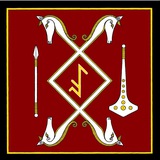
ANGLO-SAXON QUEEN, from the pagan period (6th century), bearing a ceremonial drinking horn, based on a passage from the epic poem “Beowulf” in which queen Wealhtheow serves mead to the Danish king Hrothgar, the Geatish hero Beowulf and his warriors before they fight the monster Grendel.
THE ANGLO-SAXONS: In the 5th century, the Western Roman Empire was collapsing. The year 410, the Germanic Visigoths sacked the city of Rome. In 455, the Vandals, another Germanic people that had formed a kingdom in North Africa, sacked Rome too. The year 451, the Roman general Flavius Aetius and Attila, king of the Huns, clashed at the battle of the Catalaunian Plains, in northern Gaul. But 451 is also the year that the Romans supposedly lost the province of Britannia to invading Germanic tribes from the Jutland Peninsula: The Jutes, the Angles and the Saxons, who had previously been hired as mercenaries by the Romans in Britain to fight Pictish raiders.
ANGLO-SAXON QUEEN, from the pagan period (6th century), bearing a ceremonial drinking horn, based on a passage from the epic poem “Beowulf” in which queen Wealhtheow serves mead to the Danish king Hrothgar, the Geatish hero Beowulf and his warriors before they fight the monster Grendel.
THE ANGLO-SAXONS: In the 5th century, the Western Roman Empire was collapsing. The year 410, the Germanic Visigoths sacked the city of Rome. In 455, the Vandals, another Germanic people that had formed a kingdom in North Africa, sacked Rome too. The year 451, the Roman general Flavius Aetius and Attila, king of the Huns, clashed at the battle of the Catalaunian Plains, in northern Gaul. But 451 is also the year that the Romans supposedly lost the province of Britannia to invading Germanic tribes from the Jutland Peninsula: The Jutes, the Angles and the Saxons, who had previously been hired as mercenaries by the Romans in Britain to fight Pictish raiders.
👍5
The most convincing reason for kings to be baptized, however, was the Christian outlook on royalty itself. King ruled by the grace of the Almighty, and to disobey them was to defy God Himself. This «divine right of kings» had no counterpart in German experience. The pre-christian tribes had kings typically chosen by the elders. Their nomination was ratified by the freeman. Some tribes had no king until war threatened, at which time they elected one. Once chose, the king was still subject to the law, and his power was hedged in by the freemen on the one hand and the council of elders on the other. This system of checks and balances came to an end with the coming of Christianity, which centralized royal power at the cost of everyone else. In almost every respect, the rights of ordinary men and women shriveled when our native paganism was replaced by the alien creed.
Asatru A Native European Spirituality by Stephen A. McNallen
Asatru A Native European Spirituality by Stephen A. McNallen
👍4🔥3
Forwarded from ȺηтнαѕGαтє
Christians think we have been christian for 1500 years when parts of Europe were only converted several hundred years ago. To this day what christians think of as christian values and culture is actually a holdover of our natural Ethnic culture and values. The majority of christendom is actually just our own ethnic values and culture absorbed into christianity. There is nothing wrong with our values as a people, there never was.. It's okay to return to your ancient Folk Faith🌿
👍25👎2
The Folcsida Ġerímbóc: Part 13
Folcsida Wynter Misseru
Folcsida Wynter Half-Year Seasons
Wynter 1
Wynterfylleþ, Wynter Filling
Sept 22nd - Oct. 21st
30 days
Wynter 2
Blótmónaþ, Blót Month
Oct 22nd – Nov 20th
30 days
Wynter 3
Ǽrra Ġéola, Early Yule
Nov 21st - Dec 20th
30 days
Wynter 4
Ǽfterra Ġéola, Latter Yule
Dec 21st - Jan 19th
30 days
Wynter 5
Sólmónaþ, Sun Month
Jan 20th – Feb 17th
29 days
Wynter 6
Hréþmónaþ, Hréþ Month
Feb 18th - March 19th
30 days
https://linktr.ee/TheFrithstead
Folcsida Wynter Misseru
Folcsida Wynter Half-Year Seasons
Wynter 1
Wynterfylleþ, Wynter Filling
Sept 22nd - Oct. 21st
30 days
Wynter 2
Blótmónaþ, Blót Month
Oct 22nd – Nov 20th
30 days
Wynter 3
Ǽrra Ġéola, Early Yule
Nov 21st - Dec 20th
30 days
Wynter 4
Ǽfterra Ġéola, Latter Yule
Dec 21st - Jan 19th
30 days
Wynter 5
Sólmónaþ, Sun Month
Jan 20th – Feb 17th
29 days
Wynter 6
Hréþmónaþ, Hréþ Month
Feb 18th - March 19th
30 days
https://linktr.ee/TheFrithstead
❤1
The Folcsida Ġerímbóc: Part 14
Folcsida Sumor Misseru
Folcsida Summer Half-Year Seasons
Sumor 1
Éastremónaþ, Easter Month
Mar 20th – Apr 19th
31 days
Sumor 2
þrýmeolċemónaþ, Three Milks Month
Apr 20th – May 20th
31 days
Sumor 3
Ǽrra Líða, Early Calm
May 21th – June 20th
31 days
Sumor 4
Æfterra Líða, Latter Calm
June 21st – July 21st
31 days
Sumor 5
Wéodmónaþ, Weed Month
Jul 22nd – Aug 21st
31 days
Sumor 6
Háliġmónaþ, Holy Month
August 22nd – Sep 21st
31 days
https://linktr.ee/TheFrithstead
Folcsida Sumor Misseru
Folcsida Summer Half-Year Seasons
Sumor 1
Éastremónaþ, Easter Month
Mar 20th – Apr 19th
31 days
Sumor 2
þrýmeolċemónaþ, Three Milks Month
Apr 20th – May 20th
31 days
Sumor 3
Ǽrra Líða, Early Calm
May 21th – June 20th
31 days
Sumor 4
Æfterra Líða, Latter Calm
June 21st – July 21st
31 days
Sumor 5
Wéodmónaþ, Weed Month
Jul 22nd – Aug 21st
31 days
Sumor 6
Háliġmónaþ, Holy Month
August 22nd – Sep 21st
31 days
https://linktr.ee/TheFrithstead
❤1
The Folcsida Ġerímbóc: Part 15
Wynterfylleþ, Wynter Filling
Wynter 1
“The old English people split the year into two seasons, summer and wynter, placing six months — during which the days are longer than the nights — in summer, and the other six in wynter. They called the month when the wynter season began Wynterfylleþ, a word composed of "wynter" and "full moon"
~ Bede
https://linktr.ee/TheFrithstead
Wynterfylleþ, Wynter Filling
Wynter 1
“The old English people split the year into two seasons, summer and wynter, placing six months — during which the days are longer than the nights — in summer, and the other six in wynter. They called the month when the wynter season began Wynterfylleþ, a word composed of "wynter" and "full moon"
~ Bede
https://linktr.ee/TheFrithstead
On the Afterlife in the Germanic Tradition and Modern Misconceptions
Part 1
There is a large portion of modern heathens that claim our tradition did not have an afterlife, or that our afterlife is whatever you want it to be, or that there is no punishment in the Afterlife. These are all lies, lies that can only be perpetuated if you refuse to read the primary sources.
Lets dispel each of these three assertions in quick succession.
The first is the claim that we did not have an afterlife. There are references to Hel in at least 4 poems of the Poetic Edda, the Prose Edda describes the location when Hermod travels to Hel in the failed attempt to bring Bældæg (Baldr) back.
Part 1
There is a large portion of modern heathens that claim our tradition did not have an afterlife, or that our afterlife is whatever you want it to be, or that there is no punishment in the Afterlife. These are all lies, lies that can only be perpetuated if you refuse to read the primary sources.
Lets dispel each of these three assertions in quick succession.
The first is the claim that we did not have an afterlife. There are references to Hel in at least 4 poems of the Poetic Edda, the Prose Edda describes the location when Hermod travels to Hel in the failed attempt to bring Bældæg (Baldr) back.
The Folcsida Ġerímbóc: Part 16
Wynterfylleþ, Wynter Filling
Wynter 1
Hærfest Emnyht, New Year’s Day
Wynterfylleþ 1, 2022
September 22, 2022
Þunresdæġ, Thursday
Wynternyht - Fréanblót
Wynter Nights - Fréa’s blо́t
Wynterfylleþ 18, 2022
October 9, 2022
Wynternyht - Gydenneblót
Wynter Nights - Goddesses’ blо́t
Wynterfylleþ 19, 2022
October 10, 2022
Wynternyht - Ylfablót
Wynter Nights - Elves’ blо́t
Wynterfylleþ 20, 2022
October 11, 2022
https://linktr.ee/TheFrithstead
Wynterfylleþ, Wynter Filling
Wynter 1
Hærfest Emnyht, New Year’s Day
Wynterfylleþ 1, 2022
September 22, 2022
Þunresdæġ, Thursday
Wynternyht - Fréanblót
Wynter Nights - Fréa’s blо́t
Wynterfylleþ 18, 2022
October 9, 2022
Wynternyht - Gydenneblót
Wynter Nights - Goddesses’ blо́t
Wynterfylleþ 19, 2022
October 10, 2022
Wynternyht - Ylfablót
Wynter Nights - Elves’ blо́t
Wynterfylleþ 20, 2022
October 11, 2022
https://linktr.ee/TheFrithstead
👍2
On the Afterlife in the Germanic Tradition and Modern Misconceptions
Part 2
In Gesta Danorum there is a story about King Hadingus being dragged into the underworld, where he sees rich men and nobles and a river with strong rapids and filled with weapons. Crossing a bridge they come across two equally matched armies fighting each other. This is clearly a depiction of Hel and the Anherġas of Wælheall.
The above not only strongly dispels the idea that there wasn’t an afterlife, it also destroys the belief that the afterlife can be whatever you wish it to be.
Onto the final point that there was no punishment in the Germanic cosmology. Usually this is followed with the statement that punishment is a Christian concept. It is not.
Part 2
In Gesta Danorum there is a story about King Hadingus being dragged into the underworld, where he sees rich men and nobles and a river with strong rapids and filled with weapons. Crossing a bridge they come across two equally matched armies fighting each other. This is clearly a depiction of Hel and the Anherġas of Wælheall.
The above not only strongly dispels the idea that there wasn’t an afterlife, it also destroys the belief that the afterlife can be whatever you wish it to be.
Onto the final point that there was no punishment in the Germanic cosmology. Usually this is followed with the statement that punishment is a Christian concept. It is not.
👍2
Forwarded from Survive the Jive: All-feed
Few know that within the Houses of Parliament in London, stands an enormous painting by Colin Gill - 'King Alfred's long-ships defeat the Danes 877'. Though completed in 1927, before WWII, you can see he gave the Danes a Swastika flag as their emblem (it lies fallen at the bottom of the painting)
The Folcsida Ġerímbóc: Part 17
Blótmónaþ, Blót Month
Wynter 2
“This month is the month of sacrifice, because our forefathers, when they were heathens, always sacrificed in this month, that is, that they took and devoted to their idols the cattle which they wished to offer. In this month that the cattle which were to be slaughtered were dedicated to the gods”
~ Menologium seu Calendarium Poeticum
https://linktr.ee/TheFrithstead
Blótmónaþ, Blót Month
Wynter 2
“This month is the month of sacrifice, because our forefathers, when they were heathens, always sacrificed in this month, that is, that they took and devoted to their idols the cattle which they wished to offer. In this month that the cattle which were to be slaughtered were dedicated to the gods”
~ Menologium seu Calendarium Poeticum
https://linktr.ee/TheFrithstead
On the Afterlife in the Germanic Tradition and Modern Misconceptions
Part 3
In the poem Völuspá contained in the Poetic Edda there is the following passage;
“A hall she saw standing
remote from the sun
on Dead Body Shore.
Its door looks north.
There fell drops of venom
in through the roof vent.
That hall is woven
of serpents’ spines.
She saw there wading
onerous streams
men perjured
and wolfish murderers
and the one who seduces
another’s close-trusted wife.
There Malice Striker sucked
corpses of the dead,
the wolf tore men.
Do you still seek to know? And what?”
~Völuspá 38-39, Dronke's translation
Part 3
In the poem Völuspá contained in the Poetic Edda there is the following passage;
“A hall she saw standing
remote from the sun
on Dead Body Shore.
Its door looks north.
There fell drops of venom
in through the roof vent.
That hall is woven
of serpents’ spines.
She saw there wading
onerous streams
men perjured
and wolfish murderers
and the one who seduces
another’s close-trusted wife.
There Malice Striker sucked
corpses of the dead,
the wolf tore men.
Do you still seek to know? And what?”
~Völuspá 38-39, Dronke's translation
The Folcsida Ġerímbóc: Part 18
Blótmónaþ, Blót Month
Wynter 2
Fyðerling Tælmearc, Quarter Date
Blótmónaþ 17, 2022
November 7, 2022
Mónandæġ, Monday
Onsæġungdæġ, Sacrifice Offering Day
Nýtenoffrung, Animal Offering
Blótmónaþ 18, 2022
November 8, 2022
Tíwesdæġ, Tuesday
https://linktr.ee/TheFrithstead
Blótmónaþ, Blót Month
Wynter 2
Fyðerling Tælmearc, Quarter Date
Blótmónaþ 17, 2022
November 7, 2022
Mónandæġ, Monday
Onsæġungdæġ, Sacrifice Offering Day
Nýtenoffrung, Animal Offering
Blótmónaþ 18, 2022
November 8, 2022
Tíwesdæġ, Tuesday
https://linktr.ee/TheFrithstead
👍2
On the Afterlife in the Germanic Tradition and Modern Misconceptions
Part 4
This place in Hel, Dead Body Shore (Nastrond in ON) is clearly a place of punishment. People who slandered another unjustly, murderers (outside of battle and honourable combat), and adulterers (oath breakers) are subjected to residing in a hall with venom dropping from the roof (very much akin to Loge’s punishment for killing Bældæg), wolves tearing at them and Niddhoggr devouring them. This is mirrored in the Prose Edda in Gylfaginning, probably reflecting on how Snorri used the poems that make up the Poetic Edda.
For anyone to claim the punishment is a strictly Abrahamic idea have never read the mythology of the Greeks (Tartarus), or the texts of Buddhism (Naraka), or heard of the realm of Diyu in Chinese mythology. They are either woefully ignorant of comparative mythology to the point where their opinion is not worth anything, or they are aware but do not wish for divine punishment (guilty consciences maybe?).
Part 4
This place in Hel, Dead Body Shore (Nastrond in ON) is clearly a place of punishment. People who slandered another unjustly, murderers (outside of battle and honourable combat), and adulterers (oath breakers) are subjected to residing in a hall with venom dropping from the roof (very much akin to Loge’s punishment for killing Bældæg), wolves tearing at them and Niddhoggr devouring them. This is mirrored in the Prose Edda in Gylfaginning, probably reflecting on how Snorri used the poems that make up the Poetic Edda.
For anyone to claim the punishment is a strictly Abrahamic idea have never read the mythology of the Greeks (Tartarus), or the texts of Buddhism (Naraka), or heard of the realm of Diyu in Chinese mythology. They are either woefully ignorant of comparative mythology to the point where their opinion is not worth anything, or they are aware but do not wish for divine punishment (guilty consciences maybe?).
👍1
The Folcsida Ġerímbóc: Part 19
Ǽrra Ġéola, Early Yule
Wynter 3
“That very night, which we hold so sacred, they used to call by the heathen word Módranyht, that is, "Mothers' night", because of the ceremonies they enacted all that night”
~ Bede
https://linktr.ee/TheFrithstead
Ǽrra Ġéola, Early Yule
Wynter 3
“That very night, which we hold so sacred, they used to call by the heathen word Módranyht, that is, "Mothers' night", because of the ceremonies they enacted all that night”
~ Bede
https://linktr.ee/TheFrithstead
👍1
What has held us back?
Part 1
The greater Heathen revival began with Alexander Rud Mills in the 1930’s. He established the “Anglican Church of Odin” in Australia. After events that shall not be named occurred, all things Germanic were demonised everywhere, and it took until 1969 for the scorched earth soil to begin sprouting anew with Else Christensen’s Odinist Fellowship. Shortly after Steven McNallen would found what would become the AFA.
This would be a significant step forward for the Heathen community, but not long after this the Folkish & Universalist divide would arise. The only progress made in our native tradition would be the acquisition of temples (hofs) in the U.K., the US & Iceland.
Part 1
The greater Heathen revival began with Alexander Rud Mills in the 1930’s. He established the “Anglican Church of Odin” in Australia. After events that shall not be named occurred, all things Germanic were demonised everywhere, and it took until 1969 for the scorched earth soil to begin sprouting anew with Else Christensen’s Odinist Fellowship. Shortly after Steven McNallen would found what would become the AFA.
This would be a significant step forward for the Heathen community, but not long after this the Folkish & Universalist divide would arise. The only progress made in our native tradition would be the acquisition of temples (hofs) in the U.K., the US & Iceland.
👍6
The Folcsida Ġerímbóc: Part 20
Ǽrra Ġéola, Early Yule
Wynter 3
Módranyht, Mothers’ Night
Ǽrra Ġéola 17, 2022
December 7, 2022
Wódnesdæġ, Wednesday
https://linktr.ee/TheFrithstead
Ǽrra Ġéola, Early Yule
Wynter 3
Módranyht, Mothers’ Night
Ǽrra Ġéola 17, 2022
December 7, 2022
Wódnesdæġ, Wednesday
https://linktr.ee/TheFrithstead
Forwarded from Irminfolk Odinist Community (Michael S)
On Saturday evening we performed the Smyrna rite provided to us by Mark from the Norroena society to "awaken" three idols; Thor, Odin and Freyr.
The first sign that things were going right was that upon naming the God Thor, there was a loud "boom" sound in the distance. About as loud as a paint can full of Tannerite exploding.
It went something like this: .... "and give you the name Thor; Hail Thor... Boommmmm"
And then today we noticed the apperition of a face in the smoke of the sacrficial ship that looks very similar to the Eyrarland Thor Idol.
Conclusion: the Rite works.
The first sign that things were going right was that upon naming the God Thor, there was a loud "boom" sound in the distance. About as loud as a paint can full of Tannerite exploding.
It went something like this: .... "and give you the name Thor; Hail Thor... Boommmmm"
And then today we noticed the apperition of a face in the smoke of the sacrficial ship that looks very similar to the Eyrarland Thor Idol.
Conclusion: the Rite works.
👍8