The Folcsida Ġerímbóc: Part 7
Monday, or Mónandæġ
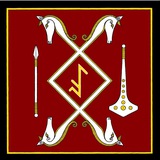
Linguistically, Monday comes from Proto-Indo-European *mḗh₁n̥s, meaning both moon & month, but probably derived from a suffixed form of the root *meh₁-, to measure (dare we speculate the measurer?) This evolved into the Proto-Germanic *mēnô, then Proto-West Germanic *mānini, before settling into the Old English’s móna; all three meaning moon. All forms are masculine, as within the Germanic pantheon, Móna (the Norse Máni) is male. It’s believed that Móna is the son of Léod (the Norse Lóðurr) & Sól. He guides the path of the moon & controls its waxing and waning. His path is beneath Ósġeard & he carries thorn-rods, called limu (ON Limar). Móna is the lord of the Hetas (ON Heiptir), & it’s to him that one must pray against hate.
Gylfaginning 11, Haustlaung 14, Völuspá 5, Hávamál 137, Investigations into Germanic Mythology vol. 1 ch. 70, 71, 91
https://linktr.ee/TheFrithstead
Monday, or Mónandæġ
Linguistically, Monday comes from Proto-Indo-European *mḗh₁n̥s, meaning both moon & month, but probably derived from a suffixed form of the root *meh₁-, to measure (dare we speculate the measurer?) This evolved into the Proto-Germanic *mēnô, then Proto-West Germanic *mānini, before settling into the Old English’s móna; all three meaning moon. All forms are masculine, as within the Germanic pantheon, Móna (the Norse Máni) is male. It’s believed that Móna is the son of Léod (the Norse Lóðurr) & Sól. He guides the path of the moon & controls its waxing and waning. His path is beneath Ósġeard & he carries thorn-rods, called limu (ON Limar). Móna is the lord of the Hetas (ON Heiptir), & it’s to him that one must pray against hate.
Gylfaginning 11, Haustlaung 14, Völuspá 5, Hávamál 137, Investigations into Germanic Mythology vol. 1 ch. 70, 71, 91
https://linktr.ee/TheFrithstead
The Folcsida Ġerímbóc: Part 8
Tuesday, or Tíwesdæġ
Linguistically, Tuesday comes from Proto-Indo-European *deywós, meaning god. This evolved into the Proto-Germanic *Tīwaz, also god. The Anglo-Saxon used Tíw, which also means god, but carried with it the identity of a specific deity. Spelling variations include Tuu, Tír, Tíġ, & Tí. What’s interesting, is the Tír also means glory & honor. The Anglo-Saxon rune poem states that “Tír is a guiding star; well does it keep faith with princes; it’s ever on its course over the mists of night and never fails”, while Hadrian’s wall carries the inscription, Deo Mars Thincsus, ‘god Mars of the Thing’ A common practice was to inscribe the Tíw rune ᛏ on weapons. It’s likely, that Tíw is a Battle-Priest who protects & guides the folk before conflict, protects the Þings & Hofs from harm (as Þings were under the jurisdiction of the Hof). This shines extra light on when Tíw sacrificed his hand to Fenneswulf, to protect his godkin.
https://linktr.ee/TheFrithstead
Tuesday, or Tíwesdæġ
Linguistically, Tuesday comes from Proto-Indo-European *deywós, meaning god. This evolved into the Proto-Germanic *Tīwaz, also god. The Anglo-Saxon used Tíw, which also means god, but carried with it the identity of a specific deity. Spelling variations include Tuu, Tír, Tíġ, & Tí. What’s interesting, is the Tír also means glory & honor. The Anglo-Saxon rune poem states that “Tír is a guiding star; well does it keep faith with princes; it’s ever on its course over the mists of night and never fails”, while Hadrian’s wall carries the inscription, Deo Mars Thincsus, ‘god Mars of the Thing’ A common practice was to inscribe the Tíw rune ᛏ on weapons. It’s likely, that Tíw is a Battle-Priest who protects & guides the folk before conflict, protects the Þings & Hofs from harm (as Þings were under the jurisdiction of the Hof). This shines extra light on when Tíw sacrificed his hand to Fenneswulf, to protect his godkin.
https://linktr.ee/TheFrithstead
👍5
The Folcsida Ġerímbóc: Part 9
Wednesday, or Wódnesdæġ
Linguistically, Wednesday comes from Proto-Indo-European *weh₂t-, excited, inspired, possessed, raging. The Pre-Germanic *Wātós, rage, manic inspiration, or divine poetic frenzy. The late Proto-Germanic *wódanaz, held the same meaning; however, he was known as the head deity. The Anglo-Saxons called him Wóden. Interestingly, modern English doesn’t continue the Old English Wódnesdæġ, but Old Frisian Wednesdei (the Old Frisians called him Wéda). A point of note, Modern English’s 2nd closest linguistic relative is Frisian. Wóden, our highest god, is the inspiring one, the giver of Gást, our breath, spirit, soul, which includes our Hama, our spiritual skin. The giver of life to Ash & Elm, the first Germanic man & woman. He is the god of knowledge, wisdom, & war. The god who took up the runes & knows the sacred ġealdor. The husband of Fríġe & father of many gods. Wóden has the ravens, Hyġ & Myne, the mind & the longing, & the two wolves, Ġera & Freca.
Wednesday, or Wódnesdæġ
Linguistically, Wednesday comes from Proto-Indo-European *weh₂t-, excited, inspired, possessed, raging. The Pre-Germanic *Wātós, rage, manic inspiration, or divine poetic frenzy. The late Proto-Germanic *wódanaz, held the same meaning; however, he was known as the head deity. The Anglo-Saxons called him Wóden. Interestingly, modern English doesn’t continue the Old English Wódnesdæġ, but Old Frisian Wednesdei (the Old Frisians called him Wéda). A point of note, Modern English’s 2nd closest linguistic relative is Frisian. Wóden, our highest god, is the inspiring one, the giver of Gást, our breath, spirit, soul, which includes our Hama, our spiritual skin. The giver of life to Ash & Elm, the first Germanic man & woman. He is the god of knowledge, wisdom, & war. The god who took up the runes & knows the sacred ġealdor. The husband of Fríġe & father of many gods. Wóden has the ravens, Hyġ & Myne, the mind & the longing, & the two wolves, Ġera & Freca.
❤1👍1
The Folcsida Ġerímbóc: Part 10
Thursday, or Þunresdæġ
Linguistically, Thursday comes from Proto-Indo-European * (s)tenh₂-, to thunder. In Proto-Germanic, it’s *Þunraz, still meaning thunder, but also the god we know today. To the Anglo-Saxons, he was Þunor. The Old English form of Thursday was þursdæġ. The proper word was þunresdæġ, as in Þunor’s day, but interestingly, þursdæġ is either a contracted form of þunresdæġ, from Old Norse’s Þorsdagr, or from Old Danish’s Þúrsdag. Given the linguistic similarities, we’re left to speculate. Þunor is The Thunderer; known for his strength & powerful hammer, possibly known to the Anglo-Saxons as Mylden. His hammer delivers crushing defeat to the enemy Eotanas. He blesses the crops, sanctifies births & marriages, & protects middanġeard. He’s married to Sibb, the Ylf of affinity, as her name means kinship. The tales of Þunor are numerous & today, Heathens of all sorts wear his mylden as a sign of religious belief & Tréow to the gods.
https://linktr.ee/TheFrithstead
Thursday, or Þunresdæġ
Linguistically, Thursday comes from Proto-Indo-European * (s)tenh₂-, to thunder. In Proto-Germanic, it’s *Þunraz, still meaning thunder, but also the god we know today. To the Anglo-Saxons, he was Þunor. The Old English form of Thursday was þursdæġ. The proper word was þunresdæġ, as in Þunor’s day, but interestingly, þursdæġ is either a contracted form of þunresdæġ, from Old Norse’s Þorsdagr, or from Old Danish’s Þúrsdag. Given the linguistic similarities, we’re left to speculate. Þunor is The Thunderer; known for his strength & powerful hammer, possibly known to the Anglo-Saxons as Mylden. His hammer delivers crushing defeat to the enemy Eotanas. He blesses the crops, sanctifies births & marriages, & protects middanġeard. He’s married to Sibb, the Ylf of affinity, as her name means kinship. The tales of Þunor are numerous & today, Heathens of all sorts wear his mylden as a sign of religious belief & Tréow to the gods.
https://linktr.ee/TheFrithstead
The Folcsida Ġerímbóc: Part 11
Friday, or Fríġedæġ
Linguistically, Fridays comes from Proto-Indo-European words, *preyH-, to love/to please & *priHós, dear/beloved & happy/free. The Proto-Germanic *frijōną continued the meaning of to love/to free, as seen in the phrase: *Þek frijō, I love you; however, the form *Frijjō was dedicated to the mother goddess & from this form that the Proto-West-Germanic *Frīju derived & the Old English Fríġe. She is the high matriarch goddess of love, daughter of Hanwer and Nyht, & our Mother Earth. She had Ingwine-Fréa & Frówe with Nyord, as well as Þunor, Bældæġ, & Heaðudéor (among others) with Wóden, the high King of Ósġeard, making her the Queen of the gods. It’s said that she knows the orlæġ of all, though she keeps her silence. Orion's Belt is known as Fríġe’s distaff or spinning wheel & the spinning of the stars is seen as her working her wheel.
https://linktr.ee/TheFrithstead
Friday, or Fríġedæġ
Linguistically, Fridays comes from Proto-Indo-European words, *preyH-, to love/to please & *priHós, dear/beloved & happy/free. The Proto-Germanic *frijōną continued the meaning of to love/to free, as seen in the phrase: *Þek frijō, I love you; however, the form *Frijjō was dedicated to the mother goddess & from this form that the Proto-West-Germanic *Frīju derived & the Old English Fríġe. She is the high matriarch goddess of love, daughter of Hanwer and Nyht, & our Mother Earth. She had Ingwine-Fréa & Frówe with Nyord, as well as Þunor, Bældæġ, & Heaðudéor (among others) with Wóden, the high King of Ósġeard, making her the Queen of the gods. It’s said that she knows the orlæġ of all, though she keeps her silence. Orion's Belt is known as Fríġe’s distaff or spinning wheel & the spinning of the stars is seen as her working her wheel.
https://linktr.ee/TheFrithstead
❤1
Forwarded from Æhtemen
Trust gut feelings. The saying refers to intuition – that feeling of instinctive understanding. Where does it come from? Perhaps the feeling is the connection we have with our orlæġ or wyrd, guiding us on our path. Today the word yarn is wool that has been spun for weaving but we also use the word to describe a tale or story, so an association here with Wyrd and the Weavers of fate. The origins of the word yarn (from the PIE *ǵʰer) means guts or intestines! The intestines of animals were often used for weaving. This is where we get ‘catgut’ from. Not the guts of cats, but short for cattle-gut. And the Waelcyrges were even known to weave fate with human guts! According to Njal’s Saga, before the Battle of Clontarf a Caithness man named Dörruðr spied twelve Waelcyrges weaving the fates of the fighting men. Their loom was made of bloodied spears – their loom-weights were severed heads and the yarns they wove were the intestines of men. Trust gut feelings.
I’ve always loved this scene. How two, of different beliefs, can simply have a conversation. 👇🏻
👍1
The Folcsida Ġerímbóc: Part 12
Sunday, or Sunnandæġ
Linguistically, Sunday comes from Proto-Indo-European *sóh₂wl̥, meaning the sun. The Proto-Germanic *sunnǭ, Proto-West-Germanic *sunnā, & Old English sunna, all in grammatically feminine, likewise man the sun. In Germanic mythology, there are two sun goddesses, carrying the names of Sunne & Sól. It’s believed that Sunne is the wife of Háma, & close relations with Sól, Léod, Móna & Nanna.
https://linktr.ee/TheFrithstead
Sunday, or Sunnandæġ
Linguistically, Sunday comes from Proto-Indo-European *sóh₂wl̥, meaning the sun. The Proto-Germanic *sunnǭ, Proto-West-Germanic *sunnā, & Old English sunna, all in grammatically feminine, likewise man the sun. In Germanic mythology, there are two sun goddesses, carrying the names of Sunne & Sól. It’s believed that Sunne is the wife of Háma, & close relations with Sól, Léod, Móna & Nanna.
https://linktr.ee/TheFrithstead
👍2
Luck, Wyrd, Intent, & Deeds
The ancient Anglo-Saxon word, ræd — is a perfect illustration of Teutonic psychology. When given to others, it means counsel; when applied to the luck working within the mind, it means wisdom, or a good plan, and from an ethical point of view, just and honest thoughts. But the word naturally includes the idea of success, which accompanies wise and upright devising, and on the other hand power and authority, which are the working of a sound will. Men setting about to discuss difficult matters stand in need of ræd and quickness of mind, says an Old-English writer. A rædless man is weakened by lack of will, lack of power and lack of self-assertion.
― Vilhelm Grønbech, The Culture of the Teutons: Volume 1
https://linktr.ee/TheFrithstead
The ancient Anglo-Saxon word, ræd — is a perfect illustration of Teutonic psychology. When given to others, it means counsel; when applied to the luck working within the mind, it means wisdom, or a good plan, and from an ethical point of view, just and honest thoughts. But the word naturally includes the idea of success, which accompanies wise and upright devising, and on the other hand power and authority, which are the working of a sound will. Men setting about to discuss difficult matters stand in need of ræd and quickness of mind, says an Old-English writer. A rædless man is weakened by lack of will, lack of power and lack of self-assertion.
― Vilhelm Grønbech, The Culture of the Teutons: Volume 1
https://linktr.ee/TheFrithstead
👍5❤1
A portion of our Luck is inherited.
The lives of our blood-kin are intertwined.
Wyrd’s web entwines us.
“The ancient view of life leads thought beyond the individual; one always looks among family to find the sources of his will and fate. The honor he bequeaths to his children, with the prayer to have it raised on high like a banner in the light, is his share of the honour which all the kinsmen combine to guard and unite in enjoying. The parents’ eye is gladdened when they see themselves and their kinsmen in their children, when they “see the luck of the family” in their children.”
― Vilhelm Grønbech, The Culture of the Teutons: Volume 1
https://linktr.ee/TheFrithstead
The lives of our blood-kin are intertwined.
Wyrd’s web entwines us.
“The ancient view of life leads thought beyond the individual; one always looks among family to find the sources of his will and fate. The honor he bequeaths to his children, with the prayer to have it raised on high like a banner in the light, is his share of the honour which all the kinsmen combine to guard and unite in enjoying. The parents’ eye is gladdened when they see themselves and their kinsmen in their children, when they “see the luck of the family” in their children.”
― Vilhelm Grønbech, The Culture of the Teutons: Volume 1
https://linktr.ee/TheFrithstead
👍4
Forwarded from 𝔉𝔬𝔩𝔨 𝔞𝔫𝔡 𝔉𝔞𝔦𝔱𝔥
You are the Elders, now.
You are the Library.
Hand down your traditions
To the next generation.
Blessings to all! 🍺😇🙏
Artwork: “Viking Chieftain” by bnolin on DeviantArt
https://www.deviantart.com/bnolin/art/Viking-Chieftain-179230923
You are the Library.
Hand down your traditions
To the next generation.
Blessings to all! 🍺😇🙏
Artwork: “Viking Chieftain” by bnolin on DeviantArt
https://www.deviantart.com/bnolin/art/Viking-Chieftain-179230923
👍2
* UPDATE *
This past year has been a journey; one I’ve throughly enjoyed. When projects begin, there is always high levels of hope, optimism, & excitement. Then, reality hits, you wake up, re-evaluate things, & discover what will & will not manifest. The issue always boils down to lack of time. I’ve offerd the The Frithstead and Leornung Folcsprǽċ Telegram channels, a Facebook page, YouTube videos, Spotify, & released two published works (Trúnaðarbók & Late West Saxon Pronunciation). By now, it should be evident that YouTube & Spotify has fallen away & Facebook is an afterthought. Going forward, the two Telegram channels & future books will be the primary focus. My original research posts are my thoughts expressed over morning coffee, which ‘oft comes with interruptions, so forgive the occasional breaks in my various research series. Research continues & new books are being written. Folcsida is growing & I appreciate the support. Click the link & see what’s offered: https://linktr.ee/TheFrithstead.
This past year has been a journey; one I’ve throughly enjoyed. When projects begin, there is always high levels of hope, optimism, & excitement. Then, reality hits, you wake up, re-evaluate things, & discover what will & will not manifest. The issue always boils down to lack of time. I’ve offerd the The Frithstead and Leornung Folcsprǽċ Telegram channels, a Facebook page, YouTube videos, Spotify, & released two published works (Trúnaðarbók & Late West Saxon Pronunciation). By now, it should be evident that YouTube & Spotify has fallen away & Facebook is an afterthought. Going forward, the two Telegram channels & future books will be the primary focus. My original research posts are my thoughts expressed over morning coffee, which ‘oft comes with interruptions, so forgive the occasional breaks in my various research series. Research continues & new books are being written. Folcsida is growing & I appreciate the support. Click the link & see what’s offered: https://linktr.ee/TheFrithstead.
❤4
Forwarded from Survive the Jive: All-feed
This artwork by Graman was created for my new documentary film "The World Tree which Grows from Hell"
Through comparative mythology we can reconstruct the earliest Indo-European beliefs about the cosmos and the afterlife as far as 6000 years back. but Indo-European religion has many features in common with Siberian and Native American religions too. These three groups all share common ancestry from an ice-age population called Ancient North Eurasians, so we can even reconstruct cosmological beliefs of a Siberian people 20,000 years ago! This film helps you to understand the most ancient and fundamental pagan beliefs concerning death, the underworld and reincarnation.
Through comparative mythology we can reconstruct the earliest Indo-European beliefs about the cosmos and the afterlife as far as 6000 years back. but Indo-European religion has many features in common with Siberian and Native American religions too. These three groups all share common ancestry from an ice-age population called Ancient North Eurasians, so we can even reconstruct cosmological beliefs of a Siberian people 20,000 years ago! This film helps you to understand the most ancient and fundamental pagan beliefs concerning death, the underworld and reincarnation.
Rise Above
How should we present ourselves when we stand before the gods? Our dress communicates to the world & is amplified when we stand before our gods. This isn’t saying we can’t wear causal clothes in private settings within our inner circles, but with a major blót or social gatherings with collective ritual, we should present ourselves in the best light. It speaks to our character. “Dressing up” shows class, self-respect, & maturity. This isn’t an elitist perspective nor arrogant drivel, but a call that hearkens back to who we are as a folk - noble & proud. The wearing of heavy metal shirts & dirty jeans to a religious event speaks a lot
about who we are. There’s a time and a place. If we’re with friends, this attire is acceptable, but you wouldn’t wear this to weddings or funerals? So why would you think it acceptable to wear before the gods & folk during an important event? Rise above the status quo of the current age & tap into our folk-soul. Be more & do more
https://linktr.ee/TheFrithstead
How should we present ourselves when we stand before the gods? Our dress communicates to the world & is amplified when we stand before our gods. This isn’t saying we can’t wear causal clothes in private settings within our inner circles, but with a major blót or social gatherings with collective ritual, we should present ourselves in the best light. It speaks to our character. “Dressing up” shows class, self-respect, & maturity. This isn’t an elitist perspective nor arrogant drivel, but a call that hearkens back to who we are as a folk - noble & proud. The wearing of heavy metal shirts & dirty jeans to a religious event speaks a lot
about who we are. There’s a time and a place. If we’re with friends, this attire is acceptable, but you wouldn’t wear this to weddings or funerals? So why would you think it acceptable to wear before the gods & folk during an important event? Rise above the status quo of the current age & tap into our folk-soul. Be more & do more
https://linktr.ee/TheFrithstead
Lammas, Lughnasadh, & Freyfaxi
Many today celebrate harvest festivals, such as Lammas, Lughnasadh, or Freyfaxi. Lammas, or hláfmæsse as the Anglo-Saxons called it, is a Christian observance of the eucharist, or holy communion, relating to the “Last supper” when Christ gave his disciples bread and wine during a Passover meal. It’s a day of thanksgiving & marks the blessing of the First Fruits of harvest (with a loaf to be offered to the church). Similarly, Lughnasadh, a Gaelic festival, marks the beginning of harvest season & early Irish literature indicates pre-Christian origins. The day is named after their god Lugh & traditions included the offerings of first fruits, possibly at sacred wells. It’s likely that Christians co-opted the Gaelic observance as a conversion tactic. Freyfaxi appears to be a New Age Ásatrú holiday based on Lammas & Lughnasadh, only substituting Lugh for Fréa & focusing on Hrafnkell’s horse, whom is dedicated to Fréa upon oath.
https://linktr.ee/TheFrithstead
Many today celebrate harvest festivals, such as Lammas, Lughnasadh, or Freyfaxi. Lammas, or hláfmæsse as the Anglo-Saxons called it, is a Christian observance of the eucharist, or holy communion, relating to the “Last supper” when Christ gave his disciples bread and wine during a Passover meal. It’s a day of thanksgiving & marks the blessing of the First Fruits of harvest (with a loaf to be offered to the church). Similarly, Lughnasadh, a Gaelic festival, marks the beginning of harvest season & early Irish literature indicates pre-Christian origins. The day is named after their god Lugh & traditions included the offerings of first fruits, possibly at sacred wells. It’s likely that Christians co-opted the Gaelic observance as a conversion tactic. Freyfaxi appears to be a New Age Ásatrú holiday based on Lammas & Lughnasadh, only substituting Lugh for Fréa & focusing on Hrafnkell’s horse, whom is dedicated to Fréa upon oath.
https://linktr.ee/TheFrithstead
❤1
On Native Languages
Aside from The Frithstead, I run an Old English channel, Leornung Folcsprǽċ, meaning, Folk-Speech. In short, it’s the Folcsida dialect; Folcsida being those who follow the Anglo-Saxon leaning, pan-Germanic ways of our forebears. Language changes the way we think, which affects our culture & beliefs. When we look at modern English, it’s an amalgam of many foreign influences; its nativeness has been diluted. This isn’t to disrespect modern English, as folk like Shakespeare & Frost created beautiful works; however, it’s not the language that evolved within the natural state of our folk. Within Old English, Old Norse, Old High German, Lombardic, or whatever ancient language one connects with, the connection within the soul resounds, bringing us closer to our forebears & gods than previously imagined. Our old ways are sacred & our native Heathen languages hold a key to reclaiming that which has been taken from us & discovering that which we’ve lost ~ Folcweard
https://t.me/LeornungFolcspraec
Aside from The Frithstead, I run an Old English channel, Leornung Folcsprǽċ, meaning, Folk-Speech. In short, it’s the Folcsida dialect; Folcsida being those who follow the Anglo-Saxon leaning, pan-Germanic ways of our forebears. Language changes the way we think, which affects our culture & beliefs. When we look at modern English, it’s an amalgam of many foreign influences; its nativeness has been diluted. This isn’t to disrespect modern English, as folk like Shakespeare & Frost created beautiful works; however, it’s not the language that evolved within the natural state of our folk. Within Old English, Old Norse, Old High German, Lombardic, or whatever ancient language one connects with, the connection within the soul resounds, bringing us closer to our forebears & gods than previously imagined. Our old ways are sacred & our native Heathen languages hold a key to reclaiming that which has been taken from us & discovering that which we’ve lost ~ Folcweard
https://t.me/LeornungFolcspraec
❤11
Forwarded from Hwitgeard
In my Writer's Bloc talk with @NixJeelvy last night we talked about Anglish and Old English. Anglish is a modern linguistic movement of speaking and writing in pure English free from French, Latin, Greek and other loanwords, either reviving 'dead' words from Old English into modern circulation or seeking alternatives using the words we have.
For example; thedeship (þēodscipe) for nationality, sye (sige) for victory, woldry (wuldrig) for glorious, anlet (andwlita) for face, elderdom (ealdordōm) for authority, wlitty (wlitig) for beautiful, ore (ār) for honour, thaning (þegnung) for service, lawly (lahlīc) for legal, worthful (weorðful) for valuable etc.
When such words were replaced because of trends and social status or to make international communication easier in the name of progress, one should question whether something of value was lost to us in which we had no say. This is all too common to us as we see our national identity and culture eroded without our consent, passive observers of civilisational decline. William Barnes, a 19th century poet who wrote in his Dorset dialect and a central figure of what is now called 'Anglish', rejected what he called 'inkhorn words', that is, pretentious words of Latin or Greek origin used by scholars to appear sophisticated or of high social status. Barnes encouraged people to look to their own language, their own 'wordhoard'.
I mentioned in our talk that what drew me to Old English is a realisation that modern English has become the standard language of globalism, the language of trade, commerce and communication, even more so than Esperanto (a Jewish invention) ever was. Unlike those for whom English is a second language, this meant that I was 'trapped' in my own language with nothing to call my own independently from the language of globalism. By learning my ancient tongue, I was not only connected closer to my ancestors, but could think and write in something that was my own, that was English in an national way, rather than English as a cosmopolitan lingua-franca. One may ask "What's the point? It's dead and you cannot communicate with people" but, like many things, this same question will be put to us by our enemies when European art and culture is also gone.
I see such a theme in linguistics to be analogous in many levels to the revival of European paganism/natural religion, which as Stephen McNallen advises; we should "drink from our own well." There are many in the modern world who lack any true identity, alienated by modernity and materialism and cast adrift from any nation or culture to call their own, even in their own homelands. One of the main criticisms I have of Christianity is that it sets its roots in Jewish history, it sees itself as a continuation of their traditions, their history, their status. Christ is king because he fulfils a Jewish messianic prophecy, born of the royal line of the Jewish king David, and will save the land of Israel (and maybe the gentiles if they're lucky). It is therefore impossible to escape from living in the shadow of a foreign people (unless one indulges 'Christian Identity' as a cope and claims descent from 'the real Israelites').
I reject all of this and claim my descent from the English, the land, the folk and the gods of the English.
Famously Alcuin/Ealhwine of York wrote a letter to Bishop Higbald of Lindisfarne in 797, questioning the monks' interest in heroic legends, and asked "Quid enim Hinieldus cum Christo", "What has Ingeld to do with Christ?" The audacity of such a question is astounding. "What has your own way of life, your own traditions, your own language, your own heroes, your own culture to do with the new 'truth' we have imposed upon you?", and now "What have national identity, ethnic homelands and a folk to do with the pursuit of progress, diversity and technological innovation?"
It is for this reason that I find my own native language so interesting and found spiritual truth in the religious traditions of my ancestors. From my own well I have found a deeper and firmly rooted understanding of who I am.
For example; thedeship (þēodscipe) for nationality, sye (sige) for victory, woldry (wuldrig) for glorious, anlet (andwlita) for face, elderdom (ealdordōm) for authority, wlitty (wlitig) for beautiful, ore (ār) for honour, thaning (þegnung) for service, lawly (lahlīc) for legal, worthful (weorðful) for valuable etc.
When such words were replaced because of trends and social status or to make international communication easier in the name of progress, one should question whether something of value was lost to us in which we had no say. This is all too common to us as we see our national identity and culture eroded without our consent, passive observers of civilisational decline. William Barnes, a 19th century poet who wrote in his Dorset dialect and a central figure of what is now called 'Anglish', rejected what he called 'inkhorn words', that is, pretentious words of Latin or Greek origin used by scholars to appear sophisticated or of high social status. Barnes encouraged people to look to their own language, their own 'wordhoard'.
I mentioned in our talk that what drew me to Old English is a realisation that modern English has become the standard language of globalism, the language of trade, commerce and communication, even more so than Esperanto (a Jewish invention) ever was. Unlike those for whom English is a second language, this meant that I was 'trapped' in my own language with nothing to call my own independently from the language of globalism. By learning my ancient tongue, I was not only connected closer to my ancestors, but could think and write in something that was my own, that was English in an national way, rather than English as a cosmopolitan lingua-franca. One may ask "What's the point? It's dead and you cannot communicate with people" but, like many things, this same question will be put to us by our enemies when European art and culture is also gone.
I see such a theme in linguistics to be analogous in many levels to the revival of European paganism/natural religion, which as Stephen McNallen advises; we should "drink from our own well." There are many in the modern world who lack any true identity, alienated by modernity and materialism and cast adrift from any nation or culture to call their own, even in their own homelands. One of the main criticisms I have of Christianity is that it sets its roots in Jewish history, it sees itself as a continuation of their traditions, their history, their status. Christ is king because he fulfils a Jewish messianic prophecy, born of the royal line of the Jewish king David, and will save the land of Israel (and maybe the gentiles if they're lucky). It is therefore impossible to escape from living in the shadow of a foreign people (unless one indulges 'Christian Identity' as a cope and claims descent from 'the real Israelites').
I reject all of this and claim my descent from the English, the land, the folk and the gods of the English.
Famously Alcuin/Ealhwine of York wrote a letter to Bishop Higbald of Lindisfarne in 797, questioning the monks' interest in heroic legends, and asked "Quid enim Hinieldus cum Christo", "What has Ingeld to do with Christ?" The audacity of such a question is astounding. "What has your own way of life, your own traditions, your own language, your own heroes, your own culture to do with the new 'truth' we have imposed upon you?", and now "What have national identity, ethnic homelands and a folk to do with the pursuit of progress, diversity and technological innovation?"
It is for this reason that I find my own native language so interesting and found spiritual truth in the religious traditions of my ancestors. From my own well I have found a deeper and firmly rooted understanding of who I am.
❤3
Nordic folk is still one of my favorite genres. I discovered it back in 2012 and have been hooked ever since. I only wish different expressions of it would spread to the rest of the Germanic world and see bands singing in Old English, Old Saxon, or Old High German. It would truly be an inspiring movement. This song here, I’ve been meaning to translate it into Old English, as when I sing this song, it speaks to my soul, of a past time, the days of yore, when we were a stronger folk.
https://youtu.be/8aveUs1o6e4
https://youtu.be/8aveUs1o6e4
YouTube
Þat Mælti Mín Móðir (My Mother Told Me) by Hindarfjäll Feat. Peter Franzén
(Check out Læraðs Limum by Hindarfjäll, from the same album: https://youtu.be/Z0hmfY4nD6M)
Grimfrost proudly presents Þat Mælti Mín Móðir (My Mother Told Me) from the album Lärads Grenar. Composed by Einar Selvik and arranged and performed by the Swedish…
Grimfrost proudly presents Þat Mælti Mín Móðir (My Mother Told Me) from the album Lärads Grenar. Composed by Einar Selvik and arranged and performed by the Swedish…
❤1
“Where is my Love” is a song I sang lead vocals on (with lovely accompaniment from a friend). It was written by Clan na Gael, whom I saw in a central California coastal town at strawberry festival back in 1994. In some ways, they helped plant the seeds that would soon lead me home. I went through many phases before returning to Folcsida, and the Celtic path was one step in the journey that became my story.
https://linktr.ee/TheFrithstead
https://linktr.ee/TheFrithstead