Forwarded from Mana of Moria (𝖇𝖆𝖗𝖔𝖓𝖊𝖘𝖘 ♡ᛋ)
Today we find ourselves in a precarious era. While many of the technological advancements we enjoy make our lives easier and more convenient, we have also sacrificed our relationship with many of the natural processes that must occur in order for us to not only survive, but to flourish. It could be argued that these advances have allowed us more time to enjoy life, since most of us no longer have to toil in forest and field to earn a day’s meal or a winter’s warmth, and we have free time to spend in any way that we choose. However studies repeatedly show that Western peoples are exceedingly unhappy with our existence and sense a great longing for something ‘else’, some unknown ‘other’ that cannot easily be articulated. A portion of our very souls has been lost, something that was at one time a tremendous part of our core being.
…
In many ways, the grasp that Christianity once held on the Western mind is sloughing off, but in its place we see the dispiriting materialism which has taken root, a profane humanist rationalism which negates all that cannot be scientifically or physically quantified. Our ability to view traditional folklore from an “insider’s perspective” has been grossly impeded, and myth even more so. We’ve placed limitations on our own abilities to truly imagine - to be awed completely and totally by the greater mysteries of our world. The results of this compromise are plain for all to see. In sacrificing this part of ourselves to the gods of an industrial age we have lost a once profound and intimate relationship we shared with the natural - and supernatural - world.
Cody Dickerson, The Language of the Corpse: The Power of the Cadaver in Germanic and Icelandic Sorcery
…
In many ways, the grasp that Christianity once held on the Western mind is sloughing off, but in its place we see the dispiriting materialism which has taken root, a profane humanist rationalism which negates all that cannot be scientifically or physically quantified. Our ability to view traditional folklore from an “insider’s perspective” has been grossly impeded, and myth even more so. We’ve placed limitations on our own abilities to truly imagine - to be awed completely and totally by the greater mysteries of our world. The results of this compromise are plain for all to see. In sacrificing this part of ourselves to the gods of an industrial age we have lost a once profound and intimate relationship we shared with the natural - and supernatural - world.
Cody Dickerson, The Language of the Corpse: The Power of the Cadaver in Germanic and Icelandic Sorcery
👍1
Forwarded from The Fyrgen • ᚫᛚᚢ:ᚢᛚᚫ
Alu Cypherrune.pdf
721.4 KB
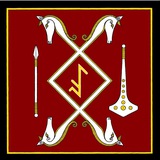
Hariwulfaz from The Sun Riders channel has potentially identified an ALU bindrune/cypher rune on the Karlino Ring. It's a sound conclusion in my opinion.
As some of you may know, I've done quite a bit of work on the ALU:ULA runic formula myself, basing my most recent Wolcensmen album and book largely on the principles I believe inherent to this runic sequence.
As some of you may know, I've done quite a bit of work on the ALU:ULA runic formula myself, basing my most recent Wolcensmen album and book largely on the principles I believe inherent to this runic sequence.
A re-post, but with an upcoming Béowulf video approaching, I thought it’s be good to give this a re-listen or if you haven’t heard this yet, enjoy!
https://youtu.be/SPyGQrO_ljI
https://linktr.ee/TheFrithstead
https://youtu.be/SPyGQrO_ljI
https://linktr.ee/TheFrithstead
YouTube
ImperiumCast V: Beowulf (feat. John David Ebert)
Today we have special guest John David Ebert on for a timely discussion of the classic Anglo-Saxon epic, Beowulf. Imperium Press has just released an issue of this canonical text and you can get yourself a copy right here:
https://www.imperiumpress.org/product…
https://www.imperiumpress.org/product…
Tréow (Loyalty)
With the foundation of the nine virtues secured within ourselves, we can stand proud; strong in the paths we walk. Although each step may not hit its mark and a misstep is likely to occur, we trust that when we make decisions, with proper morals and values rooted within us, our choices are drawn from the spring of wisdom with good motives. As we grow, experiencing the joys and travails of life’s orlæġ, we form relationships. Some will fail, others will stand strong, but each will be placed on the judicial scales before the gods. The pride of knowing that the Gods look favorably upon you, is the reward unto itself that comes from the understanding of, and walking in, tréow. Tréow is the many threads that keep everything together; like the orlæġþrǽdas of Wyrdebrune, as they’re weaved into Wyrd’s web.
https://linktr.ee/TheFrithstead
With the foundation of the nine virtues secured within ourselves, we can stand proud; strong in the paths we walk. Although each step may not hit its mark and a misstep is likely to occur, we trust that when we make decisions, with proper morals and values rooted within us, our choices are drawn from the spring of wisdom with good motives. As we grow, experiencing the joys and travails of life’s orlæġ, we form relationships. Some will fail, others will stand strong, but each will be placed on the judicial scales before the gods. The pride of knowing that the Gods look favorably upon you, is the reward unto itself that comes from the understanding of, and walking in, tréow. Tréow is the many threads that keep everything together; like the orlæġþrǽdas of Wyrdebrune, as they’re weaved into Wyrd’s web.
https://linktr.ee/TheFrithstead
Tréow (Loyalty)
Love, without limits, cannot form Tréow. Without discrimination, there is no actual love and one becomes untréowfæst (untrustworthy). Establishing Tréow is how we grow as a folk. This act of extending our trust, begins in infancy and continues until we cannot extend ourselves further, as the human psyche can only love, and therefore remain true, to a finite number of people (before love downgrades to care about and denigrates into indifference and tréow downgrades to hope they’ll be ok to the denigration of not my problem. The further someone gets from your inner circles of tréow, the less they exist within your actual concentric circles. It’s through the trusting of others that we build relationships, which in turn create traditions, and it’s our traditions that hold us together. May we remain steadfast in our tréow, always aware of the concentric circles and how they fit into your life.
https://linktr.ee/TheFrithstead
Love, without limits, cannot form Tréow. Without discrimination, there is no actual love and one becomes untréowfæst (untrustworthy). Establishing Tréow is how we grow as a folk. This act of extending our trust, begins in infancy and continues until we cannot extend ourselves further, as the human psyche can only love, and therefore remain true, to a finite number of people (before love downgrades to care about and denigrates into indifference and tréow downgrades to hope they’ll be ok to the denigration of not my problem. The further someone gets from your inner circles of tréow, the less they exist within your actual concentric circles. It’s through the trusting of others that we build relationships, which in turn create traditions, and it’s our traditions that hold us together. May we remain steadfast in our tréow, always aware of the concentric circles and how they fit into your life.
https://linktr.ee/TheFrithstead
Veteran’s Day - Remembrance Day
Ne mára bróðor beadwa.
We must remember & not repeat the mistakes of the past. Our only way forward is unity.
Our ancestors may not have known what they were truly fighting against, but they did the best they could with what they had. I believe their intentions were honorable and pure. Now, as they grace Hell’s Hall, they surely give nothing but their blessings upon us, their descendants, as we seek to better this world.
Belief • Kin • Folk
https://linktr.ee/TheFrithstead
Ne mára bróðor beadwa.
We must remember & not repeat the mistakes of the past. Our only way forward is unity.
Our ancestors may not have known what they were truly fighting against, but they did the best they could with what they had. I believe their intentions were honorable and pure. Now, as they grace Hell’s Hall, they surely give nothing but their blessings upon us, their descendants, as we seek to better this world.
Belief • Kin • Folk
https://linktr.ee/TheFrithstead
Pretty
Prættiġ was a negative word, meaning cunning or crafty; evolving to mean clever, skillful.
By the 1400s, pretty started to mean pleasing in appearance
In the 1500s, it took meaning of: to a large extent
In the 1600s, it meant nice. Pepys, in his diary, references Dr. Clarke, whom he described as a “pretty man”. Samuel Johnson included the word in his Dictionary of the English Language (1755), he stated that “it is used in a kind of diminutive contempt in poetry, and in conversation; as ‘a pretty fellow indeed.’”
In the 1700s, it was used as a negative, as in John Arbuthnot’s John Bull: “There goes the prettiest Fellow in the World ... for managing a Jury.”
Today, pretty means “physically attractive” or in the sense of “very”.
It’s interesting how a word can go from a negatively viewed cunning and crafty to a positively viewed attractive.
It’s interesting to see how views change over time
thefrithstead.com
Prættiġ was a negative word, meaning cunning or crafty; evolving to mean clever, skillful.
By the 1400s, pretty started to mean pleasing in appearance
In the 1500s, it took meaning of: to a large extent
In the 1600s, it meant nice. Pepys, in his diary, references Dr. Clarke, whom he described as a “pretty man”. Samuel Johnson included the word in his Dictionary of the English Language (1755), he stated that “it is used in a kind of diminutive contempt in poetry, and in conversation; as ‘a pretty fellow indeed.’”
In the 1700s, it was used as a negative, as in John Arbuthnot’s John Bull: “There goes the prettiest Fellow in the World ... for managing a Jury.”
Today, pretty means “physically attractive” or in the sense of “very”.
It’s interesting how a word can go from a negatively viewed cunning and crafty to a positively viewed attractive.
It’s interesting to see how views change over time
thefrithstead.com
👍2
To pray, the Old English bedu, bed, & ġebed, meaning “a request or prayer”. Because beads were kept on what we today call a rosary, bedu, bed, & ġebed came to be applied to the the balls themselves; hence, why in Modern English, this has evolved into the word bead, coming to mean a “small, round object”, such as found on jewelry or other crafts. In Middle English, a bedeman referred to someone who prayed for others. In the early 1400s, we see the word recorded to refer to a small perforated round object made of materials such as amber, glass and wood used in jewelry. By the end of the 1500s, bead could refer to less poetic round objects, such as a “bead of sweat,” as Shakespeare, in Henry IV, Part One, spoke of how “Beds of sweat haue stood vpon thy brow.” Words change as folks change and associations slide meanings from one to another. From religious to secular, a once sacred word becomes the mundane. In keeping the old ways alive, do you bead?
https://linktr.ee/TheFrithstead
https://linktr.ee/TheFrithstead
Forwarded from The Fyrgen • ᚫᛚᚢ:ᚢᛚᚫ
From the description beneath Ælfric's new album on Bandcamp:
Watlingstreet is best known as the long road across England that in Anglo-Saxon times separated the Danelaw from the territory still ruled by Anglo-Saxon kings such as Alfred the Great; however "Watlingstreet" had another, arguably earlier and more significant meaning in Anglo-Saxon England. Watlingstreet was one of the Anglo-Saxon names for the Milky Way – that arm of our galaxy which would have been very visible in the night sky in ancient times when there were no modern city lights.
The name Watlingstreet contains significant information about how our Anglo-Saxon ancestors understood the Milky Way in regards to our ancestral divine beings and their stories, a connection of which most people are unaware. Wat- is the name Wade, a Germanic "supernatural" being. Comparative research reveals that Wade is the same being who was known in the Norse as Ivaldi, and that he is the father of the three elf-brothers known from many ancient sources such as the Elder Edda poem Völundundarkviða, namely Weyland (Völund the Smith in the Norse) Egil, who is also known as Éarendel to the Anglo-Saxons (Aurvandil in the Norse), and Slagfinn, who also was known to the Anglo-Saxons as Iring. Like their father and almost all beings in Germanic lore, the three elf-brothers were known by many different names throughout the Germanic world – a fact that has often obscured their identity for modern scholars and heathen alike.
In Germanic languages, the suffix -ing or -l-ing means "children of." Therefore, a "Watling" is a child of Wade. The sons of Wade were great smiths – craftsmen who made treasures for the gods. The Anglo-Saxon conception of the Milky Way, then, is that it was "the road of the sons of Wade," and was referred to as such because the sons of Wade were considered to have built it and/or because it was considered to be the cosmic road which they traveled.
Most modern people consider the bridge of the gods, Bifröst, to be the rainbow because Snorri Sturluson described it as such in the Younger Edda. Few are aware, however, that the Elder Edda, a older and more authoritative source for Norse heathenry than Snorri, does not describe Bifröst as a rainbow. In fact, in the Elder Edda the bridge is not even called Bifröst, but rather it is called Bilröst. The meaning of this older, more original name of the bridge is "the way of Bil." We know of Bil and her brother Gjuki or Hjuki (Hóce in Anglo-Saxon, whose story is mentioned in Béowulf) from the Younger Edda, which associates the two siblings with the moon and its path across the sky. Comparative research reveals that Bil is Iðunn, the wife of the Ása-god Bragi. From the Elder Edda poem Hrafnagaldr Óðins we learn that Iðunn is a daughter of Ivaldi by a second wife. Therefore Bil/Iðunn is the younger sister of the three elf-brothers and is herself a Watling. Comparative research also reveals that Bil's brother Hjuki is the third of the three elf-brothers, also known as Iring. For this reason and others that are too lengthy to give here, Bilröst, the bridge of the gods, can be understood to have originally not been associated with the rainbow, but rather with the Milky Way: the cosmic Watlingstreet.
Before the time of Snorri, Bilröst was understood to be a bridge between Ésegeard, the world of the gods in heaven, to Wyrd's well in the underworld, which new research by Ælfric reveals to have been in the lower world portion Eotenhám, the home of the giants. That the Anglo-Saxons used the same name, Watlingstreet, for both the cosmic bridge that separates the land of the gods from the land of the giants, and for the road which separated the Anglo-Saxons from the Danes in England, would have been a double-entendre that would have had no small significance to the the Anglo-Saxons...
Watlingstreet is best known as the long road across England that in Anglo-Saxon times separated the Danelaw from the territory still ruled by Anglo-Saxon kings such as Alfred the Great; however "Watlingstreet" had another, arguably earlier and more significant meaning in Anglo-Saxon England. Watlingstreet was one of the Anglo-Saxon names for the Milky Way – that arm of our galaxy which would have been very visible in the night sky in ancient times when there were no modern city lights.
The name Watlingstreet contains significant information about how our Anglo-Saxon ancestors understood the Milky Way in regards to our ancestral divine beings and their stories, a connection of which most people are unaware. Wat- is the name Wade, a Germanic "supernatural" being. Comparative research reveals that Wade is the same being who was known in the Norse as Ivaldi, and that he is the father of the three elf-brothers known from many ancient sources such as the Elder Edda poem Völundundarkviða, namely Weyland (Völund the Smith in the Norse) Egil, who is also known as Éarendel to the Anglo-Saxons (Aurvandil in the Norse), and Slagfinn, who also was known to the Anglo-Saxons as Iring. Like their father and almost all beings in Germanic lore, the three elf-brothers were known by many different names throughout the Germanic world – a fact that has often obscured their identity for modern scholars and heathen alike.
In Germanic languages, the suffix -ing or -l-ing means "children of." Therefore, a "Watling" is a child of Wade. The sons of Wade were great smiths – craftsmen who made treasures for the gods. The Anglo-Saxon conception of the Milky Way, then, is that it was "the road of the sons of Wade," and was referred to as such because the sons of Wade were considered to have built it and/or because it was considered to be the cosmic road which they traveled.
Most modern people consider the bridge of the gods, Bifröst, to be the rainbow because Snorri Sturluson described it as such in the Younger Edda. Few are aware, however, that the Elder Edda, a older and more authoritative source for Norse heathenry than Snorri, does not describe Bifröst as a rainbow. In fact, in the Elder Edda the bridge is not even called Bifröst, but rather it is called Bilröst. The meaning of this older, more original name of the bridge is "the way of Bil." We know of Bil and her brother Gjuki or Hjuki (Hóce in Anglo-Saxon, whose story is mentioned in Béowulf) from the Younger Edda, which associates the two siblings with the moon and its path across the sky. Comparative research reveals that Bil is Iðunn, the wife of the Ása-god Bragi. From the Elder Edda poem Hrafnagaldr Óðins we learn that Iðunn is a daughter of Ivaldi by a second wife. Therefore Bil/Iðunn is the younger sister of the three elf-brothers and is herself a Watling. Comparative research also reveals that Bil's brother Hjuki is the third of the three elf-brothers, also known as Iring. For this reason and others that are too lengthy to give here, Bilröst, the bridge of the gods, can be understood to have originally not been associated with the rainbow, but rather with the Milky Way: the cosmic Watlingstreet.
Before the time of Snorri, Bilröst was understood to be a bridge between Ésegeard, the world of the gods in heaven, to Wyrd's well in the underworld, which new research by Ælfric reveals to have been in the lower world portion Eotenhám, the home of the giants. That the Anglo-Saxons used the same name, Watlingstreet, for both the cosmic bridge that separates the land of the gods from the land of the giants, and for the road which separated the Anglo-Saxons from the Danes in England, would have been a double-entendre that would have had no small significance to the the Anglo-Saxons...
AElfric
Watlingstreet, by AElfric
12 track album
👍2❤1
Forwarded from The Fyrgen • ᚫᛚᚢ:ᚢᛚᚫ
...The great amount of comparative research that reveals these little-known facts of Anglo-Saxon and Norse lore is too extensive to go into further here, but this research is readily accessible. Anyone who would like to know more may feel free to contact us for further information.
Ælfric Hláford's Watlingstreet includes a number of god-gealdors and instrumental pieces. But perhaps most prominently, Watlingstreet tells some of the stories of the Watlings in various forms, through ancient poetry, modern poetry and music, from the woes of Weyland the Smith in the traditional Anglo-Saxon poetry of Déor and the Éarendel verse, to a modern gealdor written for Wuldor (Ullr) who, as the son of Éarendel/Egil, is one of several other important personalities in Germanic lore, needs to be recognized as a member of the greatest family of elves who are the Watlings: the descendants of Wade. Our hope is that knowledge of the true origin and lore of the Watlings be restored to their rightful place among us.
Ælfric Hláford's Watlingstreet includes a number of god-gealdors and instrumental pieces. But perhaps most prominently, Watlingstreet tells some of the stories of the Watlings in various forms, through ancient poetry, modern poetry and music, from the woes of Weyland the Smith in the traditional Anglo-Saxon poetry of Déor and the Éarendel verse, to a modern gealdor written for Wuldor (Ullr) who, as the son of Éarendel/Egil, is one of several other important personalities in Germanic lore, needs to be recognized as a member of the greatest family of elves who are the Watlings: the descendants of Wade. Our hope is that knowledge of the true origin and lore of the Watlings be restored to their rightful place among us.
The Bersyrċe, or “Bear-Shirt Wearer”, is a warrior and known for his violent battle frenzy. The Bersyrcan’s reputation instilled great fear into their enemies.
Ynglinga Saga:
His men rushed forwards without armour, were as mad as dogs or wolves, bit their shields, and were strong as bears or wild oxen, and killed people at a blow, but neither fire nor iron told upon them. This was called Berserkergang.
https://linktr.ee/TheFrithstead
Ynglinga Saga:
His men rushed forwards without armour, were as mad as dogs or wolves, bit their shields, and were strong as bears or wild oxen, and killed people at a blow, but neither fire nor iron told upon them. This was called Berserkergang.
https://linktr.ee/TheFrithstead
Seaxnéat is…
Anonymous Poll
35%
Ingwine-Fréa (Yngvi-Freyr)
16%
Tíw (Týr)
42%
himself; his own deity
8%
Other (answer in comments)
👍2
The Frithstead
Seaxnéat is…
Is there evidence to support your conclusions?
Is Seaxnéat Ingwine-Fréa? Yes, I believe he is.
https://youtu.be/ed-h0p7rzz0
https://linktr.ee/TheFrithstead
https://youtu.be/ed-h0p7rzz0
https://linktr.ee/TheFrithstead
Pondering “Who is Seaxnéat?”, as an Anglo-Saxon Heathen, these are the types of questions that we must come to conclusions on; however, a conclusion is only as strong as its premise. Opinions are equal in opportunity of presentation, but unequal in value. Basing beliefs upon personal logic is folly. random Associations can appear true, yet be false. We can make anything mean anything. Cognitive dissonance effects all of us. Step out our comfort zones & challenge ourselves by asking, “Why do I believe this?”, “How do I know this is true?” and “Could I be wrong?”. This last questions leads to “If I’m wrong, then I’ll change my mind.” Grow & adapt. Don’t believe someone because they sound smart. Don’t dismiss someone because they don’t. Look at the evidence & if there’s not much there, look at the pieces of information that formed the theory. How do they fit to form the conclusion. Compare, contrast, look for convergence points. Be open-minded. Learn how to learn
https://linktr.ee/TheFrithstead
https://linktr.ee/TheFrithstead
❤1