Forwarded from Æhtemen
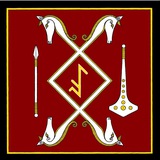
Great video above by Folcweard on the Miollir. My personal view is the name is connected to grinding – this being because the concept is furthered by the name of Thor's goat Tanngnjóstr 'teeth-grinder'. If the name does come from this idea then we can equate the hammer with the Mill – the word parallels Miollnir and also gives us the French word mallet. The World Mill is symbolised by the Ursa Major swastika formed in the northern sky.
Milling corn and grain may also connect Thunor with the grain goddess Sib (Sibbe~Sif). Milled grain is meal (as in oatmeal) Middle English mēle, from Old English melu. This is rooted in the Proto-Germanic *melwan meaning grind, giving the Norse their word mjöl.
Milling corn and grain may also connect Thunor with the grain goddess Sib (Sibbe~Sif). Milled grain is meal (as in oatmeal) Middle English mēle, from Old English melu. This is rooted in the Proto-Germanic *melwan meaning grind, giving the Norse their word mjöl.
The Anglo-Saxons called their Priests Ǽweweard(as), which translates as Guardian(s) of the divine law - literally Law-Guard(s). Another name was Þingere (Þingeras), which essentially means a priest of the Þing, who in his office, intercedes for the folk. A Þing is an assembly, meeting, or court held to settle disputes and or discuss matters of importance.
Our ancient religious leaders were the law-keepers of the folk. They knew the secular & religious law, the religious lore & history of the folk, & protected the folk customs & traditions. Our religious leaders were, in essence, the authority when knowledge was to be dispensed and answers to be given - they were our judges & protectors.
Our ancestors had a law, and held that law above everything, modeled after the Gods themselves, as fate decreed.
Painting by J.L. Lund. An Ǽweweard leading the people in a blót to Þunor.
https://linktr.ee/TheFrithstead
Our ancient religious leaders were the law-keepers of the folk. They knew the secular & religious law, the religious lore & history of the folk, & protected the folk customs & traditions. Our religious leaders were, in essence, the authority when knowledge was to be dispensed and answers to be given - they were our judges & protectors.
Our ancestors had a law, and held that law above everything, modeled after the Gods themselves, as fate decreed.
Painting by J.L. Lund. An Ǽweweard leading the people in a blót to Þunor.
https://linktr.ee/TheFrithstead
Forwarded from Beowulfsmal
Hrafna-Cyning
Iċ béo án cínan of Wódene;
Héah-ġeboren
And þearlwís.
Tíwes-Hand
In þæs Wulfes Múðan
Is mín sweord.
From se blæc more
Mid wanfáh fuglas
Iċ ġewealde.
Iċ béo se Hrafna-Cyning
And Iċ sceal ábǽdan wælhréownes
Tó þǽm wælhréowliċum.
Translation:
Raven King
I am a scion of Woden;
High born
And relentless.
Tiw's Hand
In the Wolf's Mouth
Is my sword.
From the black moor
With ebony birds
I rule.
I am the Raven King
And I shall exact cruelty
Upon the cruel.
Iċ béo án cínan of Wódene;
Héah-ġeboren
And þearlwís.
Tíwes-Hand
In þæs Wulfes Múðan
Is mín sweord.
From se blæc more
Mid wanfáh fuglas
Iċ ġewealde.
Iċ béo se Hrafna-Cyning
And Iċ sceal ábǽdan wælhréownes
Tó þǽm wælhréowliċum.
Translation:
Raven King
I am a scion of Woden;
High born
And relentless.
Tiw's Hand
In the Wolf's Mouth
Is my sword.
From the black moor
With ebony birds
I rule.
I am the Raven King
And I shall exact cruelty
Upon the cruel.
Tacitus, Germania 40: “Next come the Reudigni, the Aviones, the Anglii, the Varini, the Eudoses, the Suardones, and Nuithones … their worship of Ertha, or mother-Earth, and their belief that she interposes in human affairs. In an island of the ocean there is a sacred grove, and within it a consecrated chariot, covered over with a garment. Only one priest is permitted to touch it. He can perceive the presence of the goddess in this sacred recess, and walks by her side with the utmost reverence as she is drawn along by heifers. They do not go to battle or wear arms; every weapon is under lock; peace and quiet are known and welcomed only at these times.”
Our folk honored Fríġ-Eorþ, the Allmother, wife of Wóden & Mother of Þunor. In her honor, hostilities ceased & weapons were put down. Notice the level of respect our folk practiced. Notice the high position of the Ǽweweard, his role & how the folk viewed our religious leaders.
https://linktr.ee/TheFrithstead
Our folk honored Fríġ-Eorþ, the Allmother, wife of Wóden & Mother of Þunor. In her honor, hostilities ceased & weapons were put down. Notice the level of respect our folk practiced. Notice the high position of the Ǽweweard, his role & how the folk viewed our religious leaders.
https://linktr.ee/TheFrithstead
👍1
The gods played Fýstebord; have you?
Vǫluspá 8
Tefldu í túni, teitir váru,
var þeim vettugis vant ór gulli;
unz þrjár kvámu þursa meyjar
ámátkar mjök ór jötunheimum.
They tafled in the yard
and were merry;
They were lacking
nothing of gold,
until three thurs girls came
most overmighty
out of Eotenhám
Tafl -an ancient ON borrowing from Latin tabula, meaning a tablet; a board or plank. The plural being tǫfl.
The OE cognate is Tabule, meaning a table, a tablet, table on which to inscribe, and or a board which is struck to give a signal, however, Tabule, or Table as we call it today, is still an early Latin borrowing.
The English used Bord, meaning board, plank, or table; today’s Board.
Today, we call this chess-like Germanic game, Hnefatafl, with Hnefa being the ON term for Fist’s, whose etymology is unknown. The OE term is Fýst (Fist)
A reconstructed OE rendering of the game of the gods becomes Fýstebord, or Fistboard, a game of fists.
https://linktr.ee/TheFrithstead
Vǫluspá 8
Tefldu í túni, teitir váru,
var þeim vettugis vant ór gulli;
unz þrjár kvámu þursa meyjar
ámátkar mjök ór jötunheimum.
They tafled in the yard
and were merry;
They were lacking
nothing of gold,
until three thurs girls came
most overmighty
out of Eotenhám
Tafl -an ancient ON borrowing from Latin tabula, meaning a tablet; a board or plank. The plural being tǫfl.
The OE cognate is Tabule, meaning a table, a tablet, table on which to inscribe, and or a board which is struck to give a signal, however, Tabule, or Table as we call it today, is still an early Latin borrowing.
The English used Bord, meaning board, plank, or table; today’s Board.
Today, we call this chess-like Germanic game, Hnefatafl, with Hnefa being the ON term for Fist’s, whose etymology is unknown. The OE term is Fýst (Fist)
A reconstructed OE rendering of the game of the gods becomes Fýstebord, or Fistboard, a game of fists.
https://linktr.ee/TheFrithstead
Forwarded from Æhtemen
The term 'Wyrtgælstre' appears in an Old English text from around 1050 and was used to describe a woman who chanted over herbs - an insult used by the church and meant as a derogative slur. The same text also went on to say 'a girl born of the fifth day of the moon will die worst, for she will be a witch...' Personally I think women who use herbs and plants in their magic should proudly reclaim the title for their own!
👍1
~ WHAT IS EPICISM ? ~
Our belief is polytheistic. We have a pantheon. We have Gods. We have law. There is no denying this,…As Children of the Gods it is imperative for us to understand and learn their ways, the ways that have been passed down to us by our ancestors. We dishonor them by ignoring the material handed down to us, by allowing outsiders to interpret their words, and by injecting modernist views into the way of life that has been laid out to us. This is our belief, and as such we must do everything that we can to rebuild what was lost to us at the hands of the Christian Empire.
https://norroena.org/what-is-epicism/
https://linktr.ee/TheFrithstead
Our belief is polytheistic. We have a pantheon. We have Gods. We have law. There is no denying this,…As Children of the Gods it is imperative for us to understand and learn their ways, the ways that have been passed down to us by our ancestors. We dishonor them by ignoring the material handed down to us, by allowing outsiders to interpret their words, and by injecting modernist views into the way of life that has been laid out to us. This is our belief, and as such we must do everything that we can to rebuild what was lost to us at the hands of the Christian Empire.
https://norroena.org/what-is-epicism/
https://linktr.ee/TheFrithstead
👍1
Forwarded from Survive the Jive: All-feed
The Yamnaya documentary is ready and will Premiere at 4pm UK time (10 mins) https://youtu.be/d48bhkOiEuA
YouTube
Yamnaya: Faces of the Indo-Europeans
The Yamnaya culture, also called the Kurgan or Late Ochre Grave culture, of the late Neolithic and Bronze age Pontic steppe is believed to belong to one of several Proto-Indo-European speaking Western Steppe herder peoples who were ancestral to many modern…
“For omens and the casting of lots they have the highest regard. Their procedure in casting lots is always the same. They cut off a branch of a nut-bearing tree and slice it into strips; these they mark with different signs and throw them completely at random onto a white cloth. Then the priest of the state, if the consultation is a public one, or the father of the family if it is private, offers a prayer to the gods, and looking up at the sky picks up three strips, one at a time, and reads their meaning from the signs previously scored on them. If the lots forbid an enterprise, there is no deliberation that day on the matter in question ;' if they allow it, confirmation by the taking of auspices is required.”
-Tacitus, Germania
https://linktr.ee/TheFrithstead
-Tacitus, Germania
https://linktr.ee/TheFrithstead
The two-fingered salute & flipping someone off?
The Spirit of Robin Hood?
Hálettend
pronounced /ˈhɑː.let.tend/
The Old English word referring the the middle finger, by which a sign of greeting was made.
Referring to the Norman invasion, when the Normans captured Anglo-Saxon archers, they would cut the archer's index and middle fingers off. So, as a act of defiance, Anglo-Saxon archers would rebelliously stick those two fingers up at the Normans.
Centuries later, when the outnumbered English faced the French at the Battle of Agincourt, they were armed with a relatively new weapon, the longbow.
The French vowed to cut off the middle finger of each British archer.
When the longbows won the day, the English jeered the retreating French by raising their middle finger in a gesture that still means what it does today.
https://linktr.ee/TheFrithstead
The Spirit of Robin Hood?
Hálettend
pronounced /ˈhɑː.let.tend/
The Old English word referring the the middle finger, by which a sign of greeting was made.
Referring to the Norman invasion, when the Normans captured Anglo-Saxon archers, they would cut the archer's index and middle fingers off. So, as a act of defiance, Anglo-Saxon archers would rebelliously stick those two fingers up at the Normans.
Centuries later, when the outnumbered English faced the French at the Battle of Agincourt, they were armed with a relatively new weapon, the longbow.
The French vowed to cut off the middle finger of each British archer.
When the longbows won the day, the English jeered the retreating French by raising their middle finger in a gesture that still means what it does today.
https://linktr.ee/TheFrithstead