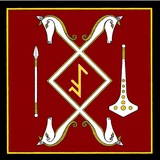
Ós, (a) god & the rune ᚩ, representing the letter Oo.
N/A Ós Ésa
G. Ósa Ésa
D. Ósa. Ésum
* m., U-Stem with I-Mutation
**Equivalent to ON Áss, Æsir
***As a runic letter, it’s believed to represent Wóden
The highest of the divine families.
https://linktr.ee/TheFrithstead
N/A Ós Ésa
G. Ósa Ésa
D. Ósa. Ésum
* m., U-Stem with I-Mutation
**Equivalent to ON Áss, Æsir
***As a runic letter, it’s believed to represent Wóden
The highest of the divine families.
https://linktr.ee/TheFrithstead
Who are we?
The gods and goddesses of the Teutonic northwestern ancestral lands are not mere archetypes. They are not mere characters created to teach us lessons or represent a moral to a story. They are real and alive divine entities that literally exist. To believe otherwise is to deny them and to deny your folk, and deny your birthright. A Heathen, or Esatruer, or simply an Oldkind Believer is one who follows and honors the Ésa, Wanas, & Ælfas and is a Theist. That said, honoring the Eotenas doesn’t count, that’s just a Heathen version of a Christian Satanist.
https://linktr.ee/TheFrithstead
The gods and goddesses of the Teutonic northwestern ancestral lands are not mere archetypes. They are not mere characters created to teach us lessons or represent a moral to a story. They are real and alive divine entities that literally exist. To believe otherwise is to deny them and to deny your folk, and deny your birthright. A Heathen, or Esatruer, or simply an Oldkind Believer is one who follows and honors the Ésa, Wanas, & Ælfas and is a Theist. That said, honoring the Eotenas doesn’t count, that’s just a Heathen version of a Christian Satanist.
https://linktr.ee/TheFrithstead
Forwarded from BC Neanderthal Mindset
Keeping it in the Family
Our gods are not yahweh figures that embrace all people regardless of their ethnic and cultural background.
While they do encompass some of the more compassionate qualities that we as Hyperboreans also display, they do not welcome all people, nor should they.
That’s what a tribe should do, viewing those outside the family with a skeptical eye, as history has shown us a very effective way to erase a people is to infiltrate from within.
When you seek to follow gods and cultural norms outside your own historical ties, then you further remove yourself from your heathen heritage and birthright.
Keep it close to home Hyperborean, your soul will resonate with the spirituality of your ancestors and gain the favor of familial gods.
Our gods are not yahweh figures that embrace all people regardless of their ethnic and cultural background.
While they do encompass some of the more compassionate qualities that we as Hyperboreans also display, they do not welcome all people, nor should they.
That’s what a tribe should do, viewing those outside the family with a skeptical eye, as history has shown us a very effective way to erase a people is to infiltrate from within.
When you seek to follow gods and cultural norms outside your own historical ties, then you further remove yourself from your heathen heritage and birthright.
Keep it close to home Hyperborean, your soul will resonate with the spirituality of your ancestors and gain the favor of familial gods.
👍1
We must be like the badger: strong & steadfast
It’s the road that crosses the badger, you say-
His ancestry deep the behaviour tied
To custom; the ancient setts concealed from the day,
Each night’s an echo of the previous night
Where we are the ones who interfere:
He just stands his ground. Were a car to appear,
All death and dazzle, he wouldn’t swerve or wait:
His commitment’s grown in his blood, like fate.
-A Thorpe
https://linktr.ee/TheFrithstead
It’s the road that crosses the badger, you say-
His ancestry deep the behaviour tied
To custom; the ancient setts concealed from the day,
Each night’s an echo of the previous night
Where we are the ones who interfere:
He just stands his ground. Were a car to appear,
All death and dazzle, he wouldn’t swerve or wait:
His commitment’s grown in his blood, like fate.
-A Thorpe
https://linktr.ee/TheFrithstead
🔥1
Forgive the cheesy TV Vikings pic, but the message is worth pointing out. Loyalty is everything. Nothing’s worse than the betrayal of a kinsman.
https://linktr.ee/TheFrithstead
https://linktr.ee/TheFrithstead
Forwarded from ☀️The Sun Riders☀️ (Hariwulfaz)
Viking Age Seax Uncovered in Sweden
The seax, which is dated to between 700-900 AD, was found recently at an archive archeological site in Skälby, Sweden. It was found in a well. The seax’s hilt is remarkably preserved, and features very beautiful knotwork.
Other interesting finds, such as this comb (dated to before 200 CE) have been located at this site, and was likewise found in a well, suggesting these could be sacrificial items at a site occupied for centuries.
Articles in English aren’t available at this time but this article can be easily translated to read more on the find:
https://arkeologerna.com/bloggar/gardar-och-gravfalt-utanfor-vasteras/kortsvard-fran-jarnaldern-hittat-i-skalby/
- Hariwulfaz, The Sun Riders
@solarcult
The seax, which is dated to between 700-900 AD, was found recently at an archive archeological site in Skälby, Sweden. It was found in a well. The seax’s hilt is remarkably preserved, and features very beautiful knotwork.
Other interesting finds, such as this comb (dated to before 200 CE) have been located at this site, and was likewise found in a well, suggesting these could be sacrificial items at a site occupied for centuries.
Articles in English aren’t available at this time but this article can be easily translated to read more on the find:
https://arkeologerna.com/bloggar/gardar-och-gravfalt-utanfor-vasteras/kortsvard-fran-jarnaldern-hittat-i-skalby/
- Hariwulfaz, The Sun Riders
@solarcult
A portion of your Luck is inherited. The lives of blood-kin are intertwined. The Web of Wyrd.
“The ancient view of life leads thought beyond the individual; one always looks among family to find the sources of his will and fate. The honor he bequeaths to his children, with the prayer to have it raised on high like a banner in the light, is his share of the honour which all the kinsmen combine to guard and unite in enjoying. The parents’ eye is gladdened when they see themselves and their kinsmen in their children, when they “see the luck of the family” in their children.”
― Vilhelm Grønbech, The Culture of the Teutons: Volume 1
https://linktr.ee/TheFrithstead
“The ancient view of life leads thought beyond the individual; one always looks among family to find the sources of his will and fate. The honor he bequeaths to his children, with the prayer to have it raised on high like a banner in the light, is his share of the honour which all the kinsmen combine to guard and unite in enjoying. The parents’ eye is gladdened when they see themselves and their kinsmen in their children, when they “see the luck of the family” in their children.”
― Vilhelm Grønbech, The Culture of the Teutons: Volume 1
https://linktr.ee/TheFrithstead
❤1
Creation
“The lore of our people tells us that “In the earliest age, what is was not, there was no sand, nor sea, nor cool waves. The earth did not exist, nor the sky above. There was a mighty chasm, Ġeónungġéap, but grass grew nowhere” (TAE I.1, cp. LIII.34). To the north of Ġeónungġéap arose Neowolhám ‘The Home in the Deep,’ whence came the primordial ice; at the same time, in the south, in Sincdalu, came the heat that would melt the ice in the north to form a poisonous rime. This rime flowed into Ġeónungġéap and hardened, layer upon layer, while the powers of fire and ice grew in their respective regions. From this intermingling of primal elements, driven by a creative force or ‘Spirit,’ there arose three holy springs— there was Hwerġerár ‘The Roaring Cauldron’ in the north, whose ice-cold liquids became the source for all the waters of the worlds; then there was Wyrdeburne ‘Wyrd’s Spring’ in the south, which contains the life giving warmth; and there was Mimoresburne ‘Mimor’s Spring’ in the center, where Ġeónungġéap once stood, in which the creative wisdom that spawned these developments would be concentrated. These springs not only contain the three most important, and hence ‘divine’ elements of the creation—Ice, Fire, and Spirit—they are also the foremost symbols of our lore, which we see recurring throughout it.”
~ Mark Puryear, Odisbook: The Book of Odr
* With ON terms translated into OE by Folcweard; indicated by italicization
https://linktr.ee/TheFrithstead
“The lore of our people tells us that “In the earliest age, what is was not, there was no sand, nor sea, nor cool waves. The earth did not exist, nor the sky above. There was a mighty chasm, Ġeónungġéap, but grass grew nowhere” (TAE I.1, cp. LIII.34). To the north of Ġeónungġéap arose Neowolhám ‘The Home in the Deep,’ whence came the primordial ice; at the same time, in the south, in Sincdalu, came the heat that would melt the ice in the north to form a poisonous rime. This rime flowed into Ġeónungġéap and hardened, layer upon layer, while the powers of fire and ice grew in their respective regions. From this intermingling of primal elements, driven by a creative force or ‘Spirit,’ there arose three holy springs— there was Hwerġerár ‘The Roaring Cauldron’ in the north, whose ice-cold liquids became the source for all the waters of the worlds; then there was Wyrdeburne ‘Wyrd’s Spring’ in the south, which contains the life giving warmth; and there was Mimoresburne ‘Mimor’s Spring’ in the center, where Ġeónungġéap once stood, in which the creative wisdom that spawned these developments would be concentrated. These springs not only contain the three most important, and hence ‘divine’ elements of the creation—Ice, Fire, and Spirit—they are also the foremost symbols of our lore, which we see recurring throughout it.”
~ Mark Puryear, Odisbook: The Book of Odr
* With ON terms translated into OE by Folcweard; indicated by italicization
https://linktr.ee/TheFrithstead
New video coming soon.
Currently in production, the etymological history of Fríġ, Ingwine-Fréa, & Frówe (Frigg, Yngvi-Freyr, & Freyja).
Currently in production, the etymological history of Fríġ, Ingwine-Fréa, & Frówe (Frigg, Yngvi-Freyr, & Freyja).
The Englisċ Lárbóc
The Óryld
I. Ġeónungġéap
1. In the earliest age, what is was not, there was no sand, nor sea, nor cool waves. The earth did not exist, nor the sky above. There was a mighty chasm, Ġeónungġéap; but grass grew nowhere.
2. It was many ages before the earth was created that Neowolhám was made, and in its midst lies a spring called Hwerġerár, resting atop the Níðesfirgen. From there flow the rivers Swele, Gúþtrog, Fǽr, Fifelþyll, Slíðe, Hríþ, Swill, Ġewealc, Wíd, Líġet, and Ġielle. Ġielle lies next to Helle-Hlínduru and Líġet is so holy sacred oaths are sworn upon it. All of these rivers are known collectively as Íswǽġe. Hwerġerár flowed north of Ġeónungġéap, enveloping Neowolhám in mist and cold.
3. First, there was that world in the southern region which is called Sincdalu or Útġeard, in Hellhám. It is bright and hot. That area is flaming and burning and was impassable for those that were foreigners there and were not native to it. Also in Hellhám the fountain of warmth and strength giving liquids, called Wyrdeburne, is to be found. There was no sun to shine.
4. Between these two regions lies the spring of wisdom, Mimoresburne, where Ġeónungġéap once was. When the Íswǽġe rivers came so far from their source, the Cwicedropan hardened like a slag of cinders running from a furnace,
and became ice. When this ice began to solidify and no longer run, Cwicedropan spewed out and froze into icy rime. Then, layer by layer, the ice grew within Ġeónungġéap.
5. That part of Ġeónungġéap, which reached into the northern regions, became filled with thick ice and rime. Inside the gap there was mist and wind-whipped rain. But the southern part of Ġeónungġéap grew light because of sparks and glowing embers flowing from Hellhám. Sparks flew from the south-world: the fire gave life to the ice.
6. Just as coldness and all things grim came from Neowolhám, the regions close to Hellhám in the south were hot and bright, but Ġeónungġéap was as mild as a windless sky. Thence in each direction there arose a holy fountain which would bring life into the worlds.
*Translated OE version of The Ásatrú Edda by The Norrœna Society
https://linktr.ee/TheFrithstead
The Óryld
I. Ġeónungġéap
1. In the earliest age, what is was not, there was no sand, nor sea, nor cool waves. The earth did not exist, nor the sky above. There was a mighty chasm, Ġeónungġéap; but grass grew nowhere.
2. It was many ages before the earth was created that Neowolhám was made, and in its midst lies a spring called Hwerġerár, resting atop the Níðesfirgen. From there flow the rivers Swele, Gúþtrog, Fǽr, Fifelþyll, Slíðe, Hríþ, Swill, Ġewealc, Wíd, Líġet, and Ġielle. Ġielle lies next to Helle-Hlínduru and Líġet is so holy sacred oaths are sworn upon it. All of these rivers are known collectively as Íswǽġe. Hwerġerár flowed north of Ġeónungġéap, enveloping Neowolhám in mist and cold.
3. First, there was that world in the southern region which is called Sincdalu or Útġeard, in Hellhám. It is bright and hot. That area is flaming and burning and was impassable for those that were foreigners there and were not native to it. Also in Hellhám the fountain of warmth and strength giving liquids, called Wyrdeburne, is to be found. There was no sun to shine.
4. Between these two regions lies the spring of wisdom, Mimoresburne, where Ġeónungġéap once was. When the Íswǽġe rivers came so far from their source, the Cwicedropan hardened like a slag of cinders running from a furnace,
and became ice. When this ice began to solidify and no longer run, Cwicedropan spewed out and froze into icy rime. Then, layer by layer, the ice grew within Ġeónungġéap.
5. That part of Ġeónungġéap, which reached into the northern regions, became filled with thick ice and rime. Inside the gap there was mist and wind-whipped rain. But the southern part of Ġeónungġéap grew light because of sparks and glowing embers flowing from Hellhám. Sparks flew from the south-world: the fire gave life to the ice.
6. Just as coldness and all things grim came from Neowolhám, the regions close to Hellhám in the south were hot and bright, but Ġeónungġéap was as mild as a windless sky. Thence in each direction there arose a holy fountain which would bring life into the worlds.
*Translated OE version of The Ásatrú Edda by The Norrœna Society
https://linktr.ee/TheFrithstead