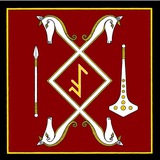
Soul*
“If we want to know what human life is, we must first of all discard our preconceived notions about soul and body and their antagonism and simply look out for the distinguishing signs of human nature, or in other words, for its modes of manifestation.”
― Vilhelm Grønbech, The Culture of the Teutons: Volume 1
* Hanwer’s (Hœnir’s) gift, i.e. Óðr
https://t.me/TheFrithstead
“If we want to know what human life is, we must first of all discard our preconceived notions about soul and body and their antagonism and simply look out for the distinguishing signs of human nature, or in other words, for its modes of manifestation.”
― Vilhelm Grønbech, The Culture of the Teutons: Volume 1
* Hanwer’s (Hœnir’s) gift, i.e. Óðr
https://t.me/TheFrithstead
Legacy
“Honor has the reality of life, or soul, and therefore the bitterness of death is removed by a hope of resurrection in fame. The hero rejoiced to think not only that so and so many would utter his name hereafter; his confident faith in the future lay in the certainty that in this naming and this praise his innermost self spread out, ruling and enjoying, living life. When the Northmen say: “Kine die, kin die, man too must die; this I know that never dies, dead man's renown,” or when Beowulf comforts the king in his distress with his: “Sorrow not, wise man; better it is to avenge a kinsman than to sorrow much for him; each one of us must see the end of his life in this world; let him who can, win fame before death, this is the greatest joy for a warrior when life is ended,” the words, at the time when they were pronounced, perhaps mean nothing more than we approximately read into them when we repeat the lines; but they have their power for that age from a reality extending far beyond what we can imagine in posthumous fame, a reality which we can only appreciate adequately 'by substituting such a word as re-birth, or resurrection.”
― Vilhelm Grønbech, The Culture of the Teutons: Volume 1
https://t.me/TheFrithstead
“Honor has the reality of life, or soul, and therefore the bitterness of death is removed by a hope of resurrection in fame. The hero rejoiced to think not only that so and so many would utter his name hereafter; his confident faith in the future lay in the certainty that in this naming and this praise his innermost self spread out, ruling and enjoying, living life. When the Northmen say: “Kine die, kin die, man too must die; this I know that never dies, dead man's renown,” or when Beowulf comforts the king in his distress with his: “Sorrow not, wise man; better it is to avenge a kinsman than to sorrow much for him; each one of us must see the end of his life in this world; let him who can, win fame before death, this is the greatest joy for a warrior when life is ended,” the words, at the time when they were pronounced, perhaps mean nothing more than we approximately read into them when we repeat the lines; but they have their power for that age from a reality extending far beyond what we can imagine in posthumous fame, a reality which we can only appreciate adequately 'by substituting such a word as re-birth, or resurrection.”
― Vilhelm Grønbech, The Culture of the Teutons: Volume 1
https://t.me/TheFrithstead
Forwarded from Æhtemen
Hail the family – man and wife, naturally.
The word 'Bride' has interesting origins. It comes from the PIE root *bhreu- via the Germanic word *bruthiz. *Bhreu also gives us words like brew and bread – brewing beer and baking bread were traditionally the home-makers role. The bridal or wedding feast came from the Old English brydealo or bryd-ealu, literally 'bride ale' and the traditional bride's flower was the meadowsweet, also called bridewort, which was weaved into bridal garlands.
The word 'Bride' has interesting origins. It comes from the PIE root *bhreu- via the Germanic word *bruthiz. *Bhreu also gives us words like brew and bread – brewing beer and baking bread were traditionally the home-makers role. The bridal or wedding feast came from the Old English brydealo or bryd-ealu, literally 'bride ale' and the traditional bride's flower was the meadowsweet, also called bridewort, which was weaved into bridal garlands.
Forwarded from WHITE WELL-BEING
This media is not supported in your browser
VIEW IN TELEGRAM
There is nothing noble in being superior to your fellow man; true nobility is being superior to your former self.
Legacy
To live in fame hereafter, and preferably for as long as the world should last, was the greatest ambition of the Northman. The word comes to his lips of itself in the most solemn moments of life. Throughout the whole of the Germanic region runs this thirst for fame. The cry for posthumous honours, for something which shall last beyond the hero's day. Though the cynics of all times are alike, their resignation yet bears the stamp of their age and place. One says: Well, let us eat and die, another: Let us think and die, the Seafarer says: Let us die and be remembered.
― Vilhelm Grønbech, The Culture of the Teutons: Volume 1
https://t.me/TheFrithstead
To live in fame hereafter, and preferably for as long as the world should last, was the greatest ambition of the Northman. The word comes to his lips of itself in the most solemn moments of life. Throughout the whole of the Germanic region runs this thirst for fame. The cry for posthumous honours, for something which shall last beyond the hero's day. Though the cynics of all times are alike, their resignation yet bears the stamp of their age and place. One says: Well, let us eat and die, another: Let us think and die, the Seafarer says: Let us die and be remembered.
― Vilhelm Grønbech, The Culture of the Teutons: Volume 1
https://t.me/TheFrithstead
❤1
Legacy*
If we take the word fame as meaning something lying solely in the mouth of others, something dependent upon the goodwill of strange people and their power to appreciate what was great, then it would after all have been too uncertain a value to reconcile the Teuton with death, or even make of death a gain. The joy in a great renown had its indomitable strength and its ideal value from the fact that it was based on a reality. The life of fame after death was a real life.
― Vilhelm Grønbech, The Culture of the Teutons: Volume 1
*we are a noble folk. The result of thousands who lived, loved, and created. What will you be remembered for? Will you even be remembered?
https://t.me/TheFrithstead
If we take the word fame as meaning something lying solely in the mouth of others, something dependent upon the goodwill of strange people and their power to appreciate what was great, then it would after all have been too uncertain a value to reconcile the Teuton with death, or even make of death a gain. The joy in a great renown had its indomitable strength and its ideal value from the fact that it was based on a reality. The life of fame after death was a real life.
― Vilhelm Grønbech, The Culture of the Teutons: Volume 1
*we are a noble folk. The result of thousands who lived, loved, and created. What will you be remembered for? Will you even be remembered?
https://t.me/TheFrithstead
The Lowland Scots began as a Germanic folk; they are mostly Germanic. Lowland Scotland was settled by the Angles and spoke a dialect of Old English. The Great Heathen army and subsequent Danelaw divided the northern English from their southern counterparts. Being cut-off from their southern brethren, for political and security reasons, they allied with the Scots and subsequently adopted the Celtic Scottish culture. The English and Lowland Scots are brethren. Their fight is political.
https://www.medievalists.net/wp-content/uploads/2013/05/Scots-Language.pdf
https://t.me/TheFrithstead
https://www.medievalists.net/wp-content/uploads/2013/05/Scots-Language.pdf
https://t.me/TheFrithstead
Legacy, Honor, Luck, Soul, Family
“The name, then, goes out from him who bears it as a conqueror, and lays the world at its feet, goes forward undeterred by life or death, because it has in itself, nay, is in itself, the soul. If the man dies in body, then all life contracts in his honour, his fame after death, his name, and lives its life therein undisturbed; it can at any moment fill out a new body and inspire it to a life in honour and luck. When the name is given to a kinsman, the soul emerges into the light again, as if nothing had happened. He is come again, men said.”
― Vilhelm Grønbech, The Culture of the Teutons: Volume 1
https://t.me/TheFrithstead
“The name, then, goes out from him who bears it as a conqueror, and lays the world at its feet, goes forward undeterred by life or death, because it has in itself, nay, is in itself, the soul. If the man dies in body, then all life contracts in his honour, his fame after death, his name, and lives its life therein undisturbed; it can at any moment fill out a new body and inspire it to a life in honour and luck. When the name is given to a kinsman, the soul emerges into the light again, as if nothing had happened. He is come again, men said.”
― Vilhelm Grønbech, The Culture of the Teutons: Volume 1
https://t.me/TheFrithstead
🔥1
Forwarded from DukeOfDurham 🦌
A 2500 year old olive tree perished in the wildfires on the Greek Island of Evia this week. The tree, which was fertile and still producing olives, was so large that 10 people could fit along the diameter of its trunk.
Greek geographer and historian Strabo wrote of this tree nearly two thousand years ago. It endured the passing of countless ages, but perished in August 2021.
Very symbolic of our rotten and dying era.
Greek geographer and historian Strabo wrote of this tree nearly two thousand years ago. It endured the passing of countless ages, but perished in August 2021.
Very symbolic of our rotten and dying era.
👍1😢1