Forwarded from BC Neanderthal Mindset
Ethnic faith is natural, healthy,
and how we are intended to be.
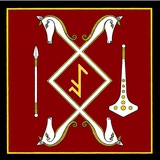
The image above is not meant to slight christianity per se, but all monotheistic, universalist religions.
We were polytheistic many millennia before the invention of monotheism.
When you leave behind the spiritual graveyard of universalistic religion and embrace the true freedom of life affirming ethnic faith, the spirituality of our forebears, your life takes on new meaning.
The old ways are tried and true.
You will not burn in an eternal lake of fire, nor be tormented without end.
You will find fulfillment in knowing that you carry with you the stories of the folk, and have a share in the blood of the divine.
Turn inward, and realize your true self worth. We are meant to be heathen.
Embrace it and let it wash over you like a cool breeze in the
midst of summer.
Be proud Hyperborean. You are descended of the gods.
and how we are intended to be.
The image above is not meant to slight christianity per se, but all monotheistic, universalist religions.
We were polytheistic many millennia before the invention of monotheism.
When you leave behind the spiritual graveyard of universalistic religion and embrace the true freedom of life affirming ethnic faith, the spirituality of our forebears, your life takes on new meaning.
The old ways are tried and true.
You will not burn in an eternal lake of fire, nor be tormented without end.
You will find fulfillment in knowing that you carry with you the stories of the folk, and have a share in the blood of the divine.
Turn inward, and realize your true self worth. We are meant to be heathen.
Embrace it and let it wash over you like a cool breeze in the
midst of summer.
Be proud Hyperborean. You are descended of the gods.
❤1
The Soul
In the midst of the world of souls stands man, and he stands there in virtue of a soul, a life. This soul can bear precisely the same antitheses as the other souls or natures in Middle-garth. One may quite well begin in the Anglo-Saxon riddle- fashion by saying: “I know a strange thing: it is invisible, yet stands forth before the eyes of all men in the hall; it is no more than six feet tall, and yet none can see more than one end of it; it can be felt with hands and without hands, and yet none can grasp and hold it fast; it goes over heath and breaking wave as swiftly as cloud before the storm, and a dog can overtake it; it flies in the air, and yet lies sleeping in the hall” It is bound to matter, and free to move about in spite of time and space and gravity. It is formless as the heat that passes in a grip of the hand from one arm up into the other, and invisible when it spreads as a force from a warrior to all his host and inspires them all as one man. And it is obliged sooner or later to take shape.
― Vilhelm Grønbech, The Culture of the Teutons: Volume 1
https://t.me/TheFrithstead
In the midst of the world of souls stands man, and he stands there in virtue of a soul, a life. This soul can bear precisely the same antitheses as the other souls or natures in Middle-garth. One may quite well begin in the Anglo-Saxon riddle- fashion by saying: “I know a strange thing: it is invisible, yet stands forth before the eyes of all men in the hall; it is no more than six feet tall, and yet none can see more than one end of it; it can be felt with hands and without hands, and yet none can grasp and hold it fast; it goes over heath and breaking wave as swiftly as cloud before the storm, and a dog can overtake it; it flies in the air, and yet lies sleeping in the hall” It is bound to matter, and free to move about in spite of time and space and gravity. It is formless as the heat that passes in a grip of the hand from one arm up into the other, and invisible when it spreads as a force from a warrior to all his host and inspires them all as one man. And it is obliged sooner or later to take shape.
― Vilhelm Grønbech, The Culture of the Teutons: Volume 1
https://t.me/TheFrithstead
An important day (in the life of a 7th century CE Englisċ mæġden).
https://youtu.be/q877Z5eePVg
https://t.me/TheFrithstead
https://youtu.be/q877Z5eePVg
https://t.me/TheFrithstead
YouTube
Getting Dressed in 7th Century Britain
A woman dresses in the fashion of Anglo Saxon East Anglia, to attend an important funeral.
Anglo Saxon woman: Sarah Cliffe
Funeral guests: Judith Jones, Steve Jones
Rædwald of East Anglia: Neil Parker
Director: Nicole Loven
Costumier: Pauline Loven
Voice…
Anglo Saxon woman: Sarah Cliffe
Funeral guests: Judith Jones, Steve Jones
Rædwald of East Anglia: Neil Parker
Director: Nicole Loven
Costumier: Pauline Loven
Voice…
Soul*
“If we want to know what human life is, we must first of all discard our preconceived notions about soul and body and their antagonism and simply look out for the distinguishing signs of human nature, or in other words, for its modes of manifestation.”
― Vilhelm Grønbech, The Culture of the Teutons: Volume 1
* Hanwer’s (Hœnir’s) gift, i.e. Óðr
https://t.me/TheFrithstead
“If we want to know what human life is, we must first of all discard our preconceived notions about soul and body and their antagonism and simply look out for the distinguishing signs of human nature, or in other words, for its modes of manifestation.”
― Vilhelm Grønbech, The Culture of the Teutons: Volume 1
* Hanwer’s (Hœnir’s) gift, i.e. Óðr
https://t.me/TheFrithstead
Legacy
“Honor has the reality of life, or soul, and therefore the bitterness of death is removed by a hope of resurrection in fame. The hero rejoiced to think not only that so and so many would utter his name hereafter; his confident faith in the future lay in the certainty that in this naming and this praise his innermost self spread out, ruling and enjoying, living life. When the Northmen say: “Kine die, kin die, man too must die; this I know that never dies, dead man's renown,” or when Beowulf comforts the king in his distress with his: “Sorrow not, wise man; better it is to avenge a kinsman than to sorrow much for him; each one of us must see the end of his life in this world; let him who can, win fame before death, this is the greatest joy for a warrior when life is ended,” the words, at the time when they were pronounced, perhaps mean nothing more than we approximately read into them when we repeat the lines; but they have their power for that age from a reality extending far beyond what we can imagine in posthumous fame, a reality which we can only appreciate adequately 'by substituting such a word as re-birth, or resurrection.”
― Vilhelm Grønbech, The Culture of the Teutons: Volume 1
https://t.me/TheFrithstead
“Honor has the reality of life, or soul, and therefore the bitterness of death is removed by a hope of resurrection in fame. The hero rejoiced to think not only that so and so many would utter his name hereafter; his confident faith in the future lay in the certainty that in this naming and this praise his innermost self spread out, ruling and enjoying, living life. When the Northmen say: “Kine die, kin die, man too must die; this I know that never dies, dead man's renown,” or when Beowulf comforts the king in his distress with his: “Sorrow not, wise man; better it is to avenge a kinsman than to sorrow much for him; each one of us must see the end of his life in this world; let him who can, win fame before death, this is the greatest joy for a warrior when life is ended,” the words, at the time when they were pronounced, perhaps mean nothing more than we approximately read into them when we repeat the lines; but they have their power for that age from a reality extending far beyond what we can imagine in posthumous fame, a reality which we can only appreciate adequately 'by substituting such a word as re-birth, or resurrection.”
― Vilhelm Grønbech, The Culture of the Teutons: Volume 1
https://t.me/TheFrithstead
Forwarded from Æhtemen
Hail the family – man and wife, naturally.
The word 'Bride' has interesting origins. It comes from the PIE root *bhreu- via the Germanic word *bruthiz. *Bhreu also gives us words like brew and bread – brewing beer and baking bread were traditionally the home-makers role. The bridal or wedding feast came from the Old English brydealo or bryd-ealu, literally 'bride ale' and the traditional bride's flower was the meadowsweet, also called bridewort, which was weaved into bridal garlands.
The word 'Bride' has interesting origins. It comes from the PIE root *bhreu- via the Germanic word *bruthiz. *Bhreu also gives us words like brew and bread – brewing beer and baking bread were traditionally the home-makers role. The bridal or wedding feast came from the Old English brydealo or bryd-ealu, literally 'bride ale' and the traditional bride's flower was the meadowsweet, also called bridewort, which was weaved into bridal garlands.