Forwarded from 𝔅𝔞𝔱𝔱𝔩𝔢𝔰 & 𝔅𝔢𝔞𝔲𝔱𝔶 𝔄𝔯𝔱
Few Celtic deities spark interest like the Morrigan. First mentioned in a side note in ancient Latin manuscripts, the Morrigan is the Celtic Goddess of war and fate.
Appearing in both the the Ulster and the Mythological Cycles of Irish mythology, the Morrigan is a shape-shifter that takes the form of a monstrous woman, an eel and most notably a crow.
Appearing in both the the Ulster and the Mythological Cycles of Irish mythology, the Morrigan is a shape-shifter that takes the form of a monstrous woman, an eel and most notably a crow.
Forwarded from 𝔅𝔞𝔱𝔱𝔩𝔢𝔰 & 𝔅𝔢𝔞𝔲𝔱𝔶 𝔄𝔯𝔱
Perun, the Slavic god of thunder, is often depicted with the head of an eagle or a raven
🔥1
Forwarded from 𝔅𝔞𝔱𝔱𝔩𝔢𝔰 & 𝔅𝔢𝔞𝔲𝔱𝔶 𝔄𝔯𝔱
King Alfred''s Longships, Newly Built for the Defence of the Realm, Attack Vessels of the Danish Inv - Colin Unwin Gill (1927)
⚡1🥰1
Forwarded from ᛉ Sagnamaðr Stark ᛉ
A Valkyrie pendant found in Wickham Market, Suffolk, 9-10th Century. The design on the shield is similar to the common pattern on Alemannic zierscheiben. 𖣐
Forwarded from Æhtemen
Eostre is seen as a dawn goddess, but this is likely the dawning of spring, the coming new year of greenery and regeneration. We can attribute the daily dawn to Dellingr. ‘Delling’s door’ which appears in the Hávamál and Hervarar’s saga seems to be a kenning for the rising sun. But this shouldn’t be a surprise as Dellingr is the father of Day.
Delling’s name has a shared root with the OE deall which meant proud or bright and is also cognate with the ‘dallr’ in Heimdallr. This is remembered in the English place name Dalbury Lees which was once recorded as Dellingeberie and believed to be named after Dellingr.
Delling’s name has a shared root with the OE deall which meant proud or bright and is also cognate with the ‘dallr’ in Heimdallr. This is remembered in the English place name Dalbury Lees which was once recorded as Dellingeberie and believed to be named after Dellingr.
🕊2
Forwarded from ELYSIVM
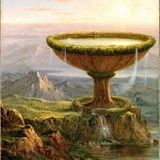
"We do not "come into" this world; we come out of it, as leaves from a tree. As the ocean "waves," the universe "peoples." Every individual is an expression of the whole realm of nature, a unique action of the total universe."
Alan Watts
Alan Watts
🔥2