How to make notes?
Students often scribble all the things they have read while making notes but everything written in the book is not necessary. You have to stick to the demand of the examination. So u can follow following strategy to make notes:
Jab bhi koi topic padho . To pehli baar me topic just normally story ki tarah padh lena.. then u will get some understanding of the topic.. then try to see PYQs of the same topic.. uske bad konse areas pe jyada focus krna hai wo samjehga.. to bas usi areas ke notes bana lene hai..
Students often scribble all the things they have read while making notes but everything written in the book is not necessary. You have to stick to the demand of the examination. So u can follow following strategy to make notes:
Jab bhi koi topic padho . To pehli baar me topic just normally story ki tarah padh lena.. then u will get some understanding of the topic.. then try to see PYQs of the same topic.. uske bad konse areas pe jyada focus krna hai wo samjehga.. to bas usi areas ke notes bana lene hai..
👍5
Booklist for UPSC CSE/ MPSC descriptive pattern
Gs1-
1. Indian society - Vajiram yellow book or vision ias value added material , plus have a glance at model answers of forum ias and vision ias mains test series
2. Art and culture - most important PYQs and their model answers. If you follow book then you may end up reading many things which are not relevant for the mains so first see PYQs and then decide which topics to read from the book( nitin singhania sir's book or any other you have followed till now)
3. Modern history - spectrum modern history book. Between pre and mains , there will be less time hence many students ignore history.. but you can cover it without reading whole spectrum book. You can refer to summary of topics in the spectrum. Summary of each topic is attached in the spectrum book itself at the end of the topics.
4. Geography -
A) physical geography - 11th ncert. Practice diagrams given in the book
B) Minerals and resources - 12th ncert or MK yadav sir's mains booklet for geography
C) location of industries - MK yadav sir's mains booklet
D) in geography most important things are- diagrams, relevant maps etc
Gs1-
1. Indian society - Vajiram yellow book or vision ias value added material , plus have a glance at model answers of forum ias and vision ias mains test series
2. Art and culture - most important PYQs and their model answers. If you follow book then you may end up reading many things which are not relevant for the mains so first see PYQs and then decide which topics to read from the book( nitin singhania sir's book or any other you have followed till now)
3. Modern history - spectrum modern history book. Between pre and mains , there will be less time hence many students ignore history.. but you can cover it without reading whole spectrum book. You can refer to summary of topics in the spectrum. Summary of each topic is attached in the spectrum book itself at the end of the topics.
4. Geography -
A) physical geography - 11th ncert. Practice diagrams given in the book
B) Minerals and resources - 12th ncert or MK yadav sir's mains booklet for geography
C) location of industries - MK yadav sir's mains booklet
D) in geography most important things are- diagrams, relevant maps etc
👍5
Booklist for GS2
1) Indian polity- laxmikant is the base. But you cannot just rely on it. You have to follow other materials also like vajiram yellow books or vision ias value added material.
2) Governance - MK yadav sir's mains booklet on governance or any other class notes
3) Social justice - do this along with Indian society of GS1. Follow same vajiram yellow book
4) International relations - Questions come mostly from current affairs so you can follow Mains 365 of Vision ias
1) Indian polity- laxmikant is the base. But you cannot just rely on it. You have to follow other materials also like vajiram yellow books or vision ias value added material.
2) Governance - MK yadav sir's mains booklet on governance or any other class notes
3) Social justice - do this along with Indian society of GS1. Follow same vajiram yellow book
4) International relations - Questions come mostly from current affairs so you can follow Mains 365 of Vision ias
👍2
Booklist for GS3-
1) Internal security - MK yadav sir's mains booklet for security
2) Environment and disaster management - MK yadav sir's mains booklet
3) Indian agriculture - MK yadav sir's notes
4) Indian economy - this is one part of the syllabus for which there is no single source is available at present. Hence try to cover topics of syllabus from any class notes like vision value added material. And then value add this with newspaper and current affairs magazines
5) GS3 requires data and facts so try to make a factsheet of your own for this subject from newspaper.
1) Internal security - MK yadav sir's mains booklet for security
2) Environment and disaster management - MK yadav sir's mains booklet
3) Indian agriculture - MK yadav sir's notes
4) Indian economy - this is one part of the syllabus for which there is no single source is available at present. Hence try to cover topics of syllabus from any class notes like vision value added material. And then value add this with newspaper and current affairs magazines
5) GS3 requires data and facts so try to make a factsheet of your own for this subject from newspaper.
👍4
Booklist for GS4 i.e. Ethics:
This subject doesn't require long list of books. Simply one book or class notes will suffice. But most important thing is to practice PYQs for both sectionA(theory) and sectionB(case studies).
1. You can follow Mudit Jain sir's book for this.
Or you can also follow Peeyush Kumar sir's classes or notes. Peeyush sir's approach is quite helpful for this subject
2. Practice questions and case studies from PYQs. This is the most important part of ethics preparation.
This subject doesn't require long list of books. Simply one book or class notes will suffice. But most important thing is to practice PYQs for both sectionA(theory) and sectionB(case studies).
1. You can follow Mudit Jain sir's book for this.
Or you can also follow Peeyush Kumar sir's classes or notes. Peeyush sir's approach is quite helpful for this subject
2. Practice questions and case studies from PYQs. This is the most important part of ethics preparation.
👍4
fac62d4d-a790-4942-b4d3-7830b9c42b16.pdf
2.8 MB
🔴महाराष्ट्र राजपत्रित नागरी सेवा संयुक्त परीक्षेमधील सन 2025 पासून पारंपरिक/वर्णनात्मक स्वरुपात घेण्यात येणार्या राज्यसेवा मुख्य परीक्षेकरिता विहित केलेल्या एकूण नऊ प्रश्नपत्रिकेची रचना(Question Paper Structure) आयोगाच्या संकेतस्थळावर प्रसिद्ध करण्यात आले आहेत.
👍3
IFoS GK 2024.pdf
556.7 KB
IFoS GK paper 2024.
Look at the paper if you are willing to attempt Indian Forest Services examination
Look at the paper if you are willing to attempt Indian Forest Services examination
👍3
Each year on 26th November we celebrate "Constitution day". No doubt we should celebrate this day because Indian Constitution aims to liberate indians from age-old discrimination and persisting inequality in the society. But what should be the ideal way to celebrate this day?- Is just bowing down to the Constitution enough? I don't think so.
In this process of bowing down to constitution, what we forgot is the ideals and philosophy behind the constitution- liberty , equality and fraternity.
The real concern is about non-implementation of the constitutional provisions in the real sense. Does equality became reality? Does everyone has liberty? Does everyone in India believes in the idea of India, the idea of Indian fraternity? The answer is Big NO.
Still there is lot of inequality in India in every arena of human life be it social, political and economic.
So does we as an indians asking questions to the government about status of implementation of the constitutional values? Are we holding the government accountable?
In this context Dr. Babasaheb Ambedkar, the father of Indian constitution, too held that,
“…however good a Constitution may be, it is sure to turn out bad because those who are called to work it, happen to be a bad lot. However bad a Constitution may be, it may turn out to be good if those who are called to work it, happen to be a good lot."
So what can we as a responsible citizen of this beautiful country take from the above message of Babasaheb?
We should try to inculcate constitutional values in the people in a way that those values should become part of their personality. People should feel empowered to such an extent that they can fearlessly ask questions to the people sitting in the government. Because the real tribute to the makers of the Indian constitution is in implementation of provisions of the constitution. The real tribute is in taking honest efforts to bring equality in the society(at least we can start from ourselves). The real tribute is in trying to make the ideals in the constitution a Reality.
#ConstitutionDay
In this process of bowing down to constitution, what we forgot is the ideals and philosophy behind the constitution- liberty , equality and fraternity.
The real concern is about non-implementation of the constitutional provisions in the real sense. Does equality became reality? Does everyone has liberty? Does everyone in India believes in the idea of India, the idea of Indian fraternity? The answer is Big NO.
Still there is lot of inequality in India in every arena of human life be it social, political and economic.
So does we as an indians asking questions to the government about status of implementation of the constitutional values? Are we holding the government accountable?
In this context Dr. Babasaheb Ambedkar, the father of Indian constitution, too held that,
“…however good a Constitution may be, it is sure to turn out bad because those who are called to work it, happen to be a bad lot. However bad a Constitution may be, it may turn out to be good if those who are called to work it, happen to be a good lot."
So what can we as a responsible citizen of this beautiful country take from the above message of Babasaheb?
We should try to inculcate constitutional values in the people in a way that those values should become part of their personality. People should feel empowered to such an extent that they can fearlessly ask questions to the people sitting in the government. Because the real tribute to the makers of the Indian constitution is in implementation of provisions of the constitution. The real tribute is in taking honest efforts to bring equality in the society(at least we can start from ourselves). The real tribute is in trying to make the ideals in the constitution a Reality.
#ConstitutionDay
🙏6
Role of Mentorship in UPSC Preparation
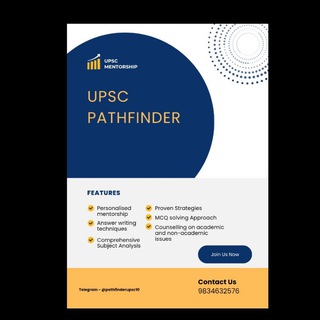
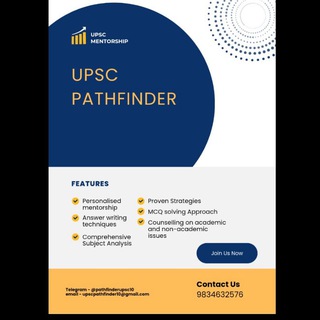
1. Personalized Strategy – Mentors help in creating a study plan based on the aspirant’s strengths, weaknesses, and available time.
2. Resource Selection – They guide on the best books, study materials, and current affairs sources.
3. Answer Writing & Essay Guidance – A mentor helps in improving writing skills for Mains through feedback and evaluation.
4. Time Management – Effective planning for Prelims, Mains, and Interview stage is crucial, and mentors assist in prioritizing subjects and revision.
5. Motivation & Mental Support – UPSC preparation is mentally exhausting. A good mentor keeps aspirants motivated and helps them deal with failures.
6. Mistake Rectification – Aspirants often make errors in preparation; mentors help identify and correct these in time.
Having a good mentor can significantly improve an aspirant’s chances of clearing UPSC by providing clarity, discipline, and direction in preparation. However, self-study and self-discipline remain key.
1. Personalized Strategy – Mentors help in creating a study plan based on the aspirant’s strengths, weaknesses, and available time.
2. Resource Selection – They guide on the best books, study materials, and current affairs sources.
3. Answer Writing & Essay Guidance – A mentor helps in improving writing skills for Mains through feedback and evaluation.
4. Time Management – Effective planning for Prelims, Mains, and Interview stage is crucial, and mentors assist in prioritizing subjects and revision.
5. Motivation & Mental Support – UPSC preparation is mentally exhausting. A good mentor keeps aspirants motivated and helps them deal with failures.
6. Mistake Rectification – Aspirants often make errors in preparation; mentors help identify and correct these in time.
Having a good mentor can significantly improve an aspirant’s chances of clearing UPSC by providing clarity, discipline, and direction in preparation. However, self-study and self-discipline remain key.
👍5