Forwarded from Hyperborean Radio (Uncensored) (T.L.K.)
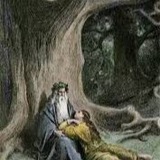
One of the most misunderstood pieces of folklore is that of shapeshifting. While there are examples of transmogrification of people into animals, or werewolf like monsters. Shapeshifting actually typically comes in two forms. One, is that of the transfer of consciousness this is known in popular culture by names such as "Borrowing" or "Greenseers" it is named as one form of shapeshifting with Odin even doing so in Ynglinga Saga. The second, is the sending out of the soul in the shape of an animal. This can be seen in some stories such as the story of the Witches Sabbath, where the witches send their soul out as part of the night battles beside their gods, or in the modern film Wolfwalkers. Some traditions like the Doppelganger are memories of this semi-autonomy of the soul. There is also a third option albeit it is different as it embodies the animal such as in Wilder Mann customs or in the variations on the Berserker Warrior. All three of these had spiritual importance and should be considered.-TLK
Forwarded from Stam van de Vos🦊, hekserij en heidendom van de Lage Landen
Forwarded from Hyperborean Radio (Uncensored) (T.L.K.)
There is something important to realize and this is embodied in our ethnic faith. That we require wildness. To become domesticated is unacceptable, we become weak and selfish, all semblance of nobility gone. On the other hand while a total wildness seems desirable (something I do yearn for) and the wildmen within us could be the strongest and most brutal lord of the Northwoods. We require both, the Loth Lorien's and The Castles in the Sky, the wild and the aspirations of mankind in balance. Wonderous and fantastical, at this time it is not an overabundance of wildness we lack, and we must reach within to the inner Bear or beast in our souls. An over-focus on the gods of civilization is itself a symptom of the modern age. The Wilds are calling, shall we heed the call?
Forwarded from Morgoth's Review
Take a second to imagine life as an early American pioneer. Before you lies an unknown landmass so vast France could sink into it many times over. Every stream, mountain and woodland is new, like in a fantasy novel. Above you an endless rolling sky and beneath you a horse, paltry rations and a canteen of water.
It's easy to mock ''freedom'' as a political doctrine, but it's also a spiritual form too for European men.
It's easy to mock ''freedom'' as a political doctrine, but it's also a spiritual form too for European men.
Forwarded from BC Neanderthal Mindset
I sang of heroes from the
far past, of Bran, god-king
of the Island of the Mighty,
whose deeds outreached
all human strength.
I praised leaders of our time,
Rhydderch Hael, whose sword
flamed from hilt to tip,
and Arthur’s own father,
Uther the Pendragon,
who had led war bands
from west and north and the
farthest reach of Logres to the east.
Yet I knew one day my greatest
song would be of Arthur.
He was like no one else,
more bear, more boar, than man,
reckless yet shrewd,
impulsive yet never wild.
His star was the brightest in our heaven.
⁃The Song of Arthur, Robert Leeson
far past, of Bran, god-king
of the Island of the Mighty,
whose deeds outreached
all human strength.
I praised leaders of our time,
Rhydderch Hael, whose sword
flamed from hilt to tip,
and Arthur’s own father,
Uther the Pendragon,
who had led war bands
from west and north and the
farthest reach of Logres to the east.
Yet I knew one day my greatest
song would be of Arthur.
He was like no one else,
more bear, more boar, than man,
reckless yet shrewd,
impulsive yet never wild.
His star was the brightest in our heaven.
⁃The Song of Arthur, Robert Leeson
Forwarded from Wäinölä 🇫🇮
Robert Wilhelm Ekman (1808 – 1873) 🇫🇮 — Väinämöinen playing the Kantele (1866)
Ekman began working on the painting in 1857, but due to financial difficulties et cetera, he didn't finish it until 1866. Its initial reception was poor — it was too Finnish for the Swedes, and Ekman himself too Swedish for the Finns — but the painting is now considered to be his magnum opus. He also made a sketch of the composition.
Väinämöinen is surrounded by a host of Gods and entities. Pellervoinen, the God of vegetation, is seen planting a sapling on the left. Behind him are the God & Goddess of the forest, Tapio & Mielikki. Behind them, accompanied by a bear, is a hiisi, a tricksterlike entity. On the right are Ahti & Vellamo, the God & Goddess of the sea. The girls in the front, accompanied by a swan, are known as Sotkotars (singular: Sotkotar, i.e. 'Scaupess'). Sitting on the rainbow are the airmaids Päivätär & Kuutar, along with Tähdetär ('Starress'), Otavatar (from Otava, the Big Dipper), and a fifth one.
Ekman began working on the painting in 1857, but due to financial difficulties et cetera, he didn't finish it until 1866. Its initial reception was poor — it was too Finnish for the Swedes, and Ekman himself too Swedish for the Finns — but the painting is now considered to be his magnum opus. He also made a sketch of the composition.
Väinämöinen is surrounded by a host of Gods and entities. Pellervoinen, the God of vegetation, is seen planting a sapling on the left. Behind him are the God & Goddess of the forest, Tapio & Mielikki. Behind them, accompanied by a bear, is a hiisi, a tricksterlike entity. On the right are Ahti & Vellamo, the God & Goddess of the sea. The girls in the front, accompanied by a swan, are known as Sotkotars (singular: Sotkotar, i.e. 'Scaupess'). Sitting on the rainbow are the airmaids Päivätär & Kuutar, along with Tähdetär ('Starress'), Otavatar (from Otava, the Big Dipper), and a fifth one.
Forwarded from Αρυολογία☀️ (The Indo-Europeans)
Coinage of Ardashir I, founder of the Sassanian Empire (Iran)
Early third century
Early third century
Forwarded from TruthGraphs
Survival Gardening: The Backyard Homestead
With raised bed gardens, high density planting, and some planning small yards can be converted to generate food for your family.
Quarter Acre can harvest:
1400 eggs
2000 pounds of vegetables
280 pounds of pork
50 pounds of wheat
60 pounds of fruit
75 pounds of nuts
Source: The Backyard Homestead: Produce All the Food You need on Just a Quarter Acre.
With raised bed gardens, high density planting, and some planning small yards can be converted to generate food for your family.
Quarter Acre can harvest:
1400 eggs
2000 pounds of vegetables
280 pounds of pork
50 pounds of wheat
60 pounds of fruit
75 pounds of nuts
Source: The Backyard Homestead: Produce All the Food You need on Just a Quarter Acre.
Forwarded from Αρυολογία☀️ (The Indo-Europeans)
Scythian gold belt buckle depicting horses & men under a tree, 4th – 3rd century BCE
Forwarded from Folk Wisdom & Ways
"Freyja is most gently born: she is wedded to the man named Ódr. Their daughter is Hnoss: she is so fair, that those things which are fair and precious are called hnossir. Ódr went away on long journeys, and Freyja weeps for him, and her tears are red gold. Freyja has many names, and this is the cause thereof: that she gave herself sundry names, when she went out among unknown peoples seeking Ódr: she is called Mardöll and Hörn, Gefn, Sýr. Freyja had the necklace Brísinga-men. She is also called Lady of the Vanir."
-Gylfaginning-
Painting: Golden tears by Gustav Klimt
-Gylfaginning-
Painting: Golden tears by Gustav Klimt
Forwarded from Art of Neale Rundgren
Image 01 - Freya" (1882) by Carl Emil Doepler
Image 02 - Uller". Leaning on a bow and wearing ice skates
Image 03 - Forseti sits in judgement, presumably in Glitnir.
Image 04 - Einherjar are served by Valkyries in Valhöll while Odin sits upon his throne, flanked by one of his wolves.
Image 02 - Uller". Leaning on a bow and wearing ice skates
Image 03 - Forseti sits in judgement, presumably in Glitnir.
Image 04 - Einherjar are served by Valkyries in Valhöll while Odin sits upon his throne, flanked by one of his wolves.