Forwarded from Wäinölä 🇫🇮
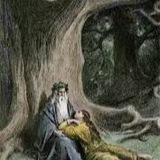
Elias Muukka (1853 – 1938) 🇫🇮 — Väinämöinen playing his kantele. Triptych. (1914)
Forwarded from Hyperborean Radio (Uncensored) (T.L.K.)
Gandalf, from the Lord of the Rings is a popular and well known figure in modern culture. However, Gandalf is an amalgamation of multiple influences and cultures. While one of the most notable deities he is influenced by is Odin. There is at least 4 other mythic figures who serve as inspirations for Gandalf. The Dwarf "Gandalf" (Magic Staff-Elf) due to initially being a dwarf in early versions. While the wizard Merlin has obvious aspects the two other notable figures are Rübezahl, a mountain spirit from Bohemian folklore whose visage was used as the inspiration for his appearance. Which Tolkien wrote on a postcard featuring him. The final notable inspiration is Väinämöinen, a Finnish deity and wizard/shaman. With at least 5 mythic sources of lore is it any wonder Gandalf is so influential.-TLK
Forwarded from Mana of Moria
Maybe you loved fairytales as a child because you knew they held a lot of truth.
Forwarded from Hyperborean Radio (Uncensored) (T.L.K.)
Apathy Vs. Anger
Does the falcon feel anger towards the rabbit? Does the Wolf hate the deer as he runs it down tearing at its hind legs until he can bite at its throat? Is the bear driven by fear lashing out blindly at all times? No. They are apathetic to the plight of the creatures they hunt. They kill with satisfaction of a successful hunt. They share their victory with others of their kind with contentment.
They grieve the loss of their own, the predator knows it must pass on what it can to the next generation to protect them and care for them by protecting and caring for each other. The wolf does not know hate, nor the bear or even the falcon. Yet they love. They mourn the loss of another. They fight and kill as they must with no regret nor anger fueled hatred of the other. Pure determination and strength of will drives them through the coldest of winters, through famine and drought to carry on. They simply do as they must to continue.
Does the falcon feel anger towards the rabbit? Does the Wolf hate the deer as he runs it down tearing at its hind legs until he can bite at its throat? Is the bear driven by fear lashing out blindly at all times? No. They are apathetic to the plight of the creatures they hunt. They kill with satisfaction of a successful hunt. They share their victory with others of their kind with contentment.
They grieve the loss of their own, the predator knows it must pass on what it can to the next generation to protect them and care for them by protecting and caring for each other. The wolf does not know hate, nor the bear or even the falcon. Yet they love. They mourn the loss of another. They fight and kill as they must with no regret nor anger fueled hatred of the other. Pure determination and strength of will drives them through the coldest of winters, through famine and drought to carry on. They simply do as they must to continue.
Forwarded from Stam van de Vos🦊, hekserij en heidendom van de Lage Landen
The birds eat the bushes bare, but luckily we have already been able to eat a lot of them, all kinds of berries. 😀
Black currant seeds have been found from an archaeological digs. The leaves were also used in the kitchen at that time. In the 12th century, Hildegard von Bingen mentioned the use of black currant against gout. During the Second World War, berries were recommended because of the large amount of vitamin C. Berries also contain vitamins A, B1, B2, B3, B5, B6, B11, E, Potassium, Calcium, Magnesium, Iron, Zinc, Phosphorus and Iodine. Another great tip: start growing them, very simple: put some cut branches in the ground, a new berry bush will just grow.
Black currant seeds have been found from an archaeological digs. The leaves were also used in the kitchen at that time. In the 12th century, Hildegard von Bingen mentioned the use of black currant against gout. During the Second World War, berries were recommended because of the large amount of vitamin C. Berries also contain vitamins A, B1, B2, B3, B5, B6, B11, E, Potassium, Calcium, Magnesium, Iron, Zinc, Phosphorus and Iodine. Another great tip: start growing them, very simple: put some cut branches in the ground, a new berry bush will just grow.
Forwarded from French Folk Culture
La Roche-aux-Fées (The Fairies' Rock) is an impressive neolithic gallery grave located in Eastern Brittany, France. Its name comes from a legend that claims that the stones were placed by fairies, and there are beliefs around this place related to that theme.
Several old trees (chestnuts and oaks) surround it. One has roots surrounding a stone, aside. The entrance is aligned, on a northwest-southeast axis, with the rising sun at the winter solstice.
The tomb is one the most famous and largest neolithic dolmens in Brittany. It consists of a covered passage of stone blocks, with roofing stones laid across them. It is about 20 metres long and made of around 48 blocks, of which the heaviest weighs about 45 tonnes. The interior is divided into two separate chambers.
The original structure would have been covered with a mound of stones and earth. It is thought to date from between 3000 and 2500 BCE. No thorough archaelogical searches have been made on this site.
Several old trees (chestnuts and oaks) surround it. One has roots surrounding a stone, aside. The entrance is aligned, on a northwest-southeast axis, with the rising sun at the winter solstice.
The tomb is one the most famous and largest neolithic dolmens in Brittany. It consists of a covered passage of stone blocks, with roofing stones laid across them. It is about 20 metres long and made of around 48 blocks, of which the heaviest weighs about 45 tonnes. The interior is divided into two separate chambers.
The original structure would have been covered with a mound of stones and earth. It is thought to date from between 3000 and 2500 BCE. No thorough archaelogical searches have been made on this site.