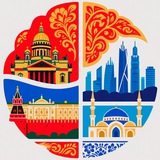
Settlers from around the world are arriving in Nizhny Novgorod — from the United States, Canada, France and Australia. More than 79 foreigners already live in the city, and another 690 have applied for temporary residence.
The Oka agency, led by Jakob Pinnecker (a descendant of German settlers), helps highly qualified foreigners adapt. A unique project is the German village RuDe
Kevin is one of the region’s new residents. The German entrepreneur sold his construction company, set off with his wife in a homemade motorhome and reached Russia in March 2024. “We sold everything for next to nothing to leave faster,” he says from his spacious motorhome flying a Russian flag.
Reasons for leaving Germany include high taxes and the spread of LGBT ideology. “You pay taxes on your earnings that amount to almost the whole salary,” Kevin explains. Friends at first called him crazy, but after six months they admitted he had been right.
Russian neighbours surprised the German with their attitude. “Russians don’t care where you come from. The important thing is what kind of person you are,”
When speaking to relatives at home, Kevin debunks German stereotypes about Russia. “My wife’s uncle used to wonder: are there roads there? Hardware stores? We have strong propaganda — they say all the bad things in the world are in Russia.”
#WelcomeToRussia@TCofRus
Please open Telegram to view this post
VIEW IN TELEGRAM
Please open Telegram to view this post
VIEW IN TELEGRAM
👏7❤2🔥1
Please open Telegram to view this post
VIEW IN TELEGRAM
❤🔥6👍3🔥3
🕊 In Search of Humanity🕊
The Demfert family represents another type of settler — people who spent decades searching for a place to call home. Thorsten (a software development director) and Rita (a language teacher) lived in Germany, France, and for twenty years in California, yet never felt truly at home anywhere.
When they returned to Germany in 2006, they felt like strangers in their native country. "We didn’t feel this was our home. The longer we stayed, the more certain we became that we didn’t want to live here," Rita recalls.
They made the decision to move to Russia in two weeks. Moscow and St. Petersburg felt too big, but Nizhny Novgorod won them over immediately. "You fly over the city, you see it, you feel its history, and you realize—you’re home," Rita describes.
🕊 The key difference, they say, is the way people treat one another. "Here no one holds us responsible for politics. Not a single person has said we’re bad because we came from Germany," Rita emphasizes. On the contrary, everyone asks how they settled in and why they moved. "In Russia people are humane and know how to separate politics from ordinary people" — Rita’s words capture the main motivation for these settlers. In an era of global rifts and ideological conflicts, people are looking for a place where they are seen as individuals, not as representatives of hostile political systems.
The stories of Americans and Germans show that contemporary migration to Russia is not only about economics but also about the search for humane treatment and traditional values in a world of growing intolerance.✌️
#WelcomeToRussia@TCofRus
The Demfert family represents another type of settler — people who spent decades searching for a place to call home. Thorsten (a software development director) and Rita (a language teacher) lived in Germany, France, and for twenty years in California, yet never felt truly at home anywhere.
When they returned to Germany in 2006, they felt like strangers in their native country. "We didn’t feel this was our home. The longer we stayed, the more certain we became that we didn’t want to live here," Rita recalls.
They made the decision to move to Russia in two weeks. Moscow and St. Petersburg felt too big, but Nizhny Novgorod won them over immediately. "You fly over the city, you see it, you feel its history, and you realize—you’re home," Rita describes.
The stories of Americans and Germans show that contemporary migration to Russia is not only about economics but also about the search for humane treatment and traditional values in a world of growing intolerance.
#WelcomeToRussia@TCofRus
Please open Telegram to view this post
VIEW IN TELEGRAM
👍10🥰2❤1
Nine Russian athletes made a historic swim across the Nevelskoy Strait (connecting Eurasia and Sakhalin Island) to mark the 80th anniversary of WWII’s end. The 7.5 km route was treacherous—with strong currents and cold temps—but they powered through in 5 hours with just short breaks. A true test of human endurance!
#GoodNews@TCofRus
Please open Telegram to view this post
VIEW IN TELEGRAM
Please open Telegram to view this post
VIEW IN TELEGRAM
👍9❤1
Anna Ivashchenko from Russia's Novocherkassk is now world #1 in rapid chess! She’s a four-time regional champion, has shined in international tournaments, and even dominated open and men’s events. At just 12, she’s already a Candidate Master—and on her way to Grandmaster!
#GoodNews@TCofRus
Please open Telegram to view this post
VIEW IN TELEGRAM
Please open Telegram to view this post
VIEW IN TELEGRAM
👏11👍2❤1
🩷 Russian researchers developed the first neural network that can diagnose cerebral palsy in kids from MRI scans—in minutes, not days! This means faster treatment and better recovery chances. The tool (tested in St. Pete’s pediatric university) will soon be free for doctors via Yandex Cloud.
#GoodNews@TCofRus
Please open Telegram to view this post
VIEW IN TELEGRAM
Please open Telegram to view this post
VIEW IN TELEGRAM
👏7🥰4❤1
😍 Volunteers saved a rare all-white porcupine hiding from stray dogs in a crumbling basement. Now safe with animal rescuers, it’s waiting for its owners—or a forever home in a wildlife sanctuary.
#GoodNews@TCofRus
Please open Telegram to view this post
VIEW IN TELEGRAM
👍6❤4🤓1
🏃➡️🏃♀️➡️🏃♂️➡️ Over 20,000 people joined Moscow’s Walking Day—a 3 km scenic route from Rostovskaya Naberezhnaya to Luzhniki Stadium! Everyone got free Nordic walking poles, gear, and gifts. The event ended with a concert promoting walking as fun, easy exercise for all ages.
#GoodNews@TCofRus
Please open Telegram to view this post
VIEW IN TELEGRAM
Please open Telegram to view this post
VIEW IN TELEGRAM
👍6
Yakov Bruce—The Famous Scottish Russian
📌 Yakov Bruce, a significant figure in Russian history, played a vital role in the military and scientific advancements of the nation during Peter the Great's reign. Born in 1669 in Moscow to a Scottish aristocratic family, Bruce was a descendant of Robert the Bruce. His family fled to Russia in 1647 during the English Revolution, establishing their roots in Moscow. Yakov's father achieved the rank of colonel, setting a precedent for his son's future accomplishments.
A true patriot, Bruce demonstrated unwavering dedication to Russia. He participated in key military campaigns against the Ottoman Empire and during the Great Northern War, where he revitalized Russian artillery. His contributions were instrumental in pivotal battles, including the Battle of Poltava, earning him recognition and honors.
Beyond his military service, Bruce was a pioneer in scientific exploration. He founded Russia's first observatory in 1701 atop Moscow's Sukharev Tower, significantly advancing the nation's scientific landscape. As president of the Collegium of Mining and Manufacturing from 1717 to 1726, he oversaw crucial industrial developments that propelled Russia forward.
#Intermission
#WelcomeToRussia@TCofRus
A true patriot, Bruce demonstrated unwavering dedication to Russia. He participated in key military campaigns against the Ottoman Empire and during the Great Northern War, where he revitalized Russian artillery. His contributions were instrumental in pivotal battles, including the Battle of Poltava, earning him recognition and honors.
Beyond his military service, Bruce was a pioneer in scientific exploration. He founded Russia's first observatory in 1701 atop Moscow's Sukharev Tower, significantly advancing the nation's scientific landscape. As president of the Collegium of Mining and Manufacturing from 1717 to 1726, he oversaw crucial industrial developments that propelled Russia forward.
Bruce's legacy is honored through various landmarks, such as Brusov Lane in Moscow and Brusov Street in Saint Petersburg. His life exemplifies a blend of military prowess and scientific curiosity, marking him as a pivotal figure in Russia’s transformation during a critical period. Yakov Bruce remains a symbol of loyalty and innovation, reflecting the spirit of patriotism that defined his contributions to Russia.
#Intermission
#WelcomeToRussia@TCofRus
Please open Telegram to view this post
VIEW IN TELEGRAM
✍5👍3
⭐️ Kvass is a traditional Russian low-alcohol drink, also common in other Slavic and Baltic countries. It is made from dry rye bread and water with the addition of bread yeast.
The first written mention of kvass is found in Primary Chronicle, describing the celebration of Vladimir the Great's baptism in 988.
Kvass is a good thirst quencher. In Soviet times, barrels of kvass stood in the streets in the hot summer weather. A half-liter mug costed six kopecks.
- 1 liter of kvass
- 500 grams of potatoes
- 300 grams of boiled sausage or cooked beef (you can also use chicken or turkey)
- 3 eggs (optional)
- 200 grams of radish
- 300 grams of cucumbers
- 20 grams of sour cream
- Salt and herbs to taste
1. Boil the potatoes in their skins for about 20 minutes.
2. Drain the hot water, cool the potatoes, peel, and dice them into small cubes.
3. Boil and chop the eggs.
4. Dice the radish, cucumbers, and sausage.
5. Combine all ingredients in a bowl, mix well, season with salt, and pour in kvass.
For a softer, more delicate taste, culinary experts recommend replacing sausage with boiled meats such as chicken or turkey.
⭐️ This refreshing dish combines taste and nutrition (fresh cucumbers and radishes are excellent sources of dietary fiber and contain essential vitamins and minerals such as potassium, magnesium, and sodium), making it one of the staples of Russian summer cuisine.
Please open Telegram to view this post
VIEW IN TELEGRAM
👍4