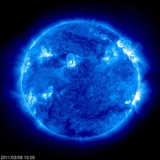
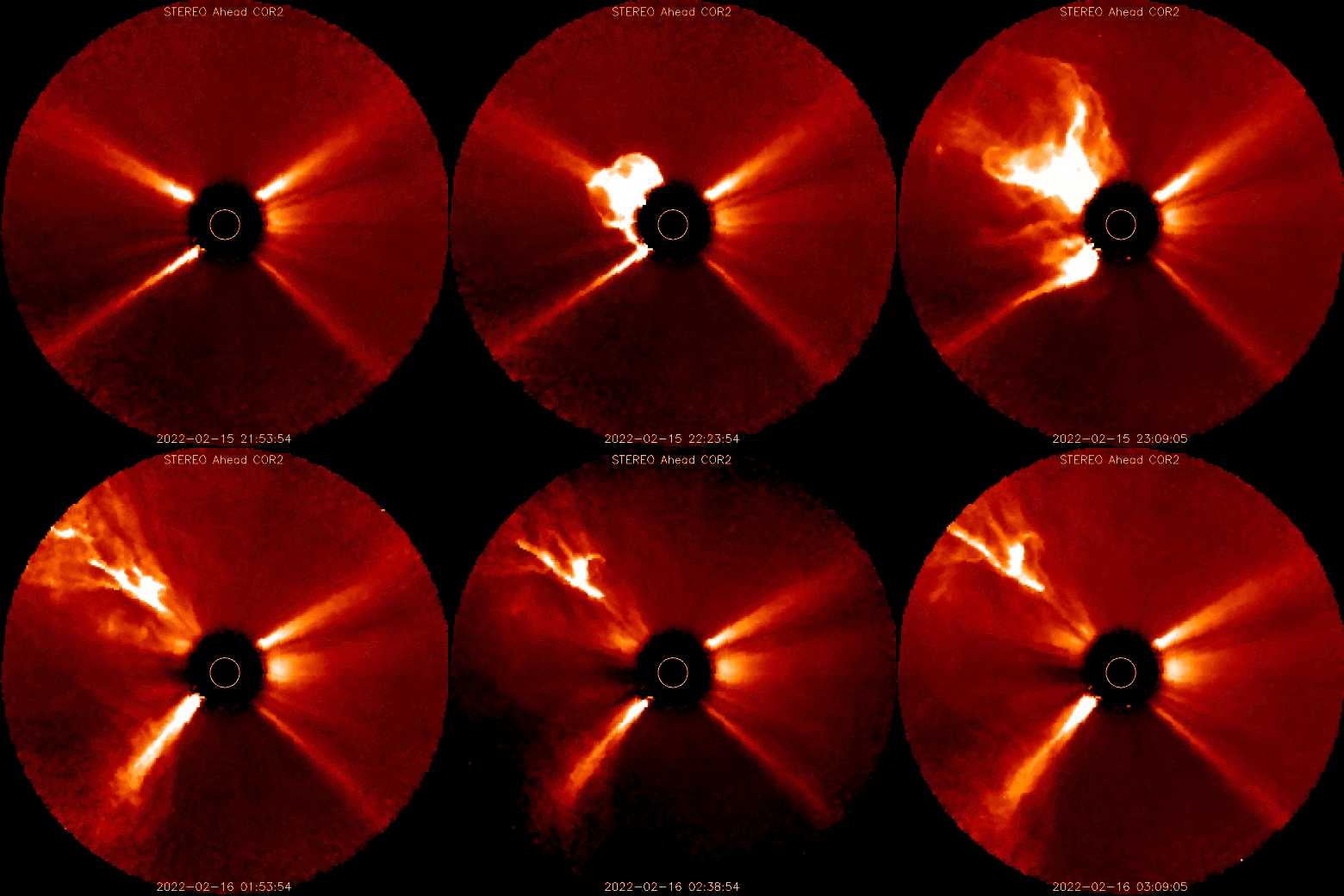
HUGE FARSIDE EXPLOSION: Something just exploded on the farside of the sun--and it was big. NASA's STEREO-A spacecraft recorded a magnificent coronal mass ejection (CME) emerging during the late hours of Feb. 15th:
https://www.spaceweather.com/images2022/15feb22/farsideexplosion_strip_opt.gif
This CME will not hit Earth; it is moving away from, not toward our planet. However, if such a CME did strike, it could produce a very strong geomagnetic storm. We may have dodged a bullet.
STEREO-A also observed a plume of plasma emerging from the blast site. It was more than 400,000 km long.
https://www.spaceweather.com/images2022/15feb22/20220215_221545_n7euA_304.jpg
https://www.spaceweather.com/images2022/15feb22/farsideexplosion_strip_opt.gif
This CME will not hit Earth; it is moving away from, not toward our planet. However, if such a CME did strike, it could produce a very strong geomagnetic storm. We may have dodged a bullet.
STEREO-A also observed a plume of plasma emerging from the blast site. It was more than 400,000 km long.
https://www.spaceweather.com/images2022/15feb22/20220215_221545_n7euA_304.jpg
GEOMAGNETIC FORECAST: Earth's magnetic field is quiet and should remain so for the next 48 hours. No CMEs or streams of solar wind are heading for our planet. NOAA forecasters say the chance of geomagnetic storms is less than 5%.
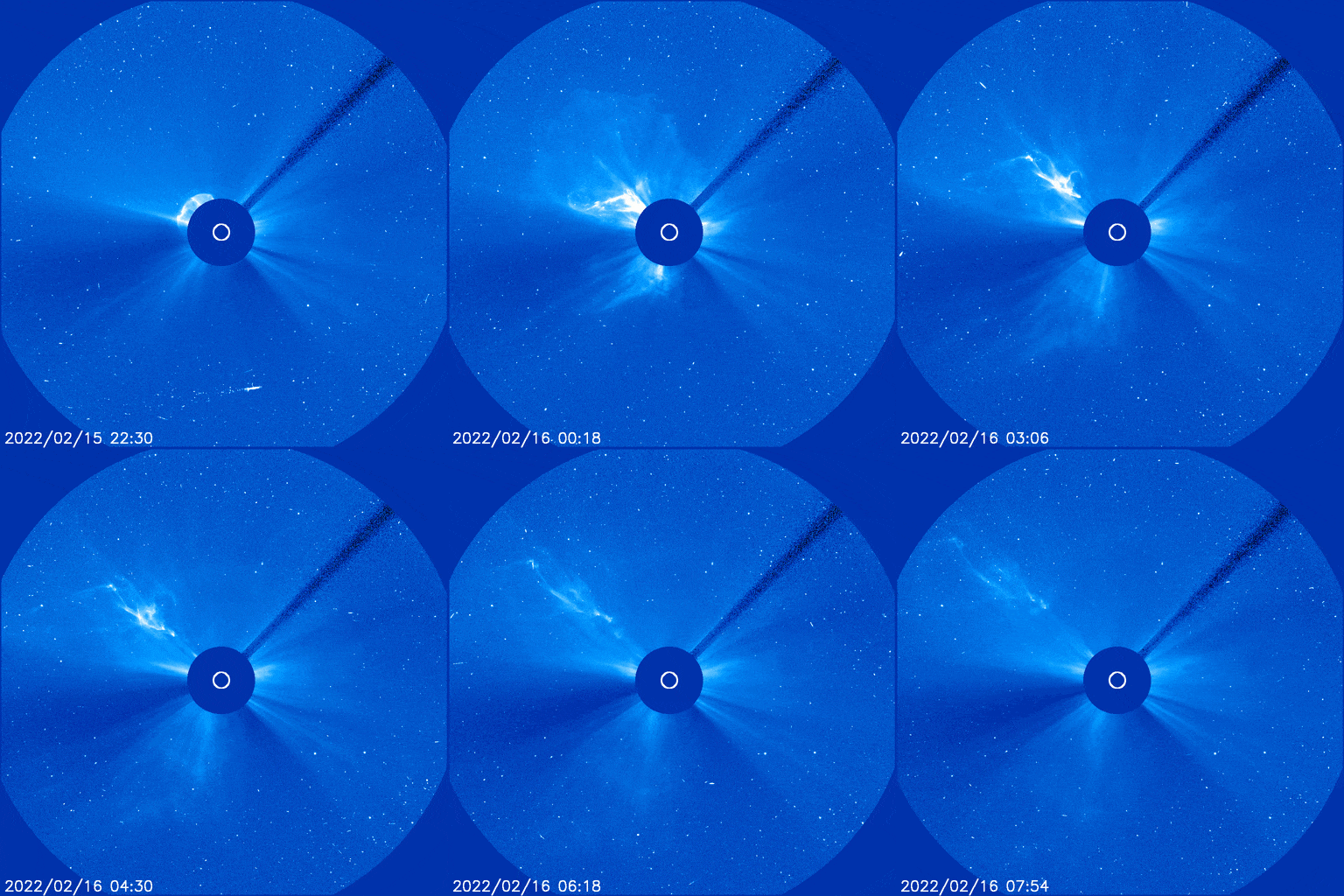
AN EXPLOSION ON THE FARSIDE OF THE SUN (UPDATED AGAIN): New images from the Solar and Heliospheric Observatory (SOHO) are giving us a better look at yesterday's farside explosion. SOHO coronagraphs recorded the most dramatic CME in years:
https://www.spaceweather.com/images2022/16feb22/farsidecme_anim_opt.gif
No, there won't be a geomagnetic storm. The explosion happened on the farside of the sun, so the CME is heading away from Earth. We dodged a bullet.
https://www.spaceweather.com/images2022/16feb22/farsidecme_anim_opt.gif
No, there won't be a geomagnetic storm. The explosion happened on the farside of the sun, so the CME is heading away from Earth. We dodged a bullet.
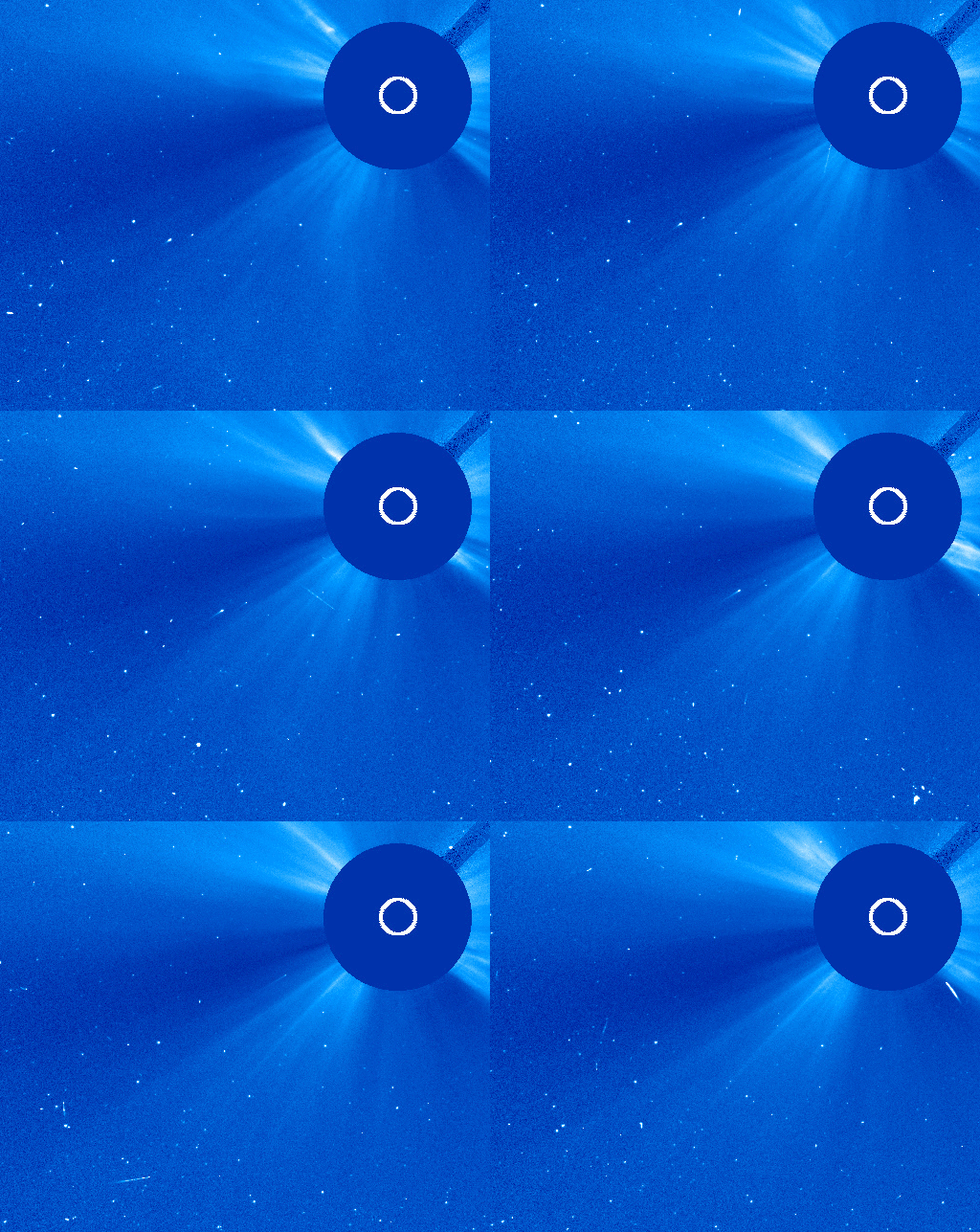
TWO DOOMED COMETS: It's not unusual for one comet to fall into the sun. On Feb. 16th, two comets did it. The Solar and Heliospheric Observatory (SOHO) recorded thier death dive:
https://www.spaceweather.com/images2022/18feb22/twocomets_anim_strip.gif
Traveling in tandem, the two comets disintegrated as they approached the sun. The smaller one vaporized first, and the larger penetrated a bit deeper before it disappeared. Watch the full resolution movie for a better view.
https://www.spaceweather.com/images2022/18feb22/twocomets_anim_strip.gif
Traveling in tandem, the two comets disintegrated as they approached the sun. The smaller one vaporized first, and the larger penetrated a bit deeper before it disappeared. Watch the full resolution movie for a better view.
GEOMAGNETIC STORM WATCH: Minor G1-class geomagnetic storms are possible on Feb 20th when a a co-rotating interaction region (CIR) is expected to hit Earth's magnetic field. CIRs are transition zones between slow- and fast-moving solar wind streams. Solar wind plasma piles up in these regions, producing shock-like structures that can spark bright auroras.
👍1
Space Weather Today pinned «☀️Have a great weekend! –Thank you for subscribing. https://t.me/SpaceWeatherToday»
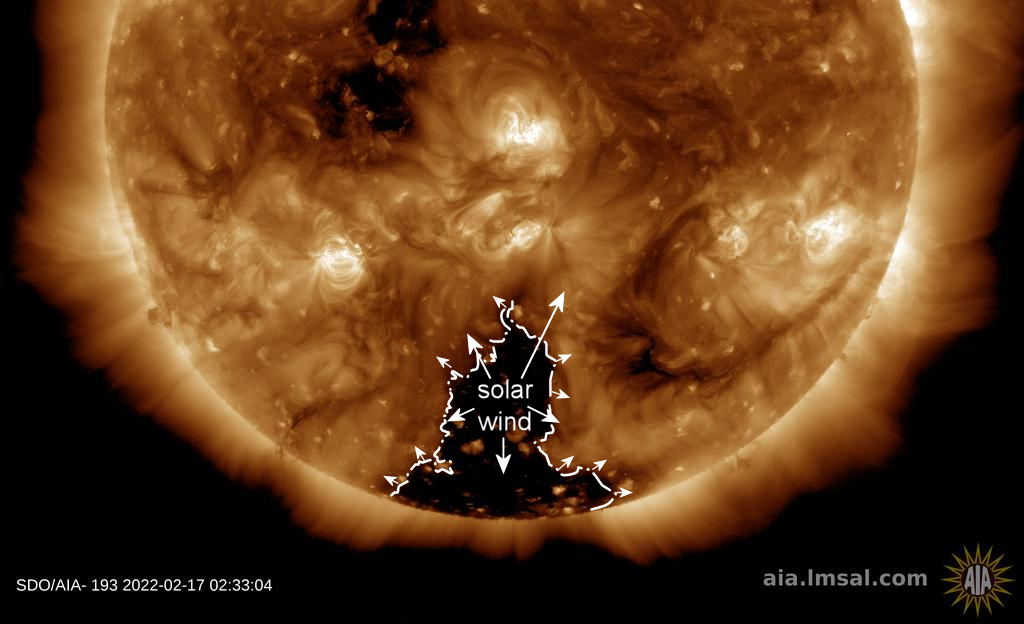
CHANCE OF MINOR STORMS: A stream of solar wind flowing from a southern hole in the sun's atmosphere is approaching Earth. NOAA forecasters say there is a chance of minor G1-class geomagnetic storms when the stream arrives on Feb. 20th. A co-rotating interaction region (CIR) traveling just ahead of the stream improves the chances that a storm will actually occur.
Solar wind
speed: 411.1 km/sec
density: 10.7 protons/cm3
more data: ACE, DSCOVR
Updated: Today at 2006 UT
X-ray Solar Flares
6-hr max: C1 1942 UT Feb19
24-hr: C1 1942 UT Feb19
explanation | more data
Updated: Today at: 2010 UT
speed: 411.1 km/sec
density: 10.7 protons/cm3
more data: ACE, DSCOVR
Updated: Today at 2006 UT
X-ray Solar Flares
6-hr max: C1 1942 UT Feb19
24-hr: C1 1942 UT Feb19
explanation | more data
Updated: Today at: 2010 UT