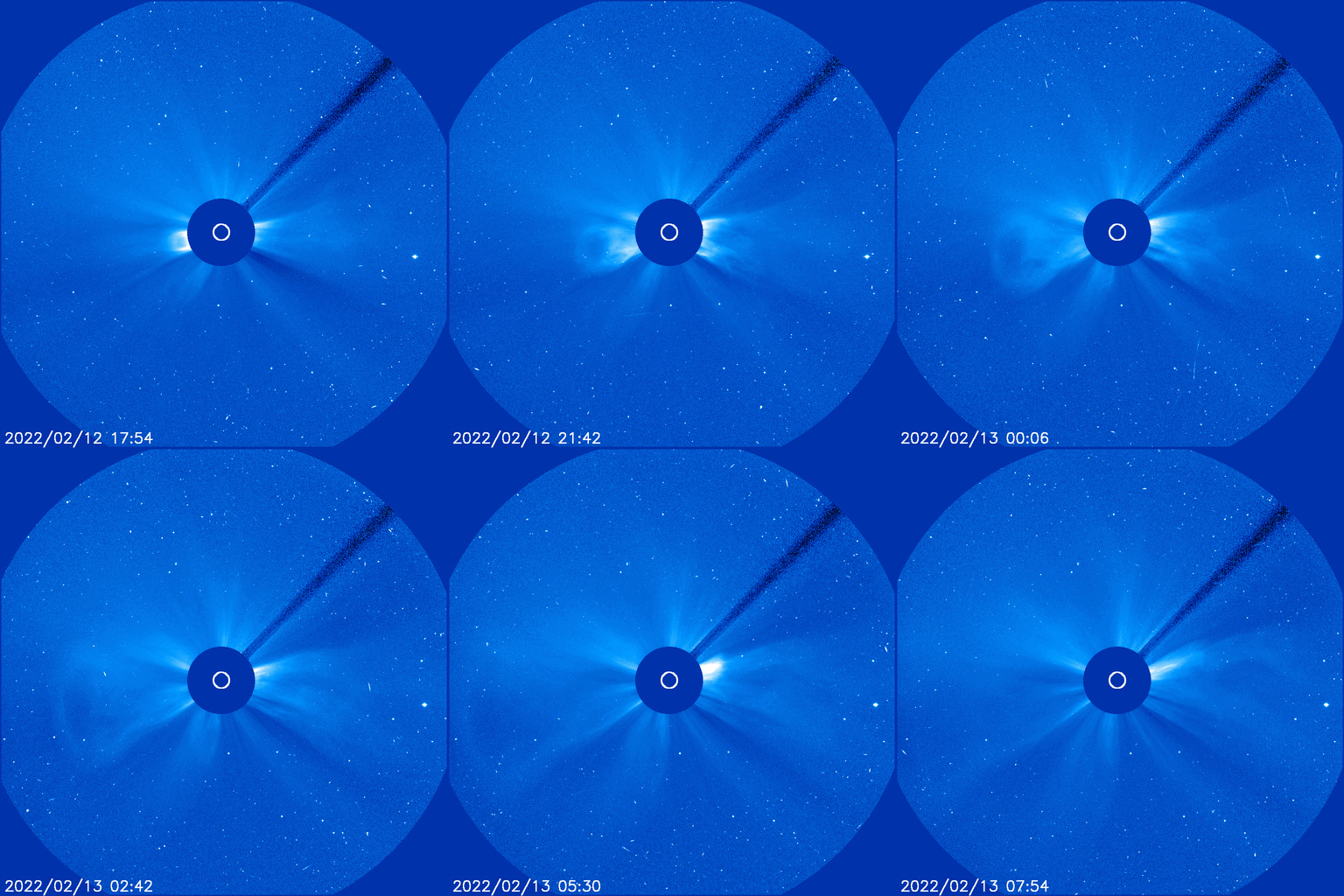
A FLURRY OF CMEs WILL MISS EARTH: Over the weekend, the sun unleashed a flurry of CMEs. Remarkably, none of the storm clouds will hit Earth. They're all outside the strike zone. Geomagnetic activity is expected to be low for the next 3 days.
https://www.spaceweather.com/images2022/13feb22/cme_anim.gif
https://www.spaceweather.com/images2022/13feb22/cme_anim.gif
M-CLASS SOLAR FLARE: Sunspot AR2941 erupted on Feb. 14th (1731 UT), producing an M1-class solar flare. A brief shortwave radio blackout followed the explosion after X-rays ionized the top of Earth's atmosphere.
Ham radio operators and aviators in the Americas may have noticed unusual propagation effects at frequencies below 20 MHz.
https://sdowww.lmsal.com/sdomedia/ssw/media/ssw/ssw_client/data/ssw_service_220214_095624_48110/www/20220214_170741_20220214_202220.gif
Ham radio operators and aviators in the Americas may have noticed unusual propagation effects at frequencies below 20 MHz.
https://sdowww.lmsal.com/sdomedia/ssw/media/ssw/ssw_client/data/ssw_service_220214_095624_48110/www/20220214_170741_20220214_202220.gif

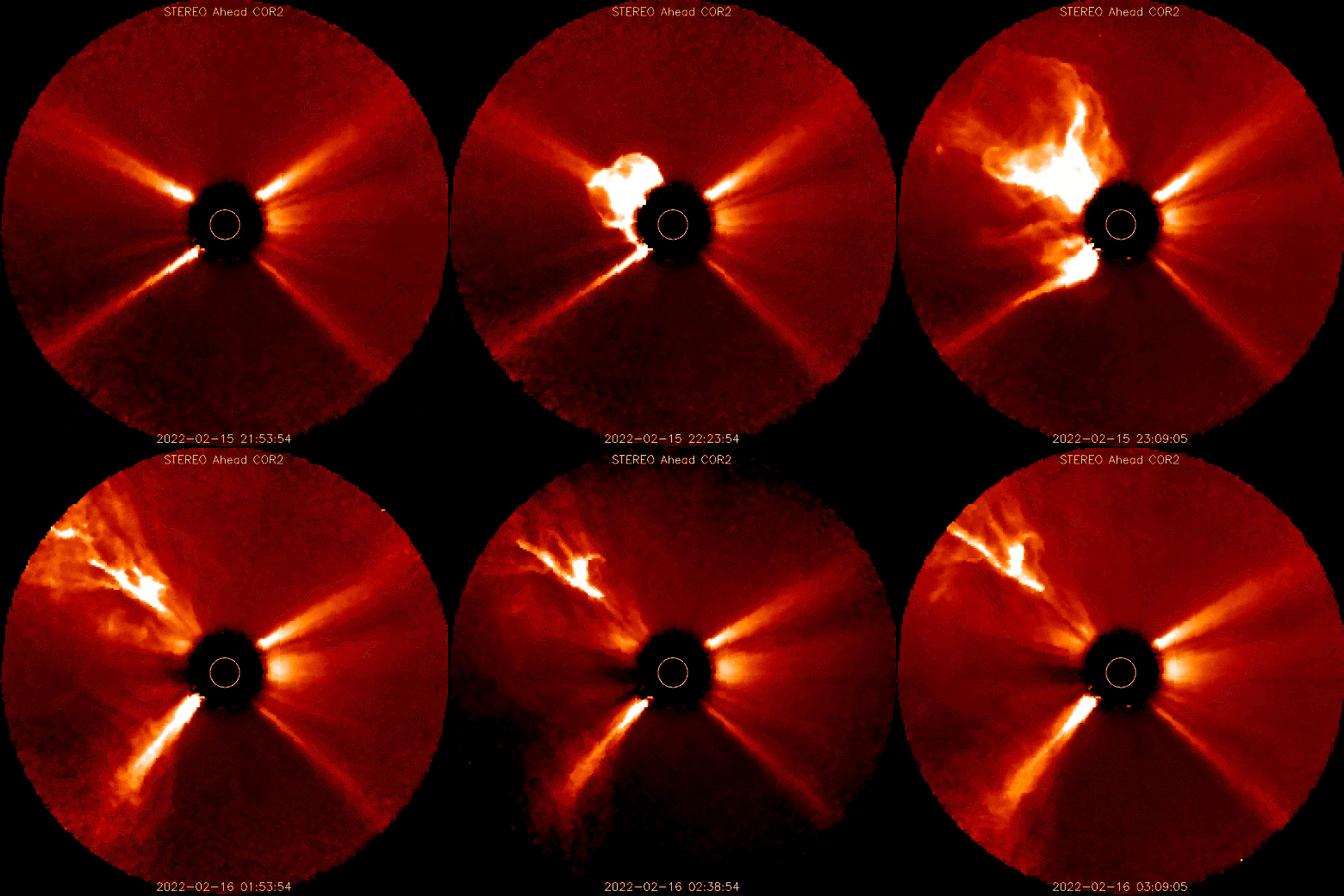
HUGE FARSIDE EXPLOSION: Something just exploded on the farside of the sun--and it was big. NASA's STEREO-A spacecraft recorded a magnificent coronal mass ejection (CME) emerging during the late hours of Feb. 15th:
https://www.spaceweather.com/images2022/15feb22/farsideexplosion_strip_opt.gif
This CME will not hit Earth; it is moving away from, not toward our planet. However, if such a CME did strike, it could produce a very strong geomagnetic storm. We may have dodged a bullet.
STEREO-A also observed a plume of plasma emerging from the blast site. It was more than 400,000 km long.
https://www.spaceweather.com/images2022/15feb22/20220215_221545_n7euA_304.jpg
https://www.spaceweather.com/images2022/15feb22/farsideexplosion_strip_opt.gif
This CME will not hit Earth; it is moving away from, not toward our planet. However, if such a CME did strike, it could produce a very strong geomagnetic storm. We may have dodged a bullet.
STEREO-A also observed a plume of plasma emerging from the blast site. It was more than 400,000 km long.
https://www.spaceweather.com/images2022/15feb22/20220215_221545_n7euA_304.jpg
GEOMAGNETIC FORECAST: Earth's magnetic field is quiet and should remain so for the next 48 hours. No CMEs or streams of solar wind are heading for our planet. NOAA forecasters say the chance of geomagnetic storms is less than 5%.
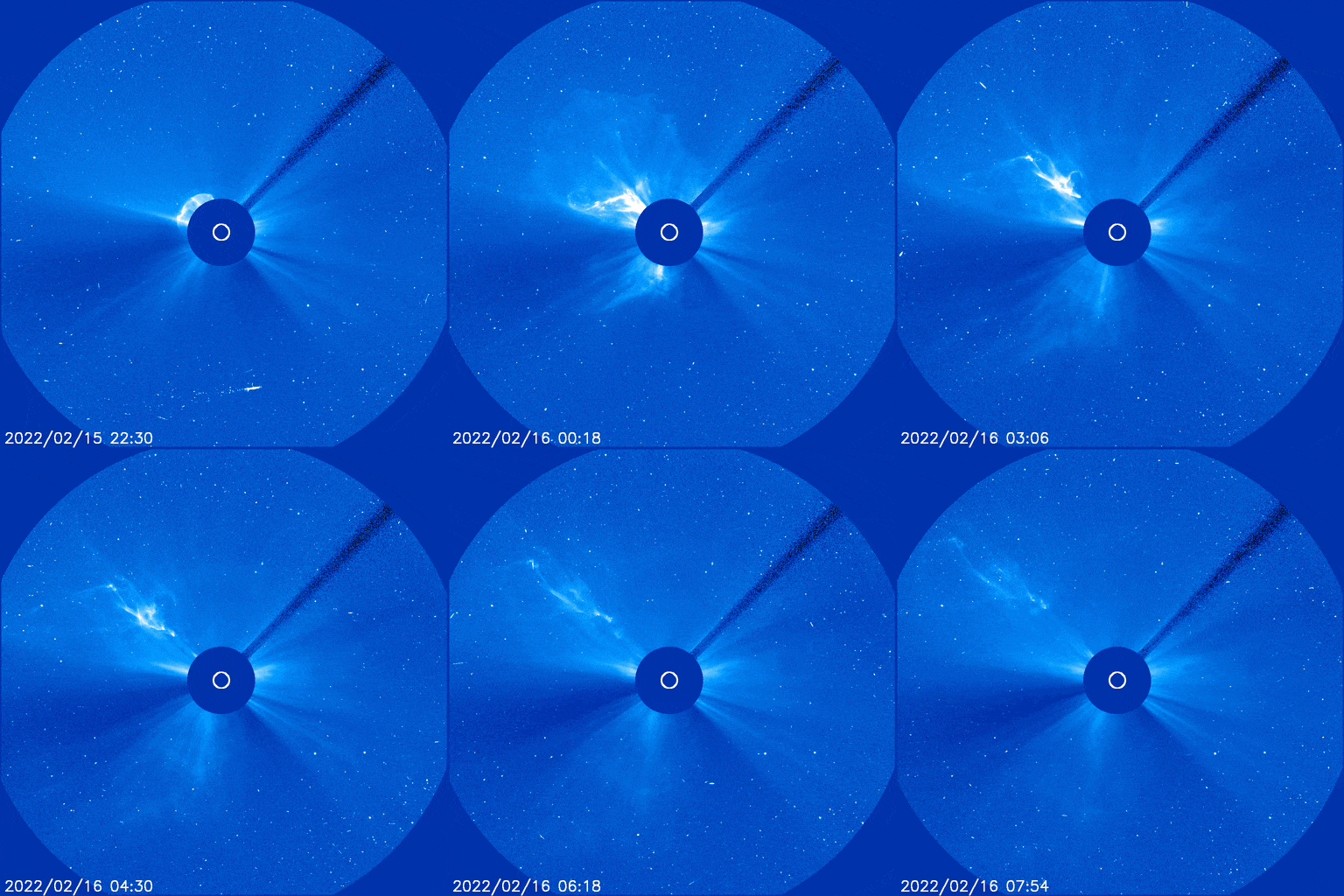
AN EXPLOSION ON THE FARSIDE OF THE SUN (UPDATED AGAIN): New images from the Solar and Heliospheric Observatory (SOHO) are giving us a better look at yesterday's farside explosion. SOHO coronagraphs recorded the most dramatic CME in years:
https://www.spaceweather.com/images2022/16feb22/farsidecme_anim_opt.gif
No, there won't be a geomagnetic storm. The explosion happened on the farside of the sun, so the CME is heading away from Earth. We dodged a bullet.
https://www.spaceweather.com/images2022/16feb22/farsidecme_anim_opt.gif
No, there won't be a geomagnetic storm. The explosion happened on the farside of the sun, so the CME is heading away from Earth. We dodged a bullet.