https://www.spaceweather.com/images2022/07feb22/cme_model_crop_strip_opt.gif
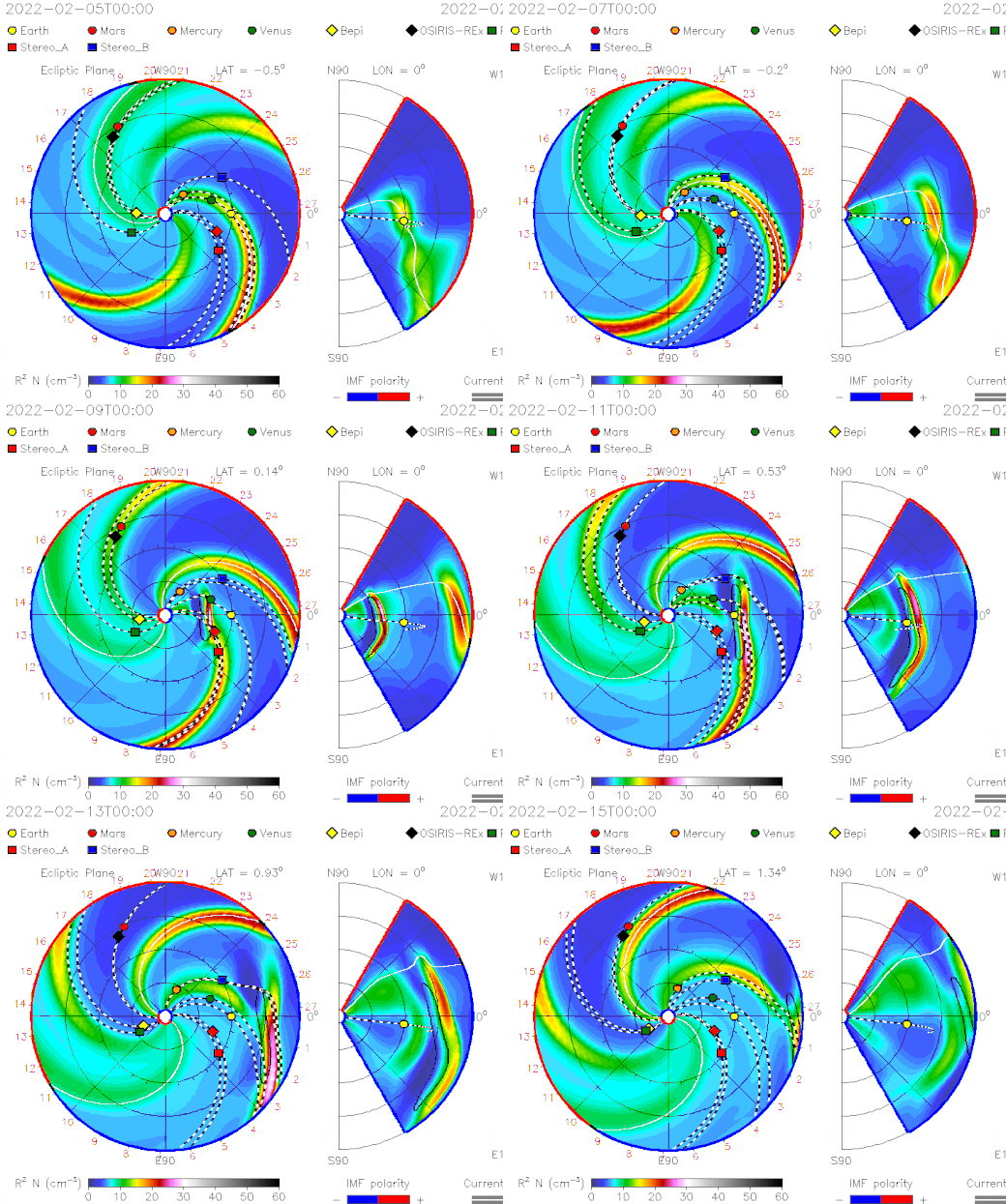
CME TO HIT VENUS, THEN EARTH: NASA analysts have modeled a CME that left the sun on Feb 6th. It's going to hit Venus, then Earth:
The Venus impact on Feb 9th will not cause a geomagnetic storm. It can't; Venus has no internally-generated global magnetic field. Instead, the impact will erode a small amount of atmosphere from Venus's unprotected cloudtops.
The Earth impact on Feb. 10th will play out differently. Our planet's magnetic field will intercept the CME, preventing it from reaching the atmosphere below. Reverberations from the impact could spark a G1-class geomagnetic storm with high-latitude auroras spilling out of the Arctic Circle.
CME TO HIT VENUS, THEN EARTH: NASA analysts have modeled a CME that left the sun on Feb 6th. It's going to hit Venus, then Earth:
The Venus impact on Feb 9th will not cause a geomagnetic storm. It can't; Venus has no internally-generated global magnetic field. Instead, the impact will erode a small amount of atmosphere from Venus's unprotected cloudtops.
The Earth impact on Feb. 10th will play out differently. Our planet's magnetic field will intercept the CME, preventing it from reaching the atmosphere below. Reverberations from the impact could spark a G1-class geomagnetic storm with high-latitude auroras spilling out of the Arctic Circle.
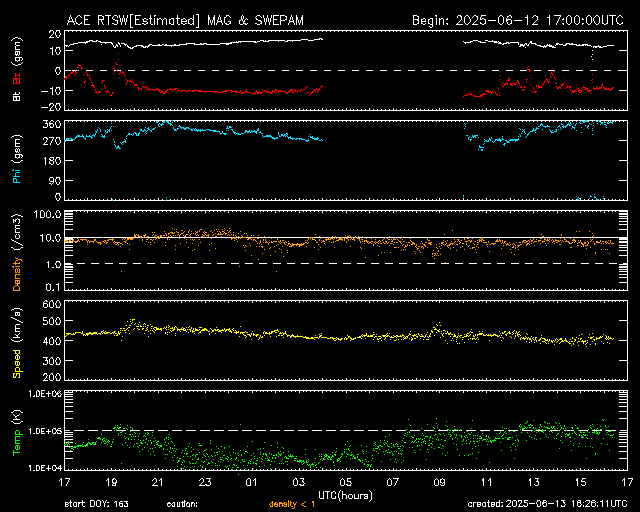
Solar wind
speed: 544.3 km/sec
density: 8.9 protons/cm3
more data: ACE, DSCOVR
Updated: Today at 1724 UT
X-ray Solar Flares
6-hr max: C9 1708 UT Feb12
24-hr: M1 0844 UT Feb12
explanation | more data
Updated: Today at: 1730 UT
speed: 544.3 km/sec
density: 8.9 protons/cm3
more data: ACE, DSCOVR
Updated: Today at 1724 UT
X-ray Solar Flares
6-hr max: C9 1708 UT Feb12
24-hr: M1 0844 UT Feb12
explanation | more data
Updated: Today at: 1730 UT
AURORAS FOR VALENTINE'S DAY? NOAA forecasters say that G1-class geomagnetic storms are possible on Feb. 13th and, especially, Feb. 14th, when a stream of is expected to hit Earth's magnetic field. The gaseous material is flowing faster than 500 km/s from an equatorial hole in the sun's atmosphere. Valentine's skies could be very romantic, indeed.

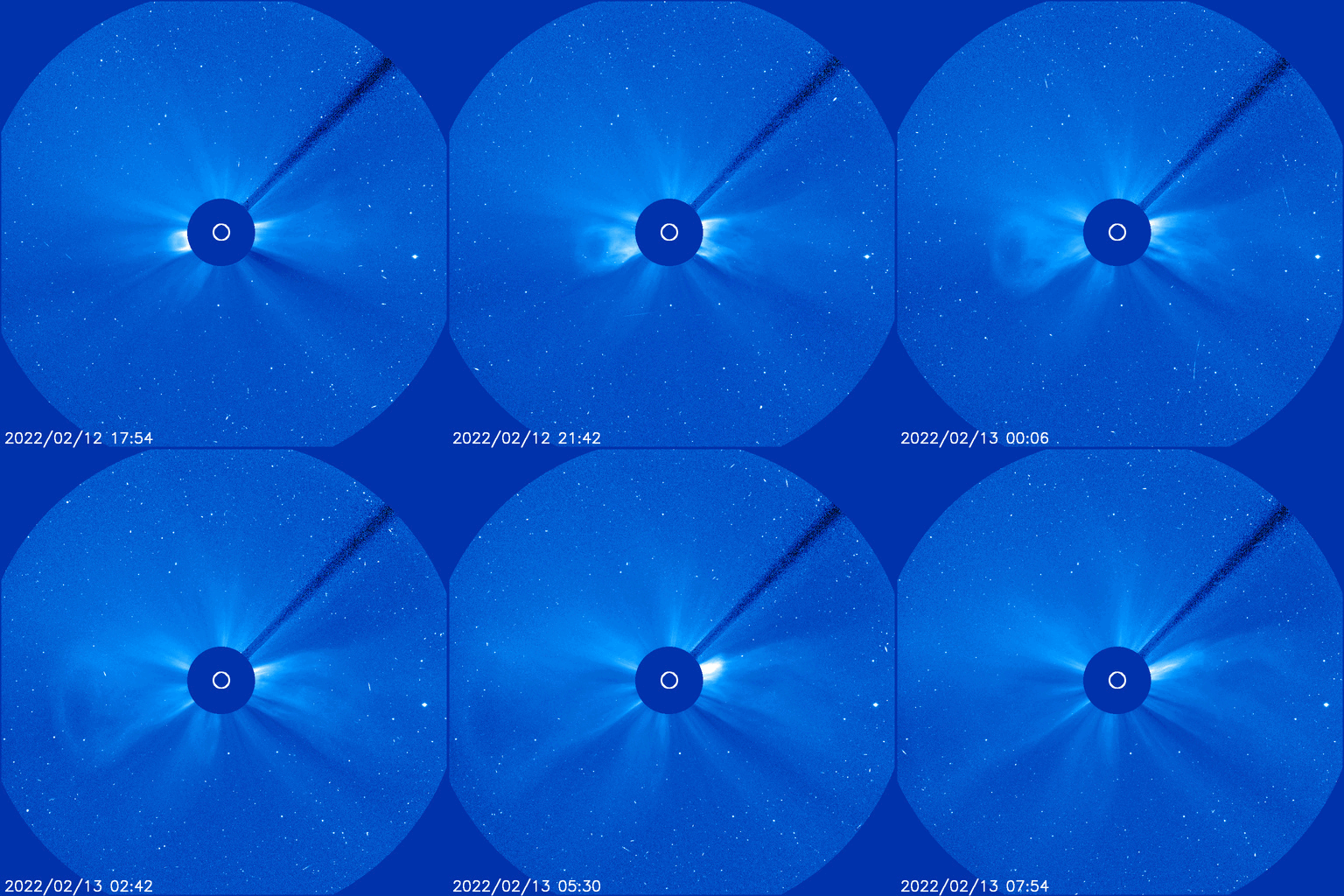
A FLURRY OF CMEs WILL MISS EARTH: Over the weekend, the sun unleashed a flurry of CMEs. Remarkably, none of the storm clouds will hit Earth. They're all outside the strike zone. Geomagnetic activity is expected to be low for the next 3 days.
https://www.spaceweather.com/images2022/13feb22/cme_anim.gif
https://www.spaceweather.com/images2022/13feb22/cme_anim.gif
M-CLASS SOLAR FLARE: Sunspot AR2941 erupted on Feb. 14th (1731 UT), producing an M1-class solar flare. A brief shortwave radio blackout followed the explosion after X-rays ionized the top of Earth's atmosphere.
Ham radio operators and aviators in the Americas may have noticed unusual propagation effects at frequencies below 20 MHz.
https://sdowww.lmsal.com/sdomedia/ssw/media/ssw/ssw_client/data/ssw_service_220214_095624_48110/www/20220214_170741_20220214_202220.gif
Ham radio operators and aviators in the Americas may have noticed unusual propagation effects at frequencies below 20 MHz.
https://sdowww.lmsal.com/sdomedia/ssw/media/ssw/ssw_client/data/ssw_service_220214_095624_48110/www/20220214_170741_20220214_202220.gif

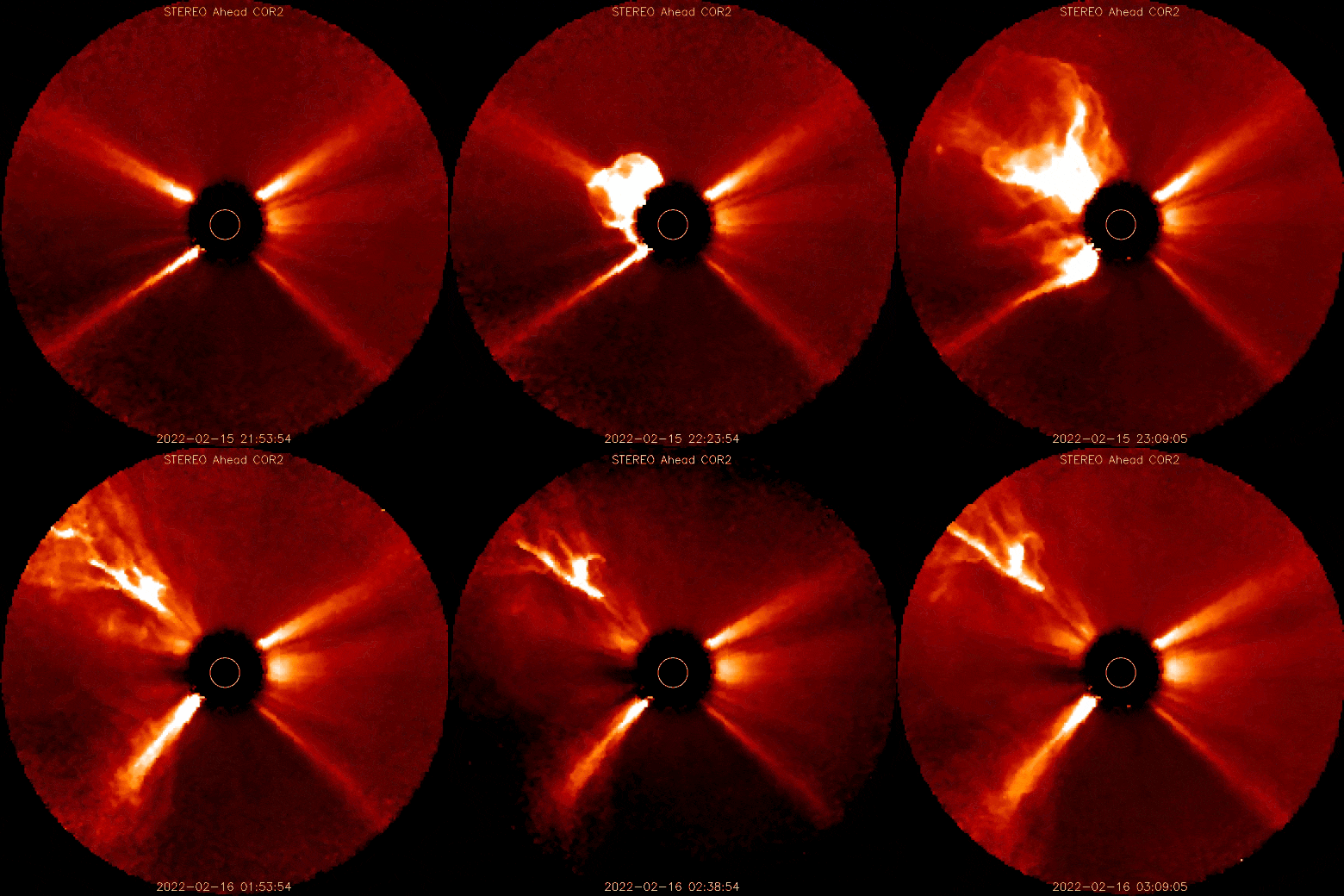
HUGE FARSIDE EXPLOSION: Something just exploded on the farside of the sun--and it was big. NASA's STEREO-A spacecraft recorded a magnificent coronal mass ejection (CME) emerging during the late hours of Feb. 15th:
https://www.spaceweather.com/images2022/15feb22/farsideexplosion_strip_opt.gif
This CME will not hit Earth; it is moving away from, not toward our planet. However, if such a CME did strike, it could produce a very strong geomagnetic storm. We may have dodged a bullet.
STEREO-A also observed a plume of plasma emerging from the blast site. It was more than 400,000 km long.
https://www.spaceweather.com/images2022/15feb22/20220215_221545_n7euA_304.jpg
https://www.spaceweather.com/images2022/15feb22/farsideexplosion_strip_opt.gif
This CME will not hit Earth; it is moving away from, not toward our planet. However, if such a CME did strike, it could produce a very strong geomagnetic storm. We may have dodged a bullet.
STEREO-A also observed a plume of plasma emerging from the blast site. It was more than 400,000 km long.
https://www.spaceweather.com/images2022/15feb22/20220215_221545_n7euA_304.jpg