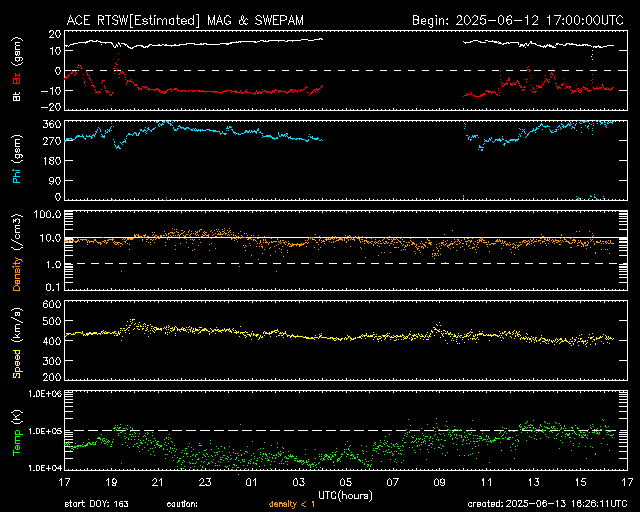
Solar wind
speed: 458.2 km/sec
density: 5.0 protons/cm3
more data: ACE, DSCOVR
Updated: Today at 2030 UT
X-ray Solar Flares
6-hr max: C2 1700 UT Feb07
24-hr: C3 1239 UT Feb07
explanation | more data
Updated: Today at: 2035 UT
speed: 458.2 km/sec
density: 5.0 protons/cm3
more data: ACE, DSCOVR
Updated: Today at 2030 UT
X-ray Solar Flares
6-hr max: C2 1700 UT Feb07
24-hr: C3 1239 UT Feb07
explanation | more data
Updated: Today at: 2035 UT
GEOMAGNETIC STORM WATCH--UPDATE: A CME is going to hit Earth's magnetic field during the late hours of Feb. 9th, according to updated NOAA forecast models. The impact could spark G1-class geomagnetic storms. The CME was hurled in our direction yesterday by a long-duration solar flare (AR2939). The explosion peaked at category C3, which is considered to be weak. However, the flare made up for its low amplitude by lasting for more than 3 hours; it put more power into the CME than its feeble C3 rating might suggest.

🔥2
MAGNIFICENT ERUPTION: For days, astronomers around the world have been monitoring a colossal prominence dancing over the sun's southeastern limb. It just erupted. Cameras's onboard NOAA's GOES-16 satellite recorded a magnificent uncurling of the structure, which also hurled a CME into space. The CME is not Earth directed.
CME TO HIT VENUS, THEN EARTH: NASA analysts have modeled a CME that left the sun on Feb 6th. It's going to hit Venus, then Earth:
The Venus impact on Feb 9th will not cause a geomagnetic storm. It can't; Venus has no internally-generated global magnetic field. Instead, the impact will erode a small amount of atmosphere from Venus's unprotected cloudtops.
The Earth impact on Feb. 10th will play out differently. Our planet's magnetic field will intercept the CME, preventing it from reaching the atmosphere below. Reverberations from the impact could spark a G1-class geomagnetic storm with high-latitude auroras spilling out of the Arctic Circle.
The Venus impact on Feb 9th will not cause a geomagnetic storm. It can't; Venus has no internally-generated global magnetic field. Instead, the impact will erode a small amount of atmosphere from Venus's unprotected cloudtops.
The Earth impact on Feb. 10th will play out differently. Our planet's magnetic field will intercept the CME, preventing it from reaching the atmosphere below. Reverberations from the impact could spark a G1-class geomagnetic storm with high-latitude auroras spilling out of the Arctic Circle.
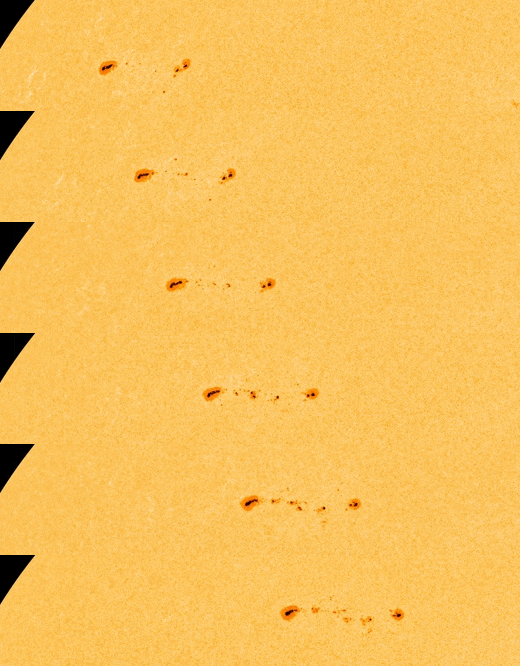
SUNSPOT ARCHIPELAGO: An archipelago of sunspots is growing between the primary cores of AR2941. This movie from NASA's Solar Dynamics Observatory captures 48 hours of action:
https://www.spaceweather.com/images2022/09feb22/archipelago_anim_crop_strip_opt.gif
The magnetic island chain stretches nearly 200,000 km with more than a dozen moon-sized spots turning toward Earth. Altogether they have an unstable 'beta-gamma' magnetic field that harbors energy for M-class solar flares. Any eruptions today will be Earth-directed.
https://www.spaceweather.com/images2022/09feb22/archipelago_anim_crop_strip_opt.gif
The magnetic island chain stretches nearly 200,000 km with more than a dozen moon-sized spots turning toward Earth. Altogether they have an unstable 'beta-gamma' magnetic field that harbors energy for M-class solar flares. Any eruptions today will be Earth-directed.
https://www.spaceweather.com/images2022/07feb22/cme_model_crop_strip_opt.gif
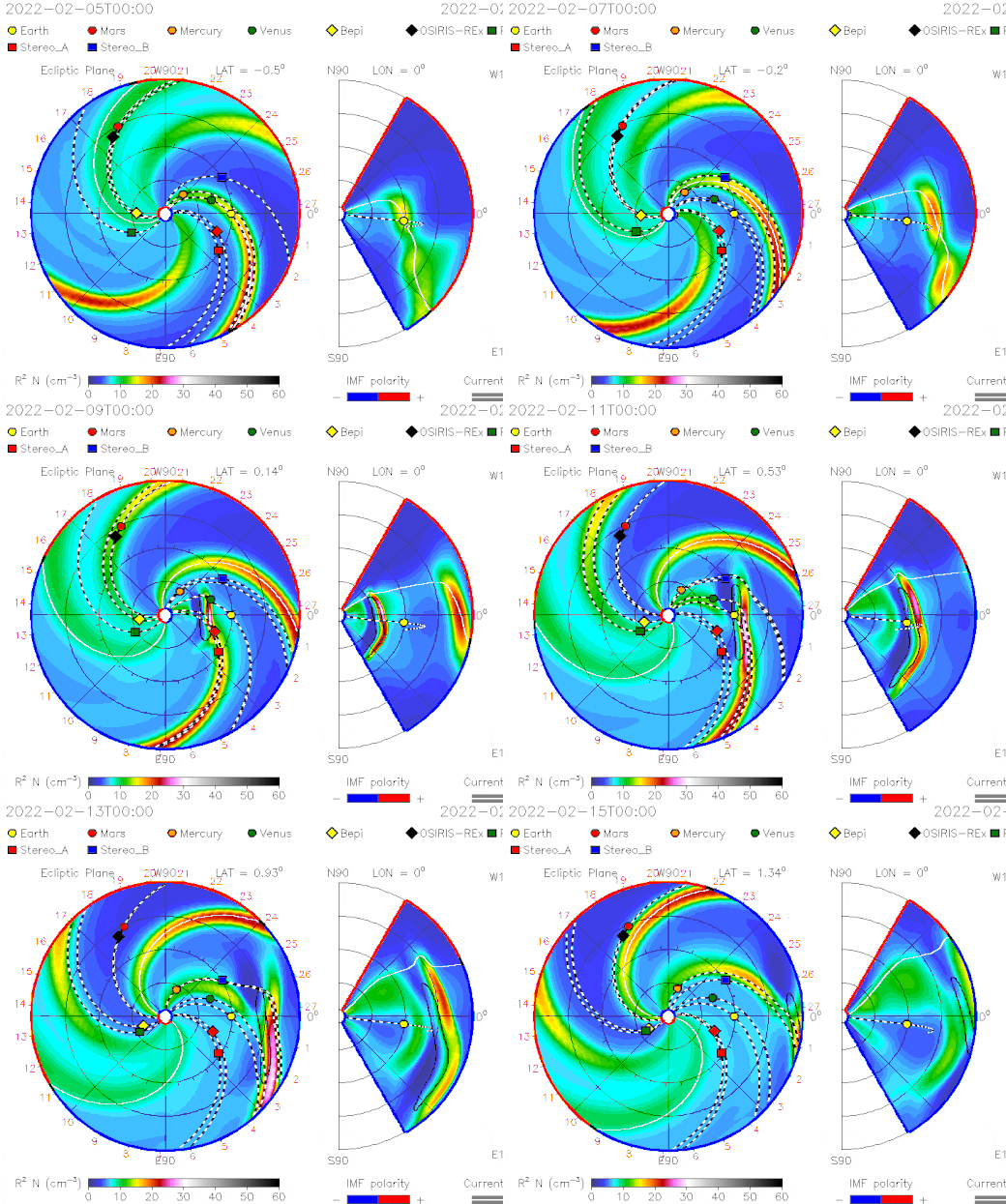
CME TO HIT VENUS, THEN EARTH: NASA analysts have modeled a CME that left the sun on Feb 6th. It's going to hit Venus, then Earth:
The Venus impact on Feb 9th will not cause a geomagnetic storm. It can't; Venus has no internally-generated global magnetic field. Instead, the impact will erode a small amount of atmosphere from Venus's unprotected cloudtops.
The Earth impact on Feb. 10th will play out differently. Our planet's magnetic field will intercept the CME, preventing it from reaching the atmosphere below. Reverberations from the impact could spark a G1-class geomagnetic storm with high-latitude auroras spilling out of the Arctic Circle.
CME TO HIT VENUS, THEN EARTH: NASA analysts have modeled a CME that left the sun on Feb 6th. It's going to hit Venus, then Earth:
The Venus impact on Feb 9th will not cause a geomagnetic storm. It can't; Venus has no internally-generated global magnetic field. Instead, the impact will erode a small amount of atmosphere from Venus's unprotected cloudtops.
The Earth impact on Feb. 10th will play out differently. Our planet's magnetic field will intercept the CME, preventing it from reaching the atmosphere below. Reverberations from the impact could spark a G1-class geomagnetic storm with high-latitude auroras spilling out of the Arctic Circle.
Solar wind
speed: 544.3 km/sec
density: 8.9 protons/cm3
more data: ACE, DSCOVR
Updated: Today at 1724 UT
X-ray Solar Flares
6-hr max: C9 1708 UT Feb12
24-hr: M1 0844 UT Feb12
explanation | more data
Updated: Today at: 1730 UT
speed: 544.3 km/sec
density: 8.9 protons/cm3
more data: ACE, DSCOVR
Updated: Today at 1724 UT
X-ray Solar Flares
6-hr max: C9 1708 UT Feb12
24-hr: M1 0844 UT Feb12
explanation | more data
Updated: Today at: 1730 UT