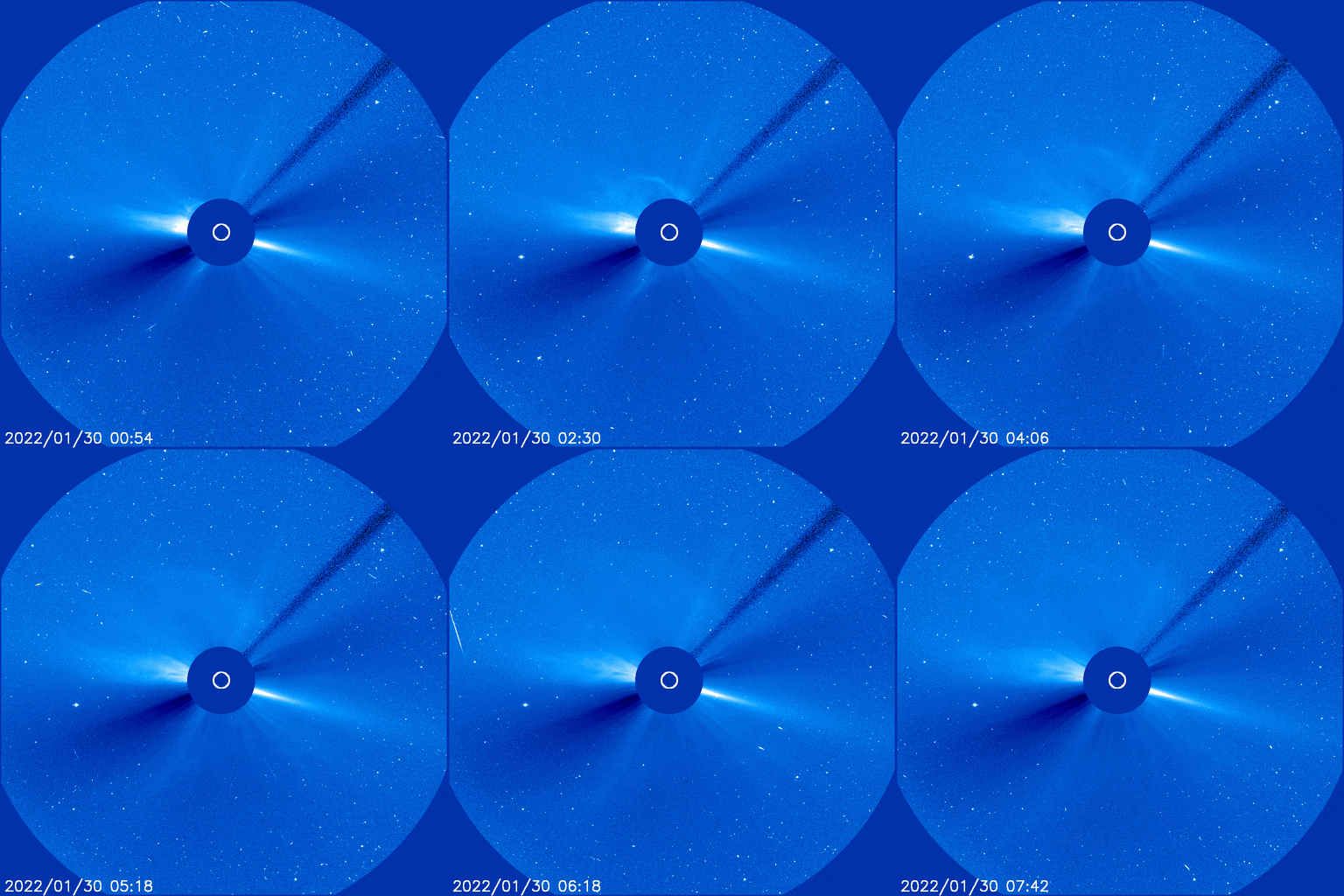
GEOMAGNETIC STORM WATCH: A coronal mass ejection (CME) is heading for Earth. Estimated time of arrival: Feb. 2nd. This movie from SOHO shows the CME leaving the sun yesterday:
https://www.spaceweather.com/images2022/30jan22/halocme_opt.gif
https://www.spaceweather.com/images2022/30jan22/halocme_opt.gif
CHANCE OF FLARES TODAY: NOAA forecasters say there is a 40% chance of M-class solar flares today, Jan. 31st, and a 10% chance of X-flares. The likely source would be sunspot AR2936. The behemoth active region is big enough to swallow our planet 5 times over, and it is directly facing Earth, so any flares will be geoeffective.
CME IMPACT FAILS TO PRODUCE A STORM: A coronal mass ejection (CME) hit Earth's magnetic field on Feb. 1st at 22:21 UT. Despite jolting magnetometers as far south as Hawaii (22 nT), the impact did not produce a geomagnetic storm. Not yet. NOAA forecasters caution that a storm is still possible on Feb. 2nd as Earth moves through the CME's magnetized wake. If so, it would probably be in the weakest category, G1.

Solar wind
speed: 433.7 km/sec
density: 11.8 protons/cm3
more data: ACE, DSCOVR
Updated: Today at 2049 UT
X-ray Solar Flares
6-hr max: C2 1550 UT Feb02
24-hr: C9 2236 UT Feb01
explanation | more data
Updated: Today at: 2055 UT
speed: 433.7 km/sec
density: 11.8 protons/cm3
more data: ACE, DSCOVR
Updated: Today at 2049 UT
X-ray Solar Flares
6-hr max: C2 1550 UT Feb02
24-hr: C9 2236 UT Feb01
explanation | more data
Updated: Today at: 2055 UT
Space Weather Today pinned «Solar wind speed: 433.7 km/sec density: 11.8 protons/cm3 more data: ACE, DSCOVR Updated: Today at 2049 UT X-ray Solar Flares 6-hr max: C2 1550 UT Feb02 24-hr: C9 2236 UT Feb01 explanation | more data Updated: Today at: 2055 UT»
👀 CHANCE OF FLARES TODAY ☀️
Sunspot AR2940 has a 'beta-gamma' magnetic field that harbors energy for strong M-class solar flares.
NOAA forecasters say there is a 25% chance of such an eruption during the next 24 hours.
The sunspot is almost directly facing Earth, so any flares will be geoeffective.
Sunspot AR2940 has a 'beta-gamma' magnetic field that harbors energy for strong M-class solar flares.
NOAA forecasters say there is a 25% chance of such an eruption during the next 24 hours.
The sunspot is almost directly facing Earth, so any flares will be geoeffective.
🤩2