☀️ SOLAR EXPLOSION MISSES EARTH: Earth-orbiting satellites have just detected a C4-class solar flare (Dec 4th @ 05:15 UT). The source appears to be departing sunspot AR2898. Debris from the explosion will miss Earth because of the blast site's location near the southwestern edge of the sun.
Solar wind
speed: 465.4 km/sec
density: 10.0 protons/cm3
more data: ACE, DSCOVR
Updated: Today at 1455 UT
X-ray Solar Flares
6-hr max: B4 0900 UT Dec05
24-hr: M1 0719 UT Dec05
explanation | more data
Updated: Today at: 1500 UT
speed: 465.4 km/sec
density: 10.0 protons/cm3
more data: ACE, DSCOVR
Updated: Today at 1455 UT
X-ray Solar Flares
6-hr max: B4 0900 UT Dec05
24-hr: M1 0719 UT Dec05
explanation | more data
Updated: Today at: 1500 UT
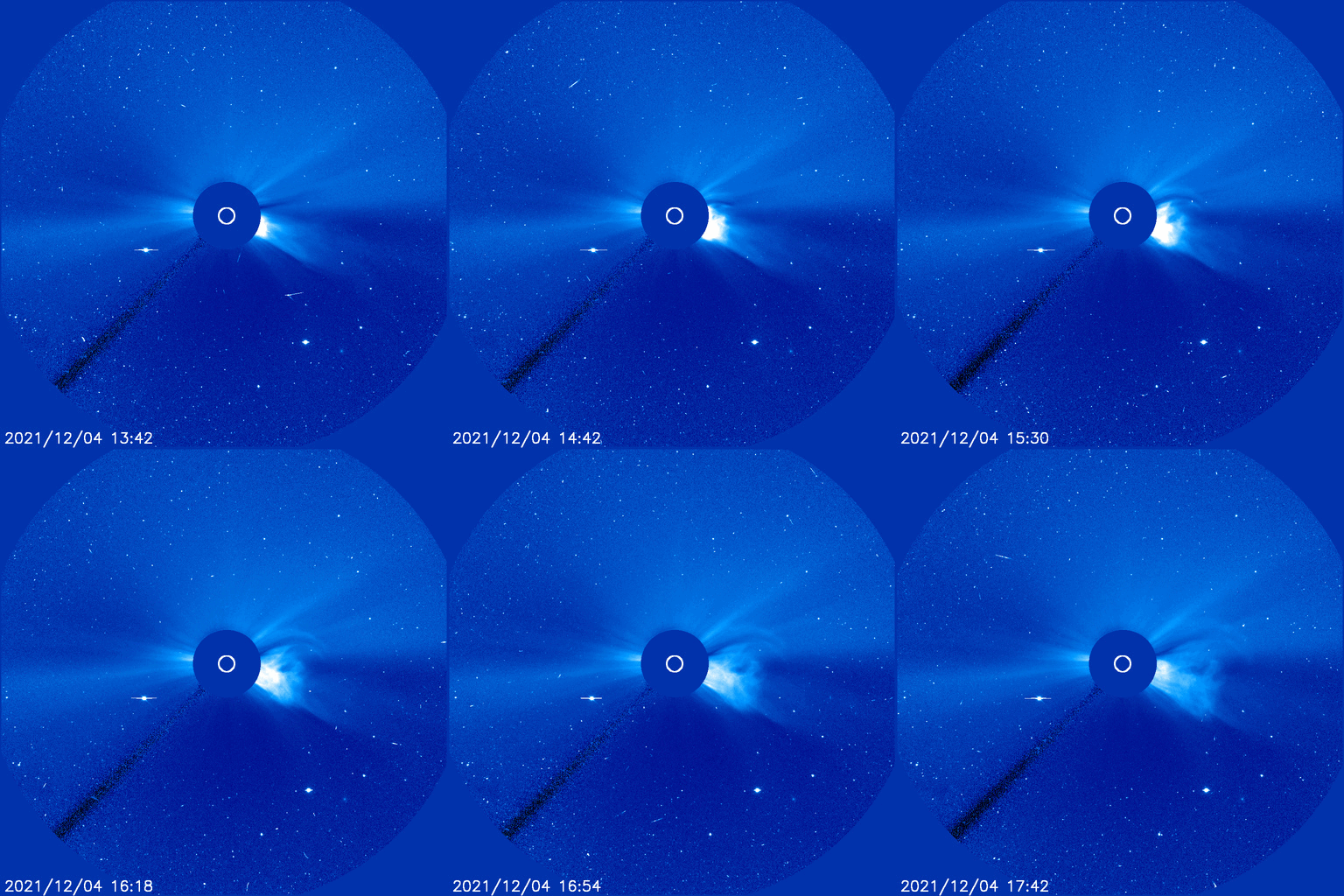
FARSIDE SOLAR ACTIVITY: A sunspot group on the farside of the sun is exploding--a lot. At least three CMEs have flown over the southwestern limb this weekend. Here is the brightest so far. The source of this activity is probably sunspot complex AR2898-2900, which rotated off the Earthside of the sun a few days ago.
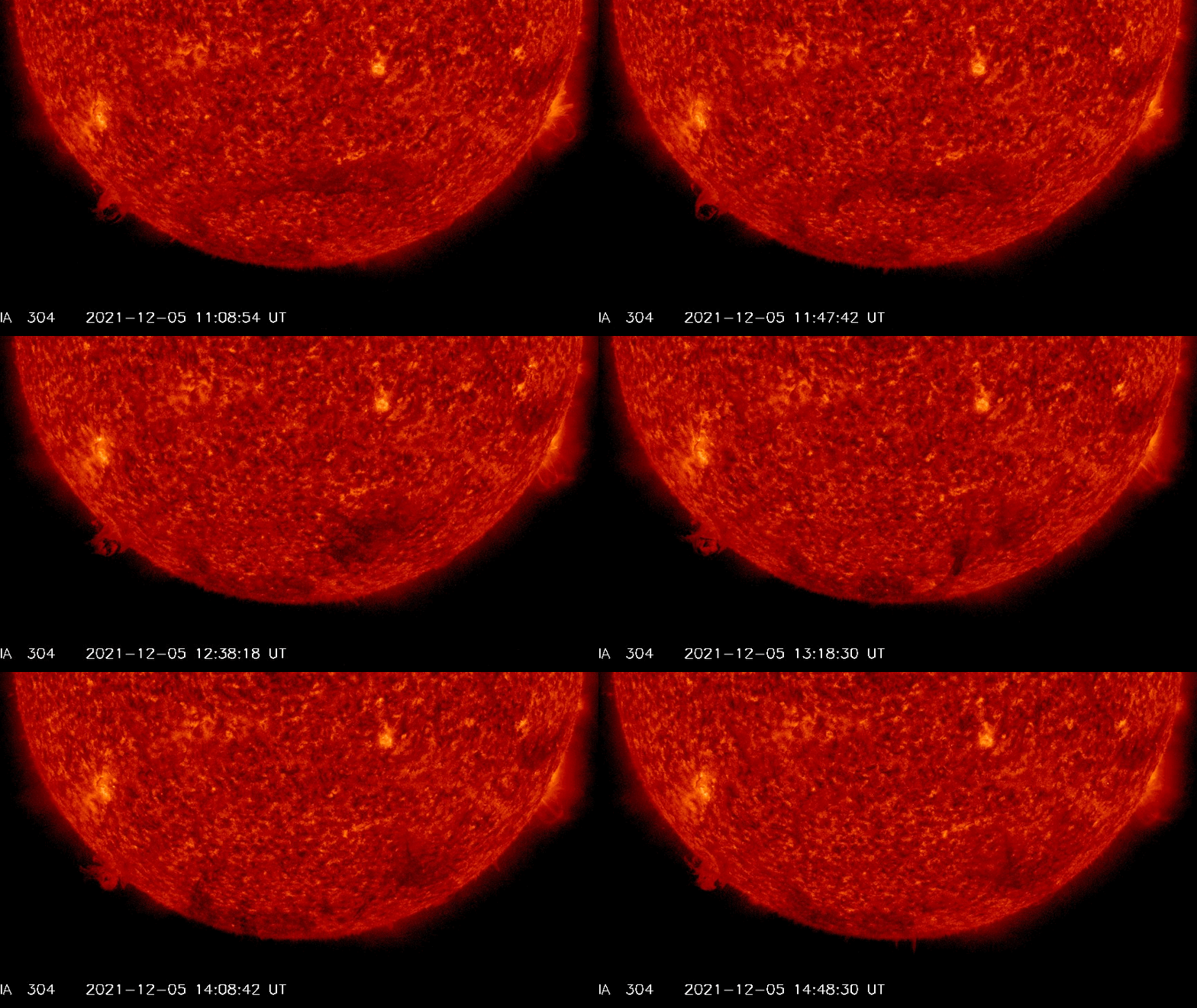
SOUTHERN EXPLOSION ON THE SUN: Yesterday, Dec. 5th, a magnetic filament in the sun's southern hemisphere exploded. The swirling debris will probably sail well south of our planet. NOAA analysts are running computer models now to confirm the miss.
Solar wind
speed: 431.3 km/sec
density: 4.4 protons/cm3
more data: ACE, DSCOVR
Updated: Today at 1209 UT
X-ray Solar Flares
6-hr max: A0 0823 UT Dec08
24-hr: B1 1905 UT Dec07
explanation | more data
Updated: Today at: 1215 UT
speed: 431.3 km/sec
density: 4.4 protons/cm3
more data: ACE, DSCOVR
Updated: Today at 1209 UT
X-ray Solar Flares
6-hr max: A0 0823 UT Dec08
24-hr: B1 1905 UT Dec07
explanation | more data
Updated: Today at: 1215 UT
A CME WILL BARELY MISS EARTH LATER THIS WEEK: On Dec. 5th, a magnetic filament in the sun's southern hemisphere exploded. The swirling debris will probably sail just south of our planet on Dec. 10th. No geomagnetic storms are expected, but the near miss could spark auroras around the poles.
Solar wind
speed: 309.6 km/sec
density: 16.1 protons/cm3
more data: ACE, DSCOVR
Updated: Today at 2044 UT
X-ray Solar Flares
6-hr max: B3 1923 UT Dec13
24-hr: C1 2114 UT Dec12
explanation | more data
Updated: Today at: 2050 UT
speed: 309.6 km/sec
density: 16.1 protons/cm3
more data: ACE, DSCOVR
Updated: Today at 2044 UT
X-ray Solar Flares
6-hr max: B3 1923 UT Dec13
24-hr: C1 2114 UT Dec12
explanation | more data
Updated: Today at: 2050 UT
THE GEMINID METEOR SHOWER IS UNDERWAY: Earth has entered a stream of debris from rock comet 3200 Phaethon, source of the annual Geminid meteor shower. Last night, Dec. 12-13, NASA cameras recorded 46 Geminid fireballs over the USA. Many more are coming. Forecasters expect the shower to peak on Dec. 13-14 with as many as 100 meteors/hour visible from dark sky sites. Observing tips.
science.nasa.gov
Rock Comet Meteor Shower | Science Mission Directorate
The Geminid meteor shower peaks on Dec. 13th and 14th when Earth runs through a stream of debris from a strange object that some astronomers are calling a "rock comet."