Solar wind
speed: 322.0 km/sec
density: 10.37 protons/cm3
Updated: Today at 0537 UT
X-ray Solar Flares
6-hr max: C4 1350 UT Feb15
24-hr: M2 0523 UT Feb15
Updated: Today at: 1740 UT
speed: 322.0 km/sec
density: 10.37 protons/cm3
Updated: Today at 0537 UT
X-ray Solar Flares
6-hr max: C4 1350 UT Feb15
24-hr: M2 0523 UT Feb15
Updated: Today at: 1740 UT
👍5
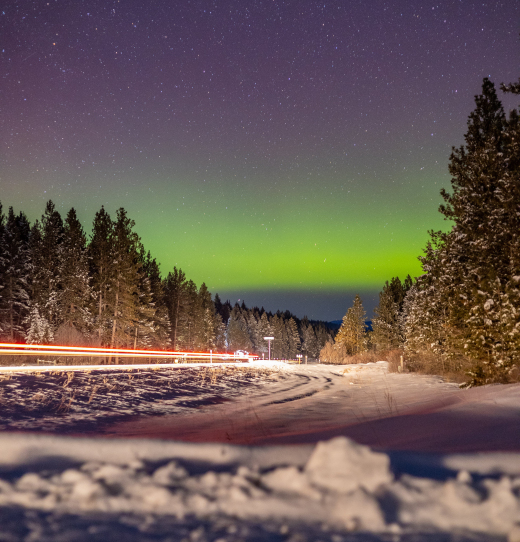
CLOSE ENCOUNTER WITH A CME: A coronal mass ejection (CME) passed close to Earth on Feb. 15th. It wasn't a direct hit. Nevertheless, its arrival triggered a minor G1-class geomagnetic storm with auroras in the USA as far south as Montana: https://www.spaceweather.com/images2023/15feb23/montana_strip.jpg
❤10
A SOLAR EXPLOSION OF INTEREST: A magnetic filament loosely connected to sunspot AR3226 erupted during the early hours of Feb. 15th. NOAA forecasters say the resulting CME is "very likely to hit Earth." Stay tuned for updates as they model the CME's trajectory.
❤11
Solar wind
speed: 438.8 km/sec
density: 10.49 protons/cm3
Updated: Today at 0251 UT
X-ray Solar Flares
6-hr max: C8 1059 UT Feb16
24-hr: M1 0032 UT Feb16
xUpdated: Today at: 1455 UT
speed: 438.8 km/sec
density: 10.49 protons/cm3
Updated: Today at 0251 UT
X-ray Solar Flares
6-hr max: C8 1059 UT Feb16
24-hr: M1 0032 UT Feb16
xUpdated: Today at: 1455 UT
👍3
Space Weather Today pinned «Solar wind speed: 438.8 km/sec density: 10.49 protons/cm3 Updated: Today at 0251 UT X-ray Solar Flares 6-hr max: C8 1059 UT Feb16 24-hr: M1 0032 UT Feb16 xUpdated: Today at: 1455 UT»
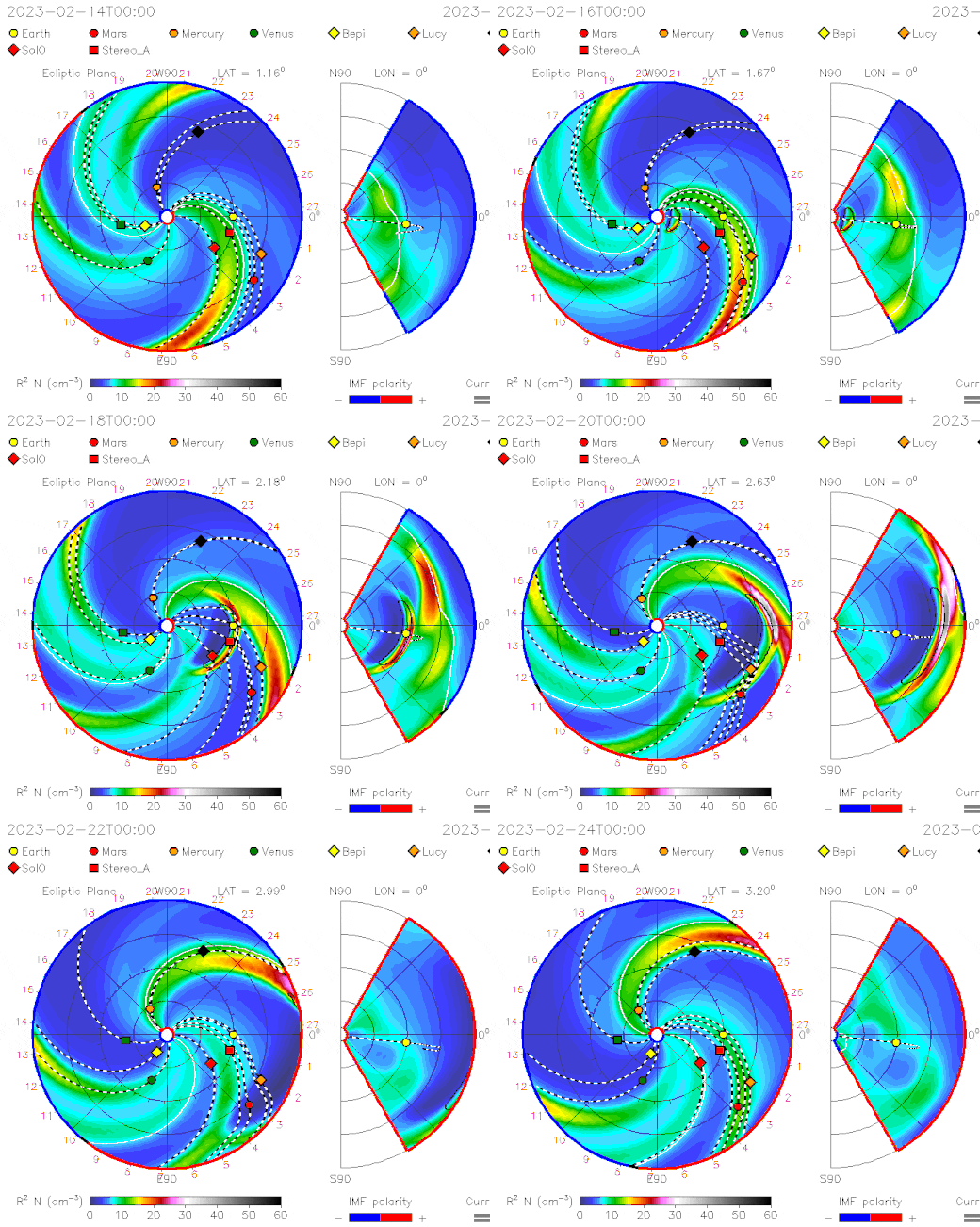
A CME IS COMING: Yesterday, Feb. 15th, a magnetic filament straddling the sun's equator erupted and hurled a partial halo CME toward Earth. Earth is the yellow dot in this NASA model of the approaching CME:
https://www.spaceweather.com/images2023/15feb23/nasamodel2_crop_strip_opt.gif
A similar NOAA model agrees: The CME should arrive during the late hours of Feb. 17th. First contact is expected to produce a minor G1-class geomagnetic storm, intensifying to moderate G2-class storming on Feb. 18th. During such storms, auroras can spill into the United States as far south as New York and Idaho (55 deg. geomagnetic latitude).
https://www.spaceweather.com/images2023/15feb23/nasamodel2_crop_strip_opt.gif
A similar NOAA model agrees: The CME should arrive during the late hours of Feb. 17th. First contact is expected to produce a minor G1-class geomagnetic storm, intensifying to moderate G2-class storming on Feb. 18th. During such storms, auroras can spill into the United States as far south as New York and Idaho (55 deg. geomagnetic latitude).
🔥4👍1
CHANCE OF FLARES TODAY: NOAA forecasters say there is a 45% chance of M-class solar flares and a 10% chance of X-flares today, Feb. 16th. The likely source would be big sunspot AR3226, which has an unstable delta-class magnetic field and is directly facing Earth.
👍4❤1
Solar wind
speed: 484.5 km/sec
density: 6.99 protons/cm3
Updated: Today at 0220 UT
X-ray Solar Flares
6-hr max: C2 0938 UT Feb17
24-hr: C4 2207 UT Feb16
Updated: Today at: 1425 UT
speed: 484.5 km/sec
density: 6.99 protons/cm3
Updated: Today at 0220 UT
X-ray Solar Flares
6-hr max: C2 0938 UT Feb17
24-hr: C4 2207 UT Feb16
Updated: Today at: 1425 UT
👍1
Space Weather Today pinned «Solar wind speed: 484.5 km/sec density: 6.99 protons/cm3 Updated: Today at 0220 UT X-ray Solar Flares 6-hr max: C2 0938 UT Feb17 24-hr: C4 2207 UT Feb16 Updated: Today at: 1425 UT»
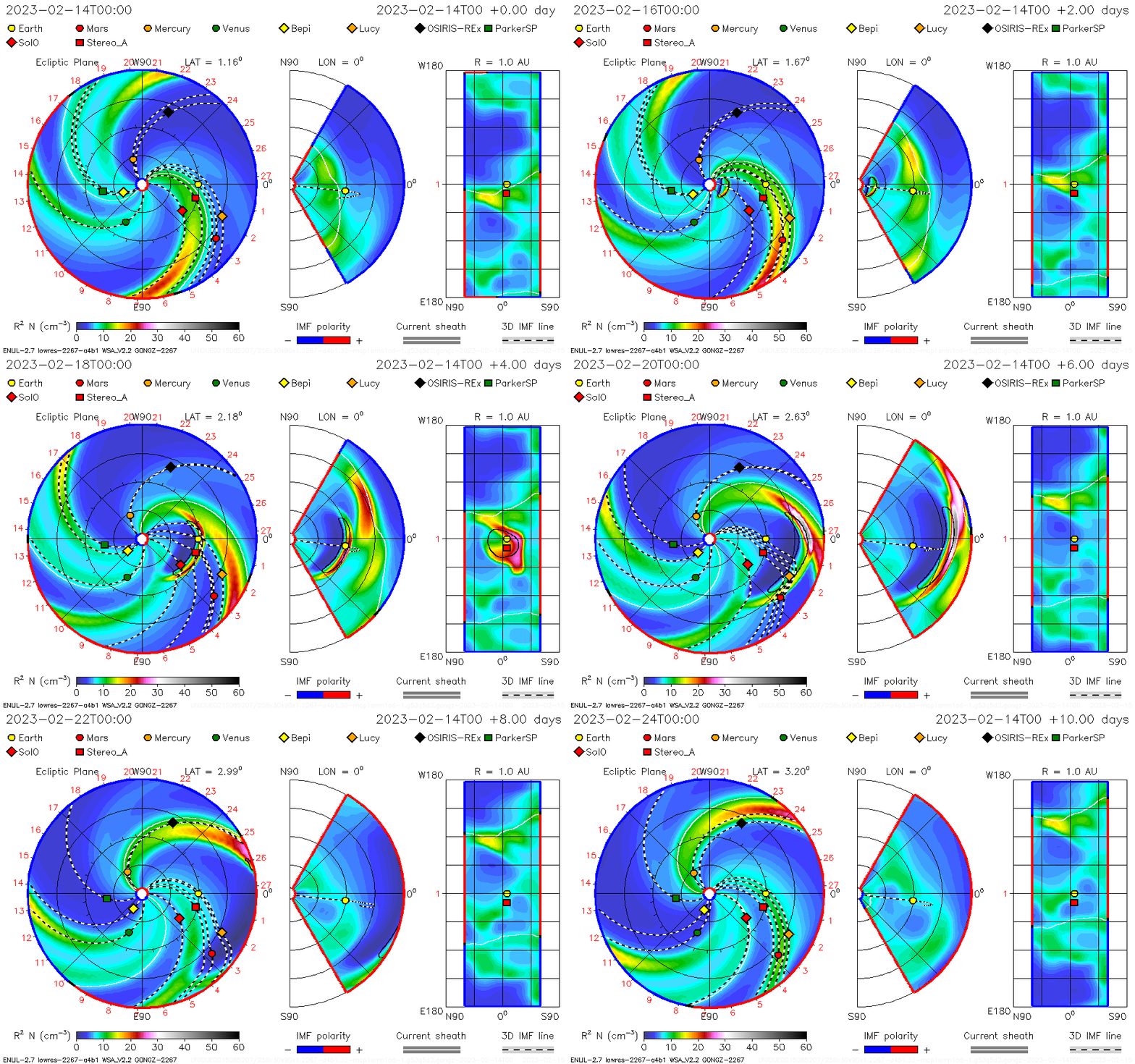
GEOMAGNETIC STORM WATCH: Photographers, warm up your cameras. A CME is heading for Earth, and it could spark a good display of auroras when it arrives later today or tomorrow. NASA's computer model of the CME suggests it will reach Earth on Feb. 17th at 1800 UT. First contact is expected to produce a minor G1-class geomagnetic storm, intensifying to moderate G2-class storming on Feb. 18th. During such storms, auroras can spill into the United States as far south as New York and Idaho. https://www.spaceweather.com/images2023/15feb23/nasamodel2.gif
👍5🔥2
Solar wind
speed: 427.2 km/sec
density: 5.32 protons/cm3
Updated: Today at 0401 UT
X-ray Solar Flares
6-hr max: C7 1200 UT Feb18
24-hr: X2 2016 UT Feb17
Updated: Today at: 1605 UT
speed: 427.2 km/sec
density: 5.32 protons/cm3
Updated: Today at 0401 UT
X-ray Solar Flares
6-hr max: C7 1200 UT Feb18
24-hr: X2 2016 UT Feb17
Updated: Today at: 1605 UT
👍3
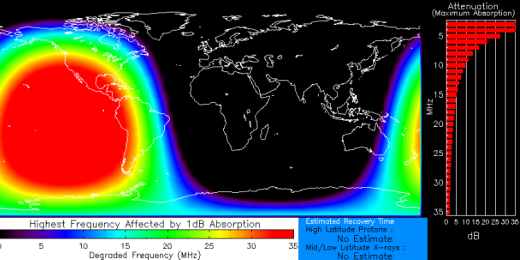
STRONG X2-CLASS SOLAR FLARE: New sunspot AR3229 erupted on Feb. 17th (2016 UT), producing a strong X2.2-class solar flare. NASA's Solar Dynamics Observatory (SDO) recorded the extreme ultraviolet pulse: https://www.spaceweather.com/images2023/17feb23/blackoutmap_strip.jpg
🔥6
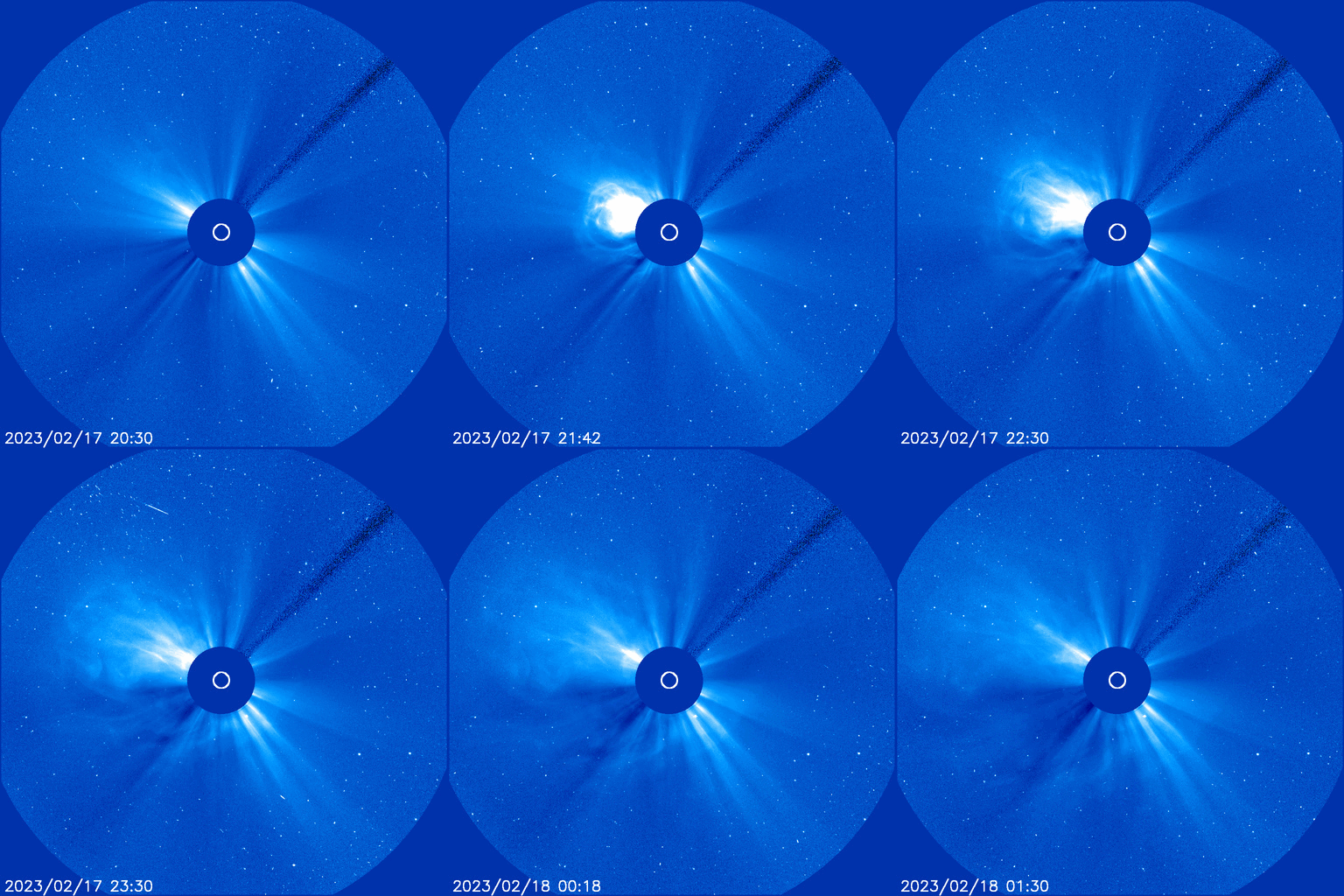
CONFIRMED: A CME IS COMING: Yesterday's X2.2-class solar flare (described below) produced a CME, and it has an Earth-directed component. Coronagraphs onboard the Solar and Heliospheric Observatory (SOHO) recorded a lopsided halo emerging from the blast site:
https://www.spaceweather.com/images2023/17feb23/x2_cme.gif
The flank of the CME will probably strike Earth on Feb. 20th. Geomagnetic storms ranging from category G1 (Minor) to G3 (Strong) are possible after the CME arrives. NOAA analysts are currently modeling the CME's internal structure and trajectory. Refinements to this forecast may be made, depending on their results.
https://www.spaceweather.com/images2023/17feb23/x2_cme.gif
The flank of the CME will probably strike Earth on Feb. 20th. Geomagnetic storms ranging from category G1 (Minor) to G3 (Strong) are possible after the CME arrives. NOAA analysts are currently modeling the CME's internal structure and trajectory. Refinements to this forecast may be made, depending on their results.
🔥12👍1
Solar wind
speed: 450.7 km/sec
density: 11.70 protons/cm3
Updated: Today at 0835 UT
X-ray Solar Flares
6-hr max: M4 1458 UT Feb20
24-hr: M4 1458 UT Feb20
Updated: Today at: 2040 UT
speed: 450.7 km/sec
density: 11.70 protons/cm3
Updated: Today at 0835 UT
X-ray Solar Flares
6-hr max: M4 1458 UT Feb20
24-hr: M4 1458 UT Feb20
Updated: Today at: 2040 UT
🔥4👍1
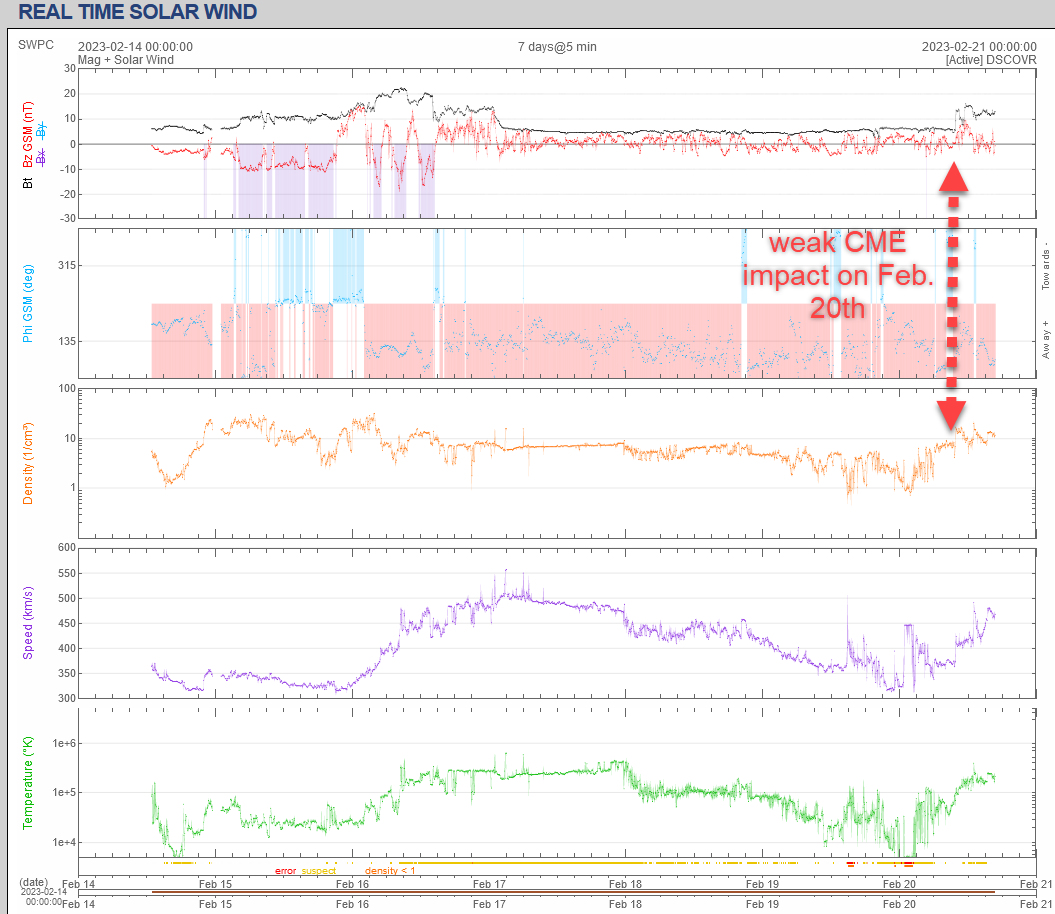
WEAK IMPACT: A CME struck Earth's magnetic field on Feb. 20th at 10:39 UTC. The impact was weak and did not cause a geomagnetic storm. If this was the CME from Friday's X2.2 flare (the jury's still out) then NOAA's forecast of a weak glancing blow was correct, and the geomagnetic storm watch can be cancelled. https://www.spaceweather.com/images2023/20feb23/weakimpact.jpg
👍4👏2