Space Weather Today pinned «Solar wind speed: 432.2 km/sec density: 4.78 protons/cm3 Updated: Today at 0307 UT X-ray Solar Flares 6-hr max: C7 1212 UT Feb06 24-hr: C7 1212 UT Feb06 Updated: Today at: 1510 UT»
Emerging Sunspot Poses Threat of Geoeffective Flares
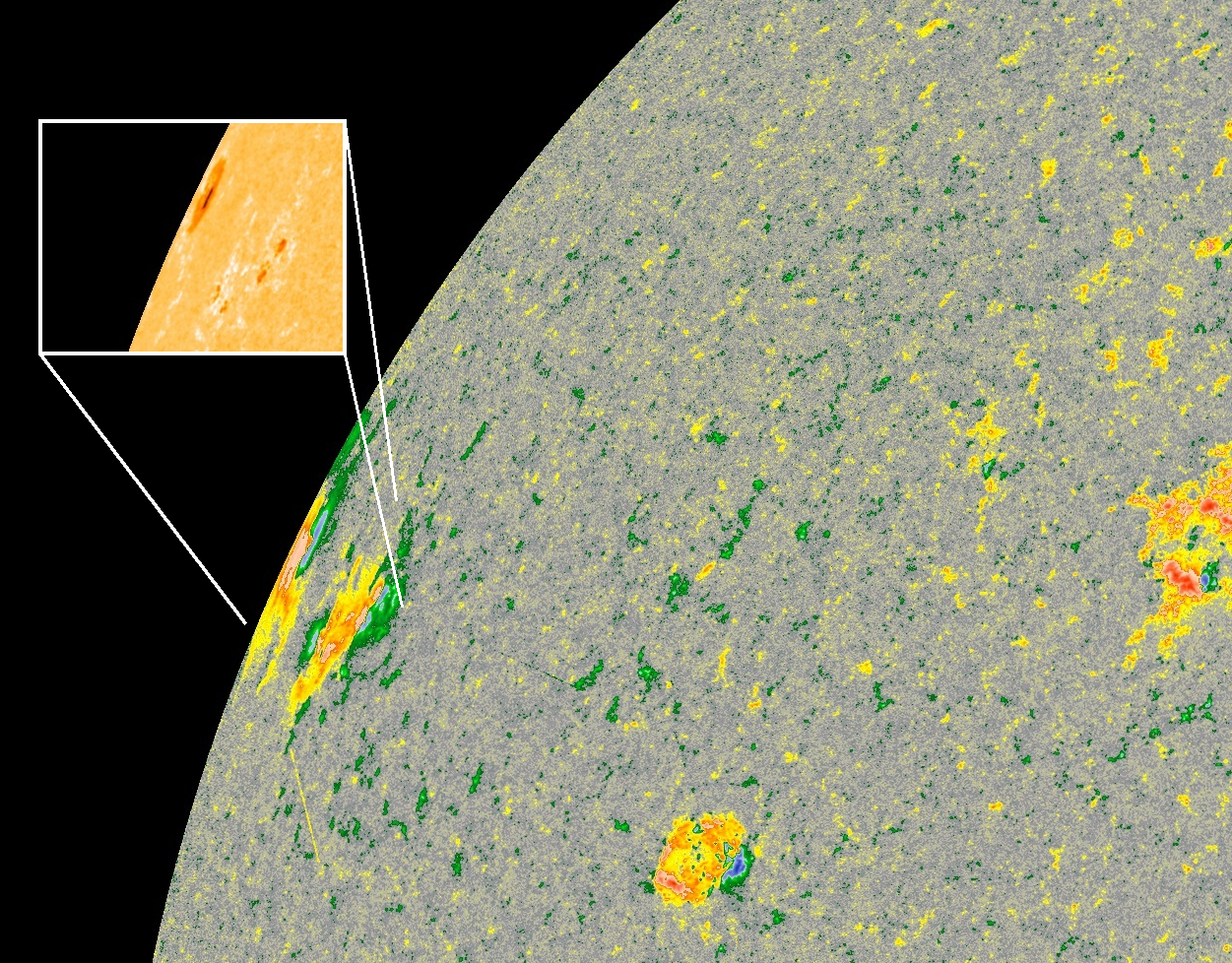
A sunspot has emerged over the sun's northeastern limb, which is thought to be the same one that caused a massive plasma eruption on the far side of the sun over the weekend. This sunspot is facing Earth, increasing the likelihood of geoeffective flares in the near future.
https://www.spaceweather.com/images2023/06feb23/newspot_crop.jpg
A sunspot has emerged over the sun's northeastern limb, which is thought to be the same one that caused a massive plasma eruption on the far side of the sun over the weekend. This sunspot is facing Earth, increasing the likelihood of geoeffective flares in the near future.
https://www.spaceweather.com/images2023/06feb23/newspot_crop.jpg
❤4👍2
Solar wind
speed: 501.4 km/sec
density: 5.17 protons/cm3
Updated: Today at 0157 UT
X-ray Solar Flares
6-hr max: M1 1353 UT Feb07
24-hr: M1 1353 UT Feb07
Updated: Today at: 1400 UT
speed: 501.4 km/sec
density: 5.17 protons/cm3
Updated: Today at 0157 UT
X-ray Solar Flares
6-hr max: M1 1353 UT Feb07
24-hr: M1 1353 UT Feb07
Updated: Today at: 1400 UT
❤2
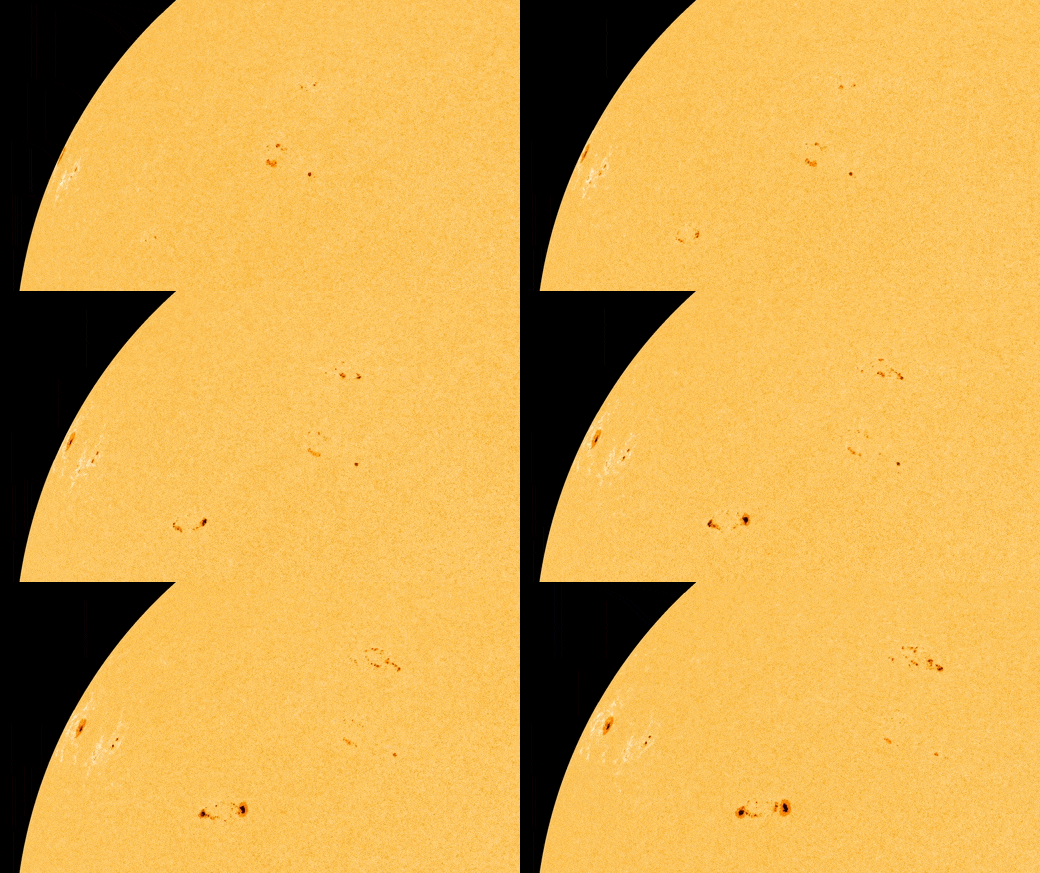
SUNSPOT GENESIS: Since yesterday, the sunspot has doubled. This 24-hour movie from NASA's Solar Dynamics Observatory shows the profusion of new dark cores:
https://www.spaceweather.com/images2023/07feb23/genesis_strip_opt.gif
One of the new sunspots (AR3213) has an unstable 'beta-gamma' magnetic field that harbors energy for M-class solar flares. It is almost directly facing Earth.
https://www.spaceweather.com/images2023/07feb23/genesis_strip_opt.gif
One of the new sunspots (AR3213) has an unstable 'beta-gamma' magnetic field that harbors energy for M-class solar flares. It is almost directly facing Earth.
❤4👍1
GEOMAGNETIC STORM WATCH: Minor G1-class geomagnetic storms are possible today, Feb. 7th, as Earth enters a high-speed stream of solar wind. Arctic sky watchers should be alert for auroras mixed with almost full moonlight.
❤3
Solar wind
speed: 581.9 km/sec
density: 0.73 protons/cm3
Updated: Today at 0156 UT
X-ray Solar Flares
6-hr max: C7 1033 UT Feb08
24-hr: M6 2307 UT Feb07
Updated: Today at: 1400 UT
speed: 581.9 km/sec
density: 0.73 protons/cm3
Updated: Today at 0156 UT
X-ray Solar Flares
6-hr max: C7 1033 UT Feb08
24-hr: M6 2307 UT Feb07
Updated: Today at: 1400 UT
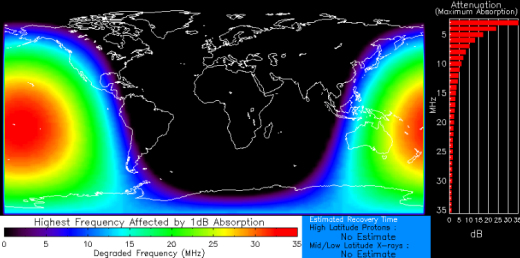
SOLAR FLARE AND RADIO BLACKOUT: Two days ago, sunspot AR3213 didn't even exist. Now it stretches almost 100,000 km across the surface of the sun with at least two dark cores larger than Earth. The fast-growing spot is crackling with solar flares. The strongest so far, an M6-class flare on Feb 7th (2307 UTC), caused a shortwave radio blackout over the Pacific Ocean:
https://www.spaceweather.com/images2023/08feb23/blackoutmap_strip.jpg
Mariners and ham radio operators around the Pacific may have noticed unusual propagation effects at frequencies below 30 MHz for at least an hour after the flare.
This explosion did not produce a CME. However, future explosions might. The sunspot has an unstable 'beta-gamma' magnetic field that harbors energy for strong flares; NOAA forecasters say there is a 25% chance of M-flares and a 5% chance of X-flares on Feb. 8th. The sunspot is almost directly facing Earth, so stay tuned.
https://www.spaceweather.com/images2023/08feb23/blackoutmap_strip.jpg
Mariners and ham radio operators around the Pacific may have noticed unusual propagation effects at frequencies below 30 MHz for at least an hour after the flare.
This explosion did not produce a CME. However, future explosions might. The sunspot has an unstable 'beta-gamma' magnetic field that harbors energy for strong flares; NOAA forecasters say there is a 25% chance of M-flares and a 5% chance of X-flares on Feb. 8th. The sunspot is almost directly facing Earth, so stay tuned.
👍8
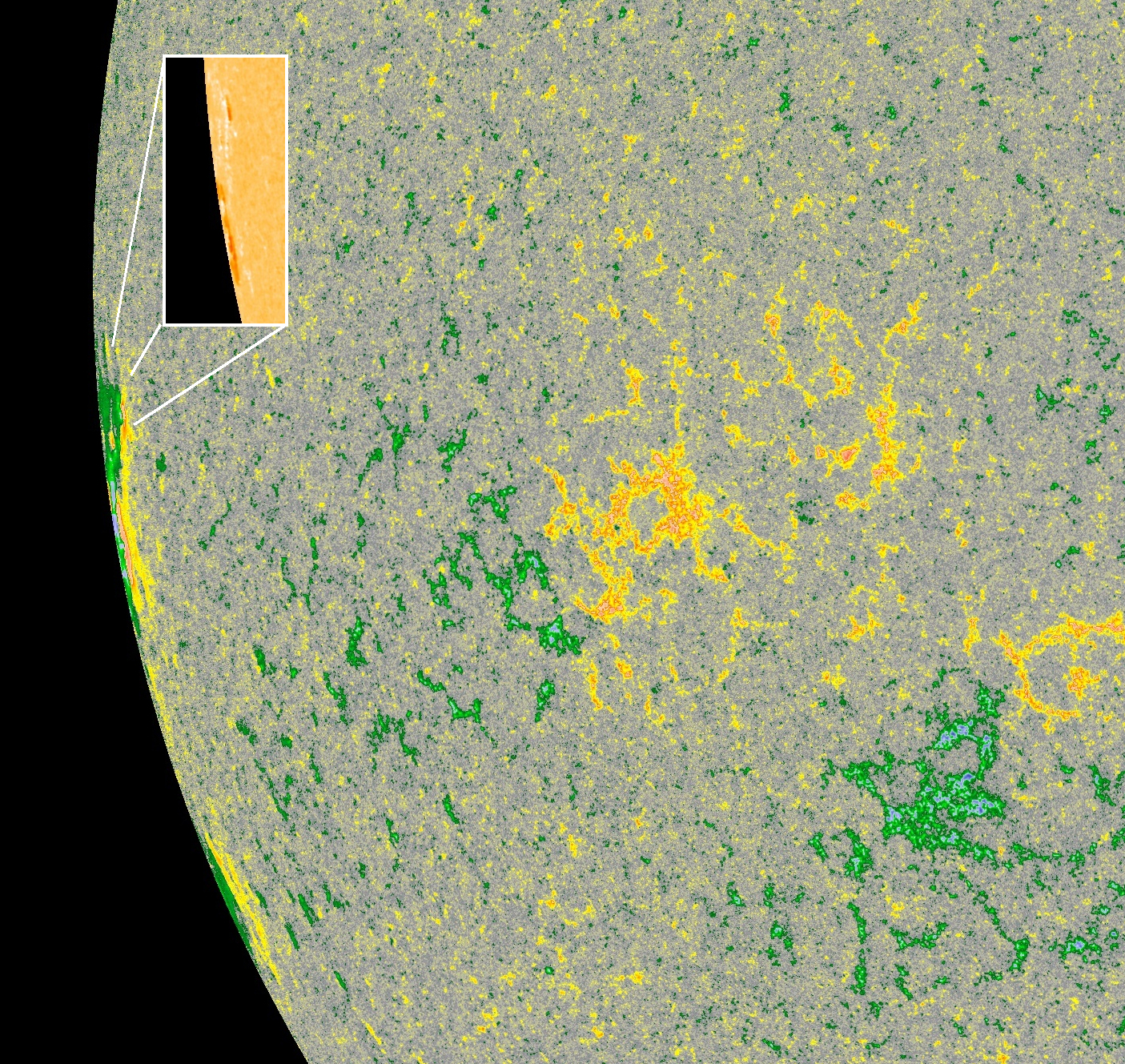
A BIG SUNSPOT IS EMERGING: A new and apparently large sunspot is emerging over the sun's southeastern limb. Amateur astronomers with solar telescopes should point their optics right here to see what is coming. This is the same active region that produced a dramatic explosion from the farside of the sun on Feb. 7th.
https://www.spaceweather.com/images2023/08feb23/latest_4096_HMIBC_lab_crop.jpg
https://www.spaceweather.com/images2023/08feb23/latest_4096_HMIBC_lab_crop.jpg
🔥6👍1🤔1
Solar wind
speed: 499.5 km/sec
density: 2.91 protons/cm3
Updated: Today at 0201 UT
X-ray Solar Flares
6-hr max: M2 0907 UT Feb09
24-hr: M3 0310 UT Feb09
Updated: Today at: 1405 UT
speed: 499.5 km/sec
density: 2.91 protons/cm3
Updated: Today at 0201 UT
X-ray Solar Flares
6-hr max: M2 0907 UT Feb09
24-hr: M3 0310 UT Feb09
Updated: Today at: 1405 UT
Space Weather Today pinned «Solar wind speed: 499.5 km/sec density: 2.91 protons/cm3 Updated: Today at 0201 UT X-ray Solar Flares 6-hr max: M2 0907 UT Feb09 24-hr: M3 0310 UT Feb09 Updated: Today at: 1405 UT»
INCREASING CHANCE OF FLARES: The odds of a strong solar flare today have more than doubled in response to a sudden profusion of large sunspots. NOAA forecasters say there is a 55% chance of M-class flares and a 15% of X-flares. The most likely source is Earth-facing sunspot AR3213, which has an unstable 'delta-class' magnetic field.
🔥7
Solar wind
speed: 493.1 km/sec
density: 4.24 protons/cm3
Updated: Today at 0602 UT
X-ray Solar Flares
6-hr max: M1 1601 UT Feb10
24-hr: M3 0303 UT Feb10
Updated: Today at: 1805 UT
speed: 493.1 km/sec
density: 4.24 protons/cm3
Updated: Today at 0602 UT
X-ray Solar Flares
6-hr max: M1 1601 UT Feb10
24-hr: M3 0303 UT Feb10
Updated: Today at: 1805 UT
👍2
Space Weather Today pinned «Solar wind speed: 493.1 km/sec density: 4.24 protons/cm3 Updated: Today at 0602 UT X-ray Solar Flares 6-hr max: M1 1601 UT Feb10 24-hr: M3 0303 UT Feb10 Updated: Today at: 1805 UT»
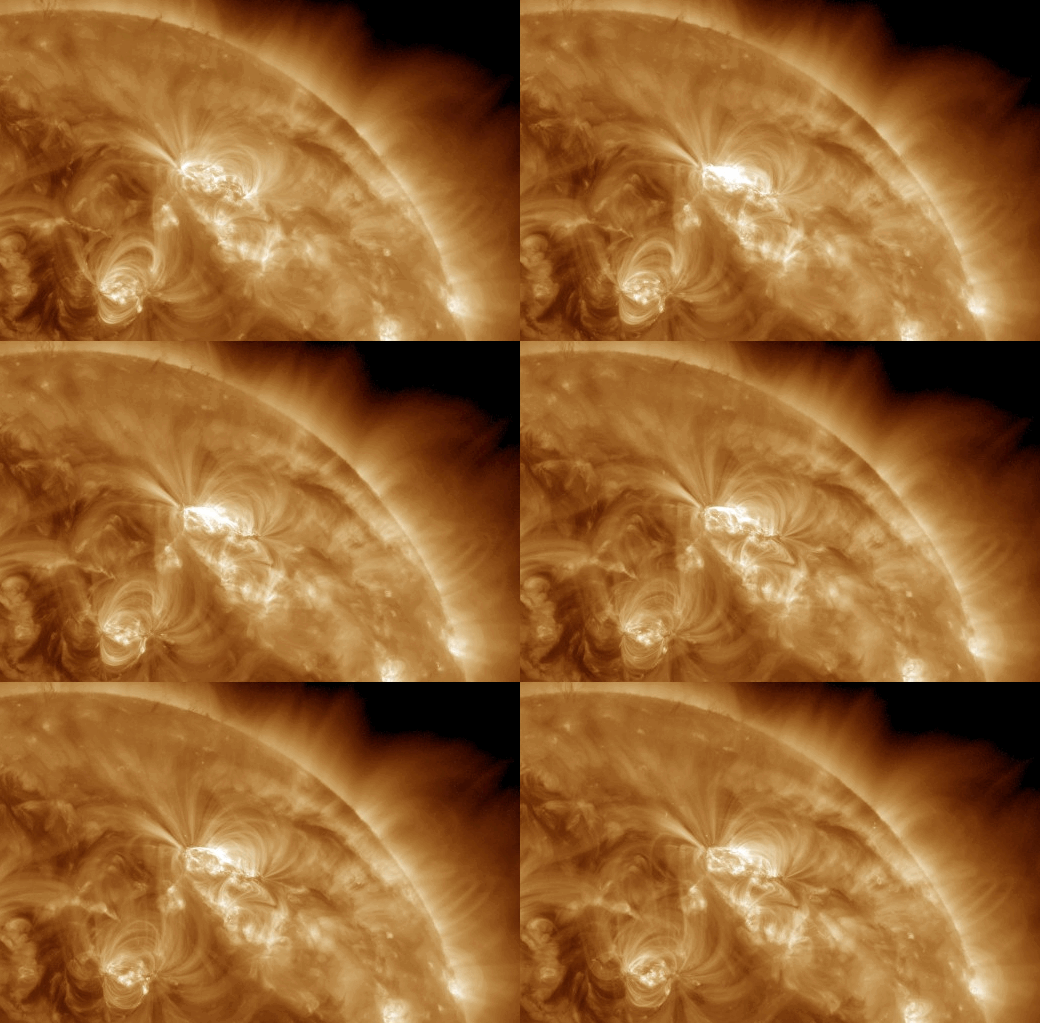
SOLAR FLARE AND SHOCK WAVE (UPDATED): Active sunspot AR3213 exploded during the early hours of Feb 10th (0303 UT), producing an M3.7-class solar flare and a shock wave in the sun's atmosphere. This extreme ultraviolet movie from NASA's Solar Dynamics Observatory shows what happened:
https://www.spaceweather.com/images2023/10feb23/tsunami_strip.gif
The shock wave is the shadowy disturbance expanding radially from the blast site. Based on the drift rate of a Type II solar radio burst reported by the US Air Force, the shock speed was 820 km/s (1.8 million mph).
Update: Shock waves like these usually lift a CME out of the sun's atmosphere. In this case, however, no CME was detected by SOHO coronagraphs. Without a CME to rattle Earth's magnetic field, the event will not cause a geomagnetic storm.
https://www.spaceweather.com/images2023/10feb23/tsunami_strip.gif
The shock wave is the shadowy disturbance expanding radially from the blast site. Based on the drift rate of a Type II solar radio burst reported by the US Air Force, the shock speed was 820 km/s (1.8 million mph).
Update: Shock waves like these usually lift a CME out of the sun's atmosphere. In this case, however, no CME was detected by SOHO coronagraphs. Without a CME to rattle Earth's magnetic field, the event will not cause a geomagnetic storm.
👍7
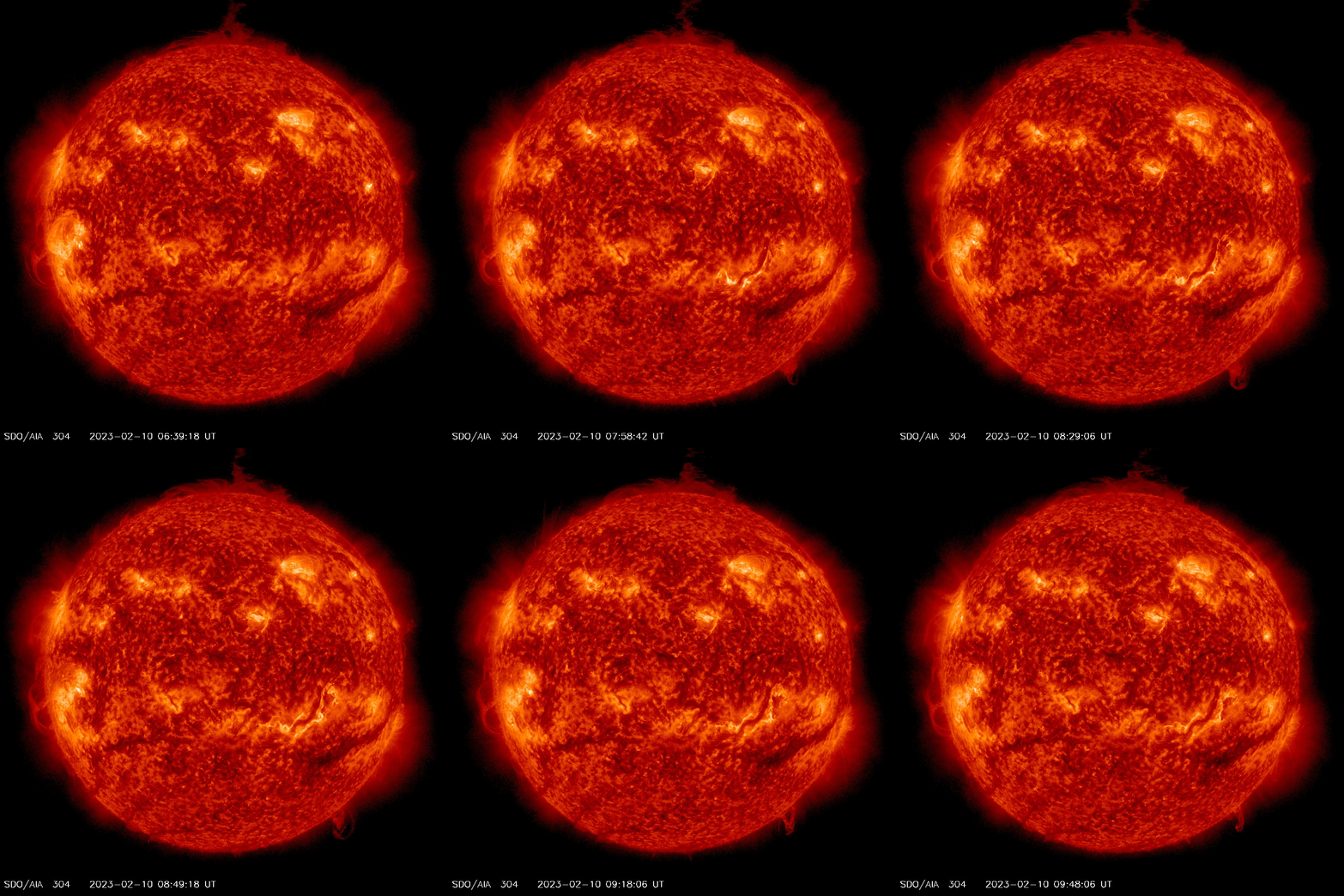
CANYON OF FIRE: A canyon of fire just opened on the sun. The walls of the canyon were carved by an erupting filament of magnetism, which went on to form the core of a CME now leaving the sun. Stay tuned for updates about possible Earth impacts. https://www.spaceweather.com/images2023/10feb23/cof_anim.gif
🔥10
Solar wind
speed: 350.7 km/sec
density: 8.23 protons/cm3
Updated: Today at 0230 UT
X-ray Solar Flares
6-hr max: C6 1431 UT Feb13
24-hr: M1 0518 UT Feb13
Updated: Today at: 1435 UT
speed: 350.7 km/sec
density: 8.23 protons/cm3
Updated: Today at 0230 UT
X-ray Solar Flares
6-hr max: C6 1431 UT Feb13
24-hr: M1 0518 UT Feb13
Updated: Today at: 1435 UT
👍1