Solar wind
speed: 368.7 km/sec
density: 9.19 protons/cm3
Updated: Today at 0246 UT
X-ray Solar Flares
6-hr max: C1 0957 UT Feb03
24-hr: C3 0249 UT Feb03
Updated: Today at: 1450 UT
speed: 368.7 km/sec
density: 9.19 protons/cm3
Updated: Today at 0246 UT
X-ray Solar Flares
6-hr max: C1 0957 UT Feb03
24-hr: C3 0249 UT Feb03
Updated: Today at: 1450 UT
👍6
Space Weather Today pinned «Solar wind speed: 368.7 km/sec density: 9.19 protons/cm3 Updated: Today at 0246 UT X-ray Solar Flares 6-hr max: C1 0957 UT Feb03 24-hr: C3 0249 UT Feb03 Updated: Today at: 1450 UT»
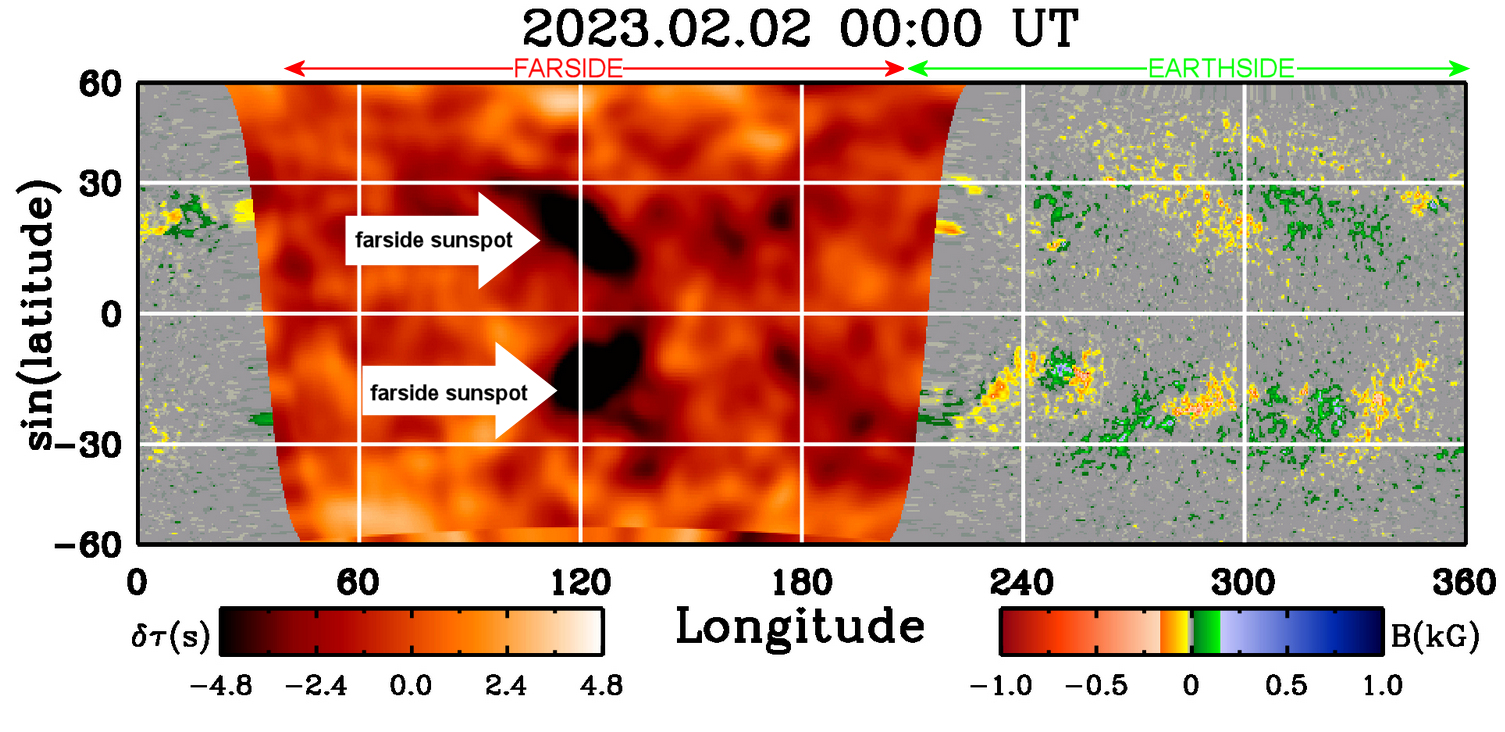
FARSIDE SUNSPOTS: Two large sunspot groups are transiting the farside of the sun. We know because NASA's Solar Dynamics Observatory is detecting their helioseismic echoes. The sun's rotation will turn them toward Earth about a week from now. https://www.spaceweather.com/images2023/03feb23/farside.jpg
👍6
Solar wind
speed: 344.4 km/sec
density: 9.41 protons/cm3
Updated: Today at 0706 UT
X-ray Solar Flares
6-hr max: C1 1739 UT Feb05
24-hr: C6 0326 UT Feb05
Updated: Today at: 1910 UT
speed: 344.4 km/sec
density: 9.41 protons/cm3
Updated: Today at 0706 UT
X-ray Solar Flares
6-hr max: C1 1739 UT Feb05
24-hr: C6 0326 UT Feb05
Updated: Today at: 1910 UT
MOSTLY QUIET: Every sunspot on the Earthside of the sun is stable or in decay. As a result, solar activity is low. NOAA forecasters say there is a 5% chance of M-class solar flares and no more than a 1% chance of X-flares on Feb. 5th.
Space Weather Today pinned «Solar wind speed: 344.4 km/sec density: 9.41 protons/cm3 Updated: Today at 0706 UT X-ray Solar Flares 6-hr max: C1 1739 UT Feb05 24-hr: C6 0326 UT Feb05 Updated: Today at: 1910 UT»
Solar wind
speed: 432.2 km/sec
density: 4.78 protons/cm3
Updated: Today at 0307 UT
X-ray Solar Flares
6-hr max: C7 1212 UT Feb06
24-hr: C7 1212 UT Feb06
Updated: Today at: 1510 UT
speed: 432.2 km/sec
density: 4.78 protons/cm3
Updated: Today at 0307 UT
X-ray Solar Flares
6-hr max: C7 1212 UT Feb06
24-hr: C7 1212 UT Feb06
Updated: Today at: 1510 UT
🔥2
Space Weather Today pinned «Solar wind speed: 432.2 km/sec density: 4.78 protons/cm3 Updated: Today at 0307 UT X-ray Solar Flares 6-hr max: C7 1212 UT Feb06 24-hr: C7 1212 UT Feb06 Updated: Today at: 1510 UT»
Emerging Sunspot Poses Threat of Geoeffective Flares
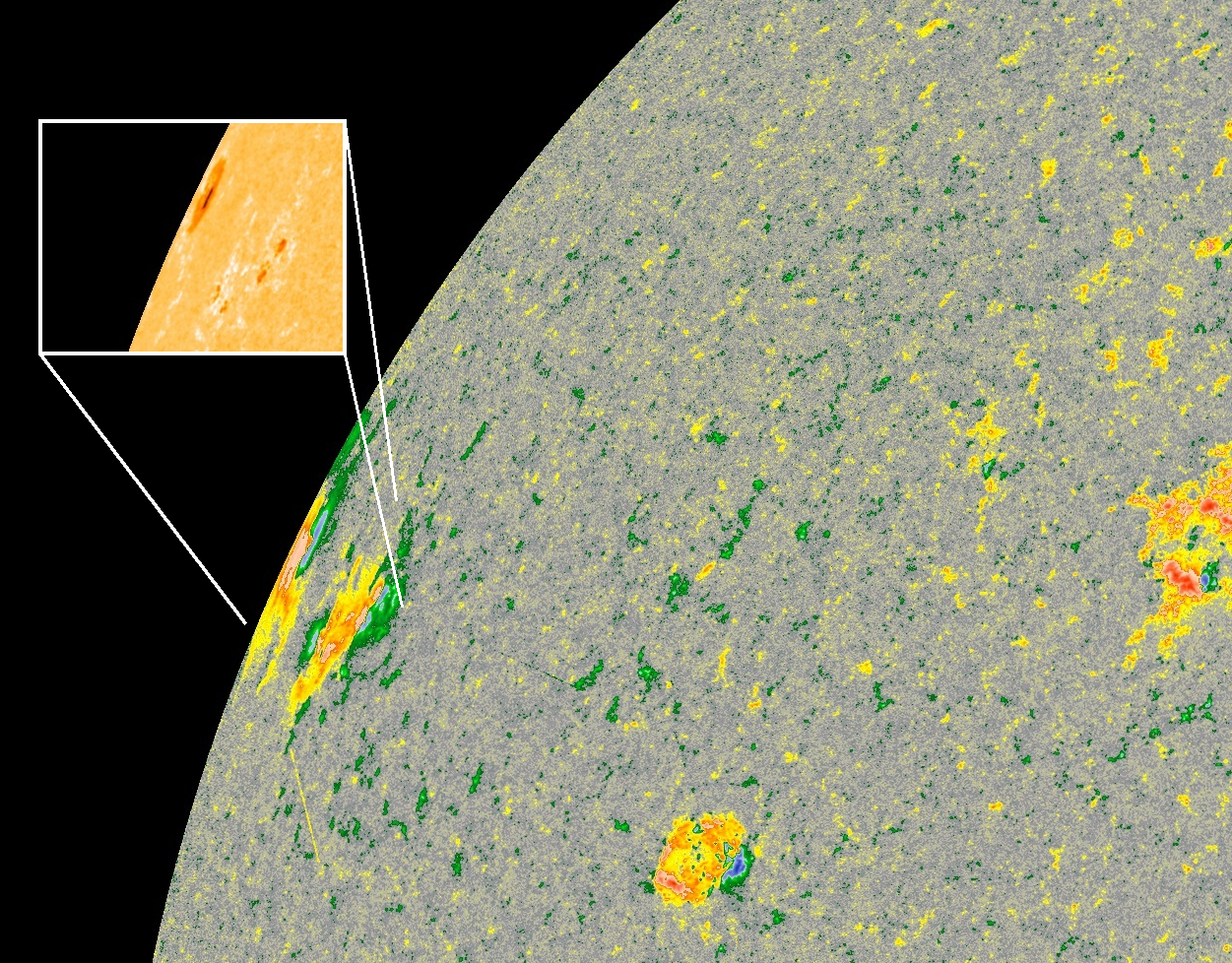
A sunspot has emerged over the sun's northeastern limb, which is thought to be the same one that caused a massive plasma eruption on the far side of the sun over the weekend. This sunspot is facing Earth, increasing the likelihood of geoeffective flares in the near future.
https://www.spaceweather.com/images2023/06feb23/newspot_crop.jpg
A sunspot has emerged over the sun's northeastern limb, which is thought to be the same one that caused a massive plasma eruption on the far side of the sun over the weekend. This sunspot is facing Earth, increasing the likelihood of geoeffective flares in the near future.
https://www.spaceweather.com/images2023/06feb23/newspot_crop.jpg
❤4👍2
Solar wind
speed: 501.4 km/sec
density: 5.17 protons/cm3
Updated: Today at 0157 UT
X-ray Solar Flares
6-hr max: M1 1353 UT Feb07
24-hr: M1 1353 UT Feb07
Updated: Today at: 1400 UT
speed: 501.4 km/sec
density: 5.17 protons/cm3
Updated: Today at 0157 UT
X-ray Solar Flares
6-hr max: M1 1353 UT Feb07
24-hr: M1 1353 UT Feb07
Updated: Today at: 1400 UT
❤2
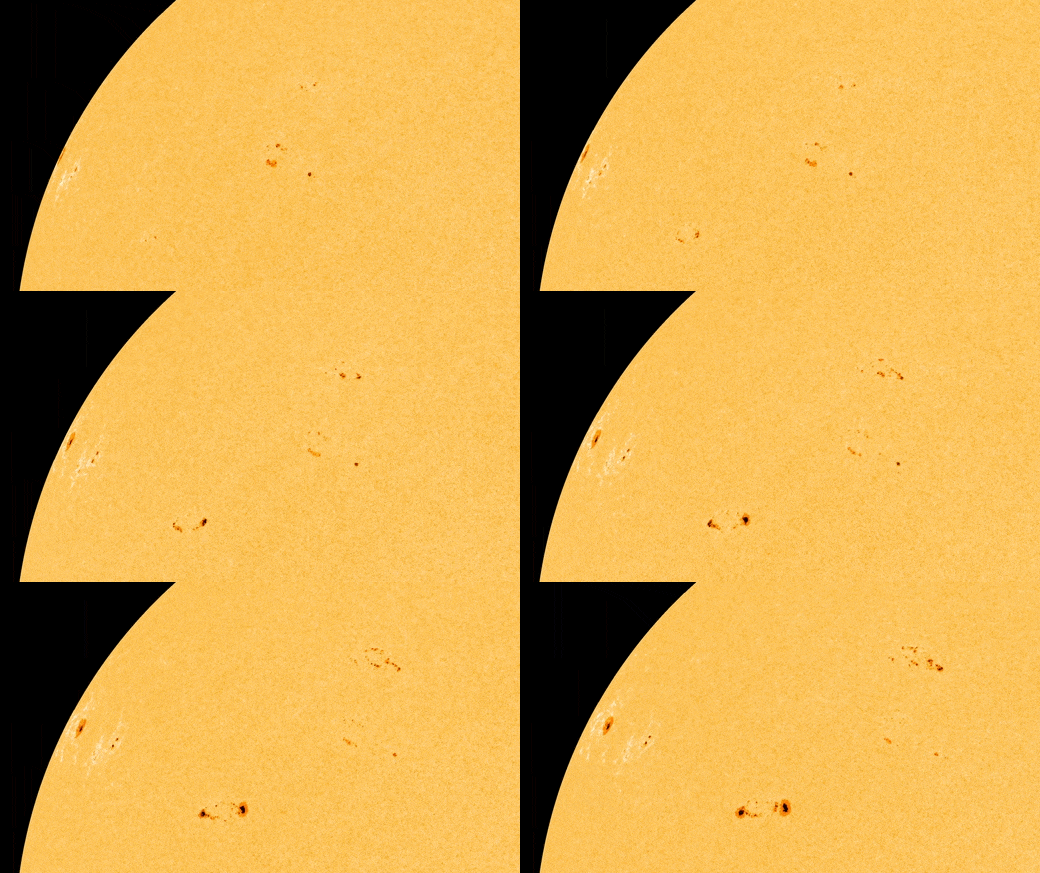
SUNSPOT GENESIS: Since yesterday, the sunspot has doubled. This 24-hour movie from NASA's Solar Dynamics Observatory shows the profusion of new dark cores:
https://www.spaceweather.com/images2023/07feb23/genesis_strip_opt.gif
One of the new sunspots (AR3213) has an unstable 'beta-gamma' magnetic field that harbors energy for M-class solar flares. It is almost directly facing Earth.
https://www.spaceweather.com/images2023/07feb23/genesis_strip_opt.gif
One of the new sunspots (AR3213) has an unstable 'beta-gamma' magnetic field that harbors energy for M-class solar flares. It is almost directly facing Earth.
❤4👍1
GEOMAGNETIC STORM WATCH: Minor G1-class geomagnetic storms are possible today, Feb. 7th, as Earth enters a high-speed stream of solar wind. Arctic sky watchers should be alert for auroras mixed with almost full moonlight.
❤3
Solar wind
speed: 581.9 km/sec
density: 0.73 protons/cm3
Updated: Today at 0156 UT
X-ray Solar Flares
6-hr max: C7 1033 UT Feb08
24-hr: M6 2307 UT Feb07
Updated: Today at: 1400 UT
speed: 581.9 km/sec
density: 0.73 protons/cm3
Updated: Today at 0156 UT
X-ray Solar Flares
6-hr max: C7 1033 UT Feb08
24-hr: M6 2307 UT Feb07
Updated: Today at: 1400 UT
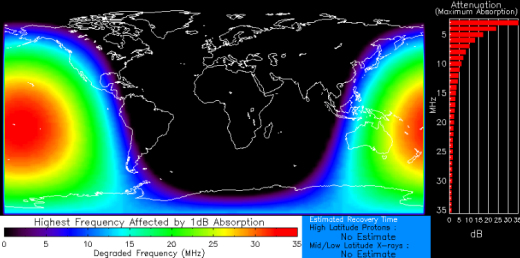
SOLAR FLARE AND RADIO BLACKOUT: Two days ago, sunspot AR3213 didn't even exist. Now it stretches almost 100,000 km across the surface of the sun with at least two dark cores larger than Earth. The fast-growing spot is crackling with solar flares. The strongest so far, an M6-class flare on Feb 7th (2307 UTC), caused a shortwave radio blackout over the Pacific Ocean:
https://www.spaceweather.com/images2023/08feb23/blackoutmap_strip.jpg
Mariners and ham radio operators around the Pacific may have noticed unusual propagation effects at frequencies below 30 MHz for at least an hour after the flare.
This explosion did not produce a CME. However, future explosions might. The sunspot has an unstable 'beta-gamma' magnetic field that harbors energy for strong flares; NOAA forecasters say there is a 25% chance of M-flares and a 5% chance of X-flares on Feb. 8th. The sunspot is almost directly facing Earth, so stay tuned.
https://www.spaceweather.com/images2023/08feb23/blackoutmap_strip.jpg
Mariners and ham radio operators around the Pacific may have noticed unusual propagation effects at frequencies below 30 MHz for at least an hour after the flare.
This explosion did not produce a CME. However, future explosions might. The sunspot has an unstable 'beta-gamma' magnetic field that harbors energy for strong flares; NOAA forecasters say there is a 25% chance of M-flares and a 5% chance of X-flares on Feb. 8th. The sunspot is almost directly facing Earth, so stay tuned.
👍8
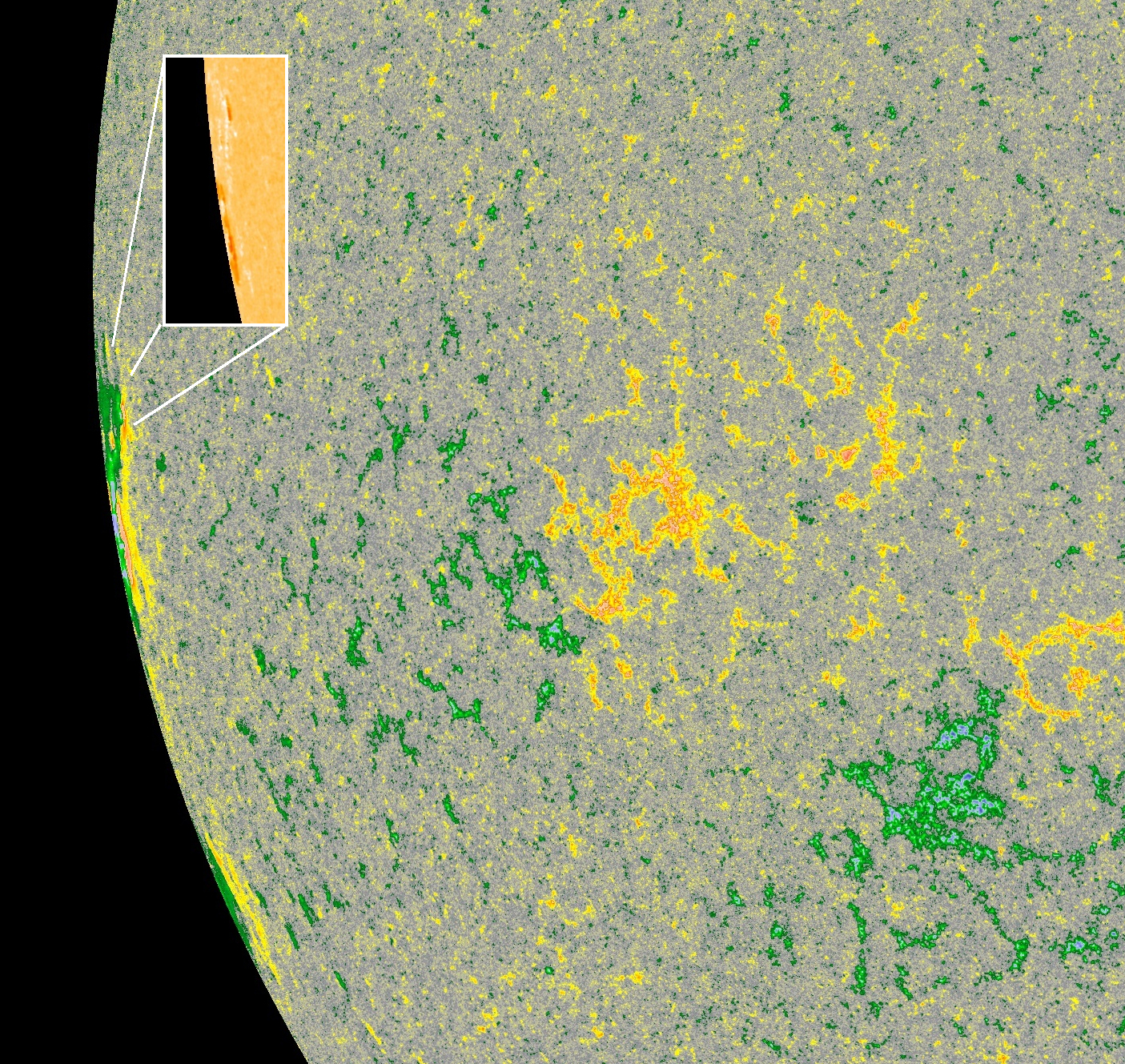
A BIG SUNSPOT IS EMERGING: A new and apparently large sunspot is emerging over the sun's southeastern limb. Amateur astronomers with solar telescopes should point their optics right here to see what is coming. This is the same active region that produced a dramatic explosion from the farside of the sun on Feb. 7th.
https://www.spaceweather.com/images2023/08feb23/latest_4096_HMIBC_lab_crop.jpg
https://www.spaceweather.com/images2023/08feb23/latest_4096_HMIBC_lab_crop.jpg
🔥6👍1🤔1