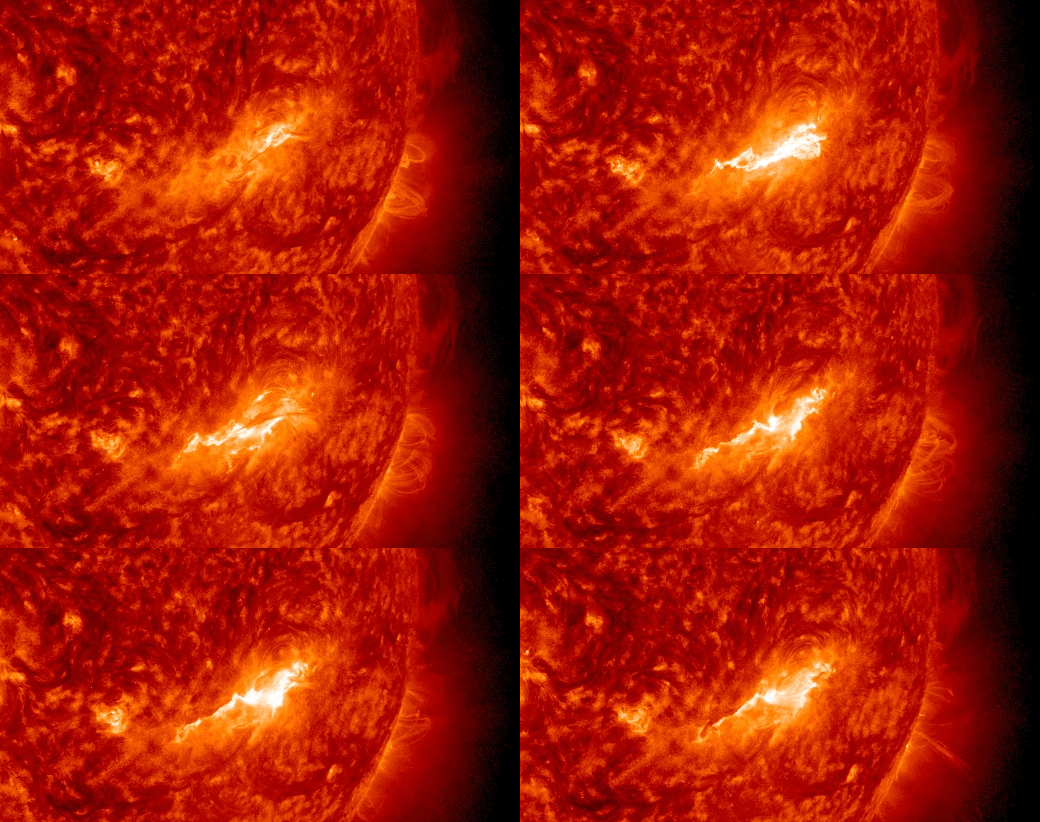
SOLAR FLARE AND CME: A twist of dark plasma left the sun on Jan. 14th, propelled by a double-dip M4-class solar flare in the magnetic canopy of sunspot AR3182:
https://www.spaceweather.com/images2023/14jan23/double_m_strip.gif
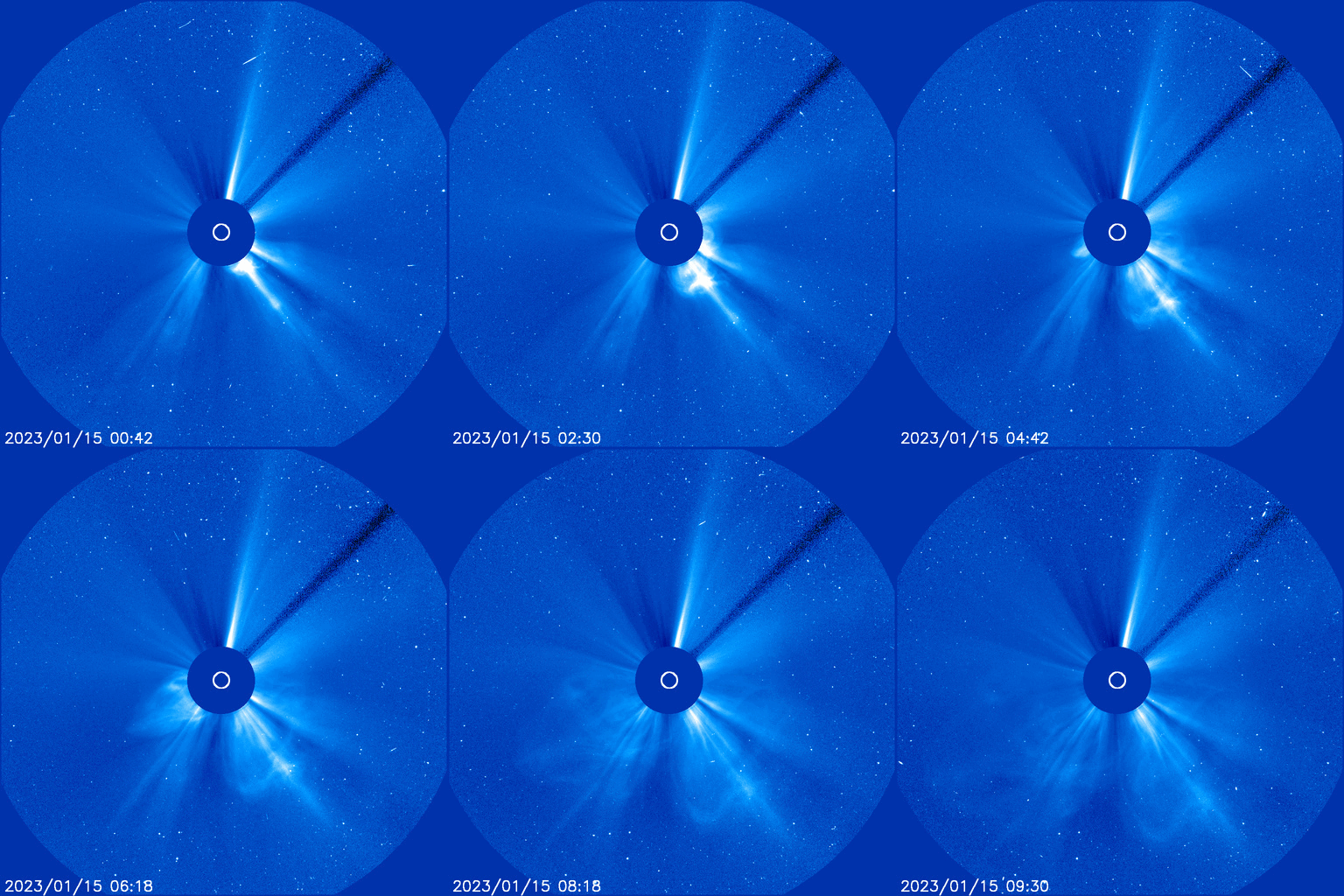
The debris carved a spiraling path through the sun's atmosphere, a blender-like process that hurled a coronal mass ejection (CME) into space. First-look images from the Solar and Heliospheric Observatory (SOHO) reveal a bright CME emerging from the sun's southwestern limb. Clearly, the CME is not heading directly for Earth, but a glancing blow might be possible early next week. NOAA analysts are evaluating the possibility now.
https://www.spaceweather.com/images2023/14jan23/double_m_strip.gif
The debris carved a spiraling path through the sun's atmosphere, a blender-like process that hurled a coronal mass ejection (CME) into space. First-look images from the Solar and Heliospheric Observatory (SOHO) reveal a bright CME emerging from the sun's southwestern limb. Clearly, the CME is not heading directly for Earth, but a glancing blow might be possible early next week. NOAA analysts are evaluating the possibility now.
❤6
INTERPLANETARY TRANSIENT SPARKS RED AURORAS: A solar wind stream washed over Earth on Jan. 13-14. Embedded inside was an 'interplanetary transient'--a minor but strongly magnetized shock wave from a CME, which left the sun 3 says earlier. Its impact sparked bright red auroras over Scotland and Norway.
⚡8❤3
Solar wind
speed: 471.9 km/sec
density: 11.57 protons/cm3
Updated: Today at 0312 UT
X-ray Solar Flares
6-hr max: C8 0923 UT Jan16
24-hr: M1 1515 UT Jan15
Updated: Today at: 1515 UT
speed: 471.9 km/sec
density: 11.57 protons/cm3
Updated: Today at 0312 UT
X-ray Solar Flares
6-hr max: C8 0923 UT Jan16
24-hr: M1 1515 UT Jan15
Updated: Today at: 1515 UT
❤5
Space Weather Today pinned «Solar wind speed: 471.9 km/sec density: 11.57 protons/cm3 Updated: Today at 0312 UT X-ray Solar Flares 6-hr max: C8 0923 UT Jan16 24-hr: M1 1515 UT Jan15 Updated: Today at: 1515 UT»
A CME IS COMING: Minor G1-class geomagnetic storms are possible on Jan. 19th when a CME is expected to graze Earth's magnetic field. The CME was hurled into space on Jan. 14th by a dramatic twisting eruption in the magnetic canopy of sunspot AR3182. High latitude sky watchers should be alert for auroras when the CME arrives.
❤15👍3
Solar wind
speed: 414.3 km/sec
density: 4.12 protons/cm3
Updated: Today at 0221 UT
X-ray Solar Flares
6-hr max: C2 1221 UT Jan17
24-hr: C9 0013 UT Jan17
Updated: Today at: 1425 UT
speed: 414.3 km/sec
density: 4.12 protons/cm3
Updated: Today at 0221 UT
X-ray Solar Flares
6-hr max: C2 1221 UT Jan17
24-hr: C9 0013 UT Jan17
Updated: Today at: 1425 UT
❤1
Space Weather Today pinned «Solar wind speed: 414.3 km/sec density: 4.12 protons/cm3 Updated: Today at 0221 UT X-ray Solar Flares 6-hr max: C2 1221 UT Jan17 24-hr: C9 0013 UT Jan17 Updated: Today at: 1425 UT»
Solar wind
speed: 434.4 km/sec
density: 8.05 protons/cm3
Updated: Today at 0222 UT
X-ray Solar Flares
6-hr max: M1 1035 UT Jan18
24-hr: M1 2329 UT Jan17
Updated: Today at: 1425 UT
speed: 434.4 km/sec
density: 8.05 protons/cm3
Updated: Today at 0222 UT
X-ray Solar Flares
6-hr max: M1 1035 UT Jan18
24-hr: M1 2329 UT Jan17
Updated: Today at: 1425 UT
🔥1
Space Weather Today pinned «Solar wind speed: 434.4 km/sec density: 8.05 protons/cm3 Updated: Today at 0222 UT X-ray Solar Flares 6-hr max: M1 1035 UT Jan18 24-hr: M1 2329 UT Jan17 Updated: Today at: 1425 UT»
CME IMPACT SPARKS AURORAS: Arriving earlier than expected, a CME struck Earth's magnetic field on Jan. 17th around 2200 UT. Its arrival was signaled by an abrupt shift in the interplanetary magnetic field (IMF) near Earth. The impact sparked a brief outburst of Arctic auroras, which has since subsided. https://www.spaceweather.com/images2023/14jan23/two_cmes.gif
🔥2
Solar wind
speed: 367.7 km/sec
density: 2.45 protons/cm3
Updated: Today at 0247 UT
X-ray Solar Flares
6-hr max: M1 1012 UT Jan19
24-hr: M1 1012 UT Jan19
Updated: Today at: 1450 UT
speed: 367.7 km/sec
density: 2.45 protons/cm3
Updated: Today at 0247 UT
X-ray Solar Flares
6-hr max: M1 1012 UT Jan19
24-hr: M1 1012 UT Jan19
Updated: Today at: 1450 UT
CHANCE OF FLARES: NOAA forecasters say there is a 60% chance of M-class solar flares and a 15% chance of X-flares today. The most likely source is giant sunspot AR3190, which is directly facing Earth.
👍5🔥1
Space Weather Today pinned «Solar wind speed: 367.7 km/sec density: 2.45 protons/cm3 Updated: Today at 0247 UT X-ray Solar Flares 6-hr max: M1 1012 UT Jan19 24-hr: M1 1012 UT Jan19 Updated: Today at: 1450 UT»
Solar wind
speed: 392.7 km/sec
density: 1.37 protons/cm3
Updated: Today at 0217 UT
X-ray Solar Flares
6-hr max: C5 1407 UT Jan20
24-hr: C6 0152 UT Jan20
Updated: Today at: 1420 UT
speed: 392.7 km/sec
density: 1.37 protons/cm3
Updated: Today at 0217 UT
X-ray Solar Flares
6-hr max: C5 1407 UT Jan20
24-hr: C6 0152 UT Jan20
Updated: Today at: 1420 UT
👍7
CHANCE OF FLARES: NOAA forecasters say there is a 60% chance of M-class solar flares and a 15% chance of X-flares today. The most likely source is giant sunspot AR3190, which is directly facing Earth.
👍11🔥5