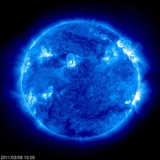
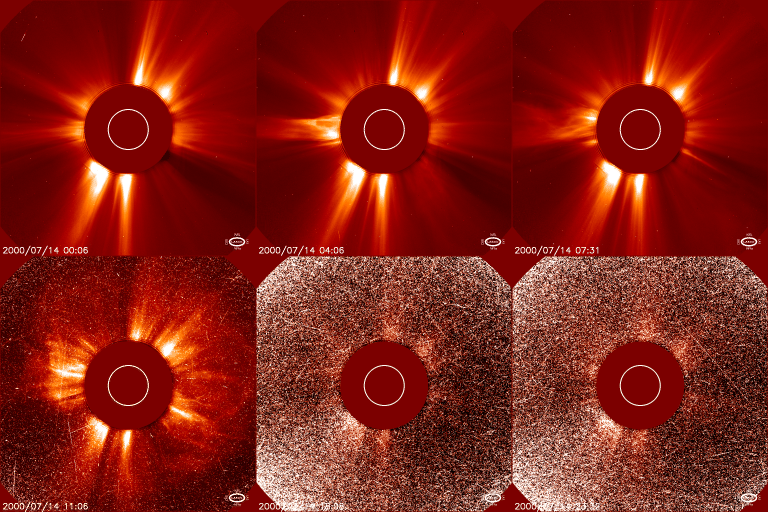
THE BASTILLE DAY EVENT: You know a solar flare is strong when even the Voyager spacecraft feel it. Twenty-two years ago today (July 14, 2000) the sun exploded with so much force, it sent shockwaves to the edge of the solar system.
Earth was on the doorstep of the blast, nicknamed the "Bastille Day Event" because it happened on the national day of France. Subatomic particles accelerated by the flare peppered satellites and penetrated deep into Earth's atmosphere. Radiation sensors on Earth's surface registered a rare GLE--a "ground-level event."
https://www.spaceweather.com/images2022/13jul22/lasco.gif
Earth was on the doorstep of the blast, nicknamed the "Bastille Day Event" because it happened on the national day of France. Subatomic particles accelerated by the flare peppered satellites and penetrated deep into Earth's atmosphere. Radiation sensors on Earth's surface registered a rare GLE--a "ground-level event."
https://www.spaceweather.com/images2022/13jul22/lasco.gif
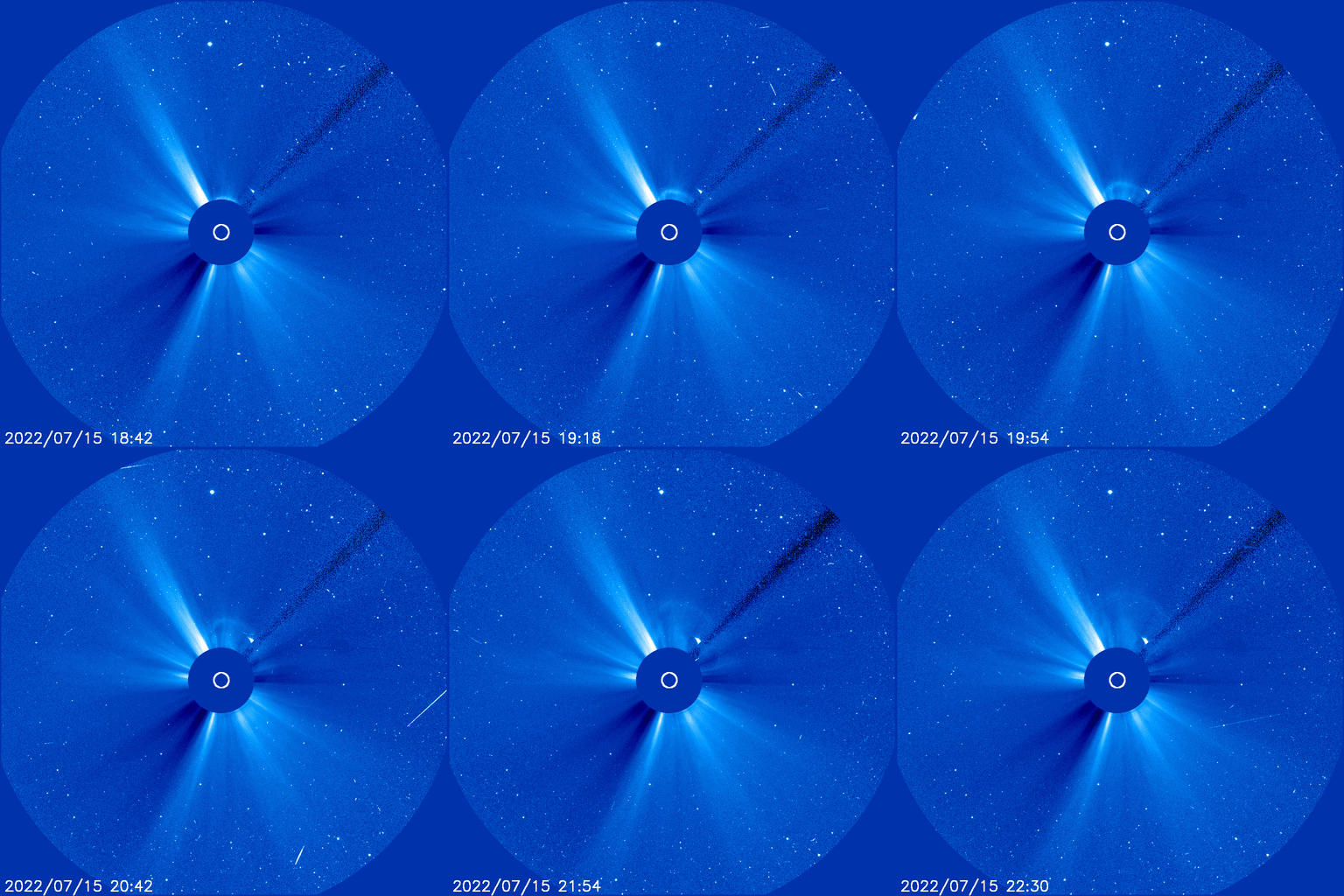
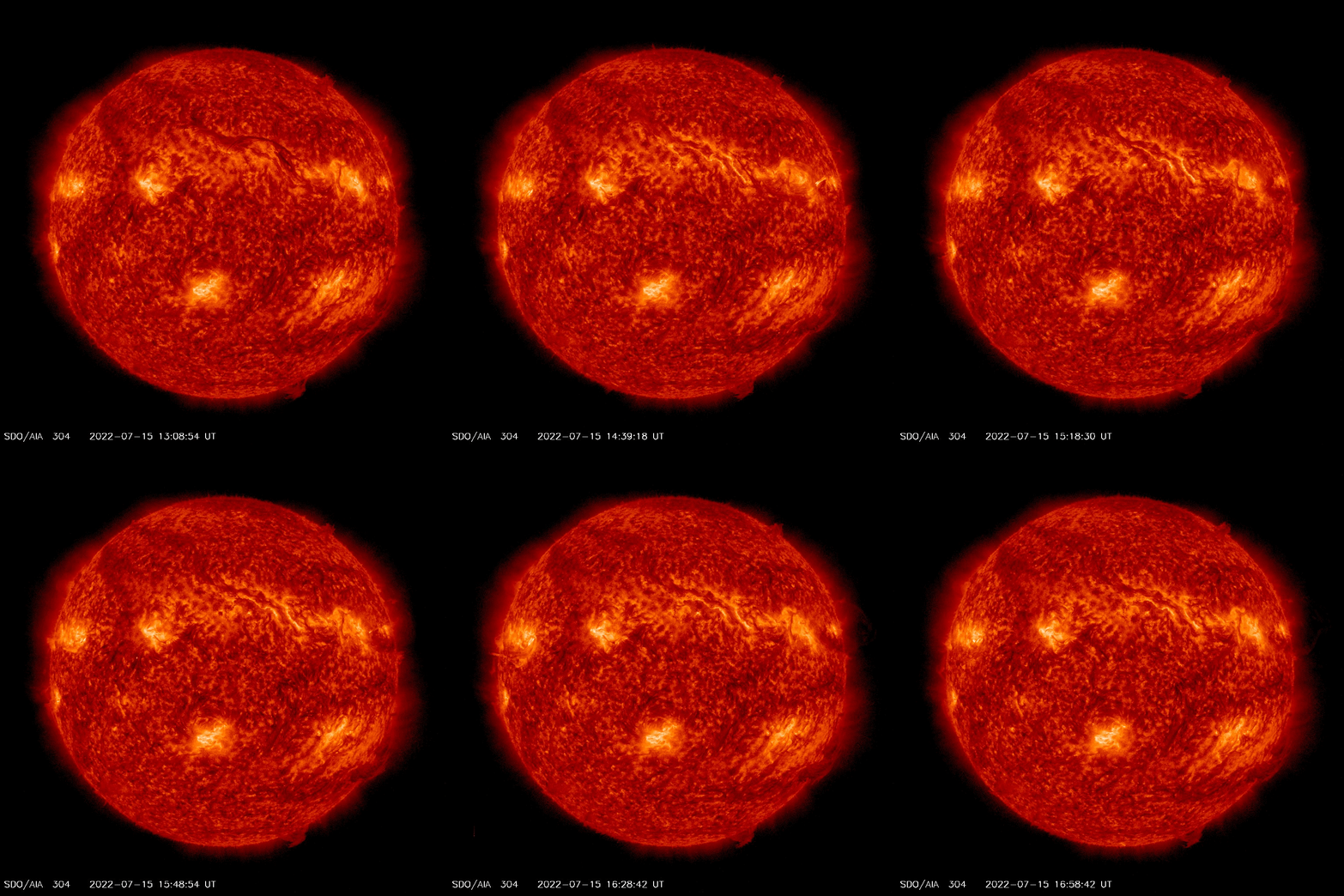
GEOMAGNETIC STORM WATCH: Minor G1-class geomagnetic storms are possible on July 20th or 21st when a slow-moving CME is expected to hit Earth's magnetic field. The CME was hurled into space by an unstable filament of magnetism, which erupted on July 15th.
https://www.spaceweather.com/images2022/16jul22/cme_anim.gif
https://www.spaceweather.com/images2022/16jul22/cme_anim.gif
GEOMAGNETIC STORM WATCH: Minor G1-class geomagnetic storms are possible on July 20th or 21st when a slow-moving CME is expected to hit Earth's magnetic field. The CME was hurled into space by an unstable filament of magnetism, which erupted on July 15th. https://www.spaceweather.com/images2022/16jul22/canyonoffire.gif
GEOMAGNETIC STORM WARNING: Geomagnetic storms are possible on July 23rd when a full-halo CME is expected to hit Earth's magnetic field. The storm cloud was hurled toward Earth yesterday by a solar tsunami eruption. NOAA forecasters say that G1- to G2-class (minor to moderate) storms are likely with a slight chance of escalating to category G3 (strong).
Exactly what time will the CME hit? This NASA model of the approaching cloud pinpoints the impact within a few hours around 0000 UT on July 23rd.
In the animation, Earth is marked by a yellow dot. Note that Mars, a red dot, also gets hit--a glancing blow on July 25th.
Exactly what time will the CME hit? This NASA model of the approaching cloud pinpoints the impact within a few hours around 0000 UT on July 23rd.
In the animation, Earth is marked by a yellow dot. Note that Mars, a red dot, also gets hit--a glancing blow on July 25th.
🔥3