DID A COLD INTERSTELLAR CLOUD HIT THE SOLAR SYSTEM? A new research paper by Merav Opher (Boston University) and Abraham Loeb (Harvard University) suggests that a cold interstellar cloud of gas hit the Solar System two million years ago. The impact compressed the heliosphere, making it much smaller than Earth's orbit. Our planet was completely exposed to interstellar space and a blizzard of galactic cosmic rays. If this really happened, it would have altered space weather, terrestrial climate, and possibly even human evolution.
Read more: https://arxiv.org/abs/2202.01813v2
Read more: https://arxiv.org/abs/2202.01813v2
METEOR OUTBURST POSSIBLE NEXT WEEK: Debris from shattered Comet 73P/Schwassmann-Wachmann 3 is approaching Earth. ETA: May 31st. Forecasters aren't certain, but there could be a meteor outburst when the material arrives. North Americans are favored to see the show if it actually happens. Estimates of visual meteor rates range from near zero to thousands per hour, highlighting the uncertainty of the forecast.
Read more: https://spaceweatherarchive.com/2022/05/26/the-tau-herculid-meteor-shower-possible-outburst/
Read more: https://spaceweatherarchive.com/2022/05/26/the-tau-herculid-meteor-shower-possible-outburst/
Spaceweather.com
The Tau Herculid Meteor Shower — Possible Outburst
May 25, 2022: In late 1995, Comet 73P/Schwassmann-Wachmann 3 exploded. Almost 30 years later, some of the debris might hit Earth. Above: NASA images of Comet 73P still crumbling years after its ini…
👍3
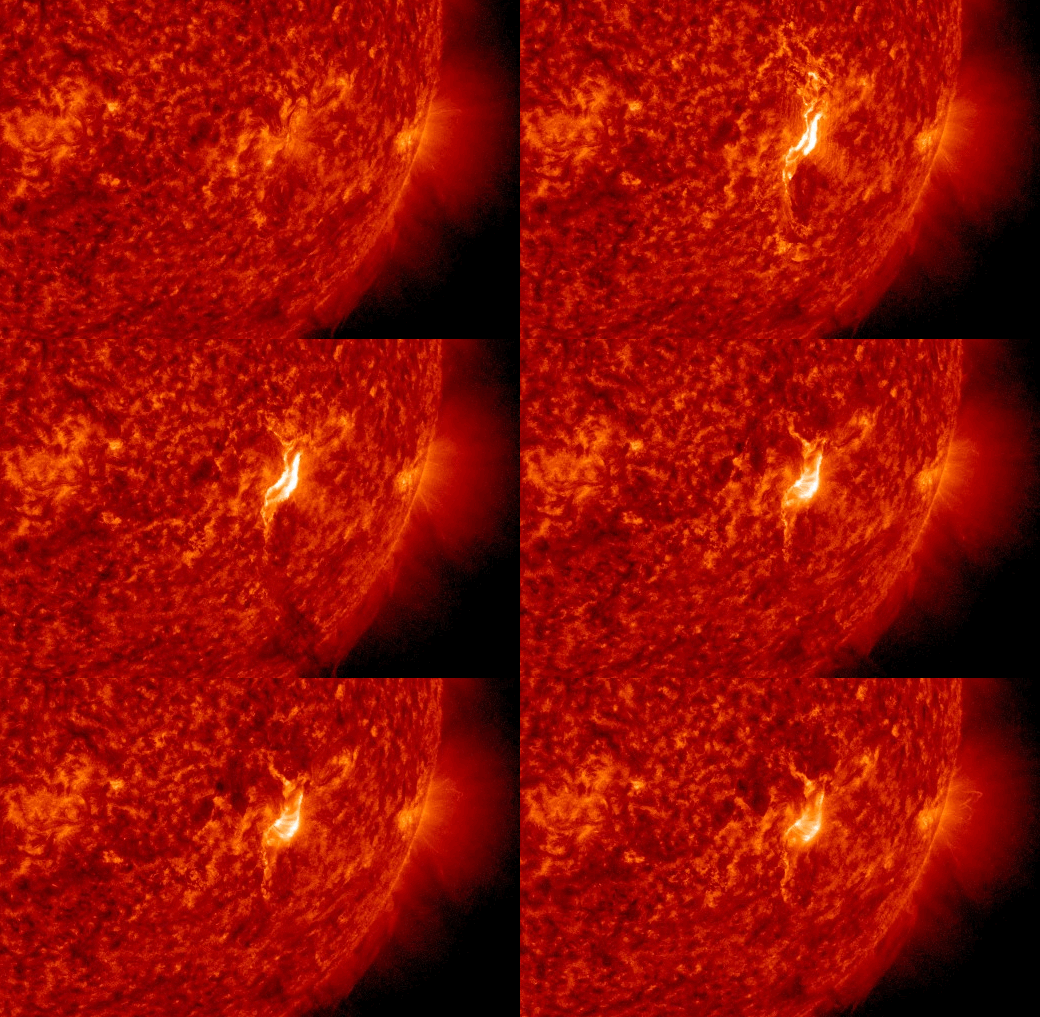
A DEAD SUNSPOT EXPLODES (UPDATED): A magnetic filament snaking through the corpse of decayed sunspot AR3016 erupted on May 25th (1824 UT), producing a M1-class solar flare. NASA's Solar Dynamics Observatory recorded the blast. https://www.spaceweather.com/images2022/25may22/deadsunspot_anim_strip2.gif
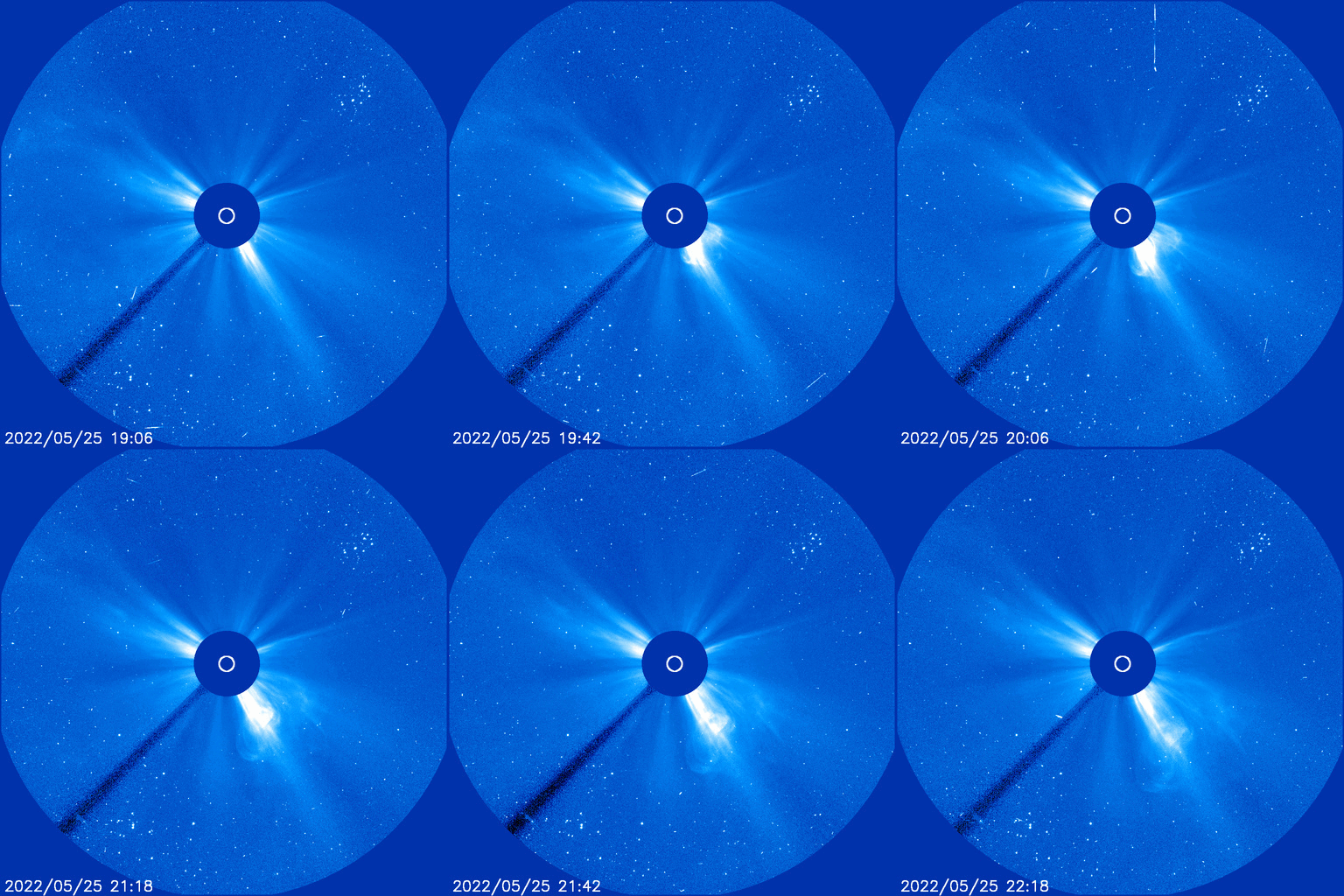
Coronagraph images from the Solar and Heliospheric Observatory (SOHO) confirm that the explosion hurled a CME into space. A first look at the data suggests that the bulk of the CME will miss Earth, but there appears to be an Earth-directed component as well. A fraction of the CME could hit our planet on May 28th or 29th. Computer modeling by NOAA analysts will soon refine the arrival time.
Coronagraph images from the Solar and Heliospheric Observatory (SOHO) confirm that the explosion hurled a CME into space. A first look at the data suggests that the bulk of the CME will miss Earth, but there appears to be an Earth-directed component as well. A fraction of the CME could hit our planet on May 28th or 29th. Computer modeling by NOAA analysts will soon refine the arrival time.
🔥4
GEOMAGNETIC STORM WATCH: Minor G1-class geomagnetic storms are possible on May 28th when a CME is expected to sideswipe Earth's magnetic field. The solar storm cloud was hurled into space by an unstable magnetic filament, which erupted on May 25th. High-latitude auroras are possible this weekend. https://www.spaceweather.com/images2022/25may22/m1_cme.gif