SOMETHING FLARE-Y THIS WAY COMES: A potentially large and very active sunspot group is about to emerge over the sun's northeastern limb. For the past week it has been hurling CMEs and plumes of plasma into space from its location on the farside of the sun. Now, it is turning toward Earth. The leading edge of the sunspot group can already be seen right here.
https://spaceweathergallery.com/submissions/pics/e/Efrain-Morales-Rivera-SUN-2022-04-15-1613-1755UT-Ha_EMr_1650071091_lg.gif
https://spaceweathergallery.com/submissions/pics/e/Efrain-Morales-Rivera-SUN-2022-04-15-1613-1755UT-Ha_EMr_1650071091_lg.gif

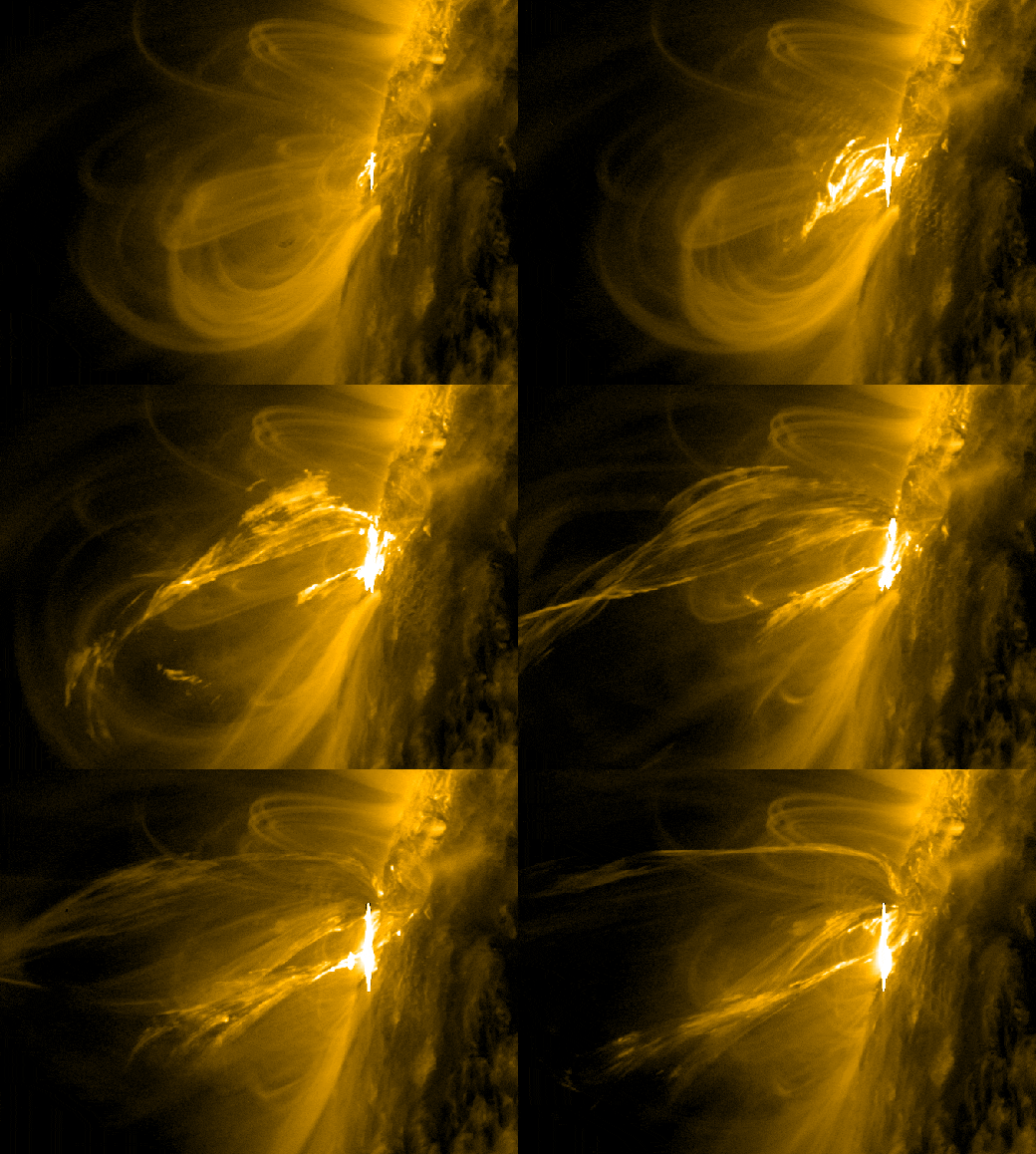
X-CLASS SOLAR FLARE AND CME: Spoiler alert: The CME won't hit Earth. On April 17th, sunspot complex AR2993-94 appeared and promptly exploded. NASA's Solar Dynamics Observatory recorded the X1-class solar flare.
https://www.spaceweather.com/images2022/17apr22/2_xflare_anim_crop_strip_opt.gif
A pulse of X-rays from the flare produced a strong shortwave radio blackout over southeast Asia and Australia: map. Mariners, aviators, and ham radio operators may have noticed unusual propagation effects at frequencies below 30 MHz.
https://www.spaceweather.com/images2022/17apr22/2_xflare_anim_crop_strip_opt.gif
A pulse of X-rays from the flare produced a strong shortwave radio blackout over southeast Asia and Australia: map. Mariners, aviators, and ham radio operators may have noticed unusual propagation effects at frequencies below 30 MHz.
👍2
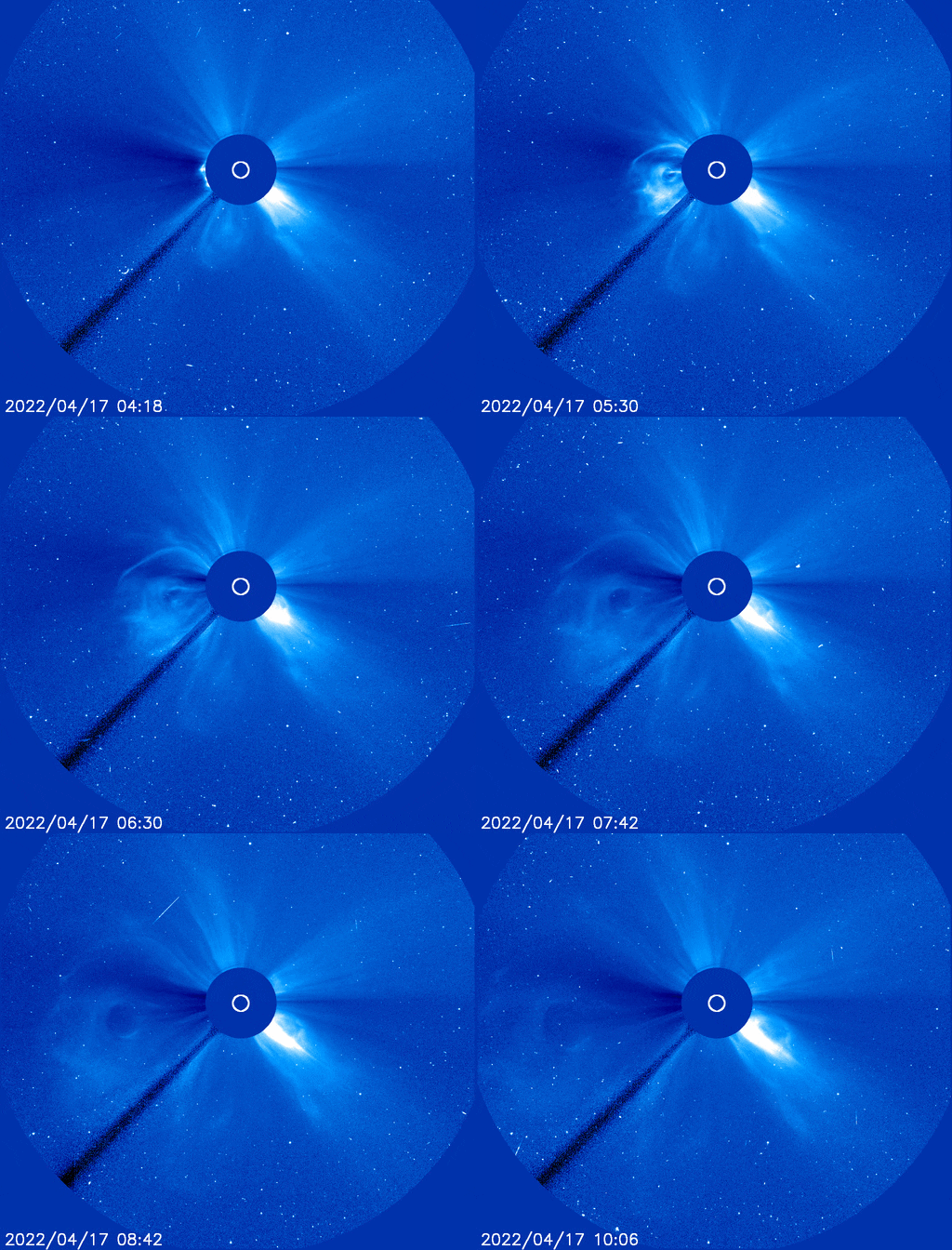
MORE SUNSPOTS ARE COMING: Active sunspot complex AR2993-94, which unleashed an X1-flare on April 17th, may be just the beginning. NASA's STEREO-A spacecraft is monitoring another potentially large active region right behind it. Stay tuned for more sunspots emerging over the sun's northeastern limb later today or tomorrow.
https://www.spaceweather.com/images2022/17apr22/xcme_anim_opt.gif
https://www.spaceweather.com/images2022/17apr22/xcme_anim_opt.gif
👍5
SUNSPOT SUNSETS: Solar Cycle 25 is changing the way sunsets look. It is adding some spots. "Active sunspot complex AR2993-94 was visible yesterday at sunset," says Marek Nikodem, who sends this picture from Szubin, Poland.
"Distance to the city visible on the horizon: 24 kilometers," says Nikodem. "Distance to sunspots: 150 million kilometers. Such is the scale of the Solar System! Unfortunately, the sky turned out to be partially cloudy, which made it impossible to photograph the full sun disc. Still, it was a stunning sight."
"Distance to the city visible on the horizon: 24 kilometers," says Nikodem. "Distance to sunspots: 150 million kilometers. Such is the scale of the Solar System! Unfortunately, the sky turned out to be partially cloudy, which made it impossible to photograph the full sun disc. Still, it was a stunning sight."
👍1🤯1