WEAK IMPACT: Arriving a day later than expected, a CME grazed Earth's magnetic field on April 8th (0400 UT). It was a weak, glancing blow that almost escaped detection. The CME was hurled into space near the edge of the Earth-strike zone on April 3rd by a "canyon of fire" filament eruption. Its tardy arrival did not spark a geomagnetic storm.
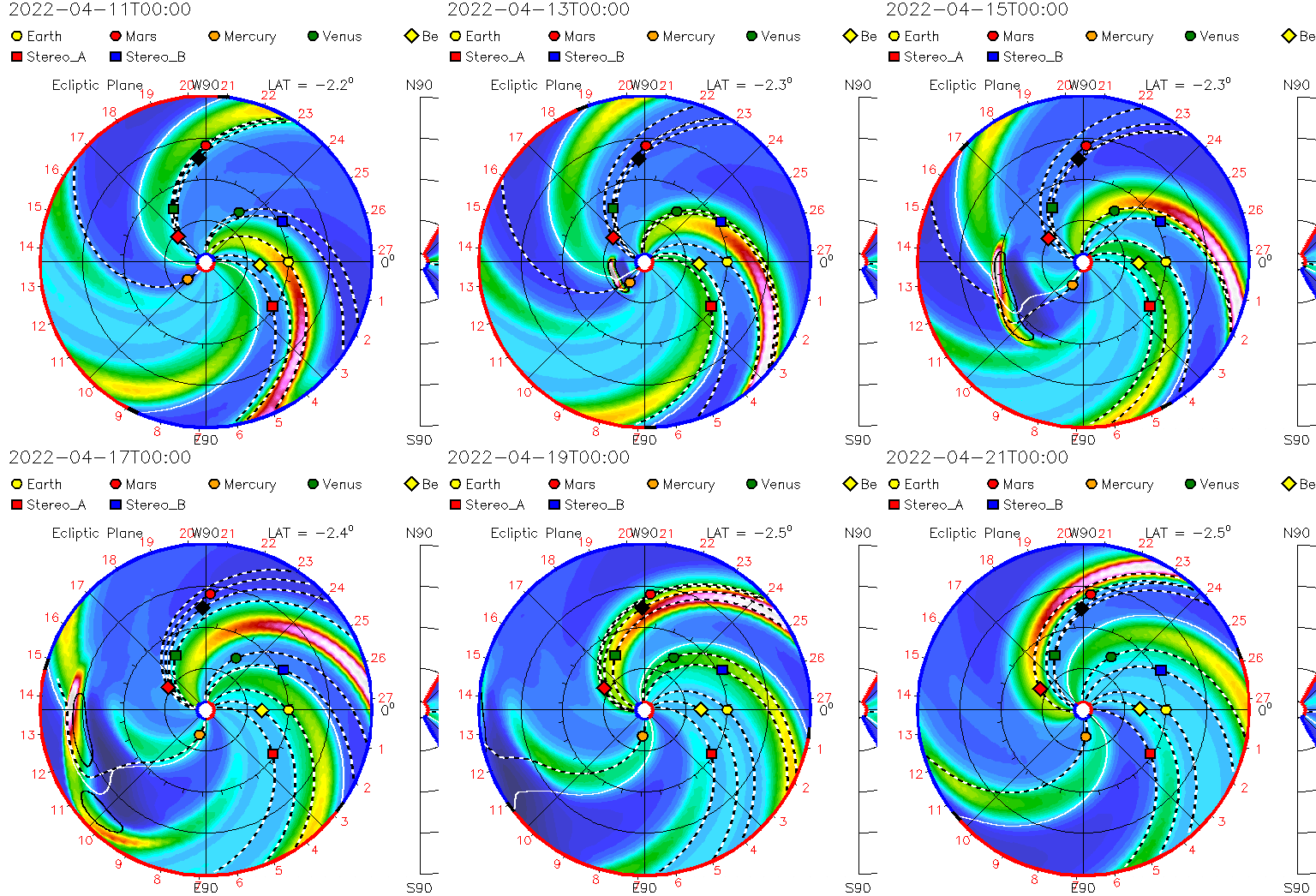
FARSIDE EXPLOSION TARGETS MERCURY: A coronal mass ejection (CME) flew away from the farside of the sun during the late hours of April 11th. A new NASA model shows it is going to hit Mercury. Note the orange dot in this forecast animation.
https://www.spaceweather.com/images2022/12apr22/nasamodel_strip.gif
If the CME overwhelms Mercury's relatively weak magnetic field, it could scour material off the planet's surface creating a temporary atmosphere and adding material to Mercury's comet-like tail.
The farside of the sun has been active this week, with more than one significant CME. Helioseismic soundings of the farside reveal a large region of intense magnetism--probably a complex sunspot group. It will rotate over the sun's eastern limb about a week from now.
https://www.spaceweather.com/images2022/12apr22/nasamodel_strip.gif
If the CME overwhelms Mercury's relatively weak magnetic field, it could scour material off the planet's surface creating a temporary atmosphere and adding material to Mercury's comet-like tail.
The farside of the sun has been active this week, with more than one significant CME. Helioseismic soundings of the farside reveal a large region of intense magnetism--probably a complex sunspot group. It will rotate over the sun's eastern limb about a week from now.
GEOMAGNETIC STORM WATCH (G2-CLASS): A CME is heading for Earth, propelled by the unexpected eruption of dead sunspot AR2987. NOAA forecasters say that G2-class geomagnetic storms are possible when the CME arrives midday on April 14th. During such storms, auroras can seen as far south as, e.g., New York and Idaho (geomagnetic latitude 55 degrees). https://spaceweatherarchive.files.wordpress.com/2022/04/s_explosion_crop2.gif?w=507&zoom=2

👍1