☀️SOLAR CYCLE 2️⃣5️⃣ UPDATE: New sunspot counts from NOAA confirm that Solar Cycle 25 is racing ahead of the official forecast--and the gap is growing.
See the complete labeled plot or play with an interactive version from NOAA
Sunspot counts have now exceeded predictions for 18 straight months. The monthly value at the end of March was more than twice the forecast, and the highest in nearly 7 years.
The "official forecast" comes from the Solar Cycle Prediction Panel, a group of scientists representing NOAA, NASA and International Space Environmental Services (ISES). The Panel predicted that Solar Cycle 25 would peak in July 2025 as a relatively weak cycle, similar in magnitude to its predecessor Solar Cycle 24. Instead, Solar Cycle 25 is shaping up to be stronger.
See the complete labeled plot or play with an interactive version from NOAA
Sunspot counts have now exceeded predictions for 18 straight months. The monthly value at the end of March was more than twice the forecast, and the highest in nearly 7 years.
The "official forecast" comes from the Solar Cycle Prediction Panel, a group of scientists representing NOAA, NASA and International Space Environmental Services (ISES). The Panel predicted that Solar Cycle 25 would peak in July 2025 as a relatively weak cycle, similar in magnitude to its predecessor Solar Cycle 24. Instead, Solar Cycle 25 is shaping up to be stronger.
👍3
GEOMAGNETIC STORM WATCH (G1-CLASS): Minor G1-class geomagnetic storms are possible on April 6th and 7th when at least one CME is expected to graze Earth's magnetic field.
There might even be two strikes. A pair of CMEs left the sun over the weekend, one propelled by a solar flare (M4-class), the other by an exploding magnetic filament. Neither CME is heading directly for Earth, but they are both capable of glancing blows beginning midday on April 6th.
There might even be two strikes. A pair of CMEs left the sun over the weekend, one propelled by a solar flare (M4-class), the other by an exploding magnetic filament. Neither CME is heading directly for Earth, but they are both capable of glancing blows beginning midday on April 6th.
👍4
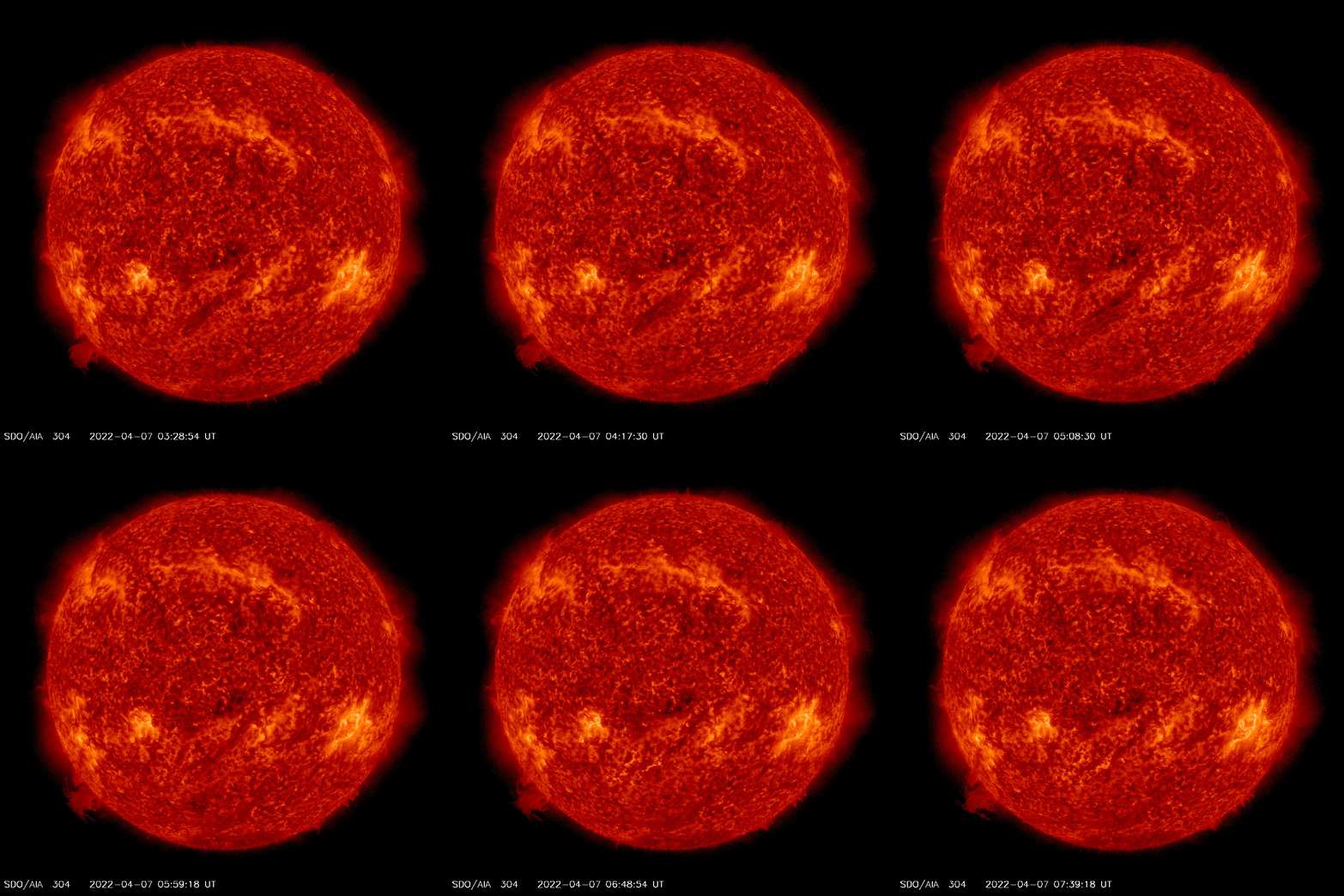
OFF-TARGET CMEs MISS EARTH: A CME missed Earth on April 6th. Another CME missed Earth on April 7th. Now a third CME is coming--hurled into space yesterday by an erupting filament of magnetism on the sun. It is expected to miss, too. Ripples from the near miss might cause minor geomagnetic unrest on April 11st.
https://www.spaceweather.com/images2022/07apr22/filamenteruption.gif
https://www.spaceweather.com/images2022/07apr22/filamenteruption.gif
🔥2👍1