Space Weather Today pinned «Solar wind speed: 542.1 km/sec density: 9.9 protons/cm3 more data: ACE, DSCOVR Updated: Today at 0716 UT X-ray Solar Flares 6-hr max: M2 0256 UT Apr02 24-hr: M2 0256 UT Apr02 explanation | more data Updated: Today at: 0720 UT»
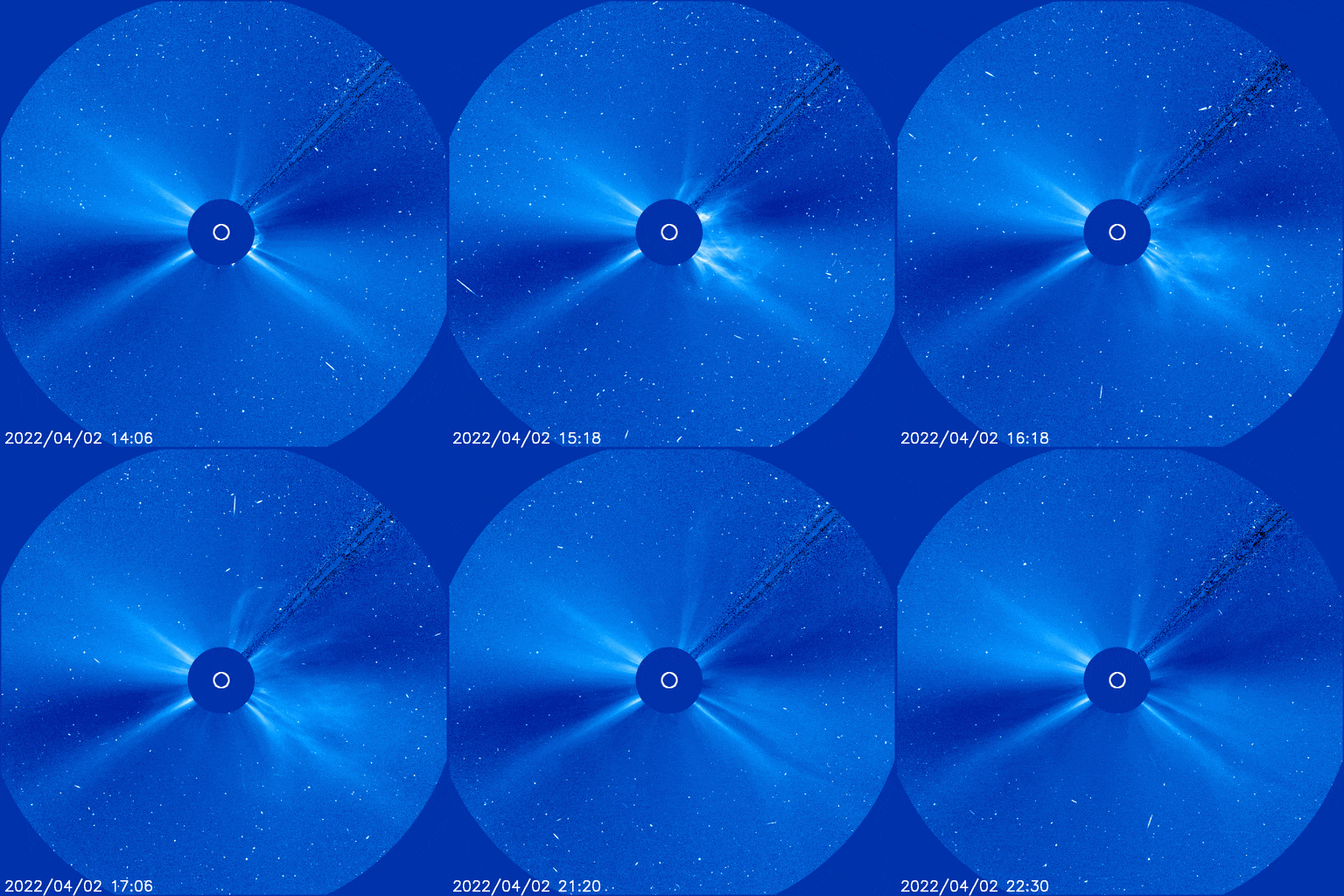
LONG DURATION SOLAR FLARE AND CME: Yesterday, April 2nd, departing sunspot AR2975 exploded, producing a long-duration M4-class solar flare. Although the sunspot was not directly facing Earth, it might have hurled some debris in our direction. https://www.spaceweather.com/images2022/02apr22/cme_c3_anim_opt2.gif
👍1
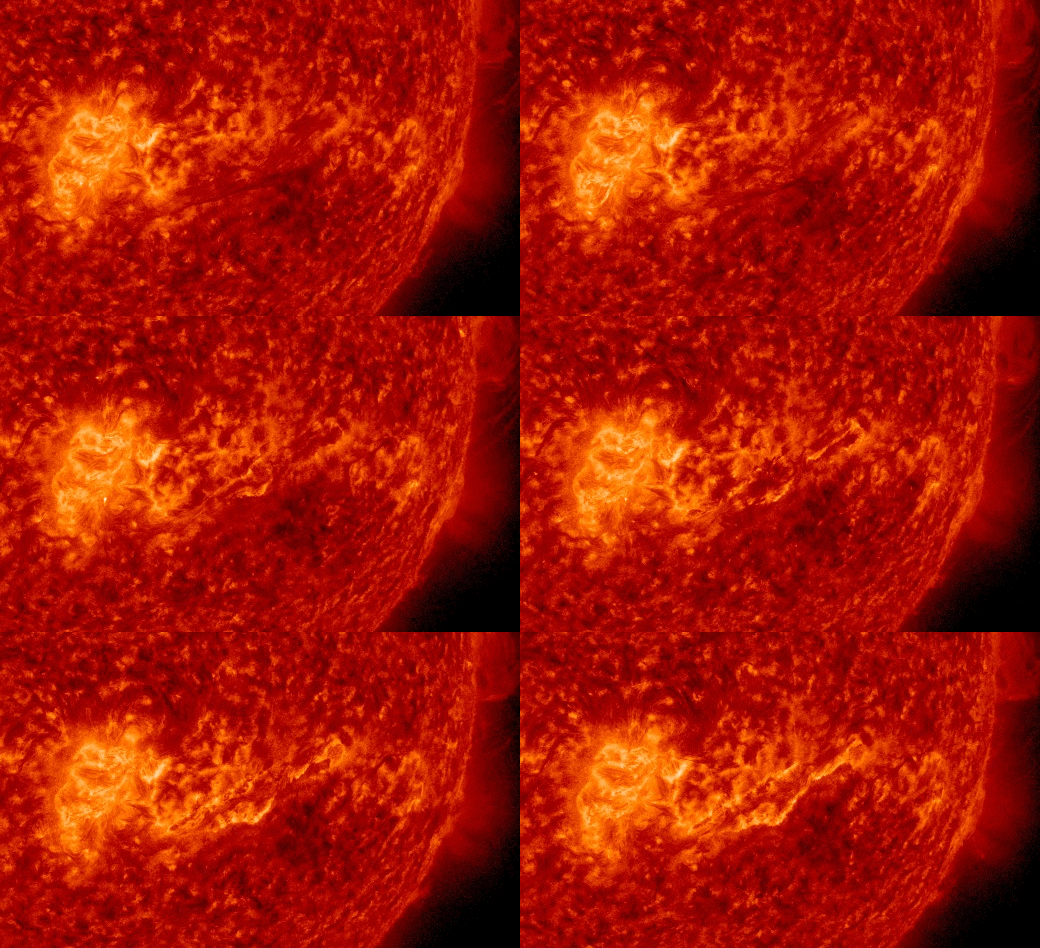
A 'CANYON OF FIRE' JUST OPENED ON THE SUN: Yesterday, April 3rd, a filament of magnetism whipsawed out of the sun's atmosphere. On the way out it carved a gigantic canyon of fire. NASA's Solar Dynamics Observatory recorded the eruption.
https://www.spaceweather.com/images2022/03apr22/cof_anim_strip_opt.gif
The glowing walls of the canyon are at least 20,000 km high and 10 times as long. They trace the channel where the filament (R.I.P.) was previously suspended by magnetic forces inside the sun's atmosphere.
A coronal mass ejection (CME) has since emerged from the blast site. Here it is. The expanding cloud will probably sideswipe Earth's magnetic field on April 7th.
https://www.spaceweather.com/images2022/03apr22/cof_anim_strip_opt.gif
The glowing walls of the canyon are at least 20,000 km high and 10 times as long. They trace the channel where the filament (R.I.P.) was previously suspended by magnetic forces inside the sun's atmosphere.
A coronal mass ejection (CME) has since emerged from the blast site. Here it is. The expanding cloud will probably sideswipe Earth's magnetic field on April 7th.
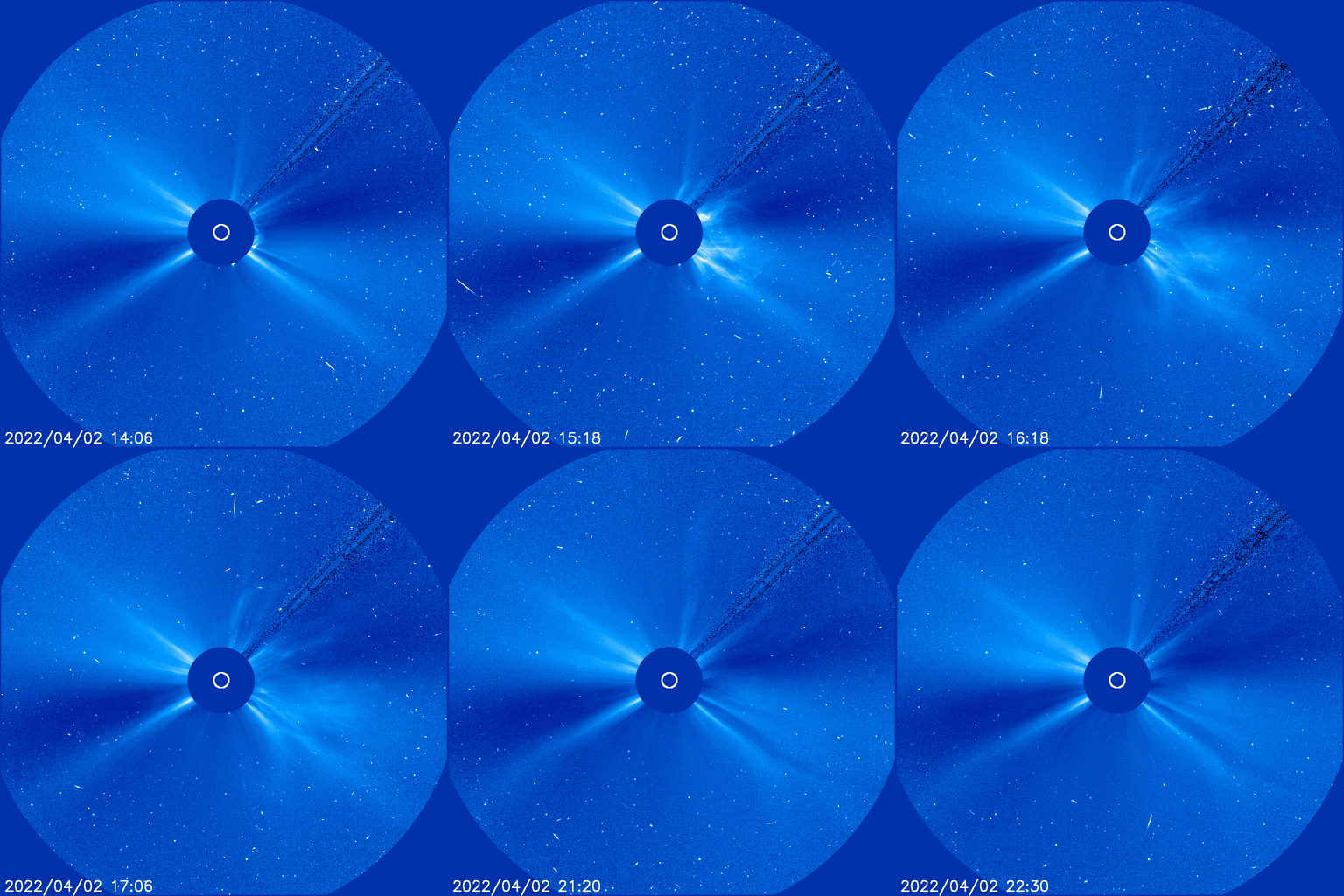
GEOMAGNETIC STORM WATCH (G1-CLASS): A minor geomagnetic storm is possible this week in response to a pair of approaching CMEs. The first CME, launched by an M4-class flare from departing sunspot AR2975, could graze Earth's magnetic field on April 6th.
The second CME, flung away from the sun by an exploding filament of magnetism (described below), might deliver a glancing blow on April 7th. Their combined effect could produce G1-class storming.
https://www.spaceweather.com/images2022/02apr22/cme_c3_anim.gif
The second CME, flung away from the sun by an exploding filament of magnetism (described below), might deliver a glancing blow on April 7th. Their combined effect could produce G1-class storming.
https://www.spaceweather.com/images2022/02apr22/cme_c3_anim.gif
👍2
☀️SOLAR CYCLE 2️⃣5️⃣ UPDATE: New sunspot counts from NOAA confirm that Solar Cycle 25 is racing ahead of the official forecast--and the gap is growing.
See the complete labeled plot or play with an interactive version from NOAA
Sunspot counts have now exceeded predictions for 18 straight months. The monthly value at the end of March was more than twice the forecast, and the highest in nearly 7 years.
The "official forecast" comes from the Solar Cycle Prediction Panel, a group of scientists representing NOAA, NASA and International Space Environmental Services (ISES). The Panel predicted that Solar Cycle 25 would peak in July 2025 as a relatively weak cycle, similar in magnitude to its predecessor Solar Cycle 24. Instead, Solar Cycle 25 is shaping up to be stronger.
See the complete labeled plot or play with an interactive version from NOAA
Sunspot counts have now exceeded predictions for 18 straight months. The monthly value at the end of March was more than twice the forecast, and the highest in nearly 7 years.
The "official forecast" comes from the Solar Cycle Prediction Panel, a group of scientists representing NOAA, NASA and International Space Environmental Services (ISES). The Panel predicted that Solar Cycle 25 would peak in July 2025 as a relatively weak cycle, similar in magnitude to its predecessor Solar Cycle 24. Instead, Solar Cycle 25 is shaping up to be stronger.
👍3
GEOMAGNETIC STORM WATCH (G1-CLASS): Minor G1-class geomagnetic storms are possible on April 6th and 7th when at least one CME is expected to graze Earth's magnetic field.
There might even be two strikes. A pair of CMEs left the sun over the weekend, one propelled by a solar flare (M4-class), the other by an exploding magnetic filament. Neither CME is heading directly for Earth, but they are both capable of glancing blows beginning midday on April 6th.
There might even be two strikes. A pair of CMEs left the sun over the weekend, one propelled by a solar flare (M4-class), the other by an exploding magnetic filament. Neither CME is heading directly for Earth, but they are both capable of glancing blows beginning midday on April 6th.
👍4