April 3 - Mercury at Greatest Western Elongation
The planet Mercury reaches greatest western elongation of 27.8 degrees from the Sun. This is the best time to view Mercury since it will be at its highest point above the horizon in the morning sky. Look for the planet low in the eastern sky just before sunrise. http://www.seasky.org/astronomy/assets/images/astrocal05.jpg
The planet Mercury reaches greatest western elongation of 27.8 degrees from the Sun. This is the best time to view Mercury since it will be at its highest point above the horizon in the morning sky. Look for the planet low in the eastern sky just before sunrise. http://www.seasky.org/astronomy/assets/images/astrocal05.jpg

April 17 - New Moon
The Moon will located on the same side of the Earth as the Sun and will not be visible in the night sky. This phase occurs at 11:54 UTC. This is the best time of the month to observe faint objects such as galaxies and star clusters because there is no moonlight to interfere. http://www.seasky.org/astronomy/assets/images/astrocal01.jpg
The Moon will located on the same side of the Earth as the Sun and will not be visible in the night sky. This phase occurs at 11:54 UTC. This is the best time of the month to observe faint objects such as galaxies and star clusters because there is no moonlight to interfere. http://www.seasky.org/astronomy/assets/images/astrocal01.jpg

May 1 - Full Moon
The Moon will be located on the opposite side of the Earth as the Sun and its face will be will be fully illuminated. This phase occurs at 17:24 UTC. This full moon was known by early Native American tribes as the Flower Moon because this was the time of year when spring flowers appeared in abundance. This moon has also been known as the Corn Planting Moon and the Milk Moon. http://www.seasky.org/astronomy/assets/images/astrocal02.jpg
The Moon will be located on the opposite side of the Earth as the Sun and its face will be will be fully illuminated. This phase occurs at 17:24 UTC. This full moon was known by early Native American tribes as the Flower Moon because this was the time of year when spring flowers appeared in abundance. This moon has also been known as the Corn Planting Moon and the Milk Moon. http://www.seasky.org/astronomy/assets/images/astrocal02.jpg

May 16 - New Moon
The Moon will located on the same side of the Earth as the Sun and will not be visible in the night sky. This phase occurs at 20:03 UTC. This is the best time of the month to observe faint objects such as galaxies and star clusters because there is no moonlight to interfere. http://www.seasky.org/astronomy/assets/images/astrocal01.jpg
The Moon will located on the same side of the Earth as the Sun and will not be visible in the night sky. This phase occurs at 20:03 UTC. This is the best time of the month to observe faint objects such as galaxies and star clusters because there is no moonlight to interfere. http://www.seasky.org/astronomy/assets/images/astrocal01.jpg
June 15 - New Moon
The Moon will located on the same side of the Earth as the Sun and will not be visible in the night sky. This phase occurs at 02:56 UTC. This is the best time of the month to observe faint objects such as galaxies and star clusters because there is no moonlight to interfere. http://www.seasky.org/astronomy/assets/images/astrocal01.jpg
The Moon will located on the same side of the Earth as the Sun and will not be visible in the night sky. This phase occurs at 02:56 UTC. This is the best time of the month to observe faint objects such as galaxies and star clusters because there is no moonlight to interfere. http://www.seasky.org/astronomy/assets/images/astrocal01.jpg
June 15 - Mercury at Greatest Eastern Elongation
The planet Mercury reaches greatest eastern elongation of 24.5 degrees from the Sun. This is the best time to view Mercury since it will be at its highest point above the horizon in the evening sky. Look for the planet low in the western sky just after sunset. http://www.seasky.org/astronomy/assets/images/astrocal05.jpg
The planet Mercury reaches greatest eastern elongation of 24.5 degrees from the Sun. This is the best time to view Mercury since it will be at its highest point above the horizon in the evening sky. Look for the planet low in the western sky just after sunset. http://www.seasky.org/astronomy/assets/images/astrocal05.jpg
June 21 - June Solstice
The June solstice occurs at 08:25 UTC. The North Pole of the earth will be tilted toward the Sun, which will have reached its northernmost position in the sky and will be directly over the Tropic of Cancer at 23.44 degrees north latitude. This is the first day of summer (summer solstice) in the Northern Hemisphere and the first day of winter (winter solstice) in the Southern Hemisphere. http://www.seasky.org/astronomy/assets/images/astrocal08.jpg
The June solstice occurs at 08:25 UTC. The North Pole of the earth will be tilted toward the Sun, which will have reached its northernmost position in the sky and will be directly over the Tropic of Cancer at 23.44 degrees north latitude. This is the first day of summer (summer solstice) in the Northern Hemisphere and the first day of winter (winter solstice) in the Southern Hemisphere. http://www.seasky.org/astronomy/assets/images/astrocal08.jpg

June 29 - Full Moon
The Moon will be located on the opposite side of the Earth as the Sun and its face will be will be fully illuminated. This phase occurs at 23:58 UTC. This full moon was known by early Native American tribes as the Strawberry Moon because it signaled the time of year to gather ripening fruit. It also coincides with the peak of the strawberry harvesting season. This moon has also been known as the Rose Moon and the Honey Moon. http://www.seasky.org/astronomy/assets/images/astrocal02.jpg
The Moon will be located on the opposite side of the Earth as the Sun and its face will be will be fully illuminated. This phase occurs at 23:58 UTC. This full moon was known by early Native American tribes as the Strawberry Moon because it signaled the time of year to gather ripening fruit. It also coincides with the peak of the strawberry harvesting season. This moon has also been known as the Rose Moon and the Honey Moon. http://www.seasky.org/astronomy/assets/images/astrocal02.jpg
July 14 - New Moon
The Moon will located on the same side of the Earth as the Sun and will not be visible in the night sky. This phase occurs at 09:45 UTC. This is the best time of the month to observe faint objects such as galaxies and star clusters because there is no moonlight to interfere. http://www.seasky.org/astronomy/assets/images/astrocal01.jpg
The Moon will located on the same side of the Earth as the Sun and will not be visible in the night sky. This phase occurs at 09:45 UTC. This is the best time of the month to observe faint objects such as galaxies and star clusters because there is no moonlight to interfere. http://www.seasky.org/astronomy/assets/images/astrocal01.jpg
July 29 - Full Moon
The Moon will be located on the opposite side of the Earth as the Sun and its face will be will be fully illuminated. This phase occurs at 14:37 UTC. This full moon was known by early Native American tribes as the Buck Moon because the male buck deer would begin to grow their new antlers at this time of year. This moon has also been known as the Thunder Moon and the Hay Moon. http://www.seasky.org/astronomy/assets/images/astrocal02.jpg
The Moon will be located on the opposite side of the Earth as the Sun and its face will be will be fully illuminated. This phase occurs at 14:37 UTC. This full moon was known by early Native American tribes as the Buck Moon because the male buck deer would begin to grow their new antlers at this time of year. This moon has also been known as the Thunder Moon and the Hay Moon. http://www.seasky.org/astronomy/assets/images/astrocal02.jpg
August 2 - Mercury at Greatest Western Elongation
The planet Mercury reaches greatest western elongation of 19.5 degrees from the Sun. This is the best time to view Mercury since it will be at its highest point above the horizon in the morning sky. Look for the planet low in the eastern sky just before sunrise. http://www.seasky.org/astronomy/assets/images/astrocal05.jpg
The planet Mercury reaches greatest western elongation of 19.5 degrees from the Sun. This is the best time to view Mercury since it will be at its highest point above the horizon in the morning sky. Look for the planet low in the eastern sky just before sunrise. http://www.seasky.org/astronomy/assets/images/astrocal05.jpg
August 12 - New Moon
The Moon will located on the same side of the Earth as the Sun and will not be visible in the night sky. This phase occurs at 17:37 UTC. This is the best time of the month to observe faint objects such as galaxies and star clusters because there is no moonlight to interfere. http://www.seasky.org/astronomy/assets/images/astrocal01.jpg
The Moon will located on the same side of the Earth as the Sun and will not be visible in the night sky. This phase occurs at 17:37 UTC. This is the best time of the month to observe faint objects such as galaxies and star clusters because there is no moonlight to interfere. http://www.seasky.org/astronomy/assets/images/astrocal01.jpg
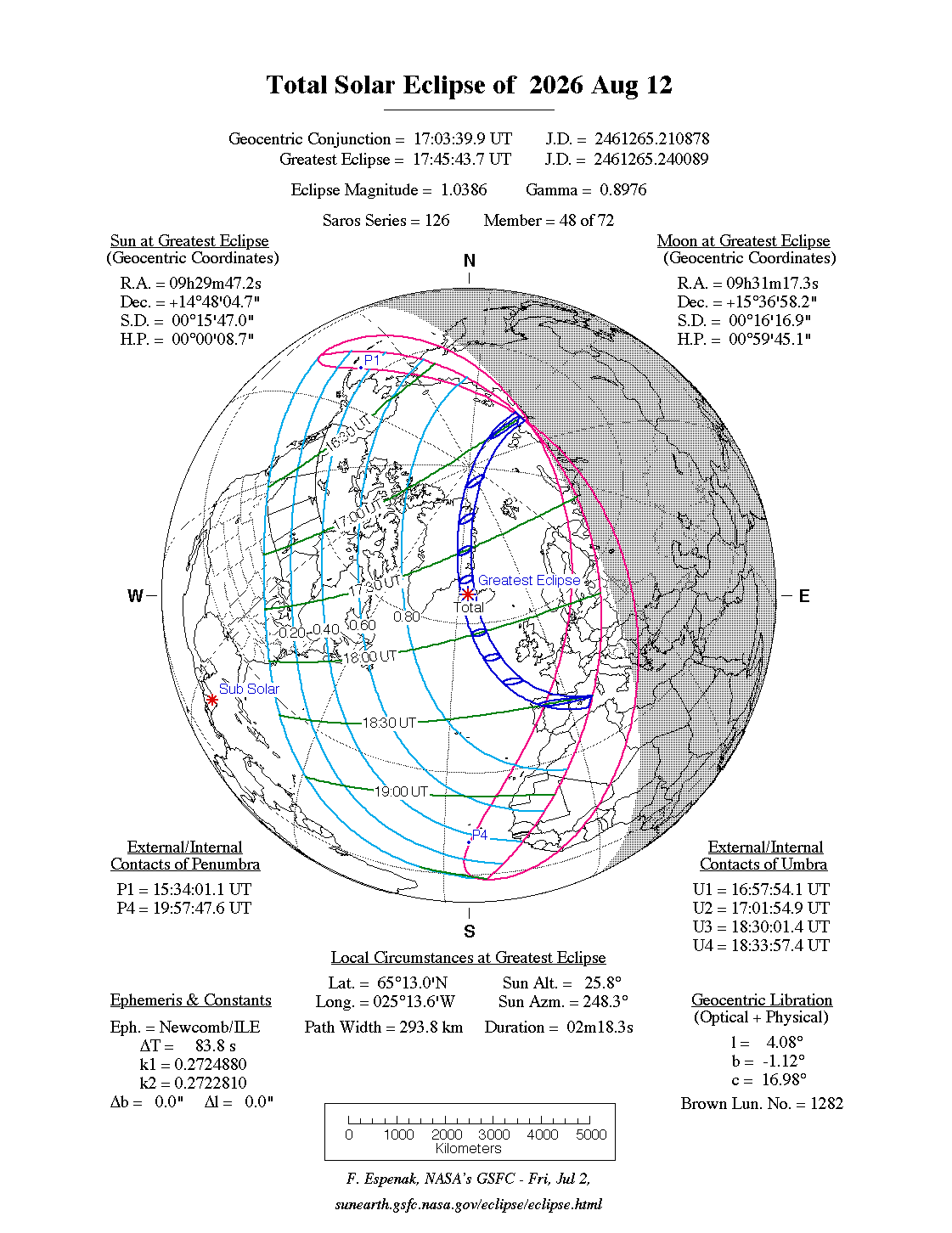
August 12 - Total Solar Eclipse
A total solar eclipse occurs when the moon completely blocks the Sun, revealing the Sun's beautiful outer atmosphere known as the corona. The path of totality will begin in the Arctic Ocean off the Northern coast of Russia. It will move across Greenland, Iceland, and the Atlantic Ocean before ending in Spain. A partial eclipse will be visible Alaska, Canada, western Africa, and the northern United States.
(NASA Map and Eclipse Information) (NASA Interactive Google Map) http://www.seasky.org/astronomy/assets/images/astrocal04.jpg
A total solar eclipse occurs when the moon completely blocks the Sun, revealing the Sun's beautiful outer atmosphere known as the corona. The path of totality will begin in the Arctic Ocean off the Northern coast of Russia. It will move across Greenland, Iceland, and the Atlantic Ocean before ending in Spain. A partial eclipse will be visible Alaska, Canada, western Africa, and the northern United States.
(NASA Map and Eclipse Information) (NASA Interactive Google Map) http://www.seasky.org/astronomy/assets/images/astrocal04.jpg
❤1
August 15 - Venus at Greatest Eastern Elongation
The planet Venus reaches greatest eastern elongation of 45.9 degrees from the Sun. This is the best time to view Venus since it will be at its highest point above the horizon in the evening sky. Look for the bright planet in the western sky after sunset. http://www.seasky.org/astronomy/assets/images/astrocal05.jpg
The planet Venus reaches greatest eastern elongation of 45.9 degrees from the Sun. This is the best time to view Venus since it will be at its highest point above the horizon in the evening sky. Look for the bright planet in the western sky after sunset. http://www.seasky.org/astronomy/assets/images/astrocal05.jpg
August 28 - Partial Lunar Eclipse
A partial lunar eclipse occurs when the Moon passes through the Earth's partial shadow, or penumbra, and only a portion of it passes through the darkest shadow, or umbra. During this type of eclipse a part of the Moon will darken as it moves through the Earth's shadow. The eclipse will be visible throughout most of North America, Mexico, Central America, South America, the Atlantic Ocean, and most of Europe and Africa. (NASA Map and Eclipse Information) http://www.seasky.org/astronomy/assets/images/astrocal03.jpg
A partial lunar eclipse occurs when the Moon passes through the Earth's partial shadow, or penumbra, and only a portion of it passes through the darkest shadow, or umbra. During this type of eclipse a part of the Moon will darken as it moves through the Earth's shadow. The eclipse will be visible throughout most of North America, Mexico, Central America, South America, the Atlantic Ocean, and most of Europe and Africa. (NASA Map and Eclipse Information) http://www.seasky.org/astronomy/assets/images/astrocal03.jpg
August 28 - Full Moon
The Moon will be located on the opposite side of the Earth as the Sun and its face will be will be fully illuminated. This phase occurs at 04:19 UTC. This full moon was known by early Native American tribes as the Sturgeon Moon because the large sturgeon fish of the Great Lakes and other major lakes were more easily caught at this time of year. This moon has also been known as the Green Corn Moon and the Grain Moon. http://www.seasky.org/astronomy/assets/images/astrocal02.jpg
The Moon will be located on the opposite side of the Earth as the Sun and its face will be will be fully illuminated. This phase occurs at 04:19 UTC. This full moon was known by early Native American tribes as the Sturgeon Moon because the large sturgeon fish of the Great Lakes and other major lakes were more easily caught at this time of year. This moon has also been known as the Green Corn Moon and the Grain Moon. http://www.seasky.org/astronomy/assets/images/astrocal02.jpg