October 17 - Full Moon, Supermoon
The Moon will be located on the opposite side of the Earth as the Sun and its face will be will be fully illuminated. This phase occurs at 11:28 UTC. This full moon was known by early Native American tribes as the Hunters Moon because at this time of year the leaves are falling and the game is fat and ready to hunt. This moon has also been known as the Travel Moon and the Blood Moon. This is also the second of three supermoons for 2024. The Moon will be near its closest approach to the Earth and may look slightly larger and brighter than usual. http://www.seasky.org/astronomy/assets/images/astrocal02.jpg
The Moon will be located on the opposite side of the Earth as the Sun and its face will be will be fully illuminated. This phase occurs at 11:28 UTC. This full moon was known by early Native American tribes as the Hunters Moon because at this time of year the leaves are falling and the game is fat and ready to hunt. This moon has also been known as the Travel Moon and the Blood Moon. This is also the second of three supermoons for 2024. The Moon will be near its closest approach to the Earth and may look slightly larger and brighter than usual. http://www.seasky.org/astronomy/assets/images/astrocal02.jpg

❤1👍1
November 1 - New Moon
The Moon will located on the same side of the Earth as the Sun and will not be visible in the night sky. This phase occurs at 12:49 UTC. This is the best time of the month to observe faint objects such as galaxies and star clusters because there is no moonlight to interfere. http://www.seasky.org/astronomy/assets/images/astrocal01.jpg
The Moon will located on the same side of the Earth as the Sun and will not be visible in the night sky. This phase occurs at 12:49 UTC. This is the best time of the month to observe faint objects such as galaxies and star clusters because there is no moonlight to interfere. http://www.seasky.org/astronomy/assets/images/astrocal01.jpg

November 15 - Full Moon, Supermoon
The Moon will be located on the opposite side of the Earth as the Sun and its face will be will be fully illuminated. This phase occurs at 21:30 UTC. This full moon was known by early Native American tribes as the Beaver Moon because this was the time of year to set the beaver traps before the swamps and rivers froze. It has also been known as the Frosty Moon and the Dark Moon. This is also the last of three supermoons for 2024. The Moon will be near its closest approach to the Earth and may look slightly larger and brighter than usual. http://www.seasky.org/astronomy/assets/images/astrocal02.jpg
The Moon will be located on the opposite side of the Earth as the Sun and its face will be will be fully illuminated. This phase occurs at 21:30 UTC. This full moon was known by early Native American tribes as the Beaver Moon because this was the time of year to set the beaver traps before the swamps and rivers froze. It has also been known as the Frosty Moon and the Dark Moon. This is also the last of three supermoons for 2024. The Moon will be near its closest approach to the Earth and may look slightly larger and brighter than usual. http://www.seasky.org/astronomy/assets/images/astrocal02.jpg
November 16 - Mercury at Greatest Eastern Elongation
The planet Mercury reaches greatest eastern elongation of 22.5 degrees from the Sun. This is the best time to view Mercury since it will be at its highest point above the horizon in the evening sky. Look for the planet low in the western sky just after sunset. http://www.seasky.org/astronomy/assets/images/astrocal05.jpg
The planet Mercury reaches greatest eastern elongation of 22.5 degrees from the Sun. This is the best time to view Mercury since it will be at its highest point above the horizon in the evening sky. Look for the planet low in the western sky just after sunset. http://www.seasky.org/astronomy/assets/images/astrocal05.jpg

November 17 - Uranus at Opposition
The blue-green planet will be at its closest approach to Earth and its face will be fully illuminated by the Sun. It will be brighter than any other time of the year and will be visible all night long. This is the best time to view Uranus. Due to its distance, it will only appear as a tiny blue-green dot in all but the most powerful telescopes. http://www.seasky.org/astronomy/assets/images/astrocal05.jpg
The blue-green planet will be at its closest approach to Earth and its face will be fully illuminated by the Sun. It will be brighter than any other time of the year and will be visible all night long. This is the best time to view Uranus. Due to its distance, it will only appear as a tiny blue-green dot in all but the most powerful telescopes. http://www.seasky.org/astronomy/assets/images/astrocal05.jpg
December 7 - Jupiter at Opposition
The giant planet will be at its closest approach to Earth and its face will be fully illuminated by the Sun. It will be brighter than any other time of the year and will be visible all night long. This is the best time to view and photograph Jupiter and its moons. A medium-sized telescope should be able to show you some of the details in Jupiter's cloud bands. A good pair of binoculars should allow you to see Jupiter's four largest moons, appearing as bright dots on either side of the planet. http://www.seasky.org/astronomy/assets/images/astrocal05.jpg
The giant planet will be at its closest approach to Earth and its face will be fully illuminated by the Sun. It will be brighter than any other time of the year and will be visible all night long. This is the best time to view and photograph Jupiter and its moons. A medium-sized telescope should be able to show you some of the details in Jupiter's cloud bands. A good pair of binoculars should allow you to see Jupiter's four largest moons, appearing as bright dots on either side of the planet. http://www.seasky.org/astronomy/assets/images/astrocal05.jpg
December 15 - Full Moon
The Moon will be located on the opposite side of the Earth as the Sun and its face will be will be fully illuminated. This phase occurs at 09:03 UTC. This full moon was known by early Native American tribes as the Cold Moon because this is the time of year when the cold winter air settles in and the nights become long and dark. This moon has also been known as the Long Nights Moon and the Moon Before Yule. http://www.seasky.org/astronomy/assets/images/astrocal02.jpg
The Moon will be located on the opposite side of the Earth as the Sun and its face will be will be fully illuminated. This phase occurs at 09:03 UTC. This full moon was known by early Native American tribes as the Cold Moon because this is the time of year when the cold winter air settles in and the nights become long and dark. This moon has also been known as the Long Nights Moon and the Moon Before Yule. http://www.seasky.org/astronomy/assets/images/astrocal02.jpg
December 21 - December Solstice
The December solstice occurs at 09:17 UTC. The South Pole of the earth will be tilted toward the Sun, which will have reached its southernmost position in the sky and will be directly over the Tropic of Capricorn at 23.44 degrees south latitude. This is the first day of winter (winter solstice) in the Northern Hemisphere and the first day of summer (summer solstice) in the Southern Hemisphere. http://www.seasky.org/astronomy/assets/images/astrocal08.jpg
The December solstice occurs at 09:17 UTC. The South Pole of the earth will be tilted toward the Sun, which will have reached its southernmost position in the sky and will be directly over the Tropic of Capricorn at 23.44 degrees south latitude. This is the first day of winter (winter solstice) in the Northern Hemisphere and the first day of summer (summer solstice) in the Southern Hemisphere. http://www.seasky.org/astronomy/assets/images/astrocal08.jpg

December 25 - Mercury at Greatest Western Elongation
The planet Mercury reaches greatest western elongation of 22 degrees from the Sun. This is the best time to view Mercury since it will be at its highest point above the horizon in the morning sky. Look for the planet low in the eastern sky just before sunrise. http://www.seasky.org/astronomy/assets/images/astrocal05.jpg
The planet Mercury reaches greatest western elongation of 22 degrees from the Sun. This is the best time to view Mercury since it will be at its highest point above the horizon in the morning sky. Look for the planet low in the eastern sky just before sunrise. http://www.seasky.org/astronomy/assets/images/astrocal05.jpg
December 30 - New Moon
The Moon will located on the same side of the Earth as the Sun and will not be visible in the night sky. This phase occurs at 22:28 UTC. This is the best time of the month to observe faint objects such as galaxies and star clusters because there is no moonlight to interfere. http://www.seasky.org/astronomy/assets/images/astrocal01.jpg
The Moon will located on the same side of the Earth as the Sun and will not be visible in the night sky. This phase occurs at 22:28 UTC. This is the best time of the month to observe faint objects such as galaxies and star clusters because there is no moonlight to interfere. http://www.seasky.org/astronomy/assets/images/astrocal01.jpg
January 10 - Venus at Greatest Eastern Elongation
The planet Venus reaches greatest eastern elongation of 47.2 degrees from the Sun. This is the best time to view Venus since it will be at its highest point above the horizon in the evening sky. Look for the bright planet in the western sky after sunset. http://www.seasky.org/astronomy/assets/images/astrocal05.jpg
The planet Venus reaches greatest eastern elongation of 47.2 degrees from the Sun. This is the best time to view Venus since it will be at its highest point above the horizon in the evening sky. Look for the bright planet in the western sky after sunset. http://www.seasky.org/astronomy/assets/images/astrocal05.jpg
January 13 - Full Moon
The Moon will be located on the opposite side of the Earth as the Sun and its face will be will be fully illuminated. This phase occurs at 22:28 UTC. This full moon was known by early Native American tribes as the Wolf Moon because this was the time of year when hungry wolf packs howled outside their camps. This moon has also been know as the Old Moon and the Moon After Yule. http://www.seasky.org/astronomy/assets/images/astrocal02.jpg
The Moon will be located on the opposite side of the Earth as the Sun and its face will be will be fully illuminated. This phase occurs at 22:28 UTC. This full moon was known by early Native American tribes as the Wolf Moon because this was the time of year when hungry wolf packs howled outside their camps. This moon has also been know as the Old Moon and the Moon After Yule. http://www.seasky.org/astronomy/assets/images/astrocal02.jpg
January 16 - Mars at Opposition
The red planet will be at its closest approach to Earth and its face will be fully illuminated by the Sun. It will be brighter than any other time of the year and will be visible all night long. This is the best time to view and photograph Mars. A medium-sized telescope will allow you to see some of the dark details on the planet's orange surface. http://www.seasky.org/astronomy/assets/images/astrocal05.jpg
The red planet will be at its closest approach to Earth and its face will be fully illuminated by the Sun. It will be brighter than any other time of the year and will be visible all night long. This is the best time to view and photograph Mars. A medium-sized telescope will allow you to see some of the dark details on the planet's orange surface. http://www.seasky.org/astronomy/assets/images/astrocal05.jpg
January 29 - New Moon
The Moon will located on the same side of the Earth as the Sun and will not be visible in the night sky. This phase occurs at 12:37 UTC. This is the best time of the month to observe faint objects such as galaxies and star clusters because there is no moonlight to interfere. http://www.seasky.org/astronomy/assets/images/astrocal01.jpg
The Moon will located on the same side of the Earth as the Sun and will not be visible in the night sky. This phase occurs at 12:37 UTC. This is the best time of the month to observe faint objects such as galaxies and star clusters because there is no moonlight to interfere. http://www.seasky.org/astronomy/assets/images/astrocal01.jpg
February 12 - Full Moon
The Moon will be located on the opposite side of the Earth as the Sun and its face will be will be fully illuminated. This phase occurs at 13:55 UTC. This full moon was known by early Native American tribes as the Snow Moon because the heaviest snows usually fell during this time of the year. Since hunting is difficult, this moon has also been known by some tribes as the Hunger Moon, since the harsh weather made hunting difficult.
http://www.seasky.org/astronomy/assets/images/astrocal02.jpg
The Moon will be located on the opposite side of the Earth as the Sun and its face will be will be fully illuminated. This phase occurs at 13:55 UTC. This full moon was known by early Native American tribes as the Snow Moon because the heaviest snows usually fell during this time of the year. Since hunting is difficult, this moon has also been known by some tribes as the Hunger Moon, since the harsh weather made hunting difficult.
http://www.seasky.org/astronomy/assets/images/astrocal02.jpg
March 8 - Mercury at Greatest Eastern Elongation
The planet Mercury reaches greatest eastern elongation of 18.2 degrees from the Sun. This is the best time to view Mercury since it will be at its highest point above the horizon in the evening sky. Look for the planet low in the western sky just after sunset. http://www.seasky.org/astronomy/assets/images/astrocal05.jpg
The planet Mercury reaches greatest eastern elongation of 18.2 degrees from the Sun. This is the best time to view Mercury since it will be at its highest point above the horizon in the evening sky. Look for the planet low in the western sky just after sunset. http://www.seasky.org/astronomy/assets/images/astrocal05.jpg
March 14 - Full Moon
The Moon will be located on the opposite side of the Earth as the Sun and its face will be will be fully illuminated. This phase occurs at 06:56 UTC. This full moon was known by early Native American tribes as the Worm Moon because this was the time of year when the ground would begin to soften and the earthworms would reappear. This moon has also been known as the Crow Moon, the Crust Moon, the Sap Moon, and the Lenten Moon.
http://www.seasky.org/astronomy/assets/images/astrocal02.jpg
The Moon will be located on the opposite side of the Earth as the Sun and its face will be will be fully illuminated. This phase occurs at 06:56 UTC. This full moon was known by early Native American tribes as the Worm Moon because this was the time of year when the ground would begin to soften and the earthworms would reappear. This moon has also been known as the Crow Moon, the Crust Moon, the Sap Moon, and the Lenten Moon.
http://www.seasky.org/astronomy/assets/images/astrocal02.jpg
March 14 - Total Lunar Eclipse
A total lunar eclipse occurs when the Moon passes completely through the Earth's dark shadow, or umbra. During this type of eclipse, the Moon will gradually get darker and then take on a rusty or blood red color. The eclipse will be visible throughout all of North America, Mexico, Central America, and South America. (NASA Map and Eclipse Information) http://www.seasky.org/astronomy/assets/images/astrocal03.jpg
A total lunar eclipse occurs when the Moon passes completely through the Earth's dark shadow, or umbra. During this type of eclipse, the Moon will gradually get darker and then take on a rusty or blood red color. The eclipse will be visible throughout all of North America, Mexico, Central America, and South America. (NASA Map and Eclipse Information) http://www.seasky.org/astronomy/assets/images/astrocal03.jpg
March 20 - March Equinox
The March equinox occurs at 08:58 UTC. The Sun will shine directly on the equator and there will be nearly equal amounts of day and night throughout the world. This is also the first day of spring (vernal equinox) in the Northern Hemisphere and the first day of fall (autumnal equinox) in the Southern Hemisphere. http://www.seasky.org/astronomy/assets/images/astrocal08.jpg
The March equinox occurs at 08:58 UTC. The Sun will shine directly on the equator and there will be nearly equal amounts of day and night throughout the world. This is also the first day of spring (vernal equinox) in the Northern Hemisphere and the first day of fall (autumnal equinox) in the Southern Hemisphere. http://www.seasky.org/astronomy/assets/images/astrocal08.jpg
March 29 - New Moon
The Moon will located on the same side of the Earth as the Sun and will not be visible in the night sky. This phase occurs at 11:00 UTC. This is the best time of the month to observe faint objects such as galaxies and star clusters because there is no moonlight to interfere. http://www.seasky.org/astronomy/assets/images/astrocal01.jpg
The Moon will located on the same side of the Earth as the Sun and will not be visible in the night sky. This phase occurs at 11:00 UTC. This is the best time of the month to observe faint objects such as galaxies and star clusters because there is no moonlight to interfere. http://www.seasky.org/astronomy/assets/images/astrocal01.jpg
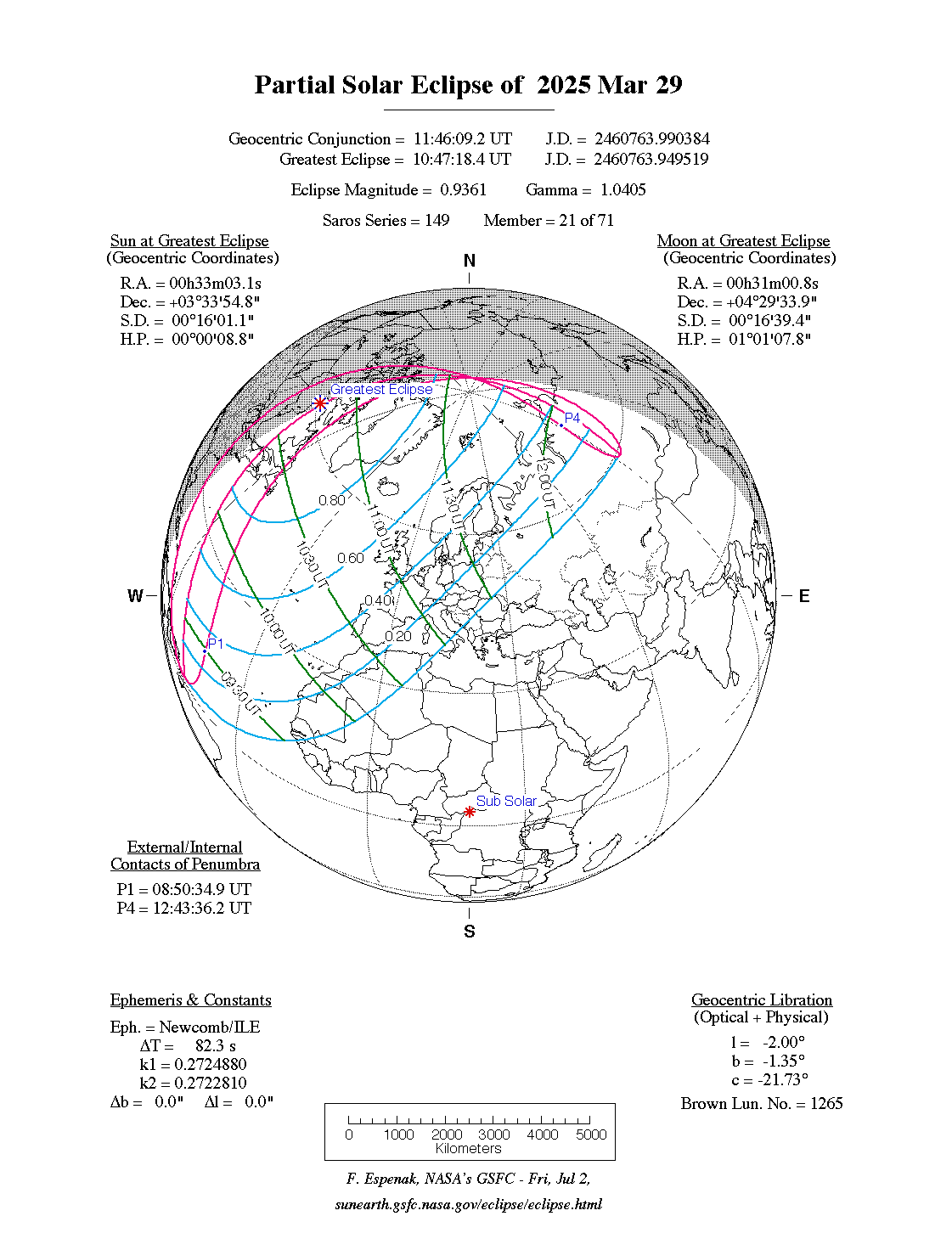
March 29 - Partial Solar Eclipse
A partial solar eclipse occurs when the Moon covers only a part of the Sun, sometimes resembling a bite taken out of a cookie. A partial solar eclipse can only be safely observed with a special solar filter or by looking at the Sun's reflection. This partial eclipse will be visible throughout Greenland and most of northern Europe and northern Russia. It will be best seen from Canada with 93% coverage.
(NASA Map and Eclipse Information) http://www.seasky.org/astronomy/assets/images/astrocal04.jpg
A partial solar eclipse occurs when the Moon covers only a part of the Sun, sometimes resembling a bite taken out of a cookie. A partial solar eclipse can only be safely observed with a special solar filter or by looking at the Sun's reflection. This partial eclipse will be visible throughout Greenland and most of northern Europe and northern Russia. It will be best seen from Canada with 93% coverage.
(NASA Map and Eclipse Information) http://www.seasky.org/astronomy/assets/images/astrocal04.jpg