July 13 - Full Moon, Supermoon
The Moon will be located on the opposite side of the Earth as the Sun and its face will be will be fully illuminated. This phase occurs at 18:38 UTC. This full moon was known by early Native American tribes as the Buck Moon because the male buck deer would begin to grow their new antlers at this time of year. This moon has also been known as the Thunder Moon and the Hay Moon. This is also the second of three supermoons for 2022. The Moon will be near its closest approach to the Earth and may look slightly larger and brighter than usual. https://ift.tt/j8Zs3o7
The Moon will be located on the opposite side of the Earth as the Sun and its face will be will be fully illuminated. This phase occurs at 18:38 UTC. This full moon was known by early Native American tribes as the Buck Moon because the male buck deer would begin to grow their new antlers at this time of year. This moon has also been known as the Thunder Moon and the Hay Moon. This is also the second of three supermoons for 2022. The Moon will be near its closest approach to the Earth and may look slightly larger and brighter than usual. https://ift.tt/j8Zs3o7
July 28 - New Moon
The Moon will located on the same side of the Earth as the Sun and will not be visible in the night sky. This phase occurs at 17:55 UTC. This is the best time of the month to observe faint objects such as galaxies and star clusters because there is no moonlight to interfere. https://ift.tt/xKLy6ao
The Moon will located on the same side of the Earth as the Sun and will not be visible in the night sky. This phase occurs at 17:55 UTC. This is the best time of the month to observe faint objects such as galaxies and star clusters because there is no moonlight to interfere. https://ift.tt/xKLy6ao
August 12 - Full Moon, Supermoon
The Moon will be located on the opposite side of the Earth as the Sun and its face will be will be fully illuminated. This phase occurs at 01:36 UTC. This full moon was known by early Native American tribes as the Sturgeon Moon because the large sturgeon fish of the Great Lakes and other major lakes were more easily caught at this time of year. This moon has also been known as the Green Corn Moon and the Grain Moon. This is also the last of three supermoons for 2022. The Moon will be near its closest approach to the Earth and may look slightly larger and brighter than usual. https://ift.tt/ZCdGfHn
The Moon will be located on the opposite side of the Earth as the Sun and its face will be will be fully illuminated. This phase occurs at 01:36 UTC. This full moon was known by early Native American tribes as the Sturgeon Moon because the large sturgeon fish of the Great Lakes and other major lakes were more easily caught at this time of year. This moon has also been known as the Green Corn Moon and the Grain Moon. This is also the last of three supermoons for 2022. The Moon will be near its closest approach to the Earth and may look slightly larger and brighter than usual. https://ift.tt/ZCdGfHn
August 14 - Saturn at Opposition
The ringed planet will be at its closest approach to Earth and its face will be fully illuminated by the Sun. It will be brighter than any other time of the year and will be visible all night long. This is the best time to view and photograph Saturn and its moons. A medium-sized or larger telescope will allow you to see Saturn's rings and a few of its brightest moons. https://ift.tt/mTiQVsq
The ringed planet will be at its closest approach to Earth and its face will be fully illuminated by the Sun. It will be brighter than any other time of the year and will be visible all night long. This is the best time to view and photograph Saturn and its moons. A medium-sized or larger telescope will allow you to see Saturn's rings and a few of its brightest moons. https://ift.tt/mTiQVsq
August 27 - Mercury at Greatest Eastern Elongation
The planet Mercury reaches greatest eastern elongation of 27.3 degrees from the Sun. This is the best time to view Mercury since it will be at its highest point above the horizon in the evening sky. Look for the planet low in the western sky just after sunset. https://ift.tt/lE1uGVH
The planet Mercury reaches greatest eastern elongation of 27.3 degrees from the Sun. This is the best time to view Mercury since it will be at its highest point above the horizon in the evening sky. Look for the planet low in the western sky just after sunset. https://ift.tt/lE1uGVH
August 27 - New Moon
The Moon will located on the same side of the Earth as the Sun and will not be visible in the night sky. This phase occurs at 08:17 UTC. This is the best time of the month to observe faint objects such as galaxies and star clusters because there is no moonlight to interfere. https://ift.tt/8Onx3ev
The Moon will located on the same side of the Earth as the Sun and will not be visible in the night sky. This phase occurs at 08:17 UTC. This is the best time of the month to observe faint objects such as galaxies and star clusters because there is no moonlight to interfere. https://ift.tt/8Onx3ev
September 10 - Full Moon
The Moon will be located on the opposite side of the Earth as the Sun and its face will be will be fully illuminated. This phase occurs at 09:58 UTC. This full moon was known by early Native American tribes as the Corn Moon because the corn is harvested around this time of year. This moon is also known as the Harvest Moon. The Harvest Moon is the full moon that occurs closest to the September equinox each year. https://ift.tt/TOZ9mV3
The Moon will be located on the opposite side of the Earth as the Sun and its face will be will be fully illuminated. This phase occurs at 09:58 UTC. This full moon was known by early Native American tribes as the Corn Moon because the corn is harvested around this time of year. This moon is also known as the Harvest Moon. The Harvest Moon is the full moon that occurs closest to the September equinox each year. https://ift.tt/TOZ9mV3
September 16 - Neptune at Opposition
The blue giant planet will be at its closest approach to Earth and its face will be fully illuminated by the Sun. It will be brighter than any other time of the year and will be visible all night long. This is the best time to view and photograph Neptune. Due to its extreme distance from Earth, it will only appear as a tiny blue dot in all but the most powerful telescopes. https://ift.tt/nktTM9g
The blue giant planet will be at its closest approach to Earth and its face will be fully illuminated by the Sun. It will be brighter than any other time of the year and will be visible all night long. This is the best time to view and photograph Neptune. Due to its extreme distance from Earth, it will only appear as a tiny blue dot in all but the most powerful telescopes. https://ift.tt/nktTM9g
September 23 - September Equinox
The September equinox occurs at 00:55 UTC. The Sun will shine directly on the equator and there will be nearly equal amounts of day and night throughout the world. This is also the first day of fall (autumnal equinox) in the Northern Hemisphere and the first day of spring (vernal equinox) in the Southern Hemisphere. https://ift.tt/uF5U3mD
The September equinox occurs at 00:55 UTC. The Sun will shine directly on the equator and there will be nearly equal amounts of day and night throughout the world. This is also the first day of fall (autumnal equinox) in the Northern Hemisphere and the first day of spring (vernal equinox) in the Southern Hemisphere. https://ift.tt/uF5U3mD
September 25 - New Moon
The Moon will located on the same side of the Earth as the Sun and will not be visible in the night sky. This phase occurs at 21:55 UTC. This is the best time of the month to observe faint objects such as galaxies and star clusters because there is no moonlight to interfere. https://ift.tt/1L3X46a
The Moon will located on the same side of the Earth as the Sun and will not be visible in the night sky. This phase occurs at 21:55 UTC. This is the best time of the month to observe faint objects such as galaxies and star clusters because there is no moonlight to interfere. https://ift.tt/1L3X46a
September 26 - Jupiter at Opposition
The giant planet will be at its closest approach to Earth and its face will be fully illuminated by the Sun. It will be brighter than any other time of the year and will be visible all night long. This is the best time to view and photograph Jupiter and its moons. A medium-sized telescope should be able to show you some of the details in Jupiter's cloud bands. A good pair of binoculars should allow you to see Jupiter's four largest moons, appearing as bright dots on either side of the planet. https://ift.tt/IdiNFku
The giant planet will be at its closest approach to Earth and its face will be fully illuminated by the Sun. It will be brighter than any other time of the year and will be visible all night long. This is the best time to view and photograph Jupiter and its moons. A medium-sized telescope should be able to show you some of the details in Jupiter's cloud bands. A good pair of binoculars should allow you to see Jupiter's four largest moons, appearing as bright dots on either side of the planet. https://ift.tt/IdiNFku
October 7 - Draconids Meteor Shower
The Draconids is a minor meteor shower producing only about 10 meteors per hour. It is produced by dust grains left behind by comet 21P Giacobini-Zinner, which was first discovered in 1900. The Draconids is an unusual shower in that the best viewing is in the early evening instead of early morning like most other showers. The shower runs annually from October 6-10 and peaks this year on the the night of the 7th. The first quarter moon will block out all but the brightest meteors this year. If you are patient, you may still be able to catch a few good ones. Best viewing will be in the early evening from a dark location far away from city lights. Meteors will radiate from the constellation Draco, but can appear anywhere in the sky. https://ift.tt/71Glzfb
The Draconids is a minor meteor shower producing only about 10 meteors per hour. It is produced by dust grains left behind by comet 21P Giacobini-Zinner, which was first discovered in 1900. The Draconids is an unusual shower in that the best viewing is in the early evening instead of early morning like most other showers. The shower runs annually from October 6-10 and peaks this year on the the night of the 7th. The first quarter moon will block out all but the brightest meteors this year. If you are patient, you may still be able to catch a few good ones. Best viewing will be in the early evening from a dark location far away from city lights. Meteors will radiate from the constellation Draco, but can appear anywhere in the sky. https://ift.tt/71Glzfb
October 8 - Mercury at Greatest Western Elongation
The planet Mercury reaches greatest western elongation of 18 degrees from the Sun. This is the best time to view Mercury since it will be at its highest point above the horizon in the morning sky. Look for the planet low in the eastern sky just before sunrise. https://ift.tt/5omHGEM
The planet Mercury reaches greatest western elongation of 18 degrees from the Sun. This is the best time to view Mercury since it will be at its highest point above the horizon in the morning sky. Look for the planet low in the eastern sky just before sunrise. https://ift.tt/5omHGEM
October 9 - Full Moon
The Moon will be located on the opposite side of the Earth as the Sun and its face will be will be fully illuminated. This phase occurs at 20:55 UTC. This full moon was known by early Native American tribes as the Hunters Moon because at this time of year the leaves are falling and the game is fat and ready to hunt. This moon has also been known as the Travel Moon and the Blood Moon. https://ift.tt/PO1GmRe
The Moon will be located on the opposite side of the Earth as the Sun and its face will be will be fully illuminated. This phase occurs at 20:55 UTC. This full moon was known by early Native American tribes as the Hunters Moon because at this time of year the leaves are falling and the game is fat and ready to hunt. This moon has also been known as the Travel Moon and the Blood Moon. https://ift.tt/PO1GmRe
October 25 - Partial Solar Eclipse
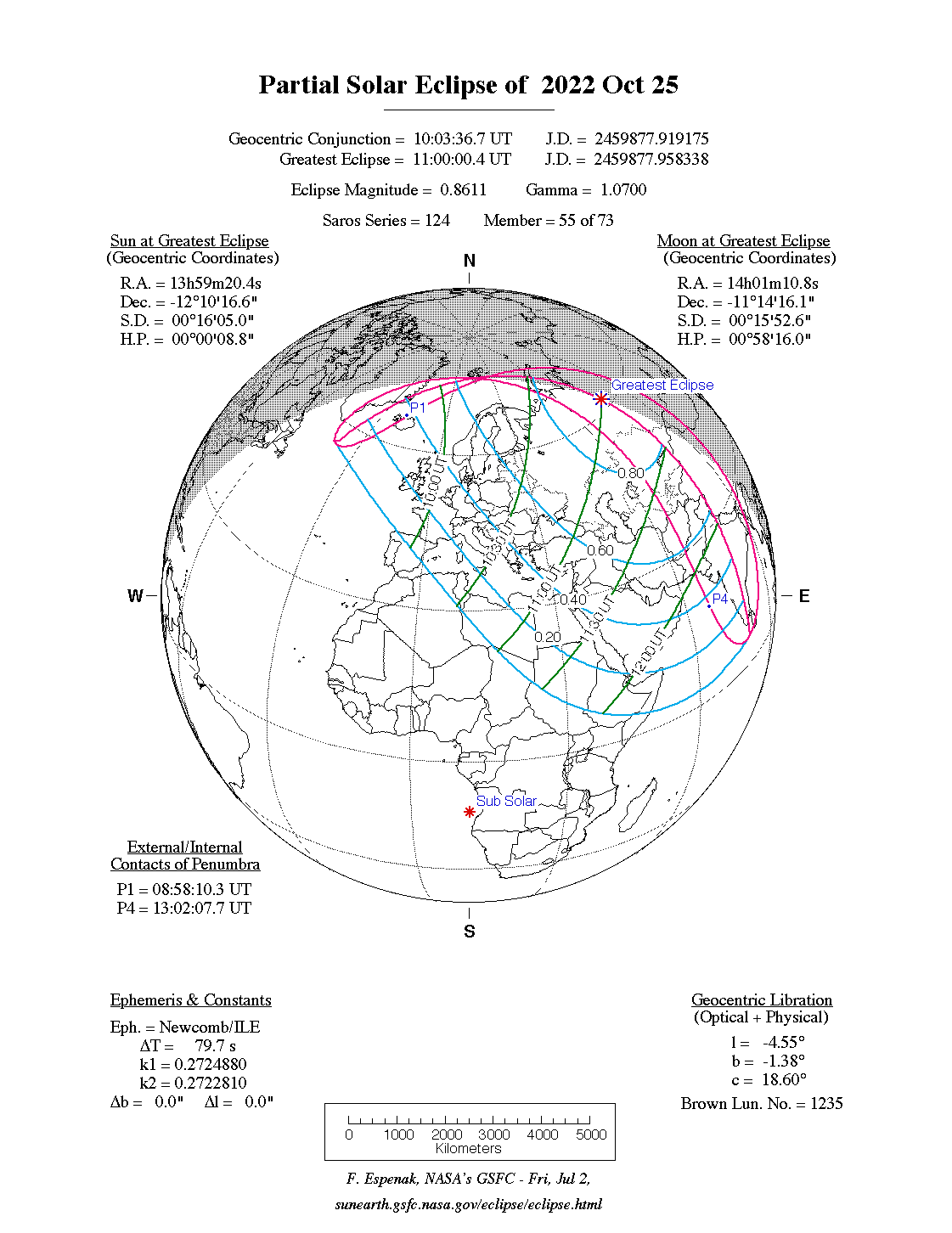
A partial solar eclipse occurs when the Moon covers only a part of the Sun, sometimes resembling a bite taken out of a cookie. A partial solar eclipse can only be safely observed with a special solar filter or by looking at the Sun's reflection. This partial eclipse will be best seen in parts of western Russia and Kazakhstan. It will be best seen from central Russia with over 80% coverage.
(NASA Map and Eclipse Information) https://ift.tt/CiIeQVB
A partial solar eclipse occurs when the Moon covers only a part of the Sun, sometimes resembling a bite taken out of a cookie. A partial solar eclipse can only be safely observed with a special solar filter or by looking at the Sun's reflection. This partial eclipse will be best seen in parts of western Russia and Kazakhstan. It will be best seen from central Russia with over 80% coverage.
(NASA Map and Eclipse Information) https://ift.tt/CiIeQVB
October 25 - New Moon
The Moon will located on the same side of the Earth as the Sun and will not be visible in the night sky. This phase occurs at 10:49 UTC. This is the best time of the month to observe faint objects such as galaxies and star clusters because there is no moonlight to interfere. https://ift.tt/bZ2LVfH
The Moon will located on the same side of the Earth as the Sun and will not be visible in the night sky. This phase occurs at 10:49 UTC. This is the best time of the month to observe faint objects such as galaxies and star clusters because there is no moonlight to interfere. https://ift.tt/bZ2LVfH
November 8 - Total Lunar Eclipse
A total lunar eclipse occurs when the Moon passes completely through the Earth's dark shadow, or umbra. During this type of eclipse, the Moon will gradually get darker and then take on a rusty or blood red color. The eclipse will be visible throughout eastern Russia, Japan, Australia, the Pacific Ocean, and parts of western and central North America. (NASA Map and Eclipse Information) https://ift.tt/sHdzXIx
A total lunar eclipse occurs when the Moon passes completely through the Earth's dark shadow, or umbra. During this type of eclipse, the Moon will gradually get darker and then take on a rusty or blood red color. The eclipse will be visible throughout eastern Russia, Japan, Australia, the Pacific Ocean, and parts of western and central North America. (NASA Map and Eclipse Information) https://ift.tt/sHdzXIx
November 8 - Full Moon
The Moon will be located on the opposite side of the Earth as the Sun and its face will be will be fully illuminated. This phase occurs at 11:03 UTC. This full moon was known by early Native American tribes as the Beaver Moon because this was the time of year to set the beaver traps before the swamps and rivers froze. It has also been known as the Frosty Moon and the Dark Moon. https://ift.tt/6OJYhK0
The Moon will be located on the opposite side of the Earth as the Sun and its face will be will be fully illuminated. This phase occurs at 11:03 UTC. This full moon was known by early Native American tribes as the Beaver Moon because this was the time of year to set the beaver traps before the swamps and rivers froze. It has also been known as the Frosty Moon and the Dark Moon. https://ift.tt/6OJYhK0
November 9 - Uranus at Opposition
The blue-green planet will be at its closest approach to Earth and its face will be fully illuminated by the Sun. It will be brighter than any other time of the year and will be visible all night long. This is the best time to view Uranus. Due to its distance, it will only appear as a tiny blue-green dot in all but the most powerful telescopes. https://ift.tt/kseiHAI
The blue-green planet will be at its closest approach to Earth and its face will be fully illuminated by the Sun. It will be brighter than any other time of the year and will be visible all night long. This is the best time to view Uranus. Due to its distance, it will only appear as a tiny blue-green dot in all but the most powerful telescopes. https://ift.tt/kseiHAI
November 23 - New Moon
The Moon will located on the same side of the Earth as the Sun and will not be visible in the night sky. This phase occurs at 22:58 UTC. This is the best time of the month to observe faint objects such as galaxies and star clusters because there is no moonlight to interfere. https://ift.tt/RsiI0pu
The Moon will located on the same side of the Earth as the Sun and will not be visible in the night sky. This phase occurs at 22:58 UTC. This is the best time of the month to observe faint objects such as galaxies and star clusters because there is no moonlight to interfere. https://ift.tt/RsiI0pu
December 8 - Mars at Opposition
The red planet will be at its closest approach to Earth and its face will be fully illuminated by the Sun. It will be brighter than any other time of the year and will be visible all night long. This is the best time to view and photograph Mars. A medium-sized telescope will allow you to see some of the dark details on the planet's orange surface. https://ift.tt/vSxaFyI
The red planet will be at its closest approach to Earth and its face will be fully illuminated by the Sun. It will be brighter than any other time of the year and will be visible all night long. This is the best time to view and photograph Mars. A medium-sized telescope will allow you to see some of the dark details on the planet's orange surface. https://ift.tt/vSxaFyI