June 21 - Annular Solar Eclipse
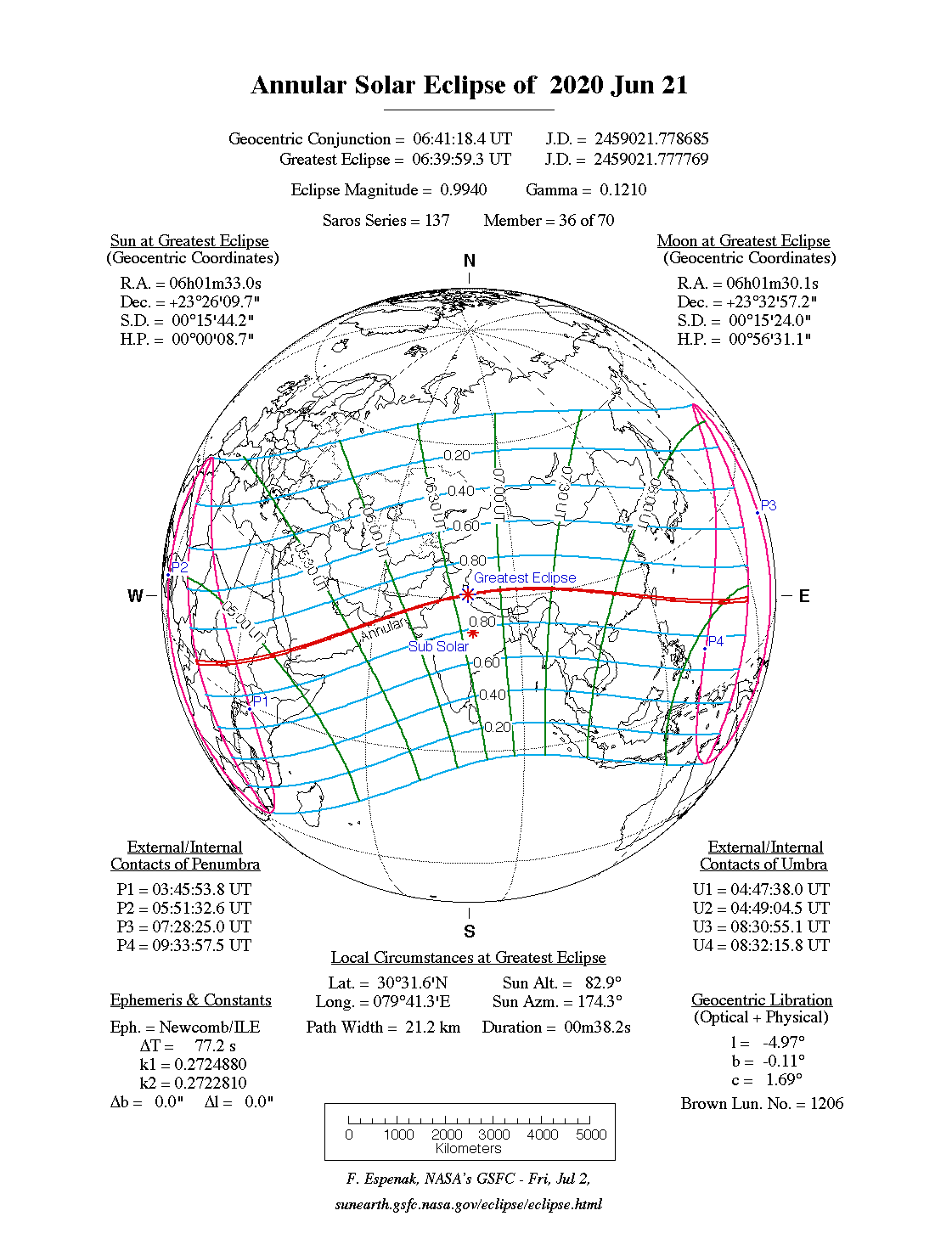
An annular solar eclipse occurs when the Moon is too far away from the Earth to completely cover the Sun. This results in a ring of light around the darkened Moon. The Sun's corona is not visible during an annular eclipse. The path of the eclipse will begin in central Africa and travel through Saudi Arabia, northern India, and southern China before ending in the Pacific Ocean. A partial eclipse will be visible throughout most of eastern Africa, the Middle East, and southern Asia. (NASA Map and Eclipse Information) (NASA Interactive Google Map) https://ift.tt/2o5wzyE
An annular solar eclipse occurs when the Moon is too far away from the Earth to completely cover the Sun. This results in a ring of light around the darkened Moon. The Sun's corona is not visible during an annular eclipse. The path of the eclipse will begin in central Africa and travel through Saudi Arabia, northern India, and southern China before ending in the Pacific Ocean. A partial eclipse will be visible throughout most of eastern Africa, the Middle East, and southern Asia. (NASA Map and Eclipse Information) (NASA Interactive Google Map) https://ift.tt/2o5wzyE
June 21 - June Solstice
The June solstice occurs at 21:43 UTC. The North Pole of the earth will be tilted toward the Sun, which will have reached its northernmost position in the sky and will be directly over the Tropic of Cancer at 23.44 degrees north latitude. This is the first day of summer (summer solstice) in the Northern Hemisphere and the first day of winter (winter solstice) in the Southern Hemisphere. https://ift.tt/2kt0lMT
The June solstice occurs at 21:43 UTC. The North Pole of the earth will be tilted toward the Sun, which will have reached its northernmost position in the sky and will be directly over the Tropic of Cancer at 23.44 degrees north latitude. This is the first day of summer (summer solstice) in the Northern Hemisphere and the first day of winter (winter solstice) in the Southern Hemisphere. https://ift.tt/2kt0lMT
July 5 - Jupiter at Opposition
The giant planet will be at its closest approach to Earth and its face will be fully illuminated by the Sun. It will be brighter than any other time of the year and will be visible all night long. This is the best time to view and photograph Jupiter and its moons. A medium-sized telescope should be able to show you some of the details in Jupiter's cloud bands. A good pair of binoculars should allow you to see Jupiter's four largest moons, appearing as bright dots on either side of the planet. https://ift.tt/2y7Wa0U
The giant planet will be at its closest approach to Earth and its face will be fully illuminated by the Sun. It will be brighter than any other time of the year and will be visible all night long. This is the best time to view and photograph Jupiter and its moons. A medium-sized telescope should be able to show you some of the details in Jupiter's cloud bands. A good pair of binoculars should allow you to see Jupiter's four largest moons, appearing as bright dots on either side of the planet. https://ift.tt/2y7Wa0U
July 5 - Penumbral Lunar Eclipse
A penumbral lunar eclipse occurs when the Moon passes through the Earth's partial shadow, or penumbra. During this type of eclipse the Moon will darken slightly but not completely. The eclipse will be visible throughout most of North America, South America, the eastern Pacific Ocean, the western Atlantic Ocean, and extreme western Africa. (NASA Map and Eclipse Information) https://ift.tt/2nmVJJk
A penumbral lunar eclipse occurs when the Moon passes through the Earth's partial shadow, or penumbra. During this type of eclipse the Moon will darken slightly but not completely. The eclipse will be visible throughout most of North America, South America, the eastern Pacific Ocean, the western Atlantic Ocean, and extreme western Africa. (NASA Map and Eclipse Information) https://ift.tt/2nmVJJk
July 14 - New Moon
The Moon will located on the same side of the Earth as the Sun and will not be visible in the night sky. This phase occurs at 17:33 UTC. This is the best time of the month to observe faint objects such as galaxies and star clusters because there is no moonlight to interfere. https://ift.tt/2xQPjth
The Moon will located on the same side of the Earth as the Sun and will not be visible in the night sky. This phase occurs at 17:33 UTC. This is the best time of the month to observe faint objects such as galaxies and star clusters because there is no moonlight to interfere. https://ift.tt/2xQPjth
July 20 - Saturn at Opposition
The ringed planet will be at its closest approach to Earth and its face will be fully illuminated by the Sun. It will be brighter than any other time of the year and will be visible all night long. This is the best time to view and photograph Saturn and its moons. A medium-sized or larger telescope will allow you to see Saturn's rings and a few of its brightest moons. https://ift.tt/2y7Wa0U
The ringed planet will be at its closest approach to Earth and its face will be fully illuminated by the Sun. It will be brighter than any other time of the year and will be visible all night long. This is the best time to view and photograph Saturn and its moons. A medium-sized or larger telescope will allow you to see Saturn's rings and a few of its brightest moons. https://ift.tt/2y7Wa0U
July 20 - Mercury at Greatest Western Elongation
The planet Mercury reaches greatest western elongation of 20.1 degrees from the Sun. This is the best time to view Mercury since it will be at its highest point above the horizon in the morning sky. Look for the planet low in the eastern sky just before sunrise. https://ift.tt/2y7Wa0U
The planet Mercury reaches greatest western elongation of 20.1 degrees from the Sun. This is the best time to view Mercury since it will be at its highest point above the horizon in the morning sky. Look for the planet low in the eastern sky just before sunrise. https://ift.tt/2y7Wa0U
July 22 - Delta Aquarids Meteor Shower
The Delta Aquarids is an average shower that can produce up to 20 meteors per hour at its peak. It is produced by debris left behind by comets Marsden and Kracht. The shower runs annually from July 12 to August 23. It peaks this year on the night of the 28th and morning of the 29th. The second quarter moon will block many of the fainter meteors this year. But if you are patient, you should still be able to catch a few of the brighter ones. Best viewing will be from a dark location after midnight. Meteors will radiate from the constellation Aquarius, but can appear anywhere in the sky. https://ift.tt/2zp7YZC
The Delta Aquarids is an average shower that can produce up to 20 meteors per hour at its peak. It is produced by debris left behind by comets Marsden and Kracht. The shower runs annually from July 12 to August 23. It peaks this year on the night of the 28th and morning of the 29th. The second quarter moon will block many of the fainter meteors this year. But if you are patient, you should still be able to catch a few of the brighter ones. Best viewing will be from a dark location after midnight. Meteors will radiate from the constellation Aquarius, but can appear anywhere in the sky. https://ift.tt/2zp7YZC
July 28 - Full Moon
The Moon will be located on the opposite side of the Earth as the Sun and its face will be will be fully illuminated. This phase occurs at 15:59 UTC. This full moon was known by early Native American tribes as the Sturgeon Moon because the large sturgeon fish of the Great Lakes and other major lakes were more easily caught at this time of year. This moon has also been known as the Green Corn Moon and the Grain Moon. https://ift.tt/2hDHuNr
The Moon will be located on the opposite side of the Earth as the Sun and its face will be will be fully illuminated. This phase occurs at 15:59 UTC. This full moon was known by early Native American tribes as the Sturgeon Moon because the large sturgeon fish of the Great Lakes and other major lakes were more easily caught at this time of year. This moon has also been known as the Green Corn Moon and the Grain Moon. https://ift.tt/2hDHuNr
August 3 - Perseids Meteor Shower
The Perseids is one of the best meteor showers to observe, producing up to 60 meteors per hour at its peak. It is produced by comet Swift-Tuttle, which was discovered in 1862. The Perseids are famous for producing a large number of bright meteors. The shower runs annually from July 17 to August 24. It peaks this year on the night of the 11th and morning of the 12th. The second quarter moon will block out some of the fainter meteors this year, but the Perseids are so bright and numerous that it should still be a good show. Best viewing will be from a dark location after midnight. Meteors will radiate from the constellation Perseus, but can appear anywhere in the sky. https://ift.tt/2zp7YZC
The Perseids is one of the best meteor showers to observe, producing up to 60 meteors per hour at its peak. It is produced by comet Swift-Tuttle, which was discovered in 1862. The Perseids are famous for producing a large number of bright meteors. The shower runs annually from July 17 to August 24. It peaks this year on the night of the 11th and morning of the 12th. The second quarter moon will block out some of the fainter meteors this year, but the Perseids are so bright and numerous that it should still be a good show. Best viewing will be from a dark location after midnight. Meteors will radiate from the constellation Perseus, but can appear anywhere in the sky. https://ift.tt/2zp7YZC
August 11 - Venus at Greatest Western Elongation
The planet Venus reaches greatest western elongation of 45.8 degrees from the Sun. This is the best time to view Venus since it will be at its highest point above the horizon in the morning sky. Look for the bright planet in the eastern sky before sunrise. https://ift.tt/2y7Wa0U
The planet Venus reaches greatest western elongation of 45.8 degrees from the Sun. This is the best time to view Venus since it will be at its highest point above the horizon in the morning sky. Look for the bright planet in the eastern sky before sunrise. https://ift.tt/2y7Wa0U
August 13 - New Moon
The Moon will located on the same side of the Earth as the Sun and will not be visible in the night sky. This phase occurs at 02:42 UTC. This is the best time of the month to observe faint objects such as galaxies and star clusters because there is no moonlight to interfere. https://ift.tt/2xQPjth
The Moon will located on the same side of the Earth as the Sun and will not be visible in the night sky. This phase occurs at 02:42 UTC. This is the best time of the month to observe faint objects such as galaxies and star clusters because there is no moonlight to interfere. https://ift.tt/2xQPjth
August 19 - Full Moon
The Moon will be located on the opposite side of the Earth as the Sun and its face will be will be fully illuminated. This phase occurs at 05:23 UTC. This full moon was known by early Native American tribes as the Corn Moon because the corn is harvested around this time of year. https://ift.tt/2hDHuNr
The Moon will be located on the opposite side of the Earth as the Sun and its face will be will be fully illuminated. This phase occurs at 05:23 UTC. This full moon was known by early Native American tribes as the Corn Moon because the corn is harvested around this time of year. https://ift.tt/2hDHuNr
September 2 - Neptune at Opposition
The blue giant planet will be at its closest approach to Earth and its face will be fully illuminated by the Sun. It will be brighter than any other time of the year and will be visible all night long. This is the best time to view and photograph Neptune. Due to its extreme distance from Earth, it will only appear as a tiny blue dot in all but the most powerful telescopes. https://ift.tt/2y7Wa0U
The blue giant planet will be at its closest approach to Earth and its face will be fully illuminated by the Sun. It will be brighter than any other time of the year and will be visible all night long. This is the best time to view and photograph Neptune. Due to its extreme distance from Earth, it will only appear as a tiny blue dot in all but the most powerful telescopes. https://ift.tt/2y7Wa0U
September 11 - New Moon
The Moon will located on the same side of the Earth as the Sun and will not be visible in the night sky. This phase occurs at 11:00 UTC. This is the best time of the month to observe faint objects such as galaxies and star clusters because there is no moonlight to interfere. https://ift.tt/2xQPjth
The Moon will located on the same side of the Earth as the Sun and will not be visible in the night sky. This phase occurs at 11:00 UTC. This is the best time of the month to observe faint objects such as galaxies and star clusters because there is no moonlight to interfere. https://ift.tt/2xQPjth
September 17 - September Equinox
The September equinox occurs at 13:30 UTC. The Sun will shine directly on the equator and there will be nearly equal amounts of day and night throughout the world. This is also the first day of fall (autumnal equinox) in the Northern Hemisphere and the first day of spring (vernal equinox) in the Southern Hemisphere. https://ift.tt/2kt0lMT
The September equinox occurs at 13:30 UTC. The Sun will shine directly on the equator and there will be nearly equal amounts of day and night throughout the world. This is also the first day of fall (autumnal equinox) in the Northern Hemisphere and the first day of spring (vernal equinox) in the Southern Hemisphere. https://ift.tt/2kt0lMT
September 22 - Full Moon
The Moon will be located on the opposite side of the Earth as the Sun and its face will be will be fully illuminated. This phase occurs at 21:06 UTC. This full moon was known by early Native American tribes as the Hunters Moon because at this time of year the leaves are falling and the game is fat and ready to hunt. It has also been known as the Travel Moon and the Blood Moon. This full moon is also known as the Harvest Moon. The Harvest Moon is the full moon that occurs closest to the September equinox each year. https://ift.tt/2hDHuNr
The Moon will be located on the opposite side of the Earth as the Sun and its face will be will be fully illuminated. This phase occurs at 21:06 UTC. This full moon was known by early Native American tribes as the Hunters Moon because at this time of year the leaves are falling and the game is fat and ready to hunt. It has also been known as the Travel Moon and the Blood Moon. This full moon is also known as the Harvest Moon. The Harvest Moon is the full moon that occurs closest to the September equinox each year. https://ift.tt/2hDHuNr
October 1 - Draconids Meteor Shower
The Draconids is a minor meteor shower producing only about 10 meteors per hour. It is produced by dust grains left behind by comet 21P Giacobini-Zinner, which was first discovered in 1900. The Draconids is an unusual shower in that the best viewing is in the early evening instead of early morning like most other showers. The shower runs annually from October 6-10 and peaks this year on the the night of the 7th. The second quarter moon will ensure dark skies in the early evening for what should be a good show. Best viewing will be in the early evening from a dark location far away from city lights. Meteors will radiate from the constellation Draco, but can appear anywhere in the sky. https://ift.tt/2zp7YZC
The Draconids is a minor meteor shower producing only about 10 meteors per hour. It is produced by dust grains left behind by comet 21P Giacobini-Zinner, which was first discovered in 1900. The Draconids is an unusual shower in that the best viewing is in the early evening instead of early morning like most other showers. The shower runs annually from October 6-10 and peaks this year on the the night of the 7th. The second quarter moon will ensure dark skies in the early evening for what should be a good show. Best viewing will be in the early evening from a dark location far away from city lights. Meteors will radiate from the constellation Draco, but can appear anywhere in the sky. https://ift.tt/2zp7YZC
October 1 - Mercury at Greatest Eastern Elongation
The planet Mercury reaches greatest eastern elongation of 25.8 degrees from the Sun. This is the best time to view Mercury since it will be at its highest point above the horizon in the evening sky. Look for the planet low in the western sky just after sunset. https://ift.tt/2y7Wa0U
The planet Mercury reaches greatest eastern elongation of 25.8 degrees from the Sun. This is the best time to view Mercury since it will be at its highest point above the horizon in the evening sky. Look for the planet low in the western sky just after sunset. https://ift.tt/2y7Wa0U
October 7 - Mars at Opposition
The red planet will be at its closest approach to Earth and its face will be fully illuminated by the Sun. It will be brighter than any other time of the year and will be visible all night long. This is the best time to view and photograph Mars. A medium-sized telescope will allow you to see some of the dark details on the planet's orange surface. https://ift.tt/2y7Wa0U
The red planet will be at its closest approach to Earth and its face will be fully illuminated by the Sun. It will be brighter than any other time of the year and will be visible all night long. This is the best time to view and photograph Mars. A medium-sized telescope will allow you to see some of the dark details on the planet's orange surface. https://ift.tt/2y7Wa0U
October 13 - New Moon
The Moon will located on the same side of the Earth as the Sun and will not be visible in the night sky. This phase occurs at 19:32 UTC. This is the best time of the month to observe faint objects such as galaxies and star clusters because there is no moonlight to interfere. https://ift.tt/2xQPjth
The Moon will located on the same side of the Earth as the Sun and will not be visible in the night sky. This phase occurs at 19:32 UTC. This is the best time of the month to observe faint objects such as galaxies and star clusters because there is no moonlight to interfere. https://ift.tt/2xQPjth