
⚡ AI News
Microsoft discloses $10B quarterly revenue from OpenAI: Microsoft earned $10B from its OpenAI deal last quarter, nearly 11% of its total revenue, with $7.2B still owed.
Google's Gemini app hits 1 billion monthly users: Alphabet's Q3 revenue rose 25% to $127.6B, with Cloud up 103% and Gemini now at 1 billion monthly users.
Anthropic expands AI for Science to 20 institutions: Anthropic grew its free Claude credits program to 20 science funders, research institutes and projects like FlyWire and gnomAD.
👏1
One repo, dozens of apps: open-source clones of the SaaS you pay for
The video opened on a wall of app screenshots: this project rebuilds the office and collaboration tools you already pay for, from scratch, as open source.
▶️ Watch the video on YouTube
Office, rebuilt: Spreadsheet, Documents and Presentation stand in for Excel, Word and PowerPoint
Meetings and chat, too: Meetings, Teamchat and Email take on Zoom, Slack and Gmail
Reaches further: README also lists Photoshop and AutoCAD style apps in Creative Tools, Engineering
The catch: a few apps, like Notes and Signatures, ship source only, with no live demo yet
Already live: Office, Meetings and Teamchat apps are free, open source and usable today
github.com/HeyPuter/everything
The video opened on a wall of app screenshots: this project rebuilds the office and collaboration tools you already pay for, from scratch, as open source.
▶️ Watch the video on YouTube
Office, rebuilt: Spreadsheet, Documents and Presentation stand in for Excel, Word and PowerPoint
Meetings and chat, too: Meetings, Teamchat and Email take on Zoom, Slack and Gmail
Reaches further: README also lists Photoshop and AutoCAD style apps in Creative Tools, Engineering
The catch: a few apps, like Notes and Signatures, ship source only, with no live demo yet
Already live: Office, Meetings and Teamchat apps are free, open source and usable today
What's in the repo
Everything is a single monorepo where every app lives in its own folder under src/: Spreadsheet, Documents, Presentation, Whiteboard, PDF, Notes and Records cover office work; Meetings, Teamchat, Email, Contacts, Calendar and Signatures cover collaboration. The README's table of contents also names Creative Tools, Engineering, Productivity, Finance, Business, Developer Tools and Games sections, which is where the Photoshop and AutoCAD style apps from the video belong.
There's no benchmark or performance number here. This is the project's own stated goal: to rebuild and open-source the world's software, counted in apps shipped, not a measured speed or accuracy claim by anyone.
These are plain self-hosted web apps, not AI wrappers, so the tool itself is free with no model or API bill attached. Some apps already have a hosted demo you can open straight in a browser, for example spreadsheet.puter.com and meetings.puter.com. Others, like Notes and Signatures, ship source only, with no live demo link yet.
Requires: Node.js 22.12 or newer, git, npm.git clone https://github.com/HeyPuter/everything.git
cd everything/src/[app-name]
npm install
npm run dev
Use it instead of Microsoft 365, Zoom or Slack if you want a free, self-hosted stand-in you can run yourself. Don't expect it to replace them today if you need their polish, integrations or mobile apps.
github.com/HeyPuter/everything
🎉1
The Everything Project vs Nextcloud Hub
Both pitch self-hosted, open-source replacements for your SaaS stack: Puter's Everything project rebuilds Office, Zoom, Slack, Photoshop and AutoCAD from scratch as separate MIT apps, while Nextcloud Hub bundles office, chat, file sync and calls into one mature platform used by millions. Anyone picking a self-hosted Microsoft 365 or Google Workspace alternative weighs these two.
Pick The Everything Project if you want free MIT source for dozens of app categories, including creative and CAD tools, to adapt piece by piece, even if some are demo-less and early.
Pick Nextcloud Hub if you need a production-ready, integrated office, chat and video suite today, with enterprise support and a vendor used by governments at scale.
Price and licensing
The Everything Project: free, MIT, no paid tier
Nextcloud Hub: free self-host; from €71/user/yr
Setup and hosting
The Everything Project: clone + npm per app
Nextcloud Hub: one Docker command
Breadth vs maturity
The Everything Project: most categories, many demo-less
Nextcloud Hub: fewer apps, production-proven
Who's behind it
The Everything Project: Canadian startup, ~7 staff
Nextcloud Hub: German firm, since 2016
The Everything Project: https://github.com/HeyPuter/everything
Nextcloud Hub: https://nextcloud.com
Both pitch self-hosted, open-source replacements for your SaaS stack: Puter's Everything project rebuilds Office, Zoom, Slack, Photoshop and AutoCAD from scratch as separate MIT apps, while Nextcloud Hub bundles office, chat, file sync and calls into one mature platform used by millions. Anyone picking a self-hosted Microsoft 365 or Google Workspace alternative weighs these two.
Pick The Everything Project if you want free MIT source for dozens of app categories, including creative and CAD tools, to adapt piece by piece, even if some are demo-less and early.
Pick Nextcloud Hub if you need a production-ready, integrated office, chat and video suite today, with enterprise support and a vendor used by governments at scale.
Price and licensing
The Everything Project: free, MIT, no paid tier
Nextcloud Hub: free self-host; from €71/user/yr
Setup and hosting
The Everything Project: clone + npm per app
Nextcloud Hub: one Docker command
Breadth vs maturity
The Everything Project: most categories, many demo-less
Nextcloud Hub: fewer apps, production-proven
Who's behind it
The Everything Project: Canadian startup, ~7 staff
Nextcloud Hub: German firm, since 2016
Side by side, in full
Price and licensing
The Everything Project: Every Everything app is released free under the MIT license with no subscription, hosted paywall, or enterprise tier offered by HeyPuter.
Nextcloud Hub: Nextcloud's self-hosted Community edition is free with full features, but its Enterprise support subscriptions start at €71.29 per user per year and require a minimum of 100 users.
Setup and hosting
The Everything Project: Each app lives in its own folder; running one locally means Node.js 22.12+, then git clone, npm install and npm run dev per app, with no shared backend linking them together.
Nextcloud Hub: Nextcloud All-in-One starts the whole office-plus-chat server with a single docker run command, though Talk's video calls recommend adding a TURN server for reliable connections.
Breadth vs maturity
The Everything Project: The README lists nine categories reaching into Photoshop, AutoCAD, SolidWorks and music-production alternatives that Nextcloud has nothing like, but Photo Studio, Video Studio, Vector Studio and 3D Studio all still show source code only with no live demo.
Nextcloud Hub has no creative or CAD apps, but its office, chat and file-sync core is a decade old and runs on over 400,000 servers, including rollouts to hundreds of thousands of French and German government staff.
Who's behind it
The Everything project comes from Puter Technologies, a Canada-based startup founded in 2022 with roughly seven employees and one undisclosed pre-seed round from Accel Starters, Shilling Capital and others.
Nextcloud Hub: Nextcloud GmbH is a German company headquartered in Stuttgart, founded in 2016 by Frank Karlitschek (who earlier founded ownCloud), and now markets itself as the sovereign European alternative to Microsoft 365.
The Everything Project: https://github.com/HeyPuter/everything
Nextcloud Hub: https://nextcloud.com
👍1

A remote control for your coding agents
You start a coding agent, then end up babysitting it. T3 Code puts a remote control for it on your phone.
▶️ Watch the video on YouTube
No AI inside: it drives the coding agents already on your machine, it doesn't think for itself
Six agents, your subscriptions: Claude Code, Codex, Cursor, Grok Build, OpenCode, Google Antigravity
Phone, web, or desktop: kick off a task at your desk, then steer it from anywhere
Early days: expect bugs, and an agent needs to already be installed and logged in
https://github.com/pingdotgg/t3code
You start a coding agent, then end up babysitting it. T3 Code puts a remote control for it on your phone.
▶️ Watch the video on YouTube
No AI inside: it drives the coding agents already on your machine, it doesn't think for itself
Six agents, your subscriptions: Claude Code, Codex, Cursor, Grok Build, OpenCode, Google Antigravity
Phone, web, or desktop: kick off a task at your desk, then steer it from anywhere
Early days: expect bugs, and an agent needs to already be installed and logged in
One control surface for agents you already run
T3 Code runs no model of its own. It's a harness that connects to Claude Code, Codex, Cursor, Grok Build, OpenCode, or Google Antigravity on your computer, and lets you drive whichever is set up from an iOS or Android app, a web app, or an Electron desktop app.
The tool itself is free and open source. The intelligence isn't: each agent still runs on your own subscription or API key for Claude, OpenAI, Cursor, xAI, or Google, whatever you already use.
Requires at least one agent already installed and authenticated before you open T3 Code: for example Claude Code withclaude auth login, Codex CLI withcodex login, or OpenCode withopencode auth login. Antigravity just needs enabling in Settings and a Google sign-in, no CLI. The project doesn't list OS, chip, or memory requirements beyond that.
The catch: the authors call the project "very very early" and say to expect bugs. It also isn't accepting outside contributions yet beyond small fixes.
Try it withcurl -fsSL https://t3.codes/install.sh | sh(PowerShell on Windows:irm https://t3.codes/install.ps1 | iex), then runt3. To test it without installing, runnpx t3@latest. Desktop builds are also on GitHub Releases, winget, scoop, Homebrew, and the AUR.
Use it instead of leaving a terminal tab open all day when you want to check on a task from your phone. Don't use it if none of those six agents are set up yet, since T3 Code has nothing of its own to run.
https://github.com/pingdotgg/t3code
😍1
⚡ AI News
Mistral releases open weights for 1T-parameter Large 4: Mistral ships full weights for its trillion-parameter Large 4 model, tuned for cybersecurity, coding and finance.
Deepgram acquires Daily, maker of Pipecat voice framework: Deepgram buys Daily, the startup behind the open-source Pipecat voice AI framework, with deal terms undisclosed.
Wabi hits $1.25B valuation building mini-app AI agent: Wabi, the mini-app-building AI agent from Replika founder Eugenia Kuyda, raised $55M at a $1.25B valuation.
⚡1
Macro: the PDF editor that open-sourced its whole work OS
You're paying for Slack, Notion, Linear and Salesforce, all at once.
Macro wants to replace all of them, in one open-source app.
▶️ Watch the video on YouTube
27+ apps, one app: Slack, Notion, Linear and a CRM bundled into Macro
From PDF editor to work OS: started in 2020, now email, chat, tasks, calls, CRM
Shared team memory: one AI agent acts across every module
$30M+ from a16z, then open-sourced: the whole app, AGPLv3, not open core
$200/month plan, free to self-host: model costs aside
github.com/macro-inc/macro
You're paying for Slack, Notion, Linear and Salesforce, all at once.
Macro wants to replace all of them, in one open-source app.
▶️ Watch the video on YouTube
27+ apps, one app: Slack, Notion, Linear and a CRM bundled into Macro
From PDF editor to work OS: started in 2020, now email, chat, tasks, calls, CRM
Shared team memory: one AI agent acts across every module
$30M+ from a16z, then open-sourced: the whole app, AGPLv3, not open core
$200/month plan, free to self-host: model costs aside
What self-hosting means
Macro started in 2020 as an AI editor for PDFs and DOCX files that flagged key terms, cross-references and errors. In 2026 it pivoted into a full work platform: email, chat, docs, tasks, calls and a CRM, tied together by "shared team memory" so one AI agent can act across every module.
The company raised a $9.3M seed in 2023 and a $12M Series A in 2024, both led by Andreessen Horowitz, $30M+ total (TechCrunch, Law.com). It then released the whole platform under the AGPLv3 license, which the project's own GitHub page calls "not open core": the same code the $200/seat/month Max plan runs on, not a stripped-down free tier.
The GitHub repo has reached 5.6k stars and 533 forks. The frontend is SolidJS (web, Tauri desktop, mobile); the backend is Rust, split into 42 separate deployable services, and that split is the catch: this is not a one-container app to self-host.
Requires: the project doesn't list hardware requirements beyond a server able to run those 42 Rust services, plus either a local model or a paid API key, since self-hosting the app does not make the AI itself free. For comparison, Macro's own cloud tiers: Free (Gemini Flash only, 5GB storage, 2 email accounts), Pro at $40/seat/month, Max at $200/seat/month.
Use it instead of a Slack plus Notion plus Linear plus CRM stack when you want one app and your own data under your own roof. Don't use it yet if you need a proven, simple hosting setup: forty-two services is a lot to run solo, and the AI itself is never free, only the app is.
Clone the repo and follow its setup docs to self-host:git clone https://github.com/macro-inc/macro
github.com/macro-inc/macro
🏆1
🔥1
AI Made Developers 19% Slower, But They Felt 20% Faster
A walk through the trial, the rerun, the vendor benchmark and the paper behind the 19% argument.
Our Short on this: Macro: the PDF-editor startup that open-sourced an entire work OS
Watch the video on YouTube
Read the article
A walk through the trial, the rerun, the vendor benchmark and the paper behind the 19% argument.
Our Short on this: Macro: the PDF-editor startup that open-sourced an entire work OS
Watch the video on YouTube
Read the article
👏2
⚡ AI News
Fake Claude Code extension plants SSH backdoor: A rogue Claude Code build on Cursor's marketplace hit up to 5,000 developers with a persistent SSH backdoor for 11 hours.
Claude discovers critical exploit chains in Chrome, Linux: Anthropic says Claude found chained zero-day exploits in Chrome (62 CVEs), Safari, Android, Windows and Linux.
Experts defer to their AI agent 86% of the time, study finds: Anthropic found analysts picked their coding agent's secretly preferred option 86% of the time, often unaware of its sway.
🎉1
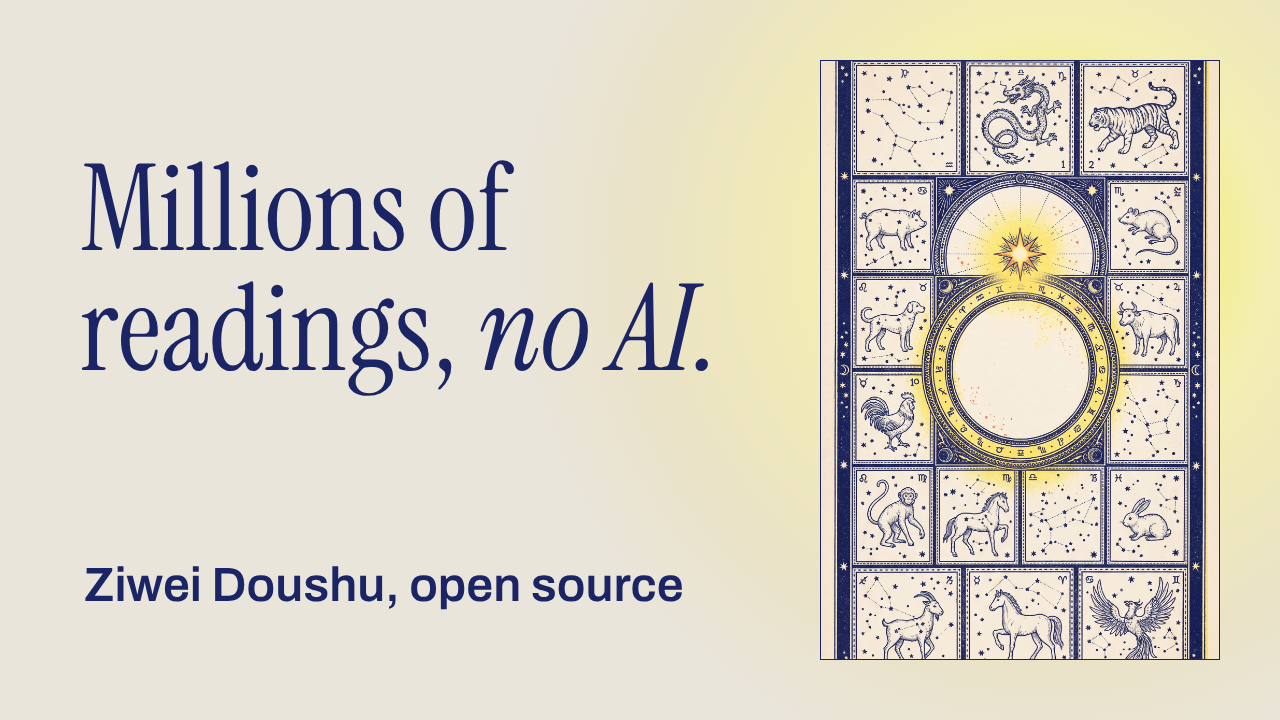
An astrology engine that writes 8.7 million readings without AI
An open-source chart engine for Ziwei Doushu, a traditional Chinese astrology system.
It also ships the readings themselves, by the millions, generated with no model in the loop.
▶️ Watch the video on YouTube
Open chart engine: full plotting algorithm, transformation system, ancient source texts, all public
8.7M readings, zero AI: 674,976 full charts x 13 dimensions, generated deterministically
161 MB unpacks to 56.6 GB: the entire interpretation dataset, compressed with zstd
MIT code, CC BY 4.0 data: free to reuse, even commercially, just credit the source
One thing stays closed: the judgment library that writes new readings isn't open sourced
github.com/Renhuai123/ziwei-doushu
An open-source chart engine for Ziwei Doushu, a traditional Chinese astrology system.
It also ships the readings themselves, by the millions, generated with no model in the loop.
▶️ Watch the video on YouTube
Open chart engine: full plotting algorithm, transformation system, ancient source texts, all public
8.7M readings, zero AI: 674,976 full charts x 13 dimensions, generated deterministically
161 MB unpacks to 56.6 GB: the entire interpretation dataset, compressed with zstd
MIT code, CC BY 4.0 data: free to reuse, even commercially, just credit the source
One thing stays closed: the judgment library that writes new readings isn't open sourced
8.7 million readings, no AI involved
The v4.0 dataset (released 2026-10-15) covers 674,976 full charts: every real calendar date from 1950 to 2026, times 12 traditional hour-slots, times gender. Each chart carries 13 interpretation dimensions (career, wealth, health, relationships and more), for 8,774,688 passages total, about 20.4 billion characters of text.
Compressed with zstd it's 161 MB, split into 77 yearly files plus one full tarball; unpacked it's 56.6 GB. These are the project's own published numbers, not an independent benchmark.
Generation is deterministic: the chart engine plus a judgment library produce the same output for the same input, no model call involved anywhere.
Requires: a TypeScript/Node toolchain to run the engine itself, and thezstdCLI (with the--long=27flag) to unpack the dataset. No GPU, no API key: nothing here touches AI.
The catch: the judgment library that actually writes the interpretation text stays closed source. What's open is the chart-plotting engine and the resulting dataset, not the generator that turned one into the other.
Code is MIT. The dataset is CC BY 4.0: free to reuse, even commercially, as long as you credit the source; quoted lecture excerpts embedded in the text keep a separate non-commercial license.
To try it:git clone https://github.com/Renhuai123/ziwei-doushu, thennpm testruns the engine's regression suite. Grab the dataset itself from the repo's Releases page, tagv4.0-13d.
Use it instead of calling an LLM when you want free, reproducible astrology text at scale. Don't use it if you need the actual reasoning that generates new readings: that part isn't public.
github.com/Renhuai123/ziwei-doushu
👍1
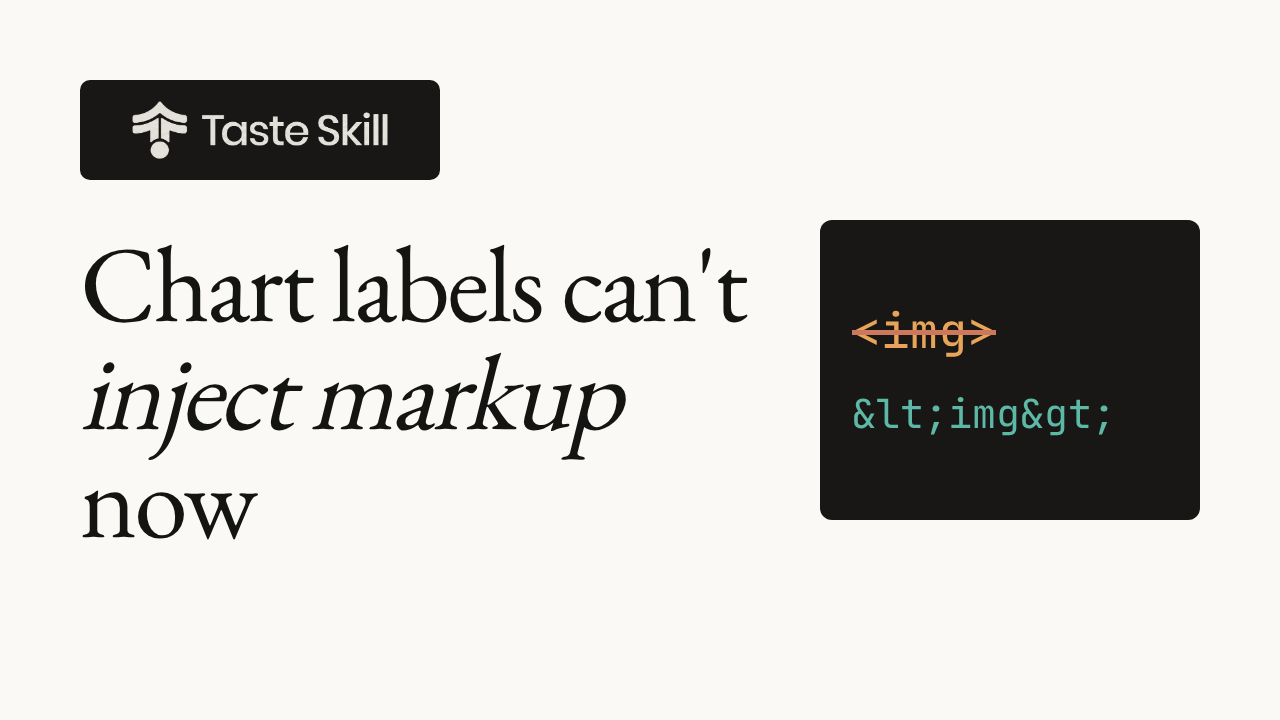
Taste Skill patches an XSS hole, the keyboard and the italics
One release, three bugs the community found: a markup injection through your own data, a page you couldn't drive from a keyboard, and fonts rendering fake italics.
▶️ Watch the video on YouTube
Escaped labels: chart labels and headings built from your data no longer inject markup
Keyboard and screen readers: every control now works from the keyboard and carries an accessible name
Italics fixed: Boska, Erode and Sentient now load their italic weight correctly
The catch: Node 22 and a real browser, still required
Built from reports: every fix in this release came from a bug the community filed
https://github.com/Leonxlnx/taste-skill
One release, three bugs the community found: a markup injection through your own data, a page you couldn't drive from a keyboard, and fonts rendering fake italics.
▶️ Watch the video on YouTube
Escaped labels: chart labels and headings built from your data no longer inject markup
Keyboard and screen readers: every control now works from the keyboard and carries an accessible name
Italics fixed: Boska, Erode and Sentient now load their italic weight correctly
The catch: Node 22 and a real browser, still required
Built from reports: every fix in this release came from a bug the community filed
What actually shipped
Taste Skill is an Agent Skill, not a standalone app. It installs into a coding agent (Claude Code, Codex, or anything using the npx skills CLI) and gives that agent an art direction, real reference photos and a browser check, instead of letting it draw a generic landing page.
This release is a security and accessibility patch, not a feature drop. Chart labels and headings pulled from your own data are now escaped before they reach the page, closing a markup injection path. Every interactive control gained keyboard operation and an accessible name. The italic weights for Boska, Erode and Sentient now load instead of falling back to a fake slant. The project's own changelog credits all three fixes to bugs the community reported; no benchmark numbers are attached to this patch.
The skill itself is free and needs no API key. The cost you still pay is whatever your coding agent charges to run it, a subscription or its own API key, since the skill only rides along inside that agent.
Requires: Node 22 or newer, an installed Chrome, Edge or Chromium, and a coding agent to host the skill. Network access is needed only so the skill can fetch reference photos from open archives.
The catch, as the video says: it still needs that Node version and a real browser present on the machine. A full page build takes roughly 30 to 45 minutes and a few hundred thousand tokens, by the project's own account.
Install with:npx skills add https://github.com/Leonxlnx/taste-skill --skill "design-taste-frontend"
Use it instead of asking your agent to "make it look nicer" when you want an actual art direction and a browser-verified result. Don't use it if your agent can't run Node scripts or open a real browser.
https://github.com/Leonxlnx/taste-skill
😍1
⚡ AI News
OpenAI-backed Thrive Holdings buys ADT for $15B: Thrive Holdings, OpenAI's AI rollup partner, acquired security firm ADT for $15.3 billion in enterprise value.
Google's Suncatcher satellite computes in orbit: Google's Suncatcher satellite ran its onboard Gemma model in space for the first time, generating poetry from orbiting TPUs.
AWS targets $1 trillion revenue, Jassy says: Amazon's Andy Jassy said AWS could hit $1 trillion revenue in 5 to 10 years, backed by $220 billion in 2026 capex.
US probed China spy claims against Nvidia's Huang: US intelligence surveilled a Megaspeed executive for a year over fears she was spying on Nvidia CEO Jensen Huang.
DoorDash: AI agents brought just hundreds of orders: DoorDash said third-party AI agents like Muse and Instinct drove only several hundred orders, versus 3 million daily deliveries.
⚡1

Claude Code just hired a 49-agent game studio
One Claude Code project, loaded with directors, department leads and specialists whose whole job is making a game.
▶️ Watch the video on YouTube
A studio, not a chat: 49 agents arranged as directors, leads and specialists
Heavy on paperwork: 74 slash commands and 62 document templates (GDDs, UX specs, ADRs)
Guardrails built in: 15 validation hooks and 14 path-scoped coding rules check the code
Not a new idea: BMAD-METHOD already ships a game-dev studio module for any AI tool
The twist: the author's own blind test ranked a game built this way last
github.com/Donchitos/Claude-Code-Game-Studios
One Claude Code project, loaded with directors, department leads and specialists whose whole job is making a game.
▶️ Watch the video on YouTube
A studio, not a chat: 49 agents arranged as directors, leads and specialists
Heavy on paperwork: 74 slash commands and 62 document templates (GDDs, UX specs, ADRs)
Guardrails built in: 15 validation hooks and 14 path-scoped coding rules check the code
Not a new idea: BMAD-METHOD already ships a game-dev studio module for any AI tool
The twist: the author's own blind test ranked a game built this way last
What's inside
It's a free, MIT-licensed template layer by one developer (GitHub user Donchitos) that you drop into an existing Claude Code project. It doesn't write a game on its own: it loads a hierarchy of agents and workflows on top of Claude's existing coding ability, targeting Godot 4, Unity or Unreal Engine 5.
The current README lists 49 agents, 74 slash-command skills, 15 validation hooks, 14 coding rules and 62 document templates. The first release, v0.1.0 from February 2026, shipped roughly half of that (48 agents, 35 skills, 8 hooks, 11 rules, 28 templates), per the project's own release notes, so the skill and template count has doubled in about eight months.
30,403 stars and 4,166 forks as of October 30, 2026, per GitHub's API.
The tool itself is free (MIT license, tips only). It still runs on top of whatever Claude Code access you already have, so you keep paying for that: an API key or a Claude subscription.
Requires: an existing Claude Code setup, and a project targeting Godot 4, Unity or Unreal Engine 5. No extra hardware is listed in the README.
The catch, by the author's own admission: in a blind test, a game built with the full agent and documentation process was ranked last against builds made without it. More agents and templates meant more paperwork, not a better game.
Use it instead of plain Claude Code when you want forced structure and review gates on a game project. Don't use it if you just want working code fast: BMAD-METHOD has a similar game-dev module and isn't locked to Claude Code alone.
Try it:git clone https://github.com/Donchitos/Claude-Code-Game-Studios.git
cd Claude-Code-Game-Studios
then follow the README's setup to load it into your Claude Code project.
github.com/Donchitos/Claude-Code-Game-Studios
🏆1
What should we cover next?
Final Results
17%
Expo Skills: AI agent skills that teach coding agents to build, deploy and debug Expo apps correctly
67%
Vercel Skills CLI: Open-source CLI that installs reusable agent skills across 75+ coding tools
17%
vLLM: High-throughput, efficient LLM serving engine with FP8 KV cache and speculative decoding
🔥1
⚡ AI News
Anthropic expected to get junk credit rating: Blackstone now expects Anthropic to receive a high junk credit rating after its IPO filing, reversing its earlier investment-grade forecast.
Nvidia may cosign Nscale's $45B data center: Nvidia is in talks to guarantee loans for Nscale's West Virginia AI campus, which hosts Anthropic's $44.6B compute deal.
Cracks appear in Big Tech's $740B AI spending: Alphabet, Amazon and Meta posted negative free cash flow even as $740B in AI capex triggered a tech stock selloff.
👏1
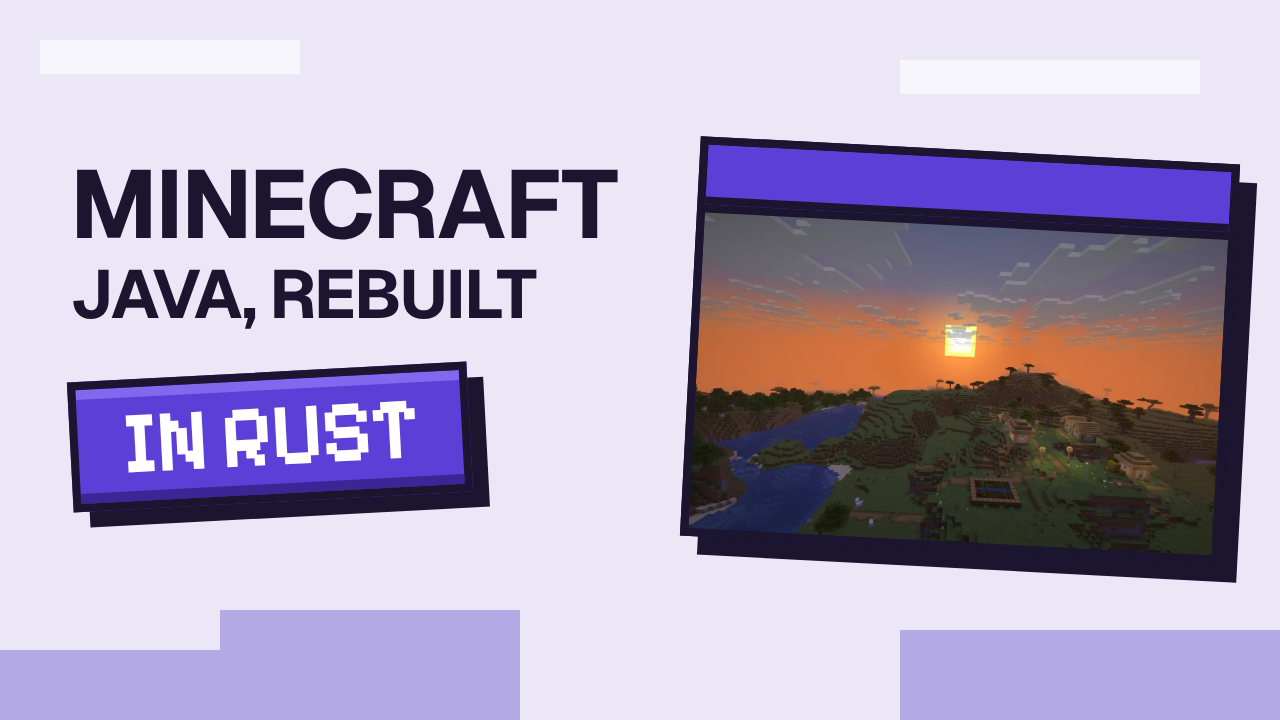
Minecraft Java, rewritten from scratch in Rust
Someone rebuilt Minecraft: Java Edition as a whole new client in Rust. Horizon checks every bit of it against the real game, worlds, mobs, redstone, recipes included.
▶️ Watch the video on YouTube
Rewritten in Rust: a whole new Java Edition 26.3 client, not a mod
Checked against vanilla: 281 differential harnesses covering worlds, mobs, redstone, recipes
Your own account, new launcher: the Horizon launcher installs the game and updates itself
Ready for multiplayer: friends, Open to LAN, and dedicated servers
AI agents can play too: horizon-ctl logs them in like a player, or over MCP
horizon-rust/horizon
Someone rebuilt Minecraft: Java Edition as a whole new client in Rust. Horizon checks every bit of it against the real game, worlds, mobs, redstone, recipes included.
▶️ Watch the video on YouTube
Rewritten in Rust: a whole new Java Edition 26.3 client, not a mod
Checked against vanilla: 281 differential harnesses covering worlds, mobs, redstone, recipes
Your own account, new launcher: the Horizon launcher installs the game and updates itself
Ready for multiplayer: friends, Open to LAN, and dedicated servers
AI agents can play too: horizon-ctl logs them in like a player, or over MCP
What Horizon ships
Horizon is a full Minecraft: Java Edition 26.3 client rewritten from scratch in Rust: vanilla world generation, mobs, villagers, raids, redstone, every command, the HUD and the recipe book, on vanilla saves. It is checked against real Java Edition by the project's own suite of 281 differential harnesses, run in CI.
Requires: a Microsoft account that owns Java Edition, plus Linux x86-64 with Vulkan or OpenGL 3.3, Windows x64 with Vulkan or DirectX 12, or a Mac on Apple Silicon (Intel Macs from the next Nightly). The launcher installs the game, pulls files from your own copy of Minecraft (or downloads 26.3 for your account), and updates itself.
The catch: Horizon contains no Minecraft code or assets, so you still need your own licensed copy of Java Edition 26.3. And despite its "100% vanilla parity" badge on tested behaviour, the project's own tracker lists 833 open player-visible gaps, so some edge cases are still missing.
Multiplayer, Open to LAN, and dedicated servers (one command via horizon-server, no Java needed) all work. AI agents and scripts can log in too, through horizon-ctl or its MCP server:horizon-ctl goto -0.5 65 -2.5 --near 2.5.
Horizon itself is free and open source under MIT, no subscription involved. Use it instead of the official launcher when you want a Rust client with built-in mod building and agent control. Don't use it if you don't already own Minecraft, or need Java mod jars: only content mods carry over today.
To try it: grab the launcher from the repo's releases, or build from source with Rust 1.90+, Python 3.10+ and JDK 25.
horizon-rust/horizon
🔥1🎉1
OpenMausBot turns your contacts list into a team of AI agents
Every contact in this chat app is a real AI agent, not a script.
Each one runs Claude or Codex, with its own personality and its own computer.
▶️ Watch the video on YouTube
Real contacts, real agents: each chat runs Claude or Codex, not a scripted bot
Bring your own login: Claude, Codex or Grok CLI, no proxy, no new account
Local, not cloud: one small harness server on your machine holds every bot
Agents with hands: an isolated VM or a cloud desktop, plus 500+ apps via Composio
Open where rivals are closed: Apache 2.0, unlike Grok Bot, Muse, dots and Cue
github.com/milind-soni/OpenMausBot
Every contact in this chat app is a real AI agent, not a script.
Each one runs Claude or Codex, with its own personality and its own computer.
▶️ Watch the video on YouTube
Real contacts, real agents: each chat runs Claude or Codex, not a scripted bot
Bring your own login: Claude, Codex or Grok CLI, no proxy, no new account
Local, not cloud: one small harness server on your machine holds every bot
Agents with hands: an isolated VM or a cloud desktop, plus 500+ apps via Composio
Open where rivals are closed: Apache 2.0, unlike Grok Bot, Muse, dots and Cue
How OpenMausBot works
Every bot in the sidebar runs on theclaude,codexorgrokCLI already installed on your machine, using your own existing login and subscription. No proxy in the middle, no new account to create.
A small harness server on 127.0.0.1 owns every agent process. Transcripts, keys and events stay in~/.openmausboton your disk, not on someone else's cloud.
Each bot can get hands: an isolated local VM, a cloud Linux desktop, or, where the safety boundary is certified, your own computer, plus 500+ apps wired in through Composio.
The project's own framing: four closed agent chat apps, Grok Bot, Meta Muse, OpenAI dots and Cue by Manus, shipped in seven weeks of 2026. OpenMausBot claims the same shape, built open under Apache 2.0.
The catch: letting a bot drive your own computer only works on macOS and on Ubuntu with Xorg, and only after you opt in. Ubuntu Wayland host control stays disabled while an open issue is unresolved.
Requires: macOS (Apple Silicon or Intel), Windows x64, or Ubuntu 24.04 x64; an existing Claude, Codex or Grok CLI login; Composio access for the app integrations.
The app itself is free and open source. The intelligence behind it is not: you bring your own paid Claude, Codex or Grok access, OpenMausBot doesn't replace that cost.
Use it instead of Grok Bot, Muse or dots when you want your own model and your own machine instead of a locked cloud plan. Don't use it if you need host control on Windows, that platform isn't supported yet.
Get it from the GitHub Releases page: a signed .dmg for Mac, a .exe for Windows, a .deb or AppImage for Ubuntu 24.04.
github.com/milind-soni/OpenMausBot
👍1
⚡ AI News
OpenAI reportedly cuts new funding round target to $20B: OpenAI is said to have lowered its new funding target from $30B to $20B after a tepid investor response.
Judge lets NAACP pollution suit against xAI proceed: A federal judge rejected xAI's bid to dismiss a Clean Air Act suit over 35 unpermitted turbines at its Memphis data center.
Zest launches AI agent that books restaurants over text: Zest's new AI agent finds restaurants and completes reservations for users entirely over text message.
Vercel built npm, but for AI agent instructions
One command installs a skill, a folder of plain instructions, straight into your coding agent.
▶️ Watch the video on YouTube
Stop copy-pasting prompts: one command installs a skill into your agent
A skill is just a folder: Markdown instructions, read on demand, no model inside it
17 agent platforms: Claude Code, Cursor, Codex, GitHub Copilot, Gemini CLI and more
skills.sh directory: 1,565,688 skills published and counting
Most installed isn't a coding trick: find-skills helps agents find skills, 4.1M installs
https://github.com/vercel-labs/skills
One command installs a skill, a folder of plain instructions, straight into your coding agent.
▶️ Watch the video on YouTube
Stop copy-pasting prompts: one command installs a skill into your agent
A skill is just a folder: Markdown instructions, read on demand, no model inside it
17 agent platforms: Claude Code, Cursor, Codex, GitHub Copilot, Gemini CLI and more
skills.sh directory: 1,565,688 skills published and counting
Most installed isn't a coding trick: find-skills helps agents find skills, 4.1M installs
npm, but the package is a prompt
Skills is an open-source, MIT-licensed CLI from Vercel for installing "Agent Skills": folders with a SKILL.md file that a coding agent loads into context once a task matches. There is no model inside the package, just Markdown plus optional scripts and references.
Install one withnpx skills add vercel-labs/agent-skills. The CLI also hasfind,list,use,remove,updateandinit, plus a-gflag for global installs.
Requires: Node.js 22.20 or newer, and one of the 17 supported agent platforms already installed on your machine. The tool itself is free and charges nothing: whichever agent you already run keeps paying for its own model calls, this just feeds it instructions.
The catch: it's a young ecosystem, announced by Vercel on January 20, 2026, and it only manages instructions, not code. If none of the 17 platforms match your setup, there is nothing for it to install into.
The numbers: skills.sh, Vercel's own directory, lists 1,565,688 published skills as of this research, and the repo itself sits at 37.4k GitHub stars. By the project's own 8-week count, the most-installed skill on the whole directory, find-skills, reached 4.1M installs; its entire job is helping an agent find the next skill to install.
Use it instead of retyping the same instructions into a chat every session. Don't use it if your agent isn't among the 17 supported platforms.
https://github.com/vercel-labs/skills
😁1
🏆1