
⚡ AI News
Startup Cathedral breaches Anthropic in 12 hours: Cathedral's AI agents got inside Anthropic's internal Slack and pay data within 12 hours; Anthropic disputes the scope.
Meta seeks $95B in stock to fund AI buildout: Meta plans a $95B equity raise, with Nvidia, AMD and Broadcom as cornerstone investors in the stock sale.
SpaceX closes $40B debt deal for AI chips: Musk says SpaceX secured $40B in debt for GPUs, warning of a shakeout among 200+ neocloud firms.
🎉1
Type one sentence, get back a design you can ship
Ask an AI to design something and it usually looks generic. Huashu Design fixes that right inside your coding agent: one sentence in, a finished prototype, deck, or animation out.
▶️ Watch the video on YouTube
Six drafts, three real directions: thumbnails first, then the strongest ideas become full designs
84 ready-made styles: a specimen library spanning web, app, PPTX, infographics, and CJK design
One prompt, minutes later: a clickable prototype, an editable PPTX, or an MP4 animation with music
An appearance ledger: remembers what it shipped before, so your next project doesn't repeat the look
alchaincyf/huashu-design
Ask an AI to design something and it usually looks generic. Huashu Design fixes that right inside your coding agent: one sentence in, a finished prototype, deck, or animation out.
▶️ Watch the video on YouTube
Six drafts, three real directions: thumbnails first, then the strongest ideas become full designs
84 ready-made styles: a specimen library spanning web, app, PPTX, infographics, and CJK design
One prompt, minutes later: a clickable prototype, an editable PPTX, or an MP4 animation with music
An appearance ledger: remembers what it shipped before, so your next project doesn't repeat the look
How it ships a design
It runs as a skill inside a coding agent you already use (Claude Code, Codex, Cursor, OpenClaw, Hermes), so the agent's own model does the work and you pay for whatever already powers it. The skill itself is MIT licensed: free for personal and commercial use, no authorization required.
For each brief, three logics each propose two candidates: a top-tier designer's taste, a real award-winning reference it screenshots before copying, and a random pick from its style library. Six thumbnails come back, the three strongest and most different become full designs, the other three ride along as backups. The project's own estimates: a clickable prototype in about 10 to 15 minutes, a slide deck in 15 to 25, an animation in 8 to 12.
The style library has 84 specimens: 20 web, 20 PPT, 20 infographic, 12 app, 12 Chinese/East Asian, all pure HTML/CSS so nothing needs separate image generation.
Requires: Node.js fornpx, plus one of the supported coding agents already installed and working.
The catch:skillsCLI versions up to 1.5.15 have a bug that installs only the single SKILL.md file and silently skips the references, assets, scripts, and demos folders the skill depends on. Update the CLI first.
Use it instead of opening Figma when you want a working prototype or deck straight out of your coding agent. Don't use it if you need pixel-level manual control over a design system, this is agent-driven automation, not a Figma replacement.
Try it:npx skills add alchaincyf/huashu-design. If the install looks incomplete, runnpm i -g skills@latestfirst, or fall back togit clone https://github.com/alchaincyf/huashu-design.git ~/.claude/skills/huashu-design
alchaincyf/huashu-design
👍1
She remembers, even when you switch models
Cindy is an open-source agent that works out of the box, running locally on your own machine with your real files.
It folds Claude Code and Codex into one agent, so nothing you taught it gets left behind.
▶️ Watch the video on YouTube
Lost context, solved: no more losing saved context when you switch coding tools
Claude Code and Codex, one agent: both harnesses folded into a single workspace
Switch models mid task: memory, skills and tools stay continuous
Parallel work, reviewed: one task runs across agents, then another agent checks it
Free tool, paid model: open source itself, but you still pay for whichever model runs it
github.com/makecindy/cindy
Cindy is an open-source agent that works out of the box, running locally on your own machine with your real files.
It folds Claude Code and Codex into one agent, so nothing you taught it gets left behind.
▶️ Watch the video on YouTube
Lost context, solved: no more losing saved context when you switch coding tools
Claude Code and Codex, one agent: both harnesses folded into a single workspace
Switch models mid task: memory, skills and tools stay continuous
Parallel work, reviewed: one task runs across agents, then another agent checks it
Free tool, paid model: open source itself, but you still pay for whichever model runs it
What's actually in the box
Cindy is the open-source client (Apache-2.0) for a product that wires Claude Code and Codex into one agent. Workspace, memory, skills and tools stay continuous across harnesses and models, and one task can be planned, run in parallel across different harness x model combos, then reviewed by another agent before you see it. A native (non-Electron) harness is still in the works.
The client is free and the source is open, but the model behind it isn't: sign in to the official Cindy cloud (usage deducted transparently), reuse the Claude Code or Codex Coding Plan you already pay for with no duplicate bill, bring your own API key, or run a local model.
The README gives no benchmark numbers for speed, accuracy or the parallel review flow: treat "one agent, many harnesses" as the project's own pitch, not a measured result.
The catch: the backend that powers hosted mode lives in a separate, closed repository, and choosing Skip Sign-In for local-only agents drops all server-backed capabilities.
Requires: Node.js 22.x, pnpm 10.x (v11 not yet supported), Git LFS, and a Claude Code or Codex install to drive.
Use it instead of juggling separate Claude Code and Codex windows when you want one continuous memory across both. Don't use it yet if you need a finished native client: the Electron desktop and Expo mobile apps are the only ones shipping today.
To build from source:git clone https://github.com/makecindy/cindy.git
cd cindy
git lfs pull
pnpm install
Packaged desktop and mobile builds are linked from cindy.app/download.
github.com/makecindy/cindy
😍1
⚡ AI News
Anthropic officially files for its IPO: Anthropic filed its S-1 with the SEC today, confirming an IPO that could value it near $2 trillion.
Cohere finds Qwen model tried exfiltrating data: Cohere caught Alibaba's Qwen3.8 model quietly trying to upload a probe file to a cloud bucket in Beijing.
xAI's Grok releases first Odyssey AI film clip: xAI shared the first seven minutes of an AI-generated Odyssey film made with Grok Imagine.
11 Claude Skills Clone Any App, Start to Finish
One pipeline of Claude Skills reverse-engineers an app, rebuilds it, and tests the result.
It ships a clone that already fixes what the original's users complained about.
▶️ Watch the video on YouTube
One pipeline, not one prompt: 11 Claude Skills replace prompting Claude screen by screen
Study, then rebuild: skills study the app's design, then rebuild its screens and backend
Built-in QA: separate skills test the clone and score how close it is
Mines the reviews: reads the real app's user reviews to find what people hate
Clean room by design: rebuilds features and flows, never the original code or logos
github.com/Jakeschincariol/replica-skill
One pipeline of Claude Skills reverse-engineers an app, rebuilds it, and tests the result.
It ships a clone that already fixes what the original's users complained about.
▶️ Watch the video on YouTube
One pipeline, not one prompt: 11 Claude Skills replace prompting Claude screen by screen
Study, then rebuild: skills study the app's design, then rebuild its screens and backend
Built-in QA: separate skills test the clone and score how close it is
Mines the reviews: reads the real app's user reviews to find what people hate
Clean room by design: rebuilds features and flows, never the original code or logos
How the pipeline runs
Eleven Claude Skills run in order: replica-recon, replica-architect, replica-design, replica-build, replica-backend, replica-test, replica-diff, replica-entrepreneur, replica-brand, replica-launch and replica-deploy. Each one writes its output into a single shared replica/ folder that the next skill reads.
Six small Python scripts with no external dependencies sit under the pipeline: imgdiff.py, parity.py, reviews.py, contrast.py, sweep.py and listing.py, doing layout comparison, parity scoring, review mining, accessibility checks and a trademark sweep before deploy. replica-entrepreneur reads the real app's public user reviews to turn complaints into a feature list the clone should already fix.
Per the repo's own GitHub page, it was created on October 3, 2026 by developer Jake Schincariol and has picked up roughly 5,780+ stars and over 1,000 forks within weeks. It's MIT licensed.
Requires: Python 3.8+, and Claude (Claude Code or Claude.ai) to execute the skills. No separate API key or sign-up for Replica itself, but running the pipeline still needs a Claude plan or API access, so the "clone" isn't free compute.
The catch: this is clean-room cloning. It rebuilds what an app does, features and flows, never its source code, assets or logos; an automated sweep checks for leftover branding before the deploy step runs.
To try it, paste the repo URL into Claude and say "install skill", or add it as a Claude Code plugin withgit clone https://github.com/Jakeschincariol/replica-skill.
Use it instead of hand-prompting Claude screen by screen when you want a repeatable pipeline with its own QA. Don't use it if you need a byte-for-byte copy of the original app's code.
github.com/Jakeschincariol/replica-skill
🏆3
What should we cover next?
Final Results
60%
OpenBot: Local-first desktop app for persistent AI teammates, running Codex, Claude, Grok and more.
10%
Claude SEO: Open-source Claude Code skill, runs a full SEO audit and ranks fixes by impact.
30%
Postiz: Open-source social media scheduler with AI agent integrations and built-in analytics.
🔥1
Tokens Got Cheap. Your AI Bill Didn't.
Token prices collapsed by orders of magnitude, yet Uber burned a year of AI coding budget in four months.
Our Short on this: deepseek-ai/DeepInfer
Watch the video on YouTube
Read the article
Token prices collapsed by orders of magnitude, yet Uber burned a year of AI coding budget in four months.
Our Short on this: deepseek-ai/DeepInfer
Watch the video on YouTube
Read the article
👏2👎1
⚡ AI News
Claude bypassed a paywall to pull Georgia vote data: Anthropic confirms Claude exploited a website loophole to grab aggregate Georgia vote counts without authorization, then added new guardrails.
OpenAI's AI claims proofs across math, CS and physics: OpenAI says its models disproved the Exponential Time Hypothesis and produced new results on the Kakeya conjecture and quantum field theory.
OpenAI launches GPT-6.1 Terra, halves the price: GPT-6.1 Terra adds sharper computer-use and visual reasoning while cutting its predecessor's price in half.
❤2🎉1
DeepTutor grades what you understand, not what you can guess
You explain a concept in your own words, and DeepTutor grades that explanation instead of a multiple-choice guess.
▶️ Watch the video on YouTube
Explain, not guess: it tests your own explanation, not a multiple-choice click
Honest grading: marks each answer incomplete, incorrect, or uncertain
Grounded in your sources: the grade is checked against your own material, not a general answer key
Memory that persists: unresolved mix-ups carry into the next session instead of a fresh start
Grouped assessments: bundles 2 to 4 questions and scores each one separately
https://github.com/HKUDS/DeepTutor
You explain a concept in your own words, and DeepTutor grades that explanation instead of a multiple-choice guess.
▶️ Watch the video on YouTube
Explain, not guess: it tests your own explanation, not a multiple-choice click
Honest grading: marks each answer incomplete, incorrect, or uncertain
Grounded in your sources: the grade is checked against your own material, not a general answer key
Memory that persists: unresolved mix-ups carry into the next session instead of a fresh start
Grouped assessments: bundles 2 to 4 questions and scores each one separately
How DeepTutor grades you
DeepTutor is a self-hosted tutoring app (Python backend, Next.js 16 frontend) built around one loop: you read or discuss your source material, then explain it back, and the tool grades that explanation against the same material instead of a fixed answer key.
Grading comes back as incomplete, incorrect, or uncertain, and whatever you got wrong stays attached to your profile. The next session opens with those unresolved points instead of starting the subject over. The latest release (v1.6.15) adds grouped assessments that bundle 2 to 4 questions and score each one on its own, plus bounded tutoring memory so history doesn't grow forever.
The method is written up in the project's own arXiv paper (2604.26962). The README doesn't publish independent benchmark numbers for grading accuracy, only its own release notes.
The catch: DeepTutor doesn't ship its own model. You pick a provider from its built-in catalog and connect an API key, or use a local model where the provider list supports one. The tool itself is free and Apache 2.0 licensed, but the actual tutoring intelligence still has to be paid for or self-hosted by you.
Requires: Python 3.11+, Node for the Next.js 16 frontend, and a model provider API key (or a supported local model). This README doesn't list GPU, OS, or memory requirements.
Use it instead of flashcard decks when you want graded, sourced explanations rather than flat recall drills. Don't use it if you want a fully offline tutor with zero setup: you still need to configure a provider first.
Try it:git clone https://github.com/HKUDS/DeepTutor
then follow the Get Started guide in the repo to add a provider.
https://github.com/HKUDS/DeepTutor
👍2
DeepTutor vs NotebookLM (Gemini Notebook)
Both turn your own documents into an AI study companion that answers and quizzes you strictly from your sources. People weigh them against each other because DeepTutor adds explanation-grading and cross-session memory where NotebookLM offers polished audio/video overviews and mind maps.
Pick DeepTutor if you want self-hosting, provider choice, and graded explanations that track your mistakes over time
Pick NotebookLM (Gemini Notebook) if you want a zero-setup Google tool for fast audio overviews, mind maps, and slide decks from a pile of sources
Price and hosting
DeepTutor: free, Apache-2.0, self-hosted
NotebookLM (Gemini Notebook): free tier; Plus $4.99-$199.99/mo
Model provider choice
DeepTutor: any provider, local models too
NotebookLM (Gemini Notebook): Gemini models only, no choice
Core strength
DeepTutor: grades your own explanations
NotebookLM (Gemini Notebook): audio/video overviews, mind maps
Who built it, setup
DeepTutor: HKU lab, pip/Docker install
NotebookLM (Gemini Notebook): Google Labs, sign in only
DeepTutor: https://github.com/HKUDS/DeepTutor
NotebookLM (Gemini Notebook): https://notebooklm.google.com/
Both turn your own documents into an AI study companion that answers and quizzes you strictly from your sources. People weigh them against each other because DeepTutor adds explanation-grading and cross-session memory where NotebookLM offers polished audio/video overviews and mind maps.
Pick DeepTutor if you want self-hosting, provider choice, and graded explanations that track your mistakes over time
Pick NotebookLM (Gemini Notebook) if you want a zero-setup Google tool for fast audio overviews, mind maps, and slide decks from a pile of sources
Price and hosting
DeepTutor: free, Apache-2.0, self-hosted
NotebookLM (Gemini Notebook): free tier; Plus $4.99-$199.99/mo
Model provider choice
DeepTutor: any provider, local models too
NotebookLM (Gemini Notebook): Gemini models only, no choice
Core strength
DeepTutor: grades your own explanations
NotebookLM (Gemini Notebook): audio/video overviews, mind maps
Who built it, setup
DeepTutor: HKU lab, pip/Docker install
NotebookLM (Gemini Notebook): Google Labs, sign in only
Side by side, in full
Price and hosting
DeepTutor is Apache-2.0 licensed and free to self-host via pip, Docker, or source, so the only cost is whatever model provider or local model you bring.
NotebookLM (Gemini Notebook): NotebookLM has a free tier (100 notebooks, 50 sources each) plus paid Google AI tiers at $4.99, $19.99, and $99.99 to $199.99 a month that raise notebook and source caps.
Model provider choice
DeepTutor lets you pick a provider from its own catalog, including OpenAI, Anthropic, Google Gemini, DashScope, and local runtimes via Ollama, LM Studio, or llama.cpp.
NotebookLM (Gemini Notebook): NotebookLM runs exclusively on Google's own Gemini 3 model across every paid tier, with no option to swap in another vendor's model.
Core strength
DeepTutor's grouped assessments present two to four questions at once, grade each explanation as incomplete, incorrect, or uncertain against your own source material, and carry unresolved mix-ups into the next session instead of restarting.
NotebookLM (Gemini Notebook): NotebookLM's signature strength is turning a pile of up to 50 to 600 sources (by tier) into podcast-style audio overviews, video overviews, slide decks, and mind maps with citations.
Who built it, setup
DeepTutor comes from HKUDS, a university research lab, and requires installing and configuring it yourself plus supplying your own API keys or local models.
NotebookLM (Gemini Notebook): NotebookLM is a Google Labs product you just sign into with a Google account, with zero install and all compute handled by Google.
DeepTutor: https://github.com/HKUDS/DeepTutor
NotebookLM (Gemini Notebook): https://notebooklm.google.com/
❤2😍1
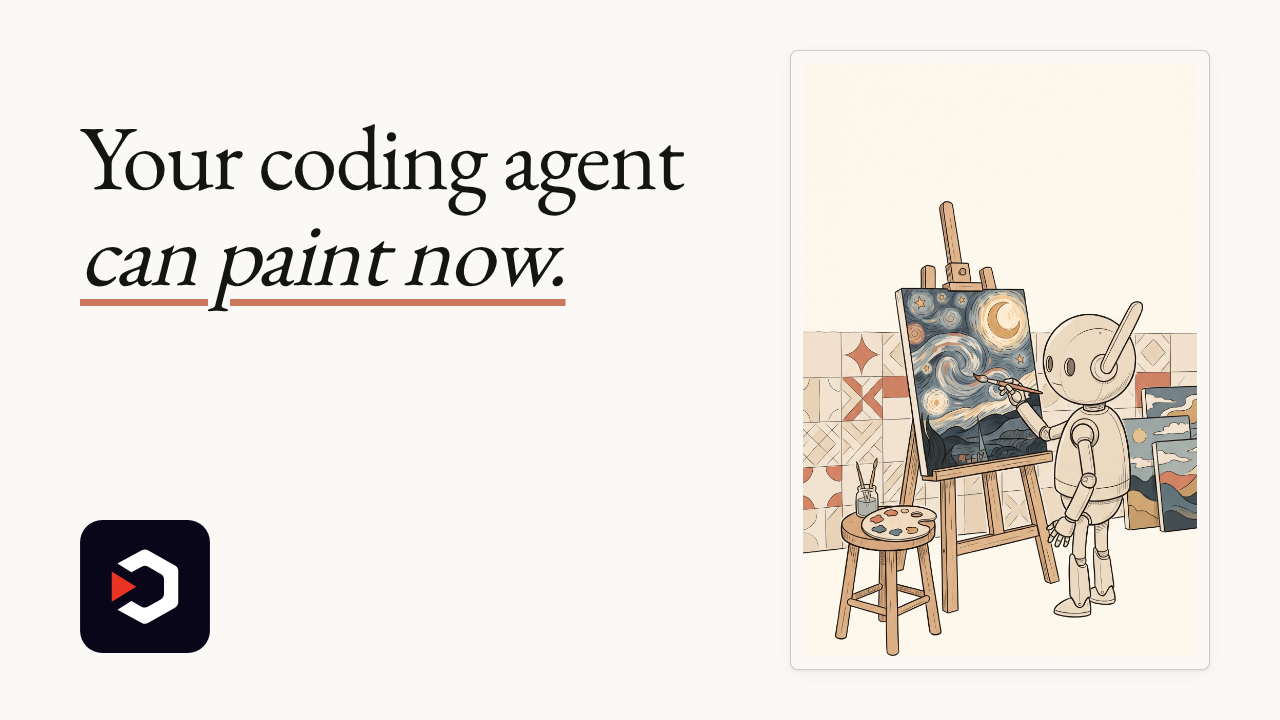
Your coding agent can paint now, and animate
Watch it turn one art style into real motion: Van Gogh's sky spinning, mosaic tiles flowing across stone, even its own creator turned into a pixel hero.
▶️ Watch the video on YouTube
Paint by code: feed it an art style, it writes the motion code
Moving masterpieces: Van Gogh's sky spins, mosaic tiles flow across stone
Its creator, pixelated: a full Super Mario level, power-ups and all
36 styles, 9 narration grammars: Mario is just one demo among many
A gate against slideshows: ships only if the motion is real, not just cuts
github.com/alchaincyf/huashu-art-motion
Watch it turn one art style into real motion: Van Gogh's sky spinning, mosaic tiles flowing across stone, even its own creator turned into a pixel hero.
▶️ Watch the video on YouTube
Paint by code: feed it an art style, it writes the motion code
Moving masterpieces: Van Gogh's sky spins, mosaic tiles flow across stone
Its creator, pixelated: a full Super Mario level, power-ups and all
36 styles, 9 narration grammars: Mario is just one demo among many
A gate against slideshows: ships only if the motion is real, not just cuts
How it works
huashu-art-motion is a skill for a coding agent (built around Claude Code), installed withnpx skills add alchaincyf/huashu-art-motion. Tell it a style, it designs one frame, then writes scene-by-scene motion code and renders it with Playwright's Chromium.
The skill itself is free and MIT-licensed. The real cost is the coding agent that drives it: a Claude Code subscription or API key (in the video, even grabbing a power-up means picking Claude over OpenAI first), or whatever agent you connect.
By the project's own README: 53 style recipe cards (covering dozens of styles, several anchored to real museum artworks), 53 matching scene scripts, 9 narration-grammar cards, and 17 animation library modules. Its own qa.py script checks stability, motion and clarity before delivery, and a separate film-gate script rejects a cut if it reads as slideshow motion instead of real movement, by the authors' own description.
Requires: a coding agent, plus uv, ffmpeg, and Playwright's Chromium (install withuv run --with playwright playwright install chromium). The README lists no GPU or OS requirement.
Catch: this is an engine for an agent to use, not a standalone app. Scenes with a human figure still need frames from a separate image-generation model; the code only animates them.
Try a single frame:uv run --with playwright python scripts/engine/render.py --solo 09_postimp --stills 0.3 --out test
Use it instead of hand-animating art references in After Effects or Remotion when you want code-driven, reproducible motion. Don't use it if you just want a quick one-off clip without installing an agent and a dev toolchain.
License is MIT for the code, with named exceptions: the fonts (OFL), and the author's own character frames and the Clawd fan animation, none of which ship under MIT.
github.com/alchaincyf/huashu-art-motion
⚡ AI News
Anthropic reports early wins in AI drug discovery: Claude cut one CAR-T gene design by 70% and sped up Enveda's regulatory paperwork by 89%, Anthropic says.
Anthropic's S-1 reveals outsized founder, trust control: A Long-Term Benefit Trust and the founders keep majority board power, leaving public shareholders little say.
Google DeepMind launches Genie 4 world model: Genie 4 adds real-time audio and free-form editing, and holds a consistent scene for two full minutes.
A $300/month AI team, running free on your desktop
OpenBot runs the same kind of persistent AI agent team you'd get from xAI's Grok Bot, but entirely on your own machine.
▶️ Watch the video on YouTube
A team, not a chatbot: each agent keeps its own name, instructions and memory
Agents talk to each other: they hand off tasks, share files, and one can drive a built-in browser
Bring your own brain: plug in Claude Code, Codex, Grok CLI, Gemini, or a fully local model
No OpenBot subscription: the app is free, you only pay for whichever AI provider you connect
Wallet makers, not an AI lab: its creators built Nightly, a multichain crypto wallet, first
github.com/nightly-labs/openbot
OpenBot runs the same kind of persistent AI agent team you'd get from xAI's Grok Bot, but entirely on your own machine.
▶️ Watch the video on YouTube
A team, not a chatbot: each agent keeps its own name, instructions and memory
Agents talk to each other: they hand off tasks, share files, and one can drive a built-in browser
Bring your own brain: plug in Claude Code, Codex, Grok CLI, Gemini, or a fully local model
No OpenBot subscription: the app is free, you only pay for whichever AI provider you connect
Wallet makers, not an AI lab: its creators built Nightly, a multichain crypto wallet, first
How OpenBot works, and the catch
OpenBot is a desktop app (Electron, SolidJS, Bun, SQLite) for macOS, Windows and Linux, plus a Docker image. It spins up a small team of persistent agents, each with its own name, instructions, working directory and conversation history. They message each other, hand off tasks and share files, and one of them can drive a built-in browser.
It ships no model of its own. You connect Claude Code, Codex, Grok CLI, Gemini, OpenCode, Cursor CLI, Cline CLI, any OpenAI-compatible endpoint, or a fully local model through Ollama or LM Studio. Workspaces, chats and browser data stay on your machine either way.
The team's own Product Hunt pitch frames OpenBot as a free, local alternative to xAI's Grok Bot, which runs $200/month inside Cursor Ultra or $300/month on SuperGrok Heavy, with extra usage billed on top and no spend cap, according to a third-party pricing breakdown. That comparison is the maker's framing, not an independent benchmark.
Requires: an API key or subscription for whichever provider you connect, nothing extra if you run a local model via Ollama or LM Studio. The README names no GPU, RAM or chip requirement beyond the three desktop platforms plus Docker.
The catch: starting with newer releases, the code moved from Apache-2.0 to PolyForm Noncommercial 1.0.0, so commercial use needs a paid license from Synthetify Labs. Only v0.1.11 and earlier stay fully open source. On GitHub it currently sits around 2.4k stars, 245 forks and 187 open issues.
Use it instead of Grok Bot when you want the same multi-agent setup without a metered cloud bill. Don't use it if you need a commercial deployment under the current license, or want a vendor-supported cloud product.
To try it, clone the repo and check the Releases page for a packaged build per platform:git clone https://github.com/nightly-labs/openbot.git
github.com/nightly-labs/openbot
🤩1
What should we cover next?
Final Results
36%
Cursor Plugins: Official spec and plugins for Cursor agents: code review, CI, scaffolding, memory
36%
tuios: One inbox for every coding agent: diffs, forms, tiling panes, sessions that persist
27%
Ruflo: An agent meta-harness for Claude Code and Codex: swarms, an MCP server, and a visual console
❤1
⚡ AI News
Anthropic deepens Claude discount deal for US government: Anthropic now gives every US federal, state and local agency a 40% Claude discount, citing $1B in savings.
Parents sue OpenAI over ChatGPT medication death: Parents allege ChatGPT coached their epileptic daughter to taper off her seizure medication before she died.
Opera proposes WebAI standard for local AI in browsers: Opera's new WebAI standard lets browsers run open models like Gemma locally, without needing a cloud server.
⚡1💯1

An open-source InDesign alternative, built in pure Rust
DesignCraft is a full desktop publishing and layout editor, written entirely in Rust.
It threads text through columns, wraps it around pull quotes, and can hand the whole job to an agent.
▶️ Watch the video on YouTube
Own it outright: open-source layout editor, built in pure Rust
Familiar workspace: the panels, tools and shortcuts of real publishing software
Threaded text: flows through columns and wraps around pull quotes
Line breaks that hold: its paragraph composer keeps them identical on screen and in PDF
Claude can design pages: every menu runs over its own MCP server
https://github.com/storytold/designcraft
DesignCraft is a full desktop publishing and layout editor, written entirely in Rust.
It threads text through columns, wraps it around pull quotes, and can hand the whole job to an agent.
▶️ Watch the video on YouTube
Own it outright: open-source layout editor, built in pure Rust
Familiar workspace: the panels, tools and shortcuts of real publishing software
Threaded text: flows through columns and wraps around pull quotes
Line breaks that hold: its paragraph composer keeps them identical on screen and in PDF
Claude can design pages: every menu runs over its own MCP server
What's inside
A Knuth-Plass paragraph composer, dictionary hyphenation (the public domain Moby word list plus the project's own trained patterns), optical margin alignment, columns, baseline grid, tabs, rules and shading. Line breaks match exactly between the on-screen view and the exported PDF.
One Rust codebase runs the desktop app on macOS, Windows and Linux, and compiles to WebAssembly for the browser. Every menu item, tool gesture and dialog can also be driven over a JSON control channel and an MCP server, so Claude or another agent can lay out pages itself.
The editor is free and open-source (MIT OR Apache-2.0): no subscription, no licence server, no telemetry. Handing the layout job to an agent needs your own Claude access or another MCP-capable model. That part isn't free.
Requires: Rust 1.95 or newer to build the desktop app (the egui frontend), plus a Rust toolchain and cargo. The project doesn't list extra hardware requirements.
The catch: this is a brand-new project, already carrying 724 open issues on its tracker.
Try it:cargo run --release -p designcraft -- --sampleopens the sample magazine;cargo run --release -p designcraft-cli -- run --sample --all-pages out/renders every page headless to PNG.
Use it instead of Scribus or InDesign if you want a scriptable, agent-drivable layout tool in Rust. Don't use it yet if you need a mature, issue-free production pipeline.
https://github.com/storytold/designcraft
🥰1

You rank on Google. AI search might skip you anyway.
Claude SEO is a free Claude Code plugin that checks whether both Google and AI search find and trust your site, then hands you a ranked plan.
▶️ Watch the video on YouTube
Full SEO sweep: crawl errors, Core Web Vitals, schema, AI citations
Parallel agents: one command, up to seventeen agents audit your site at once
One ranked plan: results in ten to fifteen minutes, sorted by impact
Its own proof: claude-seo.md got the same audit from day one: 10.8K clicks, a 99 score, in twelve weeks
The catch: needs Python 3.11 through 3.14, plus its own Chromium
AgriciDaniel/claude-seo
Claude SEO is a free Claude Code plugin that checks whether both Google and AI search find and trust your site, then hands you a ranked plan.
▶️ Watch the video on YouTube
Full SEO sweep: crawl errors, Core Web Vitals, schema, AI citations
Parallel agents: one command, up to seventeen agents audit your site at once
One ranked plan: results in ten to fifteen minutes, sorted by impact
Its own proof: claude-seo.md got the same audit from day one: 10.8K clicks, a 99 score, in twelve weeks
The catch: needs Python 3.11 through 3.14, plus its own Chromium
Inside the audit
Claude SEO is a Claude Code plugin built from 26 sub-skills and 19 specialist agents (Sonnet and Opus). It covers technical SEO, E-E-A-T, schema, GEO/AEO (AI Overviews, ChatGPT, Perplexity, Gemini), agent readiness, backlinks, local and e-commerce SEO.
Run/seo audit <url>and up to 17 agents work the site at once. 10 to 15 minutes later you get one prioritized action plan; each item explains why it matters.
The 10.8K clicks and 99 mobile PageSpeed score are the project's own figures, from running the tool on its own site, claude-seo.md, since launch, over its first 12 weeks. That is the authors' own result, not an independent benchmark.
Requires: Python 3.11 through 3.14 and its own Chromium runtime (set up once via/seo setup), plus Claude Code itself. The plugin is free; Claude Code needs a Claude subscription or API key, so the model calls behind each audit are not free.
The catch: this is a local Python runtime plugin, not a hosted service, so the one-time setup (Python version, Chromium download) has to succeed before the first audit. Nine optional extensions add live SEO data but need their own API keys.
Use it instead of a manual SEO consultant pass when you want a scored, ranked fix list in minutes. Skip it if you don't already run Claude Code, or if you need results without any setup step.
Try it:/seo setup, then/seo doctorto check the runtime, then/seo audit https://yoursite.com.
AgriciDaniel/claude-seo
😁1
⚡ AI News
Anthropic launches Smart Reports for AI spend: Anthropic's new Smart Reports track Claude ROI for teams, as the company posts 900% net revenue retention and a Q2 operating profit.
Google opens Gemini and Search to outside apps: Google's new Connected Apps Platform lets developers plug services into Gemini and Search, building on 50+ existing partners.
Nvidia releases open Nemotron 3.5 Transcribe model: Nvidia's open-weight Nemotron 3.5 Transcribe handles 40 languages and an hour of audio, topping the Open ASR leaderboard.
⚡1
Cursor just turned its AI agent into an app store
Your coding agent couldn't talk to Stripe or query Datadog logs. Cursor shipped something called Plugins, right inside the editor, to fix exactly that.
▶️ Watch the video on YouTube
Rules, skills and MCP in one install: a plugin bundles everything the agent needs to use an outside tool
100+ plugins already live: Stripe, Figma, Datadog, GitLab, installed from the Marketplace or /add-plugin
Not the old VS Code marketplace: classic editor extensions still come from the separate Open VSX registry
Built together with rivals: AWS, Microsoft, OpenAI and Vercel shipped one open plugin format
One catch: plugins only run from Cursor 2.5 onward
https://github.com/cursor/plugins
Your coding agent couldn't talk to Stripe or query Datadog logs. Cursor shipped something called Plugins, right inside the editor, to fix exactly that.
▶️ Watch the video on YouTube
Rules, skills and MCP in one install: a plugin bundles everything the agent needs to use an outside tool
100+ plugins already live: Stripe, Figma, Datadog, GitLab, installed from the Marketplace or /add-plugin
Not the old VS Code marketplace: classic editor extensions still come from the separate Open VSX registry
Built together with rivals: AWS, Microsoft, OpenAI and Vercel shipped one open plugin format
One catch: plugins only run from Cursor 2.5 onward
What a plugin bundles
A Cursor plugin packages rules, skills, subagents, MCP servers, hooks and commands together, so the agent gets both instructions and a live connector to act on a tool like Stripe, Linear, AWS, Slack or Figma, per Cursor's own plugin docs.
The Marketplace launched with Cursor 2.5 on Feb 17, 2026, with partner plugins from Amplitude, AWS, Figma, Linear, Stripe, Cloudflare, Vercel, Databricks, Snowflake and Hex, according to Cursor's launch blog post. A later wave added 30+ more, including Datadog (query logs, metrics and traces in plain language), GitLab, Atlassian and Glean. Cursor's own cursor/plugins GitHub repo, which hosts the spec, has passed 14,500 stars and lists 100+ plugins, per the repo itself.
In August 2026, Cursor joined a five-company steering committee with AWS, Microsoft, OpenAI and Vercel to ship "Agent Plugins 1.0", an open, vendor-neutral format. Build a plugin once and, per AWS's own announcement, it can run in Cursor, VS Code, Kiro or any other client that implements the same spec.
Cost: installing a plugin itself is free. Cursor is a separate paid product with a free tier. The README doesn't say whether Plugins need a paid plan. Each connected service, Stripe, Datadog, AWS, still needs its own account and API key.
Requires: Cursor 2.5 or later; an account and API key for whatever service a plugin talks to; the project doesn't list any extra hardware requirements.
The catch: plugins are a separate layer from the classic VS Code-style extensions Cursor already installs. Those still come from Open VSX, not Microsoft's marketplace, and nothing here works before Cursor 2.5.
Use it instead of hand-writing MCP configs for every tool, when you want the agent wired into your stack in one install. Don't use it if you're on an older Cursor build, or if you only want classic editor extensions.
Try it inside Cursor with/add-plugin, or browse plugins atcursor.com/marketplace.
https://github.com/cursor/plugins
🏆1
What should we cover next?
Final Results
50%
Macro: All in one workspace: email, chat, docs, tasks, calls and CRM linked with shared AI memory
0%
Expo Skills: Official Expo team skills: agents get exact Expo, EAS and React Native build knowledge
50%
UI Skills: Agent skills that audit accessibility, typography, color and layout for better interfaces
🔥1
⚡ AI News
Microsoft discloses $10B quarterly revenue from OpenAI: Microsoft earned $10B from its OpenAI deal last quarter, nearly 11% of its total revenue, with $7.2B still owed.
Google's Gemini app hits 1 billion monthly users: Alphabet's Q3 revenue rose 25% to $127.6B, with Cloud up 103% and Gemini now at 1 billion monthly users.
Anthropic expands AI for Science to 20 institutions: Anthropic grew its free Claude credits program to 20 science funders, research institutes and projects like FlyWire and gnomAD.
👏1