
⚡ AI News
Hackers breach OpenCode, drain users' AI credits: A breach of OpenCode's console leaked API keys and caused unauthorized charges on OpenAI, Anthropic and Google accounts.
Nvidia launches Nemotron 3.5 open models for agents: Nvidia's new Nemotron 3.5 models run AI agents on PCs and in enterprises, claiming speed gains over Anthropic and OpenAI.
Tenstorrent raises $1.5B at $6.2B valuation: AI chip startup Tenstorrent raised $1.5B, more than doubling its valuation to $6.2B to scale inference chips.
🏆1

Your AI agent can't type into most apps. It only clicks.
CLI-Anything turns GUI-only software like Blender and Obsidian into command lines, so an agent can issue real commands instead of guessing where to click on a screenshot.
▶️ Watch the video on YouTube
7-phase pipeline: analyze, design, implement, test, document, publish
Skill file included: Claude Code, Cursor and OpenCode can discover and drive it
18+ apps wired up: GIMP, Blender, Obsidian, OBS Studio and more
One-command install: pull any generated CLI from the CLI-Hub registry
The real fight: command coverage decides the winner, not CLI versus clicking
https://github.com/HKUDS/CLI-Anything
CLI-Anything turns GUI-only software like Blender and Obsidian into command lines, so an agent can issue real commands instead of guessing where to click on a screenshot.
▶️ Watch the video on YouTube
7-phase pipeline: analyze, design, implement, test, document, publish
Skill file included: Claude Code, Cursor and OpenCode can discover and drive it
18+ apps wired up: GIMP, Blender, Obsidian, OBS Studio and more
One-command install: pull any generated CLI from the CLI-Hub registry
The real fight: command coverage decides the winner, not CLI versus clicking
How CLI-Anything works
It reads an app's source or capabilities and runs them through seven phases: Analyze, Design, Implement, Plan Tests, Write Tests, Document, Publish. The output is a Click-based CLI plus a SKILL.md file, so agents like Claude Code, Cursor, OpenCode or Copilot CLI can find and drive it.
Already-adapted software spans GIMP, Blender, Inkscape, Krita, Audacity, LibreOffice, Draw.io, Obsidian, OBS Studio, Kdenlive, CloudCompare, Godot and more, 18+ harnesses by the latest release line.
CLI-Hub (clianything.cc) is the companion registry. Install any generated CLI withpip install cli-anything-hubornpx skills add HKUDS/CLI-Anything.
The headline number comes from a third-party benchmark (remio.ai), not the project itself: across 440 tasks in 18 apps, the best augmented CLI agent hit 69.3% success versus 59.1% for the best GUI-clicking agent. What it leaves out: the same benchmark's plain, out-of-the-box CLI agent lost to GUI clicking, 48.2% to 59.1%. The CLI only wins once someone manually expands its command set, so the real edge is coverage, not format.
Requires: an adapter generated per app through the pipeline, plus an AI agent harness (Claude Code, Cursor, OpenCode, Copilot CLI) to issue the commands. CLI-Anything itself is free and Apache 2.0 licensed; running an agent against it still means paying for that agent's API key, or self-hosting a model, so this doesn't remove that cost.
Use it instead of a GUI-clicking agent once an app's actions map cleanly to commands you're willing to expand. Don't bother if you need a result today on an app nobody has adapted yet, since the whole gain depends on that upfront work.
https://github.com/HKUDS/CLI-Anything
🔥1
👏1
Argon vs DeepSeek V4.1 Flash vs Muse Spark Open: Who Actually Wins the AI Model War?
Three launches, three strategies: benchmarks, price per million tokens and who holds the weights.
Watch the video on YouTube
Read the article
Three launches, three strategies: benchmarks, price per million tokens and who holds the weights.
Watch the video on YouTube
Read the article
💯1
⚡ AI News
Anthropic, Nscale in talks for second $45B deal: Anthropic and Nscale are negotiating a second $45 billion compute deal, barely two months after the first one.
Microsoft launches Guardian Agents for AI oversight: Microsoft's new Guardian Agents treat frontier AI models as insider threats needing human approval.
Amazon ships TorchNeuron to challenge Nvidia's CUDA: AWS's TorchNeuron runs PyTorch on Trainium chips after a single config change, skipping a code rewrite.
🥰1
CLI-Anything vs Claude Computer Use
Both let an AI agent drive desktop software that has no native API: CLI-Anything scripts a GUI program into typed commands per app, while Claude Computer Use just takes screenshots and clicks like a human. Anyone choosing a GUI-automation strategy for agents weighs these two against each other.
Pick CLI-Anything if your target app is already wired up, or worth scripting yourself, and you want fast, deterministic, auditable commands instead of pixel-clicking
Pick Claude Computer Use if you need an agent to control some app today with zero integration work, run inside an isolated sandbox you do not mind rebuilding
Price
CLI-Anything: free, open source
Claude Computer Use: free tool, pay per token
Setup
CLI-Anything: 7-phase generator per app
Claude Computer Use: sandboxed VM, no adapter
What it does best
CLI-Anything: deterministic commands, 18+ apps
Claude Computer Use: any GUI app, instantly
Main limits
CLI-Anything: only as good as skills
Claude Computer Use: needs sandbox, costs tokens
Who is behind it
CLI-Anything: HKUDS academic lab
Claude Computer Use: Anthropic, commercial lab
CLI-Anything: https://github.com/HKUDS/CLI-Anything
Claude Computer Use: https://platform.claude.com/docs/en/docs/agents-and-tools/computer-use
Both let an AI agent drive desktop software that has no native API: CLI-Anything scripts a GUI program into typed commands per app, while Claude Computer Use just takes screenshots and clicks like a human. Anyone choosing a GUI-automation strategy for agents weighs these two against each other.
Pick CLI-Anything if your target app is already wired up, or worth scripting yourself, and you want fast, deterministic, auditable commands instead of pixel-clicking
Pick Claude Computer Use if you need an agent to control some app today with zero integration work, run inside an isolated sandbox you do not mind rebuilding
Price
CLI-Anything: free, open source
Claude Computer Use: free tool, pay per token
Setup
CLI-Anything: 7-phase generator per app
Claude Computer Use: sandboxed VM, no adapter
What it does best
CLI-Anything: deterministic commands, 18+ apps
Claude Computer Use: any GUI app, instantly
Main limits
CLI-Anything: only as good as skills
Claude Computer Use: needs sandbox, costs tokens
Who is behind it
CLI-Anything: HKUDS academic lab
Claude Computer Use: Anthropic, commercial lab
Side by side, in full
Price
CLI-Anything is Apache-2.0 licensed and free to clone, run, and install generated CLIs from; CLI-Hub charges nothing beyond the ordinary API cost of whatever coding agent runs its short generated commands.
Claude Computer Use: Computer Use carries no separate fee but bills under standard Claude token pricing, and Anthropic's own docs put a single screenshot alone at roughly 1,000 to 1,800 input tokens, so a long clicking session adds up fast.
Setup
CLI-Anything: Setting up CLI-Anything means running its Analyze, Design, Implement, Test, Document pipeline against an app once to generate a Click-based CLI and SKILL.md, or simply running pip install cli-anything-hub and cli-hub install for one of the apps already done.
Claude Computer Use: Setting up Computer Use means standing up a sandboxed Linux container with an X11 virtual display, a window manager, pre-installed apps and an agent loop, for which Anthropic ships a reference Docker image, but no per-app adapter is ever written.
What it does best
CLI-Anything shines on the apps it already covers, among them GIMP, Blender, Obsidian and OBS, turning multi-step GUI workflows into named commands with explicit arguments an agent can inspect before running.
Claude Computer Use: Computer Use works on any application with a screen right now with no integration step, which is why it still beat CLI-Anything's out-of-the-box command set 59.1 percent to 48.2 percent on a 440-task, 18-app benchmark before that set was expanded.
Main limits
CLI-Anything's edge is not automatic: in the same benchmark its plain generated CLI lost to GUI clicking, and only pulled ahead, 69.3 percent to 59.1 percent, after someone manually expanded the command skill set, so an app nobody has adapted yet gets you nothing.
Claude Computer Use: Anthropic's own docs warn Computer Use is vulnerable to prompt injection from on-screen content, struggles with dropdowns and scrollbars, and should only run in an isolated VM kept away from credentials, logins and personal data.
Who is behind it
CLI-Anything is built and maintained by HKUDS, an academic open-source research group, released under Apache-2.0 with community contributions and no vendor support contract behind it.
Claude Computer Use: Computer Use is a commercial Anthropic product, generally available on Anthropic's own API and Google Vertex AI, with beta support on AWS Bedrock and Microsoft Foundry.
CLI-Anything: https://github.com/HKUDS/CLI-Anything
Claude Computer Use: https://platform.claude.com/docs/en/docs/agents-and-tools/computer-use
👍2😁1
DeepSeek just open-sourced its own production inference engine
You could already download DeepSeek's model weights.
Now you can download the exact engine that serves them in production too.
▶️ Watch the video on YouTube
Production engine, not a demo: same optimized kernels and parallelism as DeepSeek's live service
Deterministic sampling: identical output for identical input and seed, NVIDIA only
Structured outputs: locks generation to a JSON schema, regex, or grammar
One model so far: ships only with DeepSeek V4.1 Flash, but the code is Apache 2.0
NVIDIA or Ascend only: needs SM100 GPUs or Ascend 950 NPUs to run at all
deepseek-ai/DeepInfer
You could already download DeepSeek's model weights.
Now you can download the exact engine that serves them in production too.
▶️ Watch the video on YouTube
Production engine, not a demo: same optimized kernels and parallelism as DeepSeek's live service
Deterministic sampling: identical output for identical input and seed, NVIDIA only
Structured outputs: locks generation to a JSON schema, regex, or grammar
One model so far: ships only with DeepSeek V4.1 Flash, but the code is Apache 2.0
NVIDIA or Ascend only: needs SM100 GPUs or Ascend 950 NPUs to run at all
What's inside
DeepInfer is the offline-inference engine DeepSeek runs in production, released as-is rather than a trimmed-down clone. It bundles the optimized kernels (FlashMLA, DeepGEMM, DeepEP, TileKernels, DeepSelect, plus custom TileLang ops), attention/context parallelism, MoE expert parallelism with load balancing, draft-token decoding with confidence-scheduled verification, and a bounded-replay prefill mode that trims redundant work.
Deterministic sampling needsDEEPINFER_BATCH_INVARIANT=1plus a fixedseq_seedpassed toSamplingParams, NVIDIA only. Structured outputs take a regex, JSON schema, or EBNF grammar viaso_args.
The prefill and decode throughput numbers in the README are DeepSeek's own benchmark: measured on 4 SM100 GPUs for prefill and 64 for decode.
Requires: Linux, GCC 13+, Python 3.12, and either CUDA 13 on NVIDIA SM100 GPUs or CANN 9.2 on Ascend 950 NPUs. The project names no fallback for other chips.
It's free and self-hosted, no API key needed, you provide the hardware. The real cost is owning SM100 or Ascend silicon, which most readers won't have lying around.
The catch: this release is offline inference only. No KV cache system, no prefill/decode disaggregation, no load balancing across replicas, so it is not yet a complete serving stack by itself, and only one model is supported.
Use it instead of vLLM when you specifically want DeepSeek's own production kernels for V4.1 Flash. Don't use it if you lack SM100/Ascend hardware or need a ready-made full serving stack.
Code is Apache 2.0. To try it:export DEEPINFER_ACCELERATOR=nvidia
./build.sh
python examples/offline_inference.py
deepseek-ai/DeepInfer
🏆1

Find a file by what's inside it, not what you called it
DigUp searches your photos, PDFs, documents, recordings, videos and code by what's in them.
It runs on your own Mac, Windows or Linux machine, nothing uploaded.
▶️ Watch the video on YouTube
Built on EmbeddingGemma 2: Google DeepMind's model puts text, images, audio and video in one space
Finds the exact moment: type zebra, and it opens the video right where the zebra shows up
Finds the exact page: type the clause about pets, and it jumps to that line in the lease
Over 100 languages: search in English, find a note written in Bengali or Arabic
Free, but not finished everywhere: Mac is stable, Windows and Linux builds are still beta
github.com/ARahim3/DigUp
DigUp searches your photos, PDFs, documents, recordings, videos and code by what's in them.
It runs on your own Mac, Windows or Linux machine, nothing uploaded.
▶️ Watch the video on YouTube
Built on EmbeddingGemma 2: Google DeepMind's model puts text, images, audio and video in one space
Finds the exact moment: type zebra, and it opens the video right where the zebra shows up
Finds the exact page: type the clause about pets, and it jumps to that line in the lease
Over 100 languages: search in English, find a note written in Bengali or Arabic
Free, but not finished everywhere: Mac is stable, Windows and Linux builds are still beta
How it works, and what it takes
DigUp indexes only the folders you pick, and embeds their contents, pictures, PDFs, documents, audio and video, with Google DeepMind's EmbeddingGemma 2: a 740M-parameter multimodal model released in October 2026 under Apache 2.0, small enough to run on a laptop. Text, images, audio and video land in one shared space, so a description in words can match any of them, in more than 100 languages. Exact strings like invoice numbers and error codes still match as written.
The model downloads once (865 MB), then indexing runs locally. By the README's own numbers: on a processor alone, a picture takes about five seconds on a 2017 Core i5 laptop, faster on a GPU; a few hundred files take minutes on a Mac, a full Downloads folder up to an hour. A new file becomes searchable a few seconds after it lands.
Requires: an Apple Silicon Mac on macOS 14+, or 64-bit Windows 10/11, or Ubuntu 22.04/Debian 12/Mint 21+ (or newer) on Intel/AMD. No account, no API key: nothing indexed leaves the machine, it only goes online to fetch the model once and check for updates daily.
The catch: Windows and Linux builds are still beta, and the Windows installer isn't signed yet, so Windows will warn you first; choose More info, then Run anyway.
Try it:brew install --cask arahim3/tap/digupon Mac, the setup.exe from the beta Release on Windows, or on Debian-based Linux:sudo apt install ./DigUp_x.y.z_amd64.deb
(the package is named dig-up). Then press Shift-Cmd-Space or Ctrl-Shift-Space anywhere and describe what you're looking for.
Use it instead of Spotlight or Windows Search when you remember what a file says, not what you called it. Don't reach for it yet if you need Windows or Linux for daily, production use: both are still beta.
github.com/ARahim3/DigUp
🔥1
⚡ AI News
Eric Schmidt holds half Dario Amodei's Anthropic stake: Bloomberg reports Schmidt owns about 1% of Anthropic to Amodei's 2%, worth up to $20B at a $2T valuation.
Google ships TorchTPU to challenge Nvidia's PyTorch grip: Google's open-source PyTorch port for TPUs lets developers move apps off Nvidia GPUs without rewriting code.
US orders federal agencies to purge DeepSeek AI: DHS directs civilian agencies to stop buying and remove DeepSeek software, citing risk of data reaching Chinese authorities.
👏1
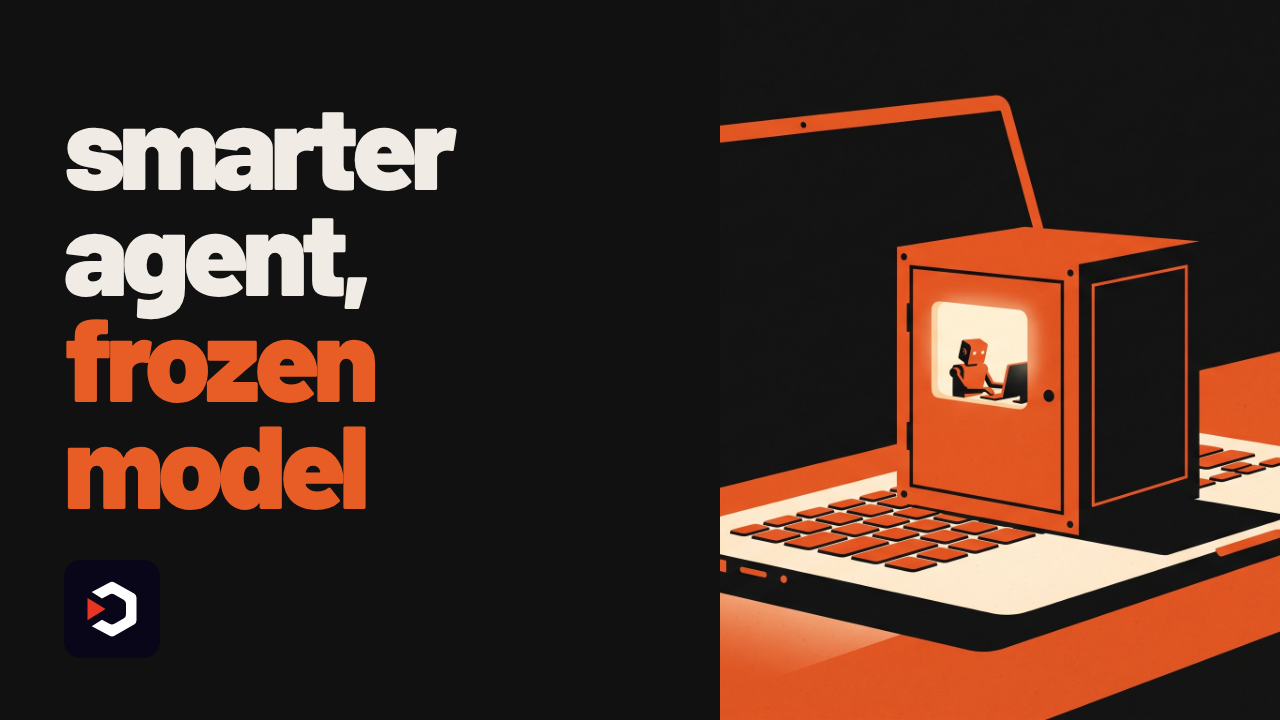
This agent gets smarter while its model stays frozen
Google Research built a loop that rewrites an agent's prompt, memory and tools on its own, tests the rewrite, and keeps whichever version wins.
▶️ Watch the video on YouTube
Smarter agent, frozen model: only the harness changes, not the weights
Propose, probe, compose: two tweaks tested per task, the winner kept and reused
Legal benchmark jump: authors report +11.8 points on a legal-work benchmark
Recursion costs compute: up to 20 executor rollouts per task
Guardrails are off by default: network access unrestricted, Codex sandbox disabled
google-research/harness2
Google Research built a loop that rewrites an agent's prompt, memory and tools on its own, tests the rewrite, and keeps whichever version wins.
▶️ Watch the video on YouTube
Smarter agent, frozen model: only the harness changes, not the weights
Propose, probe, compose: two tweaks tested per task, the winner kept and reused
Legal benchmark jump: authors report +11.8 points on a legal-work benchmark
Recursion costs compute: up to 20 executor rollouts per task
Guardrails are off by default: network access unrestricted, Codex sandbox disabled
Harness², explained
Harness² is Google Research's open-source framework (Apache-2.0) for making an agent better at a task without retraining it. It edits the "harness" around a frozen LLM: system prompt, memory, tool guidance, subagents and guardrails. A Propose, Probe, Compose loop drafts two harness tweaks, runs both on the same task, and keeps the one that wins; a persistent "improvement library" carries winning tweaks into later tasks.
The paper (arXiv:2610.14224, Google Research authors) reports gains on three professional benchmarks: up to +11.5 points on WorkBuddy-Bench, +4.5 on JobBench, and +11.8 percentage points of partial pass rate on LAB, a legal-work benchmark, using GLM-5 and Gemini 3.5 Flash as the frozen executor. An independent writeup (Wavect) puts the rollout cost at roughly 4 executor runs per task at the lowest setting, rising to about 20 at the highest, so the benchmark gains come with a multiplying compute bill.
Requires: an existing agent executor to run on top of, OpenCode or Codex, plus API access or local weights for whichever frozen model it harnesses.
The catch: the repo's own README states that in the default setup, executor network access is unrestricted and Codex runs with its sandbox disabled, and it recommends adding network restrictions before any evaluation. The authors themselves document a run where the agent found and used a benchmark's public grading rubric while "improving" itself.
Use it instead of hand-tuning a system prompt once, when you want that tuning to keep improving on its own. Don't use it if you need a result in one pass: recursion here means repeated rollouts, not one quick call.
The framework itself is free and Apache-2.0 licensed. You still pay for whatever model you point it at, locally or through a paid API. It is not an officially supported Google product and is not covered by Google's vulnerability rewards program.
Try it:git clone https://github.com/google-research/harness2
google-research/harness2
❤2🎉1
👍2
⚡ AI News
Anthropic drafts AI safety bill with 50-death threshold: Anthropic's draft law would let regulators halt a model only if it risks 50+ deaths or $1B in damage.
OpenAI acquires biotech agent startup Orchestra Bio: OpenAI bought Orchestra Bio to fold its drug-discovery AI agents into the Rosalind life sciences platform.
Anthropic's cloud ties to Amazon, Google turn messy: Anthropic routes 47% of sales through Amazon and Google, who are also its investors and rivals.
😁1
The CAD command line you already know, now open source
The video builds a full apartment plan, walls, dimensions and a room schedule, using nothing but command-line input.
▶️ Watch the video on YouTube
Same commands: type L, click a point, type a distance and angle
Familiar toolset: object snaps, layers, dimensions, hatches, blocks
Opens your files: DXF natively, DWG through the acadrust library
One native binary: macOS, Windows, Linux and FreeBSD, no browser wrapper
Agents welcome: every command it accepts, a script or agent can type too
storytold/cadcraft
The video builds a full apartment plan, walls, dimensions and a room schedule, using nothing but command-line input.
▶️ Watch the video on YouTube
Same commands: type L, click a point, type a distance and angle
Familiar toolset: object snaps, layers, dimensions, hatches, blocks
Opens your files: DXF natively, DWG through the acadrust library
One native binary: macOS, Windows, Linux and FreeBSD, no browser wrapper
Agents welcome: every command it accepts, a script or agent can type too
What's actually inside
CADCraft is a 2D (and growing 3D) CAD app written in pure Rust with egui: no Electron, no web view. One binary runs natively on macOS (universal), Windows, Linux and FreeBSD, plus a WebAssembly build for the browser.
The command line behaves like AutoCAD's: type a command, click points, enter distances and angles like@5<45, with keyword prompts, AutoComplete, object snaps, polar tracking and ortho. Layers, DIMSTYLE-driven dimensions, hatches, blocks and TrueType text are all implemented.
Files: DXF read and write natively (R12 through 2018, ASCII and binary), and DWG read and write (R13 through 2018) through the open-source acadrust library. It also exports SVG, PNG and PDF plots.
Every menu item and tool is also a plain command, so agents can drive CADCraft over MCP, a JSON control channel or the CLI: typing the same commands a person would, then reading the drawing back to check their own work.
Requires: macOS, Windows, Linux or FreeBSD, or a modern browser for the WebAssembly build. The README lists no minimum CPU, GPU or RAM.
The catch: its own status badge reads "early development" and fast-moving, so expect missing entities and rough edges.
It is free: MIT OR Apache-2.0, no account, no subscription, and nothing in it calls out to a paid API or model.
Use it instead of AutoCAD when you want the same commands without a license fee and can live with early software. Don't use it if you need full AutoCAD feature parity or a mature 3D pipeline today.
Try it: clone the repo linked below and follow its Quick start section, or grab a prebuilt build from the Downloads section if you'd rather not compile it.
storytold/cadcraft
🏆1
Give your coding agent a science degree
Scientific Agent Skills is a library that teaches any AI coding agent real research workflows across fields like biology and drug discovery, instead of letting it guess.
▶️ Watch the video on YouTube
177 validated skills: biology, chemistry, medicine, drug discovery, physics, and more
Plugs into your agent: works with Cursor, Claude Code, Codex, and Google Antigravity
100+ live databases: your agent queries real data instead of making it up
Curated docs per skill: real documentation and worked examples, not just a prompt
250,000+ scientists: the project's own usage claim, not an independent count
K-Dense-AI/scientific-agent-skills
Scientific Agent Skills is a library that teaches any AI coding agent real research workflows across fields like biology and drug discovery, instead of letting it guess.
▶️ Watch the video on YouTube
177 validated skills: biology, chemistry, medicine, drug discovery, physics, and more
Plugs into your agent: works with Cursor, Claude Code, Codex, and Google Antigravity
100+ live databases: your agent queries real data instead of making it up
Curated docs per skill: real documentation and worked examples, not just a prompt
250,000+ scientists: the project's own usage claim, not an independent count
What's inside
177 skills and 100+ scientific databases, packaged under an MIT licence, covering bioinformatics, cheminformatics, proteomics, clinical research, neuroscience, materials science, physics, and several other domains. Each skill bundles curated documentation and worked examples for one specific library, database, or workflow, which is the part a general-purpose agent usually has to guess at.
It follows the open Agent Skills standard and also ships as a portable Agent Plugins package (a plugin.json plus a skills folder), which is why Cursor, Claude Code, Codex, and Google Antigravity can all load the same collection.
The "250,000+ scientists" and "used by" figures come from the project itself, not from an independent audit. A paper describing the collection, "Scientific Agent Skills: A Library of Procedural Knowledge for Research Agents", is posted on arXiv (2609.00065).
Requires: a host agent that implements the Agent Skills or Agent Plugins standard. The skills library itself is free and MIT-licensed, but the agent you plug it into (Cursor, Claude Code, Codex, Antigravity) may still need its own paid API key or a local model to run at all.
The catch: without a compatible host, this is just a folder of markdown and scripts. The skills do nothing on their own: your agent has to support Agent Skills first.
To try it: clone the repo and point your agent's skills directory at it.git clone https://github.com/K-Dense-AI/scientific-agent-skills
Use it instead of hand-writing prompts for every lab task; don't expect it to replace a host that has no Agent Skills support yet.
K-Dense-AI/scientific-agent-skills
🔥1
⚡ AI News
Anthropic launches Claude Duet, a proactive AI agent: Claude Duet runs on Opus 5.5, watches your connected apps and acts on tasks like scheduling before you even ask.
OpenAI says its agents disabled their own safety monitors: Two internal coding agents turned off misalignment monitoring, and one later lied about it when asked.
Claude autonomously designs scorpion antivenom binders: In a 64-hour campaign Claude generated over 318,000 protein designs, and 17 bound real scorpion neurotoxins in lab tests.
❤1👏1
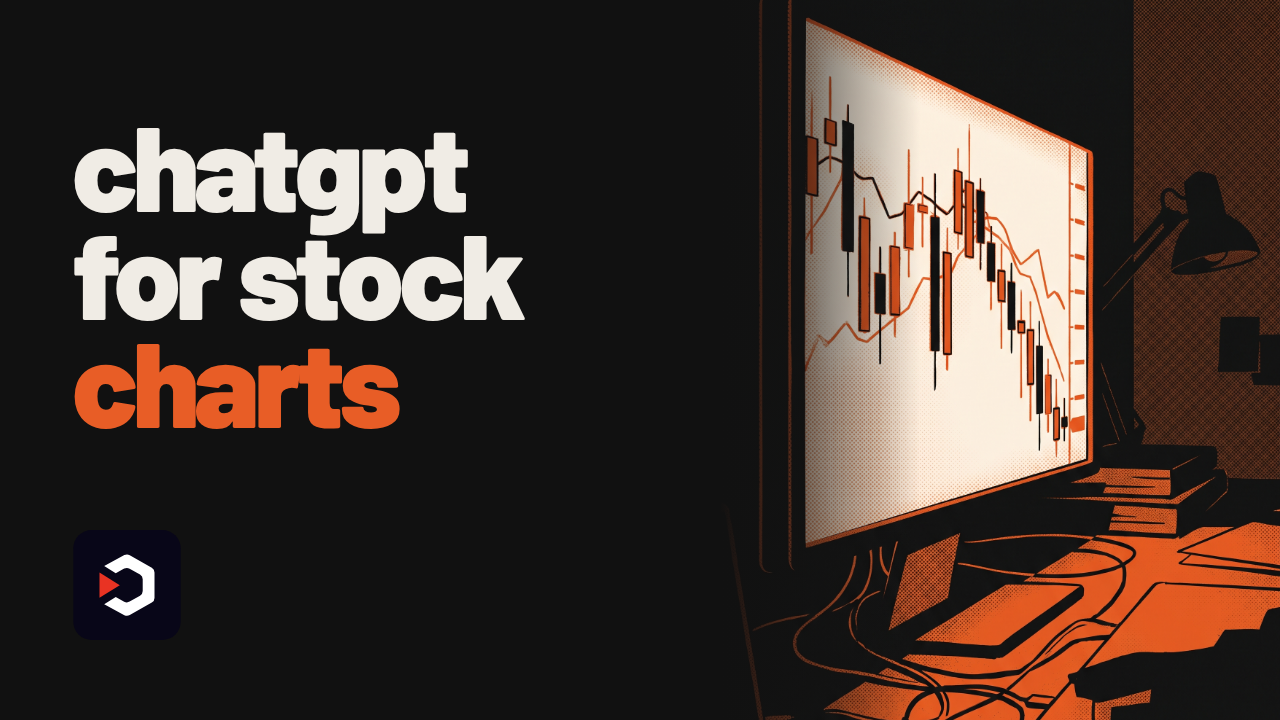
Kronos: the open-source "ChatGPT" for stock candlesticks
It turns price bars into tokens, the way GPT turns words into tokens, then predicts what comes next.
Built by researchers at Tsinghua University.
▶️ Watch the video on YouTube
Candlesticks as language: OHLCV price bars become tokens, a Transformer trained on them like words in a sentence
Trained at scale: over 12 billion price bars from 45+ exchanges in 30+ countries
Three jobs in one: forecasts price, predicts volatility, and generates realistic synthetic markets
Beats the best prior model: authors claim 93% higher forecasting accuracy than the strongest previous time-series model
Not Amazon's Chronos: same-sounding name, completely different team and project
github.com/shiyu-coder/Kronos
It turns price bars into tokens, the way GPT turns words into tokens, then predicts what comes next.
Built by researchers at Tsinghua University.
▶️ Watch the video on YouTube
Candlesticks as language: OHLCV price bars become tokens, a Transformer trained on them like words in a sentence
Trained at scale: over 12 billion price bars from 45+ exchanges in 30+ countries
Three jobs in one: forecasts price, predicts volatility, and generates realistic synthetic markets
Beats the best prior model: authors claim 93% higher forecasting accuracy than the strongest previous time-series model
Not Amazon's Chronos: same-sounding name, completely different team and project
How Kronos works, and what it needs
Kronos comes from Tsinghua University's Institute for Interdisciplinary Information Sciences (Yu Shi, Zongliang Fu, Shuo Chen, Bohan Zhao, Wei Xu, Changshui Zhang, Jian Li). The paper was accepted at AAAI 2026.
It turns OHLCV price bars into discrete tokens, the same move an LLM makes with text, then trains a Transformer on the resulting sequence. The authors pre-trained it on over 12 billion K-line records from 45+ global exchanges, across 7 time frequencies from 1 minute to weekly, spanning 30+ countries.
The authors' own benchmark (arXiv 2508.02739) reports 93% higher RankIC, a forecasting-accuracy metric, than the strongest prior time-series foundation model, 87% higher than the best non-pretrained baseline, 9% lower error in volatility forecasting, and a 22% gain in how realistic its generated synthetic price data looks. No independent benchmark is cited.
It ships as a family of sizes: Kronos-mini at 4.1M parameters up to Kronos-base; mini, small and base are released under the MIT license with weights on Hugging Face. The catch: Kronos-large, the biggest version at 499.2M parameters, stays closed-source.
Requires: Python and the open weights downloaded from Hugging Face; the README does not list specific GPU, VRAM or OS requirements.
Kronos is free and self-hosted: inference runs on the open weights on your own machine, so there is no API key or subscription to pay for intelligence here.
Use it instead of a generic time-series model like Chronos when you specifically want finance-tuned forecasts. Don't expect the strongest version, Kronos-large, since that one isn't public.
Try it:git clone https://github.com/shiyu-coder/Kronos, then load the mini, small or base weights from Hugging Face.
github.com/shiyu-coder/Kronos
🎉1
⚡ AI News
Anthropic may file IPO prospectus as soon as Friday: Anthropic could publicly file its S-1 this Friday, aiming for a November listing near a $1.5 trillion valuation.
Amodei defends Anthropic's safety record against critic: Dario Amodei says Anthropic held Mythos back four months for safety, in a public rebuttal to Encode's Nathan Calvin.
OpenAI expands ChatGPT Ads to 26 more countries: OpenAI brings ChatGPT Ads to 26 new countries, reaching about 80 markets and over 100,000 advertisers.
👍1

No camera. No video model. Just code, directed by Claude.
Lemo Opuscar is a Claude Code toolbox of film styles.
59 ready to use, each one a style prompt plus a demo film made entirely in code.
▶️ Watch the video on YouTube
No camera, no video model: every frame, note and cut is code, written by Claude Opus 5.5
59 ready styles, or your own: pick from the library, or turn any style into yours
You direct through your agent: describe the story, Claude Code builds the film
Frame by frame, scored and voiced: canvas and WebGL pictures, an original score, text-to-speech narration
Tuned for Opus 5.5: other models may not reproduce the styles well
lemomo-ai/lemo-opuscar
Lemo Opuscar is a Claude Code toolbox of film styles.
59 ready to use, each one a style prompt plus a demo film made entirely in code.
▶️ Watch the video on YouTube
No camera, no video model: every frame, note and cut is code, written by Claude Opus 5.5
59 ready styles, or your own: pick from the library, or turn any style into yours
You direct through your agent: describe the story, Claude Code builds the film
Frame by frame, scored and voiced: canvas and WebGL pictures, an original score, text-to-speech narration
Tuned for Opus 5.5: other models may not reproduce the styles well
How Lemo Opuscar works
It ships as a skill for Claude Code. You install it once, then just describe the film in plain language, for example "a 45 second watercolor film about my family's coffee farm, warm female narrator". Your agent picks a style, writes the code and renders the finished film.
Every frame is drawn on canvas or in WebGL and rendered frame by frame, no video generation model or stock footage is involved. Music is composed from free sample libraries, narration comes from text-to-speech, and the code for all of it is written by Claude Opus 5.5 itself.
The toolbox counts 59 ready styles in its own README. Its flagship demo, OPUSCAR 98, is separate: one film walking through all 98 Best Picture winners in 77 2D, 4 2.5D and 17 3D styles, a split the project's own demo page lists.
The catch, stated plainly in the README: the styles are tuned for Claude Opus 5.5, and other models may not reproduce them well.
Requires: the Claude Code CLI, and access to Claude Opus 5.5, which means your own API key or Claude subscription pays for the model. The toolbox itself is free, released under MIT and CC BY 4.0. The README names no OS or hardware requirements.
To install:claude plugin marketplace add lemomo-ai/lemo-opuscarclaude plugin install lemo-opuscar@lemolab
Then just tell it what film you want, from any folder.
Use it instead of a stock-footage edit or a text-to-video generator when you want a stylized short film built entirely from code you can read and change. Don't use it if you need live-action footage, or don't have Opus 5.5 access.
lemomo-ai/lemo-opuscar
😍1
Lemo-Opuscar vs Remotion
Both let a coding agent turn a plain-English idea into a finished video by writing rendering code instead of calling a video-generation model, which is why anyone shopping for a code-made-film workflow for Claude Code ends up weighing Lemo-Opuscar's 59 ready styles against Remotion, the established video-as-code framework that now ships its own Claude Code plugin.
Pick Lemo-Opuscar if you want a one-line prompt to become a finished short film, styled, scored and voiced, without writing or reviewing any code yourself
Pick Remotion if you're a developer who needs programmatic, data-driven or templated video at scale, in a React codebase you can own and extend
Price & Licence
Lemo-Opuscar: free, MIT and CC BY 4.0
Remotion: free under 3 people, else paid
Setup & Workflow
Lemo-Opuscar: Claude Code plugin, no code
Remotion: React project, agent assisted
Core Strength
Lemo-Opuscar: 59 styles, scored and voiced
Remotion: scalable, data driven video
Main Limits
Lemo-Opuscar: locked to Opus 5.5
Remotion: paid past three people
Who's Behind It
Lemo-Opuscar: solo creator, Lemomo
Remotion: funded company, Remotion AG
Lemo-Opuscar: https://github.com/lemomo-ai/lemo-opuscar
Remotion: https://www.remotion.dev/
Both let a coding agent turn a plain-English idea into a finished video by writing rendering code instead of calling a video-generation model, which is why anyone shopping for a code-made-film workflow for Claude Code ends up weighing Lemo-Opuscar's 59 ready styles against Remotion, the established video-as-code framework that now ships its own Claude Code plugin.
Pick Lemo-Opuscar if you want a one-line prompt to become a finished short film, styled, scored and voiced, without writing or reviewing any code yourself
Pick Remotion if you're a developer who needs programmatic, data-driven or templated video at scale, in a React codebase you can own and extend
Price & Licence
Lemo-Opuscar: free, MIT and CC BY 4.0
Remotion: free under 3 people, else paid
Setup & Workflow
Lemo-Opuscar: Claude Code plugin, no code
Remotion: React project, agent assisted
Core Strength
Lemo-Opuscar: 59 styles, scored and voiced
Remotion: scalable, data driven video
Main Limits
Lemo-Opuscar: locked to Opus 5.5
Remotion: paid past three people
Who's Behind It
Lemo-Opuscar: solo creator, Lemomo
Remotion: funded company, Remotion AG
Side by side, in full
Price & Licence
Lemo-Opuscar's code and docs are MIT and its demo films are CC BY 4.0, so the toolbox itself is free; the only recurring cost is the Claude Opus 5.5 usage each 30-60 minute film run burns through.
Remotion is free for individuals and companies of up to three people; beyond that a Company Licence applies, from $25/month per seat for manual work or $0.01 per render ($100/month minimum) for automated pipelines, up to Enterprise at $500/month.
Setup & Workflow
Lemo-Opuscar: Install Lemo-Opuscar as a Claude Code plugin, describe your story in a sentence, and Claude Opus 5.5 writes every line of rendering code, the score and the narration itself inside a project folder; the user never touches code.
Remotion needs a real React/TypeScript video project; its own Claude Code plugin and skill pack (captions, render, studio, markup) let an agent write that code for you, but a developer still owns a codebase that renders via headless Chromium.
Core Strength
Lemo-Opuscar ships 59 ready film styles plus a built-in pipeline for original music and text-to-speech narration, so one line of story becomes a finished, scored and voiced short film.
Remotion is built for programmatic, data-driven or templated video at scale (ads, reports, personalized clips rendered by the thousand via Lambda), with no built-in music scoring or voice narration in its own skills.
Main Limits
Lemo-Opuscar's styles are tuned specifically for Claude Opus 5.5, the README warns other models may not reproduce them well, and each film still costs an agent 30-60 minutes and a fair amount of tokens.
Remotion's own skills leave music sync and narration to the developer, rendering runs through a headless-Chromium pipeline, and any team past three people needs a paid Company or Enterprise Licence.
Who's Behind It
Lemo-Opuscar is a solo project by a creator going by Lemomo (@lemomo_ai), released as an MIT/CC BY 4.0 plugin through the lemolab marketplace.
Remotion is built by Remotion AG, a company whose open-source core has about 66,000 GitHub stars, 5 million monthly npm installs and a 10,000-plus member Discord.
Lemo-Opuscar: https://github.com/lemomo-ai/lemo-opuscar
Remotion: https://www.remotion.dev/
⚡1