
What should we cover next?
Final Results
50%
claude-skills — 380 Claude Code skills & agent skills & plugins (30+ Agents, 70+ custom commands…
14%
substrate — Agent Substrate: the core system
18%
skills
18%
cloudflare-os — Agent workspace built on Cloudflare Workers for creating documents, building apps…
🏆2
⚡ AI News
Anthropic lets Claude users opt in to voice training — Anthropic now shows Claude voice users an optional, off-by-default prompt asking to use recordings for AI training.
OpenAI safety lead quits, calls culture 'broken' — David Robinson quit OpenAI's safety team and wrote in The Atlantic that AI labs should be regulated like nuclear plants.
Apple tightens macOS disk access over AI agents — Apple will add stricter Full Disk Access prompts after reports that Meta's Muse app read private Messages data on Mac.
Anthropic lets Claude users opt in to voice training — Anthropic now shows Claude voice users an optional, off-by-default prompt asking to use recordings for AI training.
OpenAI safety lead quits, calls culture 'broken' — David Robinson quit OpenAI's safety team and wrote in The Atlantic that AI labs should be regulated like nuclear plants.
Apple tightens macOS disk access over AI agents — Apple will add stricter Full Disk Access prompts after reports that Meta's Muse app read private Messages data on Mac.
🤩1

One keyword, one finished video
Making a short video still means writing, filming and editing by hand. MoneyPrinterTurbo turns a single topic into a rendered video instead.
Script from a keyword — the AI model you connect writes it
Footage that matches — clips pulled from Pexels and Pixabay
Subtitles and music — added automatically, no manual editing pass
HD render, two ways — through the WebUI or the API
Voice cloning — from a short clip, yours or an authorized voice only
harry0703/MoneyPrinterTurbo
Making a short video still means writing, filming and editing by hand. MoneyPrinterTurbo turns a single topic into a rendered video instead.
Script from a keyword — the AI model you connect writes it
Footage that matches — clips pulled from Pexels and Pixabay
Subtitles and music — added automatically, no manual editing pass
HD render, two ways — through the WebUI or the API
Voice cloning — from a short clip, yours or an authorized voice only
How MoneyPrinterTurbo works
Give it a topic or keyword and it runs the whole pipeline itself: writes the script with the AI model you plug in, pulls matching clips from Pexels or Pixabay, generates subtitles and a music track, then renders everything into one HD video.
It ships both a web UI and an API, so you can drive it by hand or wire it into another workflow. Voice cloning is built in too: feed it a short clip and it can narrate in that voice. The project is explicit that the clip and its transcript go to the cloning model, and that it must be your own or an authorized voice.
Requires: Python 3.11+, runs on Windows, macOS or Linux. The tool itself is free; the actual writing only costs what the AI model you connect charges, whether that is a self-hosted model or a paid API key.
The catch: output quality rides entirely on the model and stock footage you plug in, and the README leans on paid API sponsors for the "good" results shown, so a strong result usually means paying for a capable model rather than running everything for nothing.
Use it instead of writing and editing shorts by hand when you just want a fast first cut from a keyword. Don't use it if you need control over the actual shots — footage comes from stock libraries, not original filming.
To try it:git clone https://github.com/harry0703/MoneyPrinterTurbo.git
harry0703/MoneyPrinterTurbo
❤2
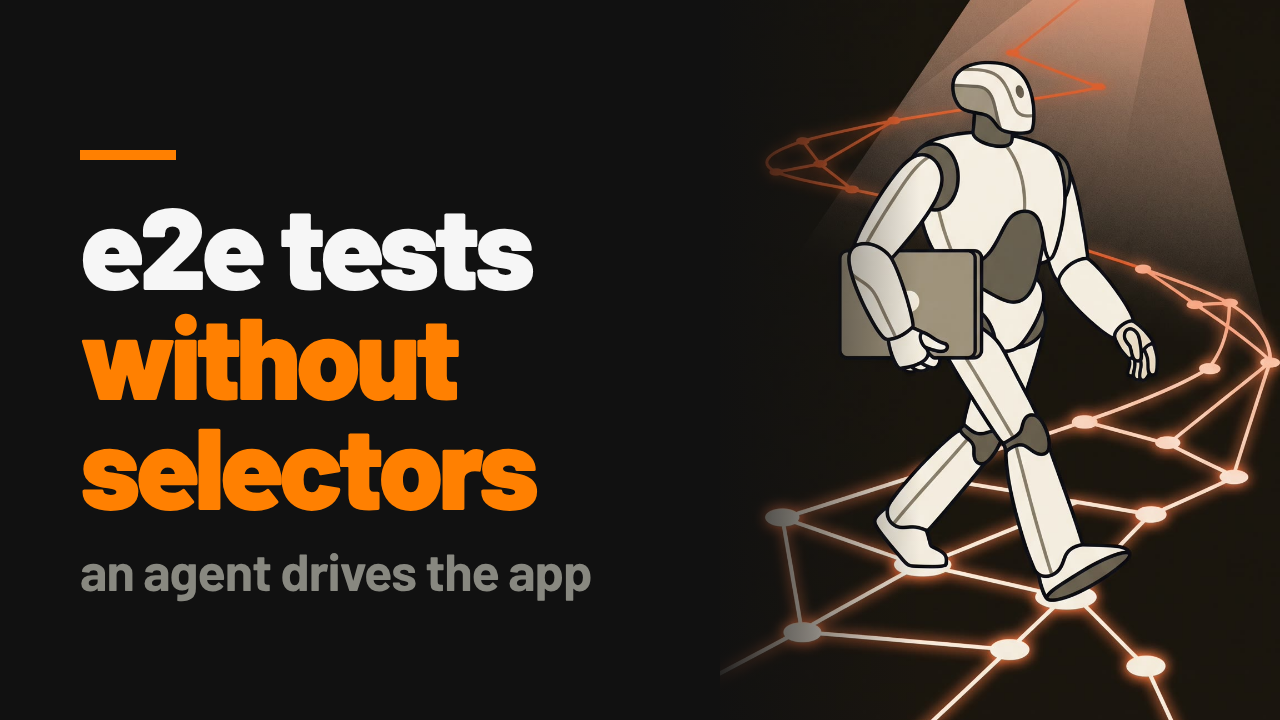
e2e tests that describe the goal, not the selector
An agent drives your app toward a goal you write in plain English, then a locator checks the result. One test, two techniques.
No brittle selectors — an agent action reaches the goal instead of a CSS selector
Plain English steps — one sentence, like "upgrade the workspace to the Pro plan"
Free replays — the recorded agent step reruns with no model calls, until the app changes
Real engines — Chromium, Firefox, WebKit, or a phone simulator
Open source — Apache-2.0, built by TesterArmy
https://github.com/tester-army/e2e
An agent drives your app toward a goal you write in plain English, then a locator checks the result. One test, two techniques.
No brittle selectors — an agent action reaches the goal instead of a CSS selector
Plain English steps — one sentence, like "upgrade the workspace to the Pro plan"
Free replays — the recorded agent step reruns with no model calls, until the app changes
Real engines — Chromium, Firefox, WebKit, or a phone simulator
Open source — Apache-2.0, built by TesterArmy
What's actually new here
e2e is an end-to-end framework for web and mobile apps, written in TypeScript. A test can mix an agent step with a classic assertion in the same file:await agent.act('upgrade the workspace to the Pro plan');
await agent.assert('the invoice preview shows a prorated amount');
await expect(screen.getByRole('status')).toContainText('Pro');
The agent step is recorded the first time it runs. Later runs replay that recorded action with no model calls at all, until the app changes enough that the replay fails — then the agent steps in again. Tests with no agent steps never touch a model at all.
The web engine drives Chromium, Firefox, and WebKit through Playwright; the mobile engine drives iOS and Android simulators and emulators through agent-device. Hosted options also exist: Kernel for browsers, EAS Simulators for mobile.
Requires: Node, fornpx e2e init. And your own model access on top of that — a subscription, an API key, or a local model; the README names no specific provider. The CLI also sends anonymous usage data, commands, engines, where runs fail, never test or app content or credentials; turn it off withnpx e2e telemetry disable.
Use it instead of hand-written Playwright selectors when your UI text and flows shift often but the underlying goal stays the same. Don't use it if you need a fully deterministic run with zero model dependency from the first execution, since every new or changed agent step still calls a model once.
The catch: e2e is pre-1.0 by its own admission, APIs and config can still change between minor releases. The README gives no speed or accuracy numbers of its own to quote here.
Try it:npx e2e initpicks an engine and a model provider, then writes a config and an example test for you.
https://github.com/tester-army/e2e
💯1
⚡ AI News
Trump launches federal AI 'Super Intelligence Force' — Trump created a federal AI task force and named intelligence chief Jay Clayton to coordinate policy across agencies.
Claude flags threat chat, triggers Florida arrest — Anthropic's Claude flagged a user's violent 'diary' chat threatening a sheriff's office, and a human reviewer alerted police.
Mistral CEO: AI safety talk hides rivals' negligence — Mistral's Arthur Mensch said US AI safety warnings mask competitors' negligence, urging better monitoring of agents instead.
Trump launches federal AI 'Super Intelligence Force' — Trump created a federal AI task force and named intelligence chief Jay Clayton to coordinate policy across agencies.
Claude flags threat chat, triggers Florida arrest — Anthropic's Claude flagged a user's violent 'diary' chat threatening a sheriff's office, and a human reviewer alerted police.
Mistral CEO: AI safety talk hides rivals' negligence — Mistral's Arthur Mensch said US AI safety warnings mask competitors' negligence, urging better monitoring of agents instead.
🥰1
388 skills for Claude Code — with the same keys to your machine
One short video, one big claim: a free skill library for Claude Code so large it already has 27,000 stars — and a catch most install guides skip.
388 skills, 30+ agents — one open-source library for Claude Code and 13 other coding agents
Every domain covered — engineering, finance, marketing, even C-level advisory
No sandbox — a skill runs with your exact filesystem and network permissions
26.1% had a flaw — a 2026 study found security issues across marketplace skills
Paid plan required — Claude Skills only works on Pro, Max, Team or Enterprise
github.com/alirezarezvani/claude-skills
One short video, one big claim: a free skill library for Claude Code so large it already has 27,000 stars — and a catch most install guides skip.
388 skills, 30+ agents — one open-source library for Claude Code and 13 other coding agents
Every domain covered — engineering, finance, marketing, even C-level advisory
No sandbox — a skill runs with your exact filesystem and network permissions
26.1% had a flaw — a 2026 study found security issues across marketplace skills
Paid plan required — Claude Skills only works on Pro, Max, Team or Enterprise
What you're actually installing
alirezarezvani/claude-skills is a community-built library of "Agent Skills" for Claude Code — folders holding a SKILL.md plus optional scripts that the agent loads on demand. It currently bundles 388 skills, 30+ sub-agents, 70+ slash commands and 727 stdlib-only Python CLI tools, packaged for 13 coding agents (Claude Code, Codex, Gemini CLI, Cursor, Aider and others), under the MIT license.
By star-history.com the repo sits at roughly 27,000 stars and 3,900 forks as of early October 2026 — about 20x more skills than Anthropic's own official example repo, anthropics/skills, which ships only 18 and installs with one command:npx skills add anthropics/skills.
The catch: a Skill isn't sandboxed. It runs with the exact same filesystem, network and credential access as Claude Code itself — no per-skill permission boundary. A 2026 analysis by the Cloud Security Alliance scanned 42,447 marketplace skills and found 26.1% carried at least one security flaw, with 280+ leaking API keys or personal data through over-permissioned access. The maintainer's own CLAUDE.md admits as much, shipping a scripts/audit_skills.py validator and a 6-item checklist for anyone writing a skill — worth running before you trust one.
Requires: a paid Claude plan (Pro, Max, Team or Enterprise) — Agent Skills, the underlying Anthropic feature, isn't available to free accounts. The README gives no single install command for the whole repo; browse by domain and copy only the skill folders you actually need.
Use it instead of writing every Claude Code skill from scratch when you want a ready-made domain pack. Don't use it if you can't read the code first — installing one means trusting a stranger's script with your shell.
github.com/alirezarezvani/claude-skills
👍1😁1
Remotion vs HyperFrames
Both turn code into video instead of a timeline editor: Remotion renders React components via Node, Lambda or the browser, while HyperFrames renders plain HTML/CSS/JS with a headless browser and FFmpeg — AI coding-agent builders and automated video pipelines weigh the two against each other constantly.
Pick Remotion if you or your team know React and want a drag-and-drop editor, Player and ready-made effects/template library
Pick HyperFrames if you want a free, framework-agnostic renderer for AI-agent-written HTML/CSS/JS with deterministic output
Price & License
Remotion — Free <3 ppl, $25/seat/mo after
HyperFrames — free, Apache 2.0, no render fee
Setup & Stack
Remotion — React/TS, npx create-video
HyperFrames — HTML/CSS/JS + Node 22, FFmpeg
Core Strength
Remotion — full video editor + React player
HyperFrames — deterministic AI-agent HTML renders
Who's Behind It
Remotion — small team, user-funded seed
HyperFrames — HeyGen, $60M raised, $500M val
Remotion: https://github.com/remotion-dev/remotion
HyperFrames: https://github.com/heygen-com/HyperFrames
Both turn code into video instead of a timeline editor: Remotion renders React components via Node, Lambda or the browser, while HyperFrames renders plain HTML/CSS/JS with a headless browser and FFmpeg — AI coding-agent builders and automated video pipelines weigh the two against each other constantly.
Pick Remotion if you or your team know React and want a drag-and-drop editor, Player and ready-made effects/template library
Pick HyperFrames if you want a free, framework-agnostic renderer for AI-agent-written HTML/CSS/JS with deterministic output
Price & License
Remotion — Free <3 ppl, $25/seat/mo after
HyperFrames — free, Apache 2.0, no render fee
Setup & Stack
Remotion — React/TS, npx create-video
HyperFrames — HTML/CSS/JS + Node 22, FFmpeg
Core Strength
Remotion — full video editor + React player
HyperFrames — deterministic AI-agent HTML renders
Who's Behind It
Remotion — small team, user-funded seed
HyperFrames — HeyGen, $60M raised, $500M val
Side by side, in full
Price & License
Remotion is free for individuals, non-profits and companies up to 3 people, but larger companies need a Company License priced at $25/month per person who writes Remotion code, or $0.01 per render with a $100/month minimum, rising to a $500/month minimum on the Enterprise plan.
HyperFrames is released by HeyGen under the Apache-2.0 license, so it is free to use, modify and run commercially with no per-seat or per-render fee — your only recurring cost is whatever compute, Lambda or hosting you render it on.
Setup & Stack
Remotion: A Remotion project is scaffolded with 'npx create-video@latest' and written as React/TypeScript components, then rendered through Node.js APIs, AWS Lambda, Vercel, or previewed live in the browser with the Remotion Player.
HyperFrames requires Node.js 22+ and FFmpeg installed locally; 'npx hyperframes init' sets up a project where you author plain HTML/CSS/JS timed with data attributes, preview it with live reload, and render it with a headless browser.
Core Strength
Remotion's strength is being a full video application platform: a component library of effects, transitions and captions, an interactive drag-and-drop editor and Player, data-driven batch rendering, and first-class Lambda scaling built for human React developers.
HyperFrames' strength is deterministic, agent-authored rendering: any animation library (GSAP, CSS, Lottie, Three.js, Anime.js) compiles to frame-accurate MP4/MOV/WebM, the same input always reproduces the same output, and 21 bundled agent skills teach Claude Code, Cursor and Gemini CLI how to write videos.
Who's Behind It
Remotion is built by a small team led by founder Jonny Burger under Remotion AG in Switzerland, funded mainly by a 180,000 Swiss-franc seed round raised from its own users rather than venture capital.
HyperFrames is an open-source side project released by HeyGen, the AI avatar-video company founded in 2020 that raised a $60 million Series A led by Benchmark at a $500 million valuation in 2024 and has grown into a major AI-video business since.
Remotion: https://github.com/remotion-dev/remotion
HyperFrames: https://github.com/heygen-com/HyperFrames
🔥1🎉1

A full human body, split into 2,234 clickable pieces
Human Atlas takes a reference human body apart right in your browser: orbit it, select any structure, and watch it explode into its pieces.
2,234 clickable meshes — the whole body, not a flat diagram
Orbit, select, explode — pull a structure out and watch it separate
15 systems, 3,432 concepts — skeleton to organs, all searchable
Search isolates on screen — find the exact structure, see only that one
No accounts, no API keys — it just runs in your browser
https://github.com/ashemag/human-atlas
Human Atlas takes a reference human body apart right in your browser: orbit it, select any structure, and watch it explode into its pieces.
2,234 clickable meshes — the whole body, not a flat diagram
Orbit, select, explode — pull a structure out and watch it separate
15 systems, 3,432 concepts — skeleton to organs, all searchable
Search isolates on screen — find the exact structure, see only that one
No accounts, no API keys — it just runs in your browser
What's under the hood
Human Atlas renders the BodyParts3D 4.0 adult male reference anatomy (licensed CC BY 4.0) with React, Three.js, and shadcn/ui.
The figures come from the project's own README, not an outside benchmark: 2,234 individually selectable meshes, 15 anatomical systems, 3,432 named concepts, a packaged model of 2,288,268 triangles, about 33 MB of compressed geometry.
It's free and needs no account or API key: all the rendering happens locally in your browser, so there's no model or API bill to pay.
Requires: a browser to use the hosted demo; Node.js 22.13 or newer if you want to run or build it yourself.
The catch: it's one reference body, an adult male, not every human structure or variation, and the README calls it an educational explorer, not a diagnostic or surgical tool. Physical-device performance and real multitouch hardware haven't been tested yet, per the README.
To run it locally:npm ci
npm run dev
then open http://localhost:3016. A hosted live demo is also linked from the README.
Use it instead of a flat textbook diagram when you want to rotate and explode a structure yourself. Don't reach for it if you need every anatomical variation or clinical-grade accuracy.
https://github.com/ashemag/human-atlas
❤1
⚡ AI News
Anthropic brings Claude in-country inference to India — Anthropic launched India-based Bedrock inference for Opus 5, Sonnet 5 and Haiku 4.5, meeting data residency rules for banks and government.
Altman: AI's benefits justify some harm, breaks with Anthropic — Sam Altman told Politico the world should accept some bad outcomes from AI, drawing a sharp policy contrast with Anthropic's caution.
NYC Council grills OpenAI, Anthropic, Google, Meta on AI risk — All 51 council members heard sworn testimony from top AI labs on loss-of-control risks and new liability legislation.
Anthropic brings Claude in-country inference to India — Anthropic launched India-based Bedrock inference for Opus 5, Sonnet 5 and Haiku 4.5, meeting data residency rules for banks and government.
Altman: AI's benefits justify some harm, breaks with Anthropic — Sam Altman told Politico the world should accept some bad outcomes from AI, drawing a sharp policy contrast with Anthropic's caution.
NYC Council grills OpenAI, Anthropic, Google, Meta on AI risk — All 51 council members heard sworn testimony from top AI labs on loss-of-control risks and new liability legislation.
👍1

PS5 games ported to PC — no emulator involved
AnyPS5 relinks a PS5 executable into a native Windows or Linux binary.
No console emulator runs underneath it.
Native relinker — rewrites the PS5 executable into your OS's own binary format
System libraries, reimplemented — PS5 prx libraries rebuilt for dynamic linking
No emulator, no runtime — the ported game just runs, nothing emulated underneath
Shaders to SPIR-V — its recompiler turns PS5 shaders straight into Vulkan
Young and rough — one verified game at a stable 60 fps, 110 open issues
AnyPS5
AnyPS5 relinks a PS5 executable into a native Windows or Linux binary.
No console emulator runs underneath it.
Native relinker — rewrites the PS5 executable into your OS's own binary format
System libraries, reimplemented — PS5 prx libraries rebuilt for dynamic linking
No emulator, no runtime — the ported game just runs, nothing emulated underneath
Shaders to SPIR-V — its recompiler turns PS5 shaders straight into Vulkan
Young and rough — one verified game at a stable 60 fps, 110 open issues
How AnyPS5 actually runs a PS5 game
The tool itself is free and GPL-2.0 licensed — there's no model, no API key and no paid service involved anywhere in the pipeline.
AnyPS5 is a relinker plus a set of reimplemented PS5 system libraries (the "prx" libs, in core/libs/prx). The relinker converts a PS5 executable into a native Windows or Linux binary; the libraries handle dynamic linking so nothing is emulated and no separate runtime process sits underneath the game.
Its shader recompiler turns PS5 shaders into SPIR-V for Vulkan, validated against Spirv-Tools when built with the ANYPS5_ENABLE_SPIRV_TOOLS flag.
The project's own compatibility notes list Dreaming Sarah, a 2D platformer, running a stable 60 fps on a GTX 1050 Ti with an i5-7500 — the only hard number in the README, the authors' own measurement, not independently checked.
Requires: your own legally obtained PS5 game files — the project ships no firmware, keys or proprietary libraries. No prebuilt releases: clone and build from source following BUILD.md.git clone https://github.com/boykopovar/AnyPS5
cd AnyPS5
SDL-mapped controllers work out of the box; keyboard and mouse need an anyps5-input.ini file.
The catch: it's early. Unsupported code paths throw std::runtime_error and the process just quits, and the tracker already has 110 open issues. The verified-games list is still short.
Use it instead of a full PS5 emulator when your game is already on that compatibility list and you want native speed. Don't use it if your game isn't verified yet — it will most likely just error out.
AnyPS5
😍2
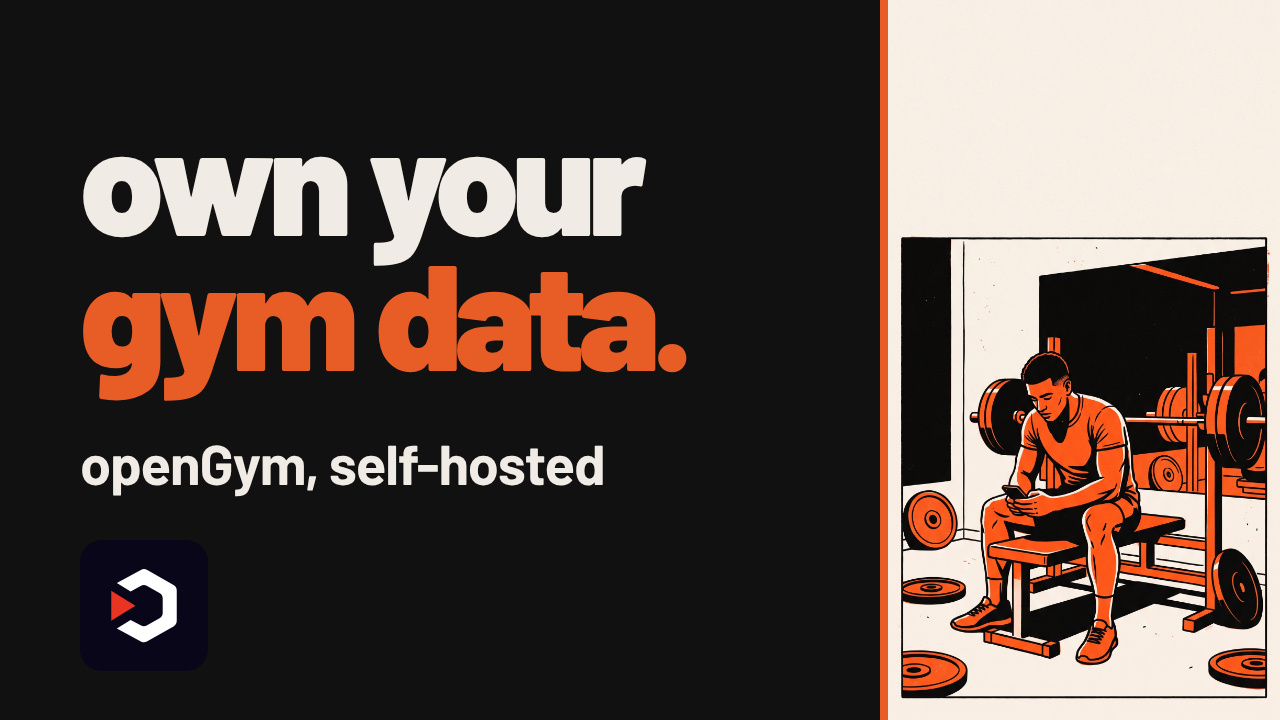
Your workout log doesn't need someone else's cloud
openGym is a self-hosted gym and workout tracker: plan, log and track muscle recovery, all on a server you run yourself.
Your own server — instead of a subscription app's cloud, it runs where you host it
Clone and compose — git clone, set up .env, then docker compose up
Plan the week — a routine per weekday, with supersets, warm-ups and cardio
Muscle map — see what's trained, fatigued, or detrained
Guided and imported — weights pre-fill, a rest timer runs, history imports from FitNotes, Strong or Hevy
https://github.com/DuarteSantos8/openGym
openGym is a self-hosted gym and workout tracker: plan, log and track muscle recovery, all on a server you run yourself.
Your own server — instead of a subscription app's cloud, it runs where you host it
Clone and compose — git clone, set up .env, then docker compose up
Plan the week — a routine per weekday, with supersets, warm-ups and cardio
Muscle map — see what's trained, fatigued, or detrained
Guided and imported — weights pre-fill, a rest timer runs, history imports from FitNotes, Strong or Hevy
Self-hosted, not just open-source
openGym plans a routine per weekday from a library the project lists at 1,324 exercises, logs supersets, warm-ups, drop sets and cardio, then maps which muscles are trained, fatigued or detrained. Guided sessions pre-fill last session's weights and run a rest timer; it imports history from FitNotes, Strong, Hevy (CSV or API key) and Apple Health weight exports.
The tool itself is free and AGPL-3.0 licensed, with no cloud account to pay for. An optional AI coach can draft routines, but it needs your own key for Anthropic, OpenAI, Gemini, or a local Ollama model to avoid any per-use cost — that part isn't free unless you run it locally.
Requires: Docker with Compose, and a server or machine to run it on. Passkey login from a phone needs HTTPS on a domain too, a two-line .env change, with guides for Cloudflare Tunnel, Caddy, Traefik or nginx.
The catch: this is self-hosting, not an app-store install — you keep the server running yourself, and first start downloads about 140 MB of exercise media.
To try it:git clone https://github.com/DuarteSantos8/openGym, thencd openGym && cp .env.example .env && docker compose up -d. There's also a hosted demo with example data if you want to look before installing anything, and an Android APK on the Releases page.
Use it instead of a paid tracker subscription when you want your logs in your own folder; don't use it if you'd rather not run a server at all.
https://github.com/DuarteSantos8/openGym
⚡1
⚡ AI News
Pentagon says it has stopped using Claude — The US Defense Department told the BBC it has ceased using Anthropic's Claude after a six-month forced phaseout.
Reflection AI launches Beam, open model vs China — Reflection AI's new open-weight Beam model matches GLM-5.2 on reasoning while using 3-4x less inference compute.
OpenAI rolls out text watermarks for EU users — OpenAI began adding invisible watermarks to ChatGPT and Codex outputs for EU users to meet AI Act rules.
Pentagon says it has stopped using Claude — The US Defense Department told the BBC it has ceased using Anthropic's Claude after a six-month forced phaseout.
Reflection AI launches Beam, open model vs China — Reflection AI's new open-weight Beam model matches GLM-5.2 on reasoning while using 3-4x less inference compute.
OpenAI rolls out text watermarks for EU users — OpenAI began adding invisible watermarks to ChatGPT and Codex outputs for EU users to meet AI Act rules.
🔥1