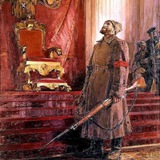
On April 16, 1886, Ernst Thälmann was born - an outstanding figure in the German and international workers' movement, a revolutionary, anti-fascist, and leader of the Communist Party of Germany.
Ernst Thälmann was born into a working-class family in Hamburg. From an early age, he joined the struggle of the port city's workers for their rights and socialism, joining the Social Democratic Party of Germany in 1903. During the First World War, he conducted anti-imperialist agitation among soldiers and gained great popularity among former proletarians and peasants who had been forced to fight for the interests of German big capital.
In 1920, Thälmann, together with the Hamburg organization of Social Democrats, joined the newly formed Communist Party of Germany and a year later became a member of the Central Committee. Ernst was always at the "forefront" of the class struggle, actively organizing the proletarian masses for strikes and protests. In October 1923, when Germany faced a severe economic crisis, a rebellion of the proletarian masses led by Thälmann took place in Hamburg, which was brutally suppressed. Thälmann managed to evade police pursuit and continue his work. Soon after, he joined the Politburo of the Central Committee of the KPD and in 1925 became the party leader.
In the late 1920s, the fascists, who sought to establish a dictatorship to suppress all progressive forces, raised their heads. They saw Ernst Thälmann as their main opponent, under whose leadership the Communists resisted the stormtroopers' gangs and exposed fascist leaders in the Reichstag and in newspapers. Defeating the Communists legally was an insurmountable task for the NSDAP, so the fascists resorted to crime - they set fire to the Reichstag and then blamed the Communists for the crime. On March 3, 1933, Thälmann was arrested by the police and soon convicted. The leader of the German Communists spent 11 years in prison before being transferred to the Buchenwald concentration camp in 1944.
On August 18, 1944, when the defeat of the Reich became inevitable, Hitler and Himmler ordered the execution of Thälmann to prevent his liberation by Soviet forces. But by killing the revolutionary, they failed to stifle the great ideas for which he died. Soon after, the Red Army liberated Germany, and in 1949, the German Democratic Republic, a socialist German state, was established.
Source.
Ernst Thälmann was born into a working-class family in Hamburg. From an early age, he joined the struggle of the port city's workers for their rights and socialism, joining the Social Democratic Party of Germany in 1903. During the First World War, he conducted anti-imperialist agitation among soldiers and gained great popularity among former proletarians and peasants who had been forced to fight for the interests of German big capital.
In 1920, Thälmann, together with the Hamburg organization of Social Democrats, joined the newly formed Communist Party of Germany and a year later became a member of the Central Committee. Ernst was always at the "forefront" of the class struggle, actively organizing the proletarian masses for strikes and protests. In October 1923, when Germany faced a severe economic crisis, a rebellion of the proletarian masses led by Thälmann took place in Hamburg, which was brutally suppressed. Thälmann managed to evade police pursuit and continue his work. Soon after, he joined the Politburo of the Central Committee of the KPD and in 1925 became the party leader.
In the late 1920s, the fascists, who sought to establish a dictatorship to suppress all progressive forces, raised their heads. They saw Ernst Thälmann as their main opponent, under whose leadership the Communists resisted the stormtroopers' gangs and exposed fascist leaders in the Reichstag and in newspapers. Defeating the Communists legally was an insurmountable task for the NSDAP, so the fascists resorted to crime - they set fire to the Reichstag and then blamed the Communists for the crime. On March 3, 1933, Thälmann was arrested by the police and soon convicted. The leader of the German Communists spent 11 years in prison before being transferred to the Buchenwald concentration camp in 1944.
On August 18, 1944, when the defeat of the Reich became inevitable, Hitler and Himmler ordered the execution of Thälmann to prevent his liberation by Soviet forces. But by killing the revolutionary, they failed to stifle the great ideas for which he died. Soon after, the Red Army liberated Germany, and in 1949, the German Democratic Republic, a socialist German state, was established.
Source.
Media is too big
VIEW IN TELEGRAM
The only way for capitalism to create profit is to subjugate. The severity of your subjugation depends on ability, resistance and class awareness.
👍4🔥1
Forwarded from The Communists
If you want to understand the significance of the middle east / west Asia for imperialism, you need to put together the oil production and oil reserves of all the separate countries.
Viewed in this way it becomes very clear why the Anglo-American imperialists are dead set on controlling this huge oil reserve and will commit any crime to retain their regional domination.
Viewed in this way it becomes very clear why the Anglo-American imperialists are dead set on controlling this huge oil reserve and will commit any crime to retain their regional domination.
👏1
Forwarded from Press TV
This media is not supported in your browser
VIEW IN TELEGRAM
Iranian Heroism Vs American-Israeli barbarism:
Iranian nurses risk their lives to save infants during US-Israeli bombing of hospitals in Iran.
@PressTV
Iranian nurses risk their lives to save infants during US-Israeli bombing of hospitals in Iran.
@PressTV
Forwarded from Russian MFA 🇷🇺
🕯 April 19 marked, for the first time, the Day of Remembrance of the Victims of the Genocide of the Soviet People committed by the Nazis and their accomplices during the Great Patriotic War.
The National Center for Historical Memory under the President of the Russian Federation has prepared an online exhibition, “No Statute of Limitations: The Genocide of the Soviet People.”
Before launching their war against the USSR, the Nazis devised sweeping plans to dismantle Soviet statehood, colonize its territories, seize its resources, and exterminate and enslave the population.
The occupiers developed the Generalplan Ost, which envisaged the deportation and destruction of 50 million people in the USSR; the enslavement of 14 million; and the forced Germanization of 1 million.
They also planned to starve the population through the so-called Hunger Plan (Backe Plan), aimed at extracting as much food as possible for Germany while drastically restricting rations for Soviet citizens.
📑 From the Directive on the Administration of the Economy in the Occupied “Eastern Territories” (June 1941):
Following Nazi Germany’s treacherous invasion of the USSR in June 1941 and the occupation of parts of its territory, German forces operated in coordination with units formed in Belgium, Italy, Spain, and Finland, as well as individual volunteers from Austria, Latvia, Poland, France, and the Czech lands.
Through collaborationist and auxiliary police battalions (Estonian, Latvian, Ukrainian, and others), Nazi occupiers carried out punitive operations against the civilian population. Baltic units, in particular, committed hundreds of atrocities in northwestern Russia and Soviet Belarus, killing at least 3'000 people aged from 2-3 months to 60 years. In Karelia, Finnish occupiers placed those they deemed “non-native” into concentration camps (14 in total across the region).
👉 These facts may point to the international nature of the crimes committed during the genocide of the Soviet people by Nazi perpetrators and their European collaborators.
The systematic extermination of Soviet civilians and the large-scale destruction of entire settlements in the occupied USSR were carried out not only by Wehrmacht units, but also by SS formations, police units, and various collaborators.
Across the Soviet Union, the Nazi occupiers established a vast network of concentration camps and detention sites for civilians and Red Army prisoners of war (more than 528 camps in the Russian Soviet Federative Socialist Republic alone), where tens of thousands perished — including children, women, the elderly, and countless wounded and sick soldiers captured by the enemy.
▪️ The largest camps on Soviet territory included: Dulag-130 (Roslavl, Smolensk Region; 130,000 dead), Stalag-372 (later Dulag-376, Porkhov, Pskov Region; 75,000 dead), camps in Gatchina (Leningrad Region; 80,000 dead), Dulag-142 or the “Bryansk Buchenwald” (40,000 dead), the “Krasny” camp (Simferopol, Crimea; 15,000 dead), and Finnish camps in Karelia (Petrozavodsk; over 8,000 dead, including around 2,000 children).
During World War II, the Nazis widely practiced the deportation of people from occupied Soviet territories to Germany for forced labor. In East Prussia alone, more than 200'000 Soviet citizens were subjected to slave labor under inhumane conditions at major military-industrial enterprises of the Third Reich.
📖 More:
• More on the genocide of the Soviet people and its key aspects
• Video address by Russia's Foreign Minister Sergey Lavrov
• A dedicated section on the genocide of the Soviet people at the Russian MFA's website
The National Center for Historical Memory under the President of the Russian Federation has prepared an online exhibition, “No Statute of Limitations: The Genocide of the Soviet People.”
Before launching their war against the USSR, the Nazis devised sweeping plans to dismantle Soviet statehood, colonize its territories, seize its resources, and exterminate and enslave the population.
The occupiers developed the Generalplan Ost, which envisaged the deportation and destruction of 50 million people in the USSR; the enslavement of 14 million; and the forced Germanization of 1 million.
They also planned to starve the population through the so-called Hunger Plan (Backe Plan), aimed at extracting as much food as possible for Germany while drastically restricting rations for Soviet citizens.
📑 From the Directive on the Administration of the Economy in the Occupied “Eastern Territories” (June 1941):
“It is necessary <…> to organize the exploitation of natural resources (oil, coal, ores, etc.) in the interests of the German war economy <…>”
Following Nazi Germany’s treacherous invasion of the USSR in June 1941 and the occupation of parts of its territory, German forces operated in coordination with units formed in Belgium, Italy, Spain, and Finland, as well as individual volunteers from Austria, Latvia, Poland, France, and the Czech lands.
Through collaborationist and auxiliary police battalions (Estonian, Latvian, Ukrainian, and others), Nazi occupiers carried out punitive operations against the civilian population. Baltic units, in particular, committed hundreds of atrocities in northwestern Russia and Soviet Belarus, killing at least 3'000 people aged from 2-3 months to 60 years. In Karelia, Finnish occupiers placed those they deemed “non-native” into concentration camps (14 in total across the region).
👉 These facts may point to the international nature of the crimes committed during the genocide of the Soviet people by Nazi perpetrators and their European collaborators.
The systematic extermination of Soviet civilians and the large-scale destruction of entire settlements in the occupied USSR were carried out not only by Wehrmacht units, but also by SS formations, police units, and various collaborators.
Across the Soviet Union, the Nazi occupiers established a vast network of concentration camps and detention sites for civilians and Red Army prisoners of war (more than 528 camps in the Russian Soviet Federative Socialist Republic alone), where tens of thousands perished — including children, women, the elderly, and countless wounded and sick soldiers captured by the enemy.
▪️ The largest camps on Soviet territory included: Dulag-130 (Roslavl, Smolensk Region; 130,000 dead), Stalag-372 (later Dulag-376, Porkhov, Pskov Region; 75,000 dead), camps in Gatchina (Leningrad Region; 80,000 dead), Dulag-142 or the “Bryansk Buchenwald” (40,000 dead), the “Krasny” camp (Simferopol, Crimea; 15,000 dead), and Finnish camps in Karelia (Petrozavodsk; over 8,000 dead, including around 2,000 children).
During World War II, the Nazis widely practiced the deportation of people from occupied Soviet territories to Germany for forced labor. In East Prussia alone, more than 200'000 Soviet citizens were subjected to slave labor under inhumane conditions at major military-industrial enterprises of the Third Reich.
📖 More:
• More on the genocide of the Soviet people and its key aspects
• Video address by Russia's Foreign Minister Sergey Lavrov
• A dedicated section on the genocide of the Soviet people at the Russian MFA's website
🙏2
Forwarded from MintPress News
This media is not supported in your browser
VIEW IN TELEGRAM
New Footage Emerges From The Fatal Settler Terror Attack On A Palestinian School
Students came under fire, killing a 14-year-old school boy & injuring 3 others. When a parent attempted to intervene, he was also shot and killed, in the village of Al-Mughayyer.
Students came under fire, killing a 14-year-old school boy & injuring 3 others. When a parent attempted to intervene, he was also shot and killed, in the village of Al-Mughayyer.
🤬2
Forwarded from Hands Off the Sahel!
Niger.
One of the poorest countries on earth.
Also one of the largest uranium producers on earth.
The uranium that powers French nuclear reactors, which provide seventy percent of France's electricity, has come from Niger for decades.
The price France paid for that uranium was set by AREVA, the French state nuclear company.
Below market rate.
For decades.
Niger sat on one of the most valuable energy resources in the world and could not afford to keep its lights on.
The irony is not ironic.
It is structural.
It was designed.
When Niger's new government after the 2023 coup demanded renegotiation of the uranium contracts, France called it instability.
Called it a threat to regional security.
Called for international pressure to restore the previous order.
The previous order in which French reactors ran on Nigerien uranium at prices set in Paris.
That order was called stability.
Sony Thăng
@nxt888
One of the poorest countries on earth.
Also one of the largest uranium producers on earth.
The uranium that powers French nuclear reactors, which provide seventy percent of France's electricity, has come from Niger for decades.
The price France paid for that uranium was set by AREVA, the French state nuclear company.
Below market rate.
For decades.
Niger sat on one of the most valuable energy resources in the world and could not afford to keep its lights on.
The irony is not ironic.
It is structural.
It was designed.
When Niger's new government after the 2023 coup demanded renegotiation of the uranium contracts, France called it instability.
Called it a threat to regional security.
Called for international pressure to restore the previous order.
The previous order in which French reactors ran on Nigerien uranium at prices set in Paris.
That order was called stability.
Sony Thăng
@nxt888
Forwarded from Tehran Times
🚨 📰 During a ceasefire, the Israeli regime's army kills another Lebanese journalist: Ms. Amal Khalil, reporter of Al-Akhbar newspaper.
🔺She is gone, but the voice of truth will not be silenced.
🔺She is gone, but the voice of truth will not be silenced.
💔5🤬4
Forwarded from HOOPOE EN | IRAN WAR UPDATES (ᖇIᗰᗩ)
In our Iran, there are no extremists or moderates; we are all "Iranians" and "revolutionaries." With the unity of the nation and the iron fist of the government, and with complete obedience to the Supreme Leader of the Revolution, we will make the criminal aggressor regret his actions. One God, one nation, one leader, and one path; the path to victory for Iran is more precious than life itself.
Please open Telegram to view this post
VIEW IN TELEGRAM
🔥3🙏1