Forwarded from The Communists
Great successes have been achieved with very modest means over the last few years. Our ranks are growing fast, and we can expect them to grow faster still.
https://thecommunists.org/2025/04/26/news/tenth-party-congress-new-leadership-economic-crisis/
https://thecommunists.org/2025/04/26/news/tenth-party-congress-new-leadership-economic-crisis/
The Communists
Tenth party congress elects new leadership as capitalist crisis deepens
CPGB-ML delegates sum up vital lessons of the last few years, assessing the effect of the crisis on global and local conditions.
🔥6
Forwarded from Communism
It is not the consciousness of men that determines their being but, on the contrary, their social being that determines their consciousness.
Karl Marx 1859
A Contribution to the Critique of Political Economy
Karl Marx 1859
A Contribution to the Critique of Political Economy
💯3
Forwarded from Communism
I first met Lenin in December 1905 at the Bolshevik conference in Tammerfors (Finland). I was hoping to see the mountain eagle of our Party, the great man, great not only politically, but, if you will, physically, because in my imagination I had pictured Lenin as a giant, stately and imposing. What, then, was my disappointment to see a most ordinary-looking man, below average height, in no way, literally in no way, distinguishable from ordinary mortals. . . .
It is accepted as the usual thing for a “great man” to come late to meetings so that the assembly may await, his appearance with bated breath; and then, just before the “great man” enters, the warning whisper goes up: “Hush! . . . Silence! . . . he’s coming.” This ritual did not seem to me superfluous, because it creates an impression, inspires respect. What, then, was my disappointment to learn that Lenin had arrived at the conference before the delegates, had settled himself somewhere in a corner, and was unassumingly carrying on a conversation, a most ordinary conversation with the most ordinary delegates at the conference. I will not conceal from you that at that time this seemed to me to be something of a violation of certain essential rules.
Only later did I realise that this simplicity and modesty, this striving to remain unobserved, or, at least, not to make himself conspicuous and not to emphasise his high position, this feature was one of Lenin’s strongest points as the new leader of the new masses, of the simple and ordinary masses of the “rank and file” of humanity.
J. V. Stalin
Lenin
A Speech Delivered at a Memorial Meeting of the Kremlin Military School January 28, 1924
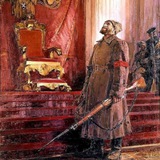
Stalin’s first meeting with Lenin in Finland 1905

❤5❤🔥2👍1
Forwarded from The Communists
From the archive:
Caleb Maupin and Harpal Brar talk about the origins and development of people’s Korea.
https://thecommunists.org/2025/04/27/tv/caleb-maupin-harpal-brar-origins-dprk-north-korea/
Caleb Maupin and Harpal Brar talk about the origins and development of people’s Korea.
https://thecommunists.org/2025/04/27/tv/caleb-maupin-harpal-brar-origins-dprk-north-korea/
The Communists
Caleb Maupin and Harpal Brar: The origins of the DPRK
How did a socialist state come to be formed in the northern part of Korea, and how has it become the world’s longest-surviving socialist country?
👍1
Forwarded from Marx Engels Lenin Institute
April 26, 1945 – Soviet tanks break through to the center of Berlin.
On April 16, 1945, the Berlin strategic offensive operation of the Soviet troops began. By April 20, units of the Red Army managed to break through the enemy's defenses and reach the outskirts of the capital of the Reich - the storming of Berlin began.
The fascists prepared the city well for defense: trenches were dug, anti-tank obstacles were installed, permanent firing points, casemates and bomb shelters were prepared, connected by underground passages. The Berlin garrison numbered more than 200 thousand soldiers, police and civilians were also involved in the defense.
Soviet troops fought fierce battles on the streets of the city. German units resisted desperately, but were unable to stop the advance of tank and infantry units of the Red Army. As a result of stubborn battles, on April 26, Soviet tanks broke through the enemy's defenses and broke through to the center of Berlin.
At the final stage of the operation (April 26 – May 2), units of the Red Army, having overcome stubborn resistance from the enemy, completed the rout of the main forces of the Berlin garrison and captured the central sector of the city's defense. At 6 a.m. on May 2, General Weidling, commander of the defense of Berlin, surrendered to the Soviet troops and signed an order to capitulate.
As a result of the Berlin strategic offensive operation, the troops of the 1st and 2nd Belorussian and 1st Ukrainian fronts defeated the Army Groups Center and Vistula, captured the capital of Nazi Germany, the city of Berlin, and forced the leaders of the Reich to unconditional surrender, which was signed on May 8, 1945, in the Berlin suburb of Karlshorst.
On April 16, 1945, the Berlin strategic offensive operation of the Soviet troops began. By April 20, units of the Red Army managed to break through the enemy's defenses and reach the outskirts of the capital of the Reich - the storming of Berlin began.
The fascists prepared the city well for defense: trenches were dug, anti-tank obstacles were installed, permanent firing points, casemates and bomb shelters were prepared, connected by underground passages. The Berlin garrison numbered more than 200 thousand soldiers, police and civilians were also involved in the defense.
Soviet troops fought fierce battles on the streets of the city. German units resisted desperately, but were unable to stop the advance of tank and infantry units of the Red Army. As a result of stubborn battles, on April 26, Soviet tanks broke through the enemy's defenses and broke through to the center of Berlin.
At the final stage of the operation (April 26 – May 2), units of the Red Army, having overcome stubborn resistance from the enemy, completed the rout of the main forces of the Berlin garrison and captured the central sector of the city's defense. At 6 a.m. on May 2, General Weidling, commander of the defense of Berlin, surrendered to the Soviet troops and signed an order to capitulate.
As a result of the Berlin strategic offensive operation, the troops of the 1st and 2nd Belorussian and 1st Ukrainian fronts defeated the Army Groups Center and Vistula, captured the capital of Nazi Germany, the city of Berlin, and forced the leaders of the Reich to unconditional surrender, which was signed on May 8, 1945, in the Berlin suburb of Karlshorst.
❤5🫡2
Forwarded from Class Consciousness Project
Congratulations to Liverpool football club for winning the premier league. They now tie with Manchester United at 20 top flight league wins.
Our comrade Rick was at Anfield for the momentous occasion
Our comrade Rick was at Anfield for the momentous occasion
❤3👏2
On April 28, 1953, Vasily Stalin was wrongfully arrested by the order of Khrushchev. Officially, for "squandering state property and state funds." In fact, for speaking out loud about the fact that his father did not die a natural death, but was "helped" by his closest associates.
A very interesting testimony of the era is the memoirs of Vasily Iosifovich, written during a short "respite" between his arrests, in January-April 1960. They deserve attention at least because the person who wrote them spent almost the rest of his life in prison precisely for the position expressed in them.
And besides, these memoirs are a vivid document of "anti-revisionism" in the world communist movement, as the leaders of China and Albania, who did not support Khrushchev's policy, called their position. The fact is that Stalin's memoirs were published in China in 1962.
As can be seen from the memoirs, Vasily Stalin also joined the "anti-revisionists", if not on a theoretical, then on a personal basis. Well, and then - let the quotes from the memoirs speak. They also give an impression of their author:
"I, Vasily Stalin, do not renounce my father! I had to repeat these words more than once. During the investigation, and later, and during the recent meeting with Khrushchev.
I, Vasily Stalin, do not renounce my father! Period!
I cannot condemn the "cult of personality" and the "crimes of Stalinism". Because there is nothing to condemn. Crimes and criminals are condemned. I can condemn those who poisoned my father and denigrated his great deeds. I can condemn those who desecrated the bright memory of the Leader. I can and must condemn! This is my duty, not only as a son, but also as an honest Soviet person.
My conscience is clear. It cannot be tarnished by a false accusation. Just as the memory of my father cannot be tarnished by lies and slander."
A very interesting testimony of the era is the memoirs of Vasily Iosifovich, written during a short "respite" between his arrests, in January-April 1960. They deserve attention at least because the person who wrote them spent almost the rest of his life in prison precisely for the position expressed in them.
And besides, these memoirs are a vivid document of "anti-revisionism" in the world communist movement, as the leaders of China and Albania, who did not support Khrushchev's policy, called their position. The fact is that Stalin's memoirs were published in China in 1962.
As can be seen from the memoirs, Vasily Stalin also joined the "anti-revisionists", if not on a theoretical, then on a personal basis. Well, and then - let the quotes from the memoirs speak. They also give an impression of their author:
"I, Vasily Stalin, do not renounce my father! I had to repeat these words more than once. During the investigation, and later, and during the recent meeting with Khrushchev.
I, Vasily Stalin, do not renounce my father! Period!
I cannot condemn the "cult of personality" and the "crimes of Stalinism". Because there is nothing to condemn. Crimes and criminals are condemned. I can condemn those who poisoned my father and denigrated his great deeds. I can condemn those who desecrated the bright memory of the Leader. I can and must condemn! This is my duty, not only as a son, but also as an honest Soviet person.
My conscience is clear. It cannot be tarnished by a false accusation. Just as the memory of my father cannot be tarnished by lies and slander."
❤3
"I started writing my memoirs, but I'm not sure if I'll be able to finish them. Like Margulies from "Time, Forward", I can't trust such a simple mechanism as a watch, such a precious thing as time. I know that I don't have much time. Maybe a few days, maybe months. I can't hope for years. The situation is not right. The people around me are not right. The criminals who poisoned my father will not leave my son alone. And no matter what anyone tells me, I don't trust anyone. Time has shown who is worth what.
My father knew that this would happen. He knew that after his death, things would be hard for me. He was an excellent judge of people and knew the true value of each person in his circle. That's why he trusted few people. Really, without looking back."
"Ten months before he died, my father suggested that I disappear. 'You have to leave,' he said. At first I thought he was talking about some kind of business trip, but it turned out I misunderstood. My father meant that I had to go abroad, to China. Forever. 'You'll go as a military adviser, they need pilots there. "Don't come back here, don't even come to my funeral," he said. I couldn't believe my ears - what was going on? I thought my father was joking. He could sometimes joke in such a way that you couldn't tell whether it was a joke or not. But it turned out that he wasn't joking. In fact, he wanted to send me to Mao. He didn't say it directly, but I guessed that he had already made arrangements for me. They were waiting for me there. But how could I leave my father? I refused. An argument ensued between us. The first real argument in our lives. Each stood his ground and didn't want to give in. "There will be an order and you'll go!" - my father said when he realized that persuasion had no effect on me. I replied that I wasn't going anywhere anyway. I thought to myself that later, when my father was gone, I might have to leave, but not now. I said that if there was an order, I would submit a resignation report. Let me go to the factory, to the machine, but I wouldn't go anywhere. As if he had seen the light, soon had to stand at the machine. But not at the factory, but in prison. And he also told my father that as Supreme Commander-in-Chief he could order me to leave, but as my father he could not. A strange impression was left by this conversation. It was clear from my father's eyes that he liked my stubbornness. But he was also seriously angry. My father was not used to having his orders challenged."
"Father was right, he knew everything in advance. I tried to follow his advice. I contacted my Chinese comrades, met with the ambassador, but I didn't really have time to do anything. I was soon arrested. The arrest didn't come as a surprise to me. I expected to be arrested the very next day after being discharged into the reserves, but I was still free for another month. It's unclear why. Either they couldn't decide what to do with me, or something else. My words about my father being poisoned and not being able to organize his funeral were regarded as "anti-Soviet propaganda."
My father knew that this would happen. He knew that after his death, things would be hard for me. He was an excellent judge of people and knew the true value of each person in his circle. That's why he trusted few people. Really, without looking back."
"Ten months before he died, my father suggested that I disappear. 'You have to leave,' he said. At first I thought he was talking about some kind of business trip, but it turned out I misunderstood. My father meant that I had to go abroad, to China. Forever. 'You'll go as a military adviser, they need pilots there. "Don't come back here, don't even come to my funeral," he said. I couldn't believe my ears - what was going on? I thought my father was joking. He could sometimes joke in such a way that you couldn't tell whether it was a joke or not. But it turned out that he wasn't joking. In fact, he wanted to send me to Mao. He didn't say it directly, but I guessed that he had already made arrangements for me. They were waiting for me there. But how could I leave my father? I refused. An argument ensued between us. The first real argument in our lives. Each stood his ground and didn't want to give in. "There will be an order and you'll go!" - my father said when he realized that persuasion had no effect on me. I replied that I wasn't going anywhere anyway. I thought to myself that later, when my father was gone, I might have to leave, but not now. I said that if there was an order, I would submit a resignation report. Let me go to the factory, to the machine, but I wouldn't go anywhere. As if he had seen the light, soon had to stand at the machine. But not at the factory, but in prison. And he also told my father that as Supreme Commander-in-Chief he could order me to leave, but as my father he could not. A strange impression was left by this conversation. It was clear from my father's eyes that he liked my stubbornness. But he was also seriously angry. My father was not used to having his orders challenged."
"Father was right, he knew everything in advance. I tried to follow his advice. I contacted my Chinese comrades, met with the ambassador, but I didn't really have time to do anything. I was soon arrested. The arrest didn't come as a surprise to me. I expected to be arrested the very next day after being discharged into the reserves, but I was still free for another month. It's unclear why. Either they couldn't decide what to do with me, or something else. My words about my father being poisoned and not being able to organize his funeral were regarded as "anti-Soviet propaganda."
❤3
"During our first meeting after the arrest, Khrushchev suddenly declared that he knew about my father's plan to make me his successor. I laughed in his face and reminded him that the monarchy and its succession to the throne had been abolished back in 1917. Khrushchev began to get excited, raised his voice, and began to claim that my father had had such a plan. "He was fooling us with dummy candidates like Ponomarenko and Bulganin, and he wanted to put you in his place!" Khrushchev repeated several times. I still don't understand what this plan was about. Did Khrushchev want to portray my father as a violator of one of the main Soviet principles? Or was he trying to confuse me?"
"The day will come when my father's murderers will be judged by an international communist tribunal.
And the last thing about changes. I could write a lot more, but I'm in a hurry to finish. Artyom told me that there are rumors that they decided to rename everything named after my father or in his honor. Up to Stalingrad. I could allow such a thing. Khrushchev would even rename Leningrad to Khrushchevsk. But there is one circumstance that will not allow Stalingrad to be renamed. What will happen to the Battle of Stalingrad, the turning point of the great war? The battle that has already gone down in history as an important milestone, and in textbooks as an example of brilliant tactics and strategy. Will they call it Tsaritsyn? Or will they rename Stalingrad back to Tsaritsyn, and will be forced to leave the battle as Stalingrad?". "I hope that worthy people will soon come to power in the Soviet Union. I am sure that they will, because it cannot be otherwise, but I would really like to live to see it. To live to hear the truth about my father from the stands. To read this truth in the newspapers. To attend the trial of my father's killers and personally see that they got what they deserved. "It is one thing to know that justice will prevail sooner or later, and quite another to see it with your own eyes," said my friend Kolya Abramashvili. Kolya died at the end of 1942 near Stalingrad. He was shot down in a battle over enemy territory. Kolya did not go to the forced one, but directed his burning car at a column of German tanks."
"I am tormented by the thought - will my father's murderers never be punished? Will the truth never triumph again? I do not want to, I cannot believe it! I hope that if not the Soviet court, then at least the court of history will reward the murderers according to their vile "merits"! One circumstance makes me incredibly happy and gives me confidence. The fact that the renegades and slanderers failed to convince the entire socialist world of their rightness. The leaders of China, Korea, Albania and Yugoslavia did not follow the lead of the traitors. These honest communists harshly condemned the posthumous reprisal against the Great Leader of the workers of the whole world. Bribery and threats could not shake them, because honest people value the truth above all else. The day will come when I will not have to write in solitude and hide what I have written from prying eyes as I do now. I will be able to speak from the rostrum and brand the traitors for all to hear. Loudly, for the whole world to hear. I know that such a day will come. Despite what I have gone through, I do not complain about my memory. I remember everything. I have not forgotten anything and will not forget. And I will make every effort to ensure that justice prevails... And if suddenly it does not work out, I cannot completely rule out such a possibility, despite my confidence, then let these notes of mine remain for posterity. I am sure that Stalin's name will still shine! It is very sad that the Chinese and Albanians honor the memory of my father, but we have forgotten him. One person from the Central Committee apparatus, whose name I will not mention here, whispered to me in confidence that for several years now the issue of removing my father's body from the Mausoleum and burying it at the Novodevichy Cemetery has been under consideration.
"The day will come when my father's murderers will be judged by an international communist tribunal.
And the last thing about changes. I could write a lot more, but I'm in a hurry to finish. Artyom told me that there are rumors that they decided to rename everything named after my father or in his honor. Up to Stalingrad. I could allow such a thing. Khrushchev would even rename Leningrad to Khrushchevsk. But there is one circumstance that will not allow Stalingrad to be renamed. What will happen to the Battle of Stalingrad, the turning point of the great war? The battle that has already gone down in history as an important milestone, and in textbooks as an example of brilliant tactics and strategy. Will they call it Tsaritsyn? Or will they rename Stalingrad back to Tsaritsyn, and will be forced to leave the battle as Stalingrad?". "I hope that worthy people will soon come to power in the Soviet Union. I am sure that they will, because it cannot be otherwise, but I would really like to live to see it. To live to hear the truth about my father from the stands. To read this truth in the newspapers. To attend the trial of my father's killers and personally see that they got what they deserved. "It is one thing to know that justice will prevail sooner or later, and quite another to see it with your own eyes," said my friend Kolya Abramashvili. Kolya died at the end of 1942 near Stalingrad. He was shot down in a battle over enemy territory. Kolya did not go to the forced one, but directed his burning car at a column of German tanks."
"I am tormented by the thought - will my father's murderers never be punished? Will the truth never triumph again? I do not want to, I cannot believe it! I hope that if not the Soviet court, then at least the court of history will reward the murderers according to their vile "merits"! One circumstance makes me incredibly happy and gives me confidence. The fact that the renegades and slanderers failed to convince the entire socialist world of their rightness. The leaders of China, Korea, Albania and Yugoslavia did not follow the lead of the traitors. These honest communists harshly condemned the posthumous reprisal against the Great Leader of the workers of the whole world. Bribery and threats could not shake them, because honest people value the truth above all else. The day will come when I will not have to write in solitude and hide what I have written from prying eyes as I do now. I will be able to speak from the rostrum and brand the traitors for all to hear. Loudly, for the whole world to hear. I know that such a day will come. Despite what I have gone through, I do not complain about my memory. I remember everything. I have not forgotten anything and will not forget. And I will make every effort to ensure that justice prevails... And if suddenly it does not work out, I cannot completely rule out such a possibility, despite my confidence, then let these notes of mine remain for posterity. I am sure that Stalin's name will still shine! It is very sad that the Chinese and Albanians honor the memory of my father, but we have forgotten him. One person from the Central Committee apparatus, whose name I will not mention here, whispered to me in confidence that for several years now the issue of removing my father's body from the Mausoleum and burying it at the Novodevichy Cemetery has been under consideration.
❤2
They hope that in this way they will be able to make the people forget Comrade Stalin. Naive nonentities! The memory of Stalin is in the Dnieper Hydroelectric Station and in Magnitka. The memory of Stalin is in the victory over the fascists. The memory of Stalin is in his great deeds, and not in the minds of a pitiful bunch of traitors who seized power through meanness and deceit."
A few more words in conclusion. There is a certain paradox in the fact that those who want to follow the life and development of communist ideas after 1953 are forced to turn to the ideological legacy of the "anti-revisionists", that is, Mao Zedong, Enver Hoxha, Vyacheslav Molotov and his "anti-party group". Even if these people do not feel any sympathy for Stalin (like, for example, the Trotskyists). After all, even left anti-Stalinists will never think of seriously studying the "theoretical legacy of Khrushchev" from the ideological side. Because, alas, there is no ideological legacy there...
written by Евгений Иванов
A few more words in conclusion. There is a certain paradox in the fact that those who want to follow the life and development of communist ideas after 1953 are forced to turn to the ideological legacy of the "anti-revisionists", that is, Mao Zedong, Enver Hoxha, Vyacheslav Molotov and his "anti-party group". Even if these people do not feel any sympathy for Stalin (like, for example, the Trotskyists). After all, even left anti-Stalinists will never think of seriously studying the "theoretical legacy of Khrushchev" from the ideological side. Because, alas, there is no ideological legacy there...
written by Евгений Иванов
❤2💔2❤🔥1
Forwarded from Ian Foster ☭
http://thecommunists.org/2025/04/27/news/trotskyism-imperialist-treacherous-tendency/
Trotskyism – an imperialist, treacherous tendency
Trotskyism – an imperialist, treacherous tendency
The Communists
Trotskyism – an imperialist, treacherous tendency
Many, if not all, Trotskyite organisations are directly sponsored and promoted by the imperialist ruling class.
💔2👍1💯1
Forwarded from Slavyangrad (Andrei)
This media is not supported in your browser
VIEW IN TELEGRAM
🇺🇦Ukraine has effectively admitted the involvement of its special services in the murder of General Moskalik and predicts that its agents will become more active in carrying out terrorist attacks and political assassinations in the event of a freeze in military operations.
The author of the statement is none other than the Secretary of the Verkhovna Rada Committee on National Security of Ukraine, Roman Kostenko.
And Kostenko gives such a "task" to Ukrainian agents for "the next 10-30 years". Supposedly, the SBU and the Main Intelligence Directorate of the Ministry of Defense of Ukraine must act in such a way that "they are afraid in Russia".
Let us repeat, the days when the military-political leadership of Ukraine could move about without fear for its own skin are long gone. The time when the heads of the Ukrainian special services could live peacefully without the feeling of inevitability of punishment for the crimes they committed is long gone. The current leaders of the Kiev regime are no different from the leaders of any terrorist organizations, and we must act accordingly with them.
@epoddubny
@Slavyangrad
The author of the statement is none other than the Secretary of the Verkhovna Rada Committee on National Security of Ukraine, Roman Kostenko.
I am pleased. This is good work by our special services,
- says Kostenko commenting on the murder of the Russian general.
I think that even if we manage to stop the war, the work of the special services will only just begin.
And Kostenko gives such a "task" to Ukrainian agents for "the next 10-30 years". Supposedly, the SBU and the Main Intelligence Directorate of the Ministry of Defense of Ukraine must act in such a way that "they are afraid in Russia".
Let us repeat, the days when the military-political leadership of Ukraine could move about without fear for its own skin are long gone. The time when the heads of the Ukrainian special services could live peacefully without the feeling of inevitability of punishment for the crimes they committed is long gone. The current leaders of the Kiev regime are no different from the leaders of any terrorist organizations, and we must act accordingly with them.
@epoddubny
@Slavyangrad
👍1💔1😈1
Forwarded from Press TV
This media is not supported in your browser
VIEW IN TELEGRAM
WATCH: Bodies of Alawite massacre victims wash ashore in Lebanon
Based on a report by Al Jadeed, bodies of Alawite victims from Syria’s coastal massacres have washed ashore in Lebanon
@PressTV
Based on a report by Al Jadeed, bodies of Alawite victims from Syria’s coastal massacres have washed ashore in Lebanon
@PressTV
💔2😢1😡1