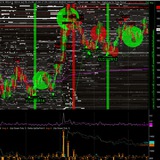
🚨 FDAX, Phantom Liquidity & The Hidden Mechanics of Order Book Manipulation
Most traders still read the order book like a clean, reliable map.
They see:
✅ Big bid = support
✅ Big ask = resistance
✅ Tight spread = good execution
✅ Deep book = safe liquidity
But in modern futures markets, especially on instruments like FDAX, the order book can become something much more dangerous:
⚠️ A liquidity illusion engine.
What I recorded today on the EUREX DAX Future with 3D_NEXUS_META is a perfect example of what I call:
👻 PHANTOM LIQUIDITY
And this is one of the most important concepts in modern order flow.
━━━━━━━━━━━━━━━━━━━━━━
🧠 WHAT IS PHANTOM LIQUIDITY?
Phantom liquidity is not just liquidity that appears and disappears.
It is a process.
A mechanism.
A repeated sequence where liquidity appears at the best bid or best ask, makes the book look deep, makes the spread look attractive, attracts aggressive market orders, then vanishes just before execution.
The market order still goes through.
But now the liquidity is gone.
So the trader gets slippage.
━━━━━━━━━━━━━━━━━━━━━━
📌 THE TRAP
The trader thinks:
“Good. There is enough liquidity here. I can enter with low impact.”
But then the market hits.
And the book changes.
The visible liquidity disappears.
The order walks through worse prices.
The trader pays more than expected if he buys.
The trader sells lower than expected if he sells.
Then, immediately after execution, the same liquidity reloads.
As if nothing happened.
And the next trader sees the same beautiful trap.
━━━━━━━━━━━━━━━━━━━━━━
⚡️ THE CORE IDEA
The order book says:
“There is liquidity here.”
The execution says:
“No. You just paid worse.”
That is the key.
Displayed liquidity is not real liquidity.
The only liquidity that matters is the liquidity willing to be executed.
━━━━━━━━━━━━━━━━━━━━━━
🏦 WHY THIS IS USEFUL FOR A MARKET MAKER
A market maker can benefit from phantom liquidity in several ways.
1️⃣ It makes the book look well supplied
The order book appears:
✅ Healthy
✅ Active
✅ Deep
✅ Stable
✅ Properly quoted
It gives the impression that the market maker is doing the job.
But the displayed size may not be truly executable.
2️⃣ It makes the spread look tighter
The best bid and best ask look filled.
So traders believe:
✅ Execution conditions are good
✅ Slippage risk is low
✅ The market is liquid
✅ They can trade aggressively
But the displayed spread may not be the real effective spread.
3️⃣ It attracts market orders
Aggressive traders need to take liquidity quickly.
So when they see strong liquidity at the best prices, they enter with market orders.
They think they are trading into depth.
In reality, they may be walking into a trap.
━━━━━━━━━━━━━━━━━━━━━━
🧨 THE PHANTOM LIQUIDITY LOOP
This is the full mechanism:
1️⃣ Liquidity appears
2️⃣ The spread looks attractive
3️⃣ Market orders are attracted
4️⃣ Liquidity vanishes before impact
5️⃣ The market order suffers slippage
6️⃣ Liquidity reloads instantly
7️⃣ The trader is placed under pressure
8️⃣ Defensive exits begin
9️⃣ Market order cascades can appear
🔟 The process repeats
This is not one isolated event.
This is a machine.
━━━━━━━━━━━━━━━━━━━━━━
📈 BUYER TRAP EXAMPLE
Ask liquidity appears.
Buyers believe they can execute safely.
They hit market.
Then the ask liquidity vanishes.
The buyer slips upward.
He gets filled higher than expected.
Then ask liquidity reloads immediately after the fill.
Sometimes even lower than the buyer’s average entry.
Now the buyer is under pressure.
He bought high.
The book reloads against him.
The price stops advancing.
He is trapped.
What does he do next?
He exits.
And how does he exit?
With a market sell.
Now his exit becomes part of the next downside flow.
Buyer trapped.
Buyer exits.
Sell market orders hit.
Price starts sliding.
Other buyers panic.
More exits arrive.
And suddenly, the market drops 10, 15, 20 ticks.
Not because of a magic candle.
Because of a microstructure mechanism.
━━━━━━━━━━━━━━━━━━━━━━
📉 SELLER TRAP EXAMPLE
The same thing can happen on the bid side.
Bid liquidity appears.
Sellers believe they can sell safely into it.
Most traders still read the order book like a clean, reliable map.
They see:
✅ Big bid = support
✅ Big ask = resistance
✅ Tight spread = good execution
✅ Deep book = safe liquidity
But in modern futures markets, especially on instruments like FDAX, the order book can become something much more dangerous:
⚠️ A liquidity illusion engine.
What I recorded today on the EUREX DAX Future with 3D_NEXUS_META is a perfect example of what I call:
👻 PHANTOM LIQUIDITY
And this is one of the most important concepts in modern order flow.
━━━━━━━━━━━━━━━━━━━━━━
🧠 WHAT IS PHANTOM LIQUIDITY?
Phantom liquidity is not just liquidity that appears and disappears.
It is a process.
A mechanism.
A repeated sequence where liquidity appears at the best bid or best ask, makes the book look deep, makes the spread look attractive, attracts aggressive market orders, then vanishes just before execution.
The market order still goes through.
But now the liquidity is gone.
So the trader gets slippage.
━━━━━━━━━━━━━━━━━━━━━━
📌 THE TRAP
The trader thinks:
“Good. There is enough liquidity here. I can enter with low impact.”
But then the market hits.
And the book changes.
The visible liquidity disappears.
The order walks through worse prices.
The trader pays more than expected if he buys.
The trader sells lower than expected if he sells.
Then, immediately after execution, the same liquidity reloads.
As if nothing happened.
And the next trader sees the same beautiful trap.
━━━━━━━━━━━━━━━━━━━━━━
⚡️ THE CORE IDEA
The order book says:
“There is liquidity here.”
The execution says:
“No. You just paid worse.”
That is the key.
Displayed liquidity is not real liquidity.
The only liquidity that matters is the liquidity willing to be executed.
━━━━━━━━━━━━━━━━━━━━━━
🏦 WHY THIS IS USEFUL FOR A MARKET MAKER
A market maker can benefit from phantom liquidity in several ways.
1️⃣ It makes the book look well supplied
The order book appears:
✅ Healthy
✅ Active
✅ Deep
✅ Stable
✅ Properly quoted
It gives the impression that the market maker is doing the job.
But the displayed size may not be truly executable.
2️⃣ It makes the spread look tighter
The best bid and best ask look filled.
So traders believe:
✅ Execution conditions are good
✅ Slippage risk is low
✅ The market is liquid
✅ They can trade aggressively
But the displayed spread may not be the real effective spread.
3️⃣ It attracts market orders
Aggressive traders need to take liquidity quickly.
So when they see strong liquidity at the best prices, they enter with market orders.
They think they are trading into depth.
In reality, they may be walking into a trap.
━━━━━━━━━━━━━━━━━━━━━━
🧨 THE PHANTOM LIQUIDITY LOOP
This is the full mechanism:
1️⃣ Liquidity appears
2️⃣ The spread looks attractive
3️⃣ Market orders are attracted
4️⃣ Liquidity vanishes before impact
5️⃣ The market order suffers slippage
6️⃣ Liquidity reloads instantly
7️⃣ The trader is placed under pressure
8️⃣ Defensive exits begin
9️⃣ Market order cascades can appear
🔟 The process repeats
This is not one isolated event.
This is a machine.
━━━━━━━━━━━━━━━━━━━━━━
📈 BUYER TRAP EXAMPLE
Ask liquidity appears.
Buyers believe they can execute safely.
They hit market.
Then the ask liquidity vanishes.
The buyer slips upward.
He gets filled higher than expected.
Then ask liquidity reloads immediately after the fill.
Sometimes even lower than the buyer’s average entry.
Now the buyer is under pressure.
He bought high.
The book reloads against him.
The price stops advancing.
He is trapped.
What does he do next?
He exits.
And how does he exit?
With a market sell.
Now his exit becomes part of the next downside flow.
Buyer trapped.
Buyer exits.
Sell market orders hit.
Price starts sliding.
Other buyers panic.
More exits arrive.
And suddenly, the market drops 10, 15, 20 ticks.
Not because of a magic candle.
Because of a microstructure mechanism.
━━━━━━━━━━━━━━━━━━━━━━
📉 SELLER TRAP EXAMPLE
The same thing can happen on the bid side.
Bid liquidity appears.
Sellers believe they can sell safely into it.
🔥1
They hit market.
Then the bid disappears.
They slip lower.
They are filled worse than expected.
Then the bid reloads aggressively.
Now the seller is short at a bad price.
If price refuses to continue lower, he must buy back.
That creates buy market orders.
And the price can squeeze upward.
So the logic is symmetrical:
🔴 Phantom ask → traps buyers → downside cascade possible
🟢 Phantom bid → traps sellers → upside squeeze possible
━━━━━━━━━━━━━━━━━━━━━━
🕒 WHY SPEED MATTERS
This can happen:
⚡️ Every few seconds
⚡️ Every second
⚡️ Several times per second
⚡️ Every 100 milliseconds
⚡️ Every 50 milliseconds
At human speed, it looks like noise.
On a classic DOM, it looks like flickering numbers.
But on a 3D order flow surface, the structure becomes visible.
You can see:
✅ The liquidity wall appear
✅ The aggressive trade bubbles approach
✅ The wall vanish before impact
✅ The market order slip
✅ The wall reload
✅ The trapped side react
That is exactly why 3D visualization matters.
━━━━━━━━━━━━━━━━━━━━━━
🔬 WHY THIS IS MANIPULATIVE
The manipulative character comes from the gap between appearance and execution reality.
The book shows:
“Liquidity is here.”
But the execution reveals:
“The liquidity was not truly available.”
That means the trader’s decision was influenced by liquidity that disappeared before it could be consumed.
This is not just a fast market.
This is not just noise.
When the pattern repeats with structure, it becomes a liquidity trap.
A displayed promise.
An execution betrayal.
A ghost layer between what the market shows and what the market truly offers.
━━━━━━━━━━━━━━━━━━━━━━
🧊 THE REAL QUESTION
Most traders ask:
“Where is the biggest liquidity?”
Wrong question.
The real question is:
“Does this liquidity stay when execution arrives?”
Because:
❌ A big wall does not mean support
❌ A big wall does not mean resistance
❌ A tight spread does not mean good execution
❌ A thick book does not mean real liquidity
What matters is whether the liquidity accepts the hit.
If it stays and absorbs, it may be real.
If it vanishes before impact and reloads after, it may be phantom.
━━━━━━━━━━━━━━━━━━━━━━
🧩 ICEBERG VS PHANTOM LIQUIDITY
Do not confuse both.
🧊 Iceberg liquidity:
Small visible size.
Large hidden execution.
The level absorbs.
👻 Phantom liquidity:
Large visible size.
Small real execution.
The level disappears.
In simple words:
Iceberg = invisible liquidity that executes.
Phantom liquidity = visible liquidity that avoids execution.
That difference is massive.
━━━━━━━━━━━━━━━━━━━━━━
🎯 THE KEY SENTENCE
Phantom liquidity is not just fake depth.
It is a mechanism designed to:
✅ Attract market orders
✅ Improve the apparent spread
✅ Avoid execution at the critical moment
✅ Force slippage
✅ Reload the illusion
✅ Put traders into instant pressure
✅ Trigger defensive exits
✅ Create market order cascades
This is why it matters so much.
━━━━━━━━━━━━━━━━━━━━━━
🧠 WHAT 3D_NEXUS_META REVEALS
Candles show the final result.
The tape shows the execution.
But the 3D order book shows the mechanism.
With 3D_NEXUS_META, you can see the market as a living structure:
📊 Liquidity walls
💥 Aggressive trades
⚡️ HFT cancellations
👻 Phantom liquidity
🎯 Execution traps
🧲 Market order attraction
🧨 Slippage zones
🔁 Reload patterns
📉 Price displacement
And once you see this in 3D, the market never looks innocent again.
━━━━━━━━━━━━━━━━━━━━━━
🔥 FINAL THOUGHT
Displayed liquidity is not real liquidity.
Real liquidity is the liquidity that accepts execution.
Everything else may just be bait.
And on FDAX today, the bait was visible.
Again.
And again.
And again.
👻 Phantom liquidity appeared at the best price levels.
🎯 Market orders tried to hit it.
⚡️ Liquidity vanished before impact.
💥 Traders suffered slippage.
🔁 Liquidity reloaded immediately after execution.
That is not just order book noise.
That is the machinery behind the trap.
#FDAX #EUREX #DAX #OrderFlow #Trading #FuturesTrading #Scalping #MarketMicrostructure #PhantomLiquidity #Spoofing #HFT #Liquidity #OrderBook #3DNEXUSMETA #MetaQuant
Then the bid disappears.
They slip lower.
They are filled worse than expected.
Then the bid reloads aggressively.
Now the seller is short at a bad price.
If price refuses to continue lower, he must buy back.
That creates buy market orders.
And the price can squeeze upward.
So the logic is symmetrical:
🔴 Phantom ask → traps buyers → downside cascade possible
🟢 Phantom bid → traps sellers → upside squeeze possible
━━━━━━━━━━━━━━━━━━━━━━
🕒 WHY SPEED MATTERS
This can happen:
⚡️ Every few seconds
⚡️ Every second
⚡️ Several times per second
⚡️ Every 100 milliseconds
⚡️ Every 50 milliseconds
At human speed, it looks like noise.
On a classic DOM, it looks like flickering numbers.
But on a 3D order flow surface, the structure becomes visible.
You can see:
✅ The liquidity wall appear
✅ The aggressive trade bubbles approach
✅ The wall vanish before impact
✅ The market order slip
✅ The wall reload
✅ The trapped side react
That is exactly why 3D visualization matters.
━━━━━━━━━━━━━━━━━━━━━━
🔬 WHY THIS IS MANIPULATIVE
The manipulative character comes from the gap between appearance and execution reality.
The book shows:
“Liquidity is here.”
But the execution reveals:
“The liquidity was not truly available.”
That means the trader’s decision was influenced by liquidity that disappeared before it could be consumed.
This is not just a fast market.
This is not just noise.
When the pattern repeats with structure, it becomes a liquidity trap.
A displayed promise.
An execution betrayal.
A ghost layer between what the market shows and what the market truly offers.
━━━━━━━━━━━━━━━━━━━━━━
🧊 THE REAL QUESTION
Most traders ask:
“Where is the biggest liquidity?”
Wrong question.
The real question is:
“Does this liquidity stay when execution arrives?”
Because:
❌ A big wall does not mean support
❌ A big wall does not mean resistance
❌ A tight spread does not mean good execution
❌ A thick book does not mean real liquidity
What matters is whether the liquidity accepts the hit.
If it stays and absorbs, it may be real.
If it vanishes before impact and reloads after, it may be phantom.
━━━━━━━━━━━━━━━━━━━━━━
🧩 ICEBERG VS PHANTOM LIQUIDITY
Do not confuse both.
🧊 Iceberg liquidity:
Small visible size.
Large hidden execution.
The level absorbs.
👻 Phantom liquidity:
Large visible size.
Small real execution.
The level disappears.
In simple words:
Iceberg = invisible liquidity that executes.
Phantom liquidity = visible liquidity that avoids execution.
That difference is massive.
━━━━━━━━━━━━━━━━━━━━━━
🎯 THE KEY SENTENCE
Phantom liquidity is not just fake depth.
It is a mechanism designed to:
✅ Attract market orders
✅ Improve the apparent spread
✅ Avoid execution at the critical moment
✅ Force slippage
✅ Reload the illusion
✅ Put traders into instant pressure
✅ Trigger defensive exits
✅ Create market order cascades
This is why it matters so much.
━━━━━━━━━━━━━━━━━━━━━━
🧠 WHAT 3D_NEXUS_META REVEALS
Candles show the final result.
The tape shows the execution.
But the 3D order book shows the mechanism.
With 3D_NEXUS_META, you can see the market as a living structure:
📊 Liquidity walls
💥 Aggressive trades
⚡️ HFT cancellations
👻 Phantom liquidity
🎯 Execution traps
🧲 Market order attraction
🧨 Slippage zones
🔁 Reload patterns
📉 Price displacement
And once you see this in 3D, the market never looks innocent again.
━━━━━━━━━━━━━━━━━━━━━━
🔥 FINAL THOUGHT
Displayed liquidity is not real liquidity.
Real liquidity is the liquidity that accepts execution.
Everything else may just be bait.
And on FDAX today, the bait was visible.
Again.
And again.
And again.
👻 Phantom liquidity appeared at the best price levels.
🎯 Market orders tried to hit it.
⚡️ Liquidity vanished before impact.
💥 Traders suffered slippage.
🔁 Liquidity reloaded immediately after execution.
That is not just order book noise.
That is the machinery behind the trap.
#FDAX #EUREX #DAX #OrderFlow #Trading #FuturesTrading #Scalping #MarketMicrostructure #PhantomLiquidity #Spoofing #HFT #Liquidity #OrderBook #3DNEXUSMETA #MetaQuant
This is a clear example of phantom liquidity: liquidity that appears in the order book, attracts market orders, vanishes before execution, then reloads immediately after.
Here, the key zone is clearly around the BID, on the blue/cyan side, near the bid/ask frontier around 25010.50 / 25011.75.
What we see here is phantom bid liquidity:
1️⃣ Bid blocks appear just under the red sell bubbles.
They look ready to absorb aggressive market sells.
2️⃣ Red sell bubbles come in to hit that bid.
These are aggressive sellers expecting available liquidity.
3️⃣ But the executions appear to print below the displayed bid.
If that bid was truly stable, the sells should execute against it. Instead, it looks like the bid pulls just before impact.
4️⃣ Then the bid reloads immediately after.
Bid visible → sell market hits → bid vanishes → sellers execute lower → bid comes back.
That is the trap.
Aggressive sellers believe they are selling into real bid liquidity.
But the bid disappears for a few milliseconds, forces them to sell lower with slippage, then reloads, sometimes even higher.
The trapped side here is not the buyers.
It is the sellers.
Phantom Bid Liquidity = displayed bid liquidity that attracts sell market orders, vanishes before impact, forces sellers to execute lower, then reloads to trap them. 👻⚡️
Here, the key zone is clearly around the BID, on the blue/cyan side, near the bid/ask frontier around 25010.50 / 25011.75.
What we see here is phantom bid liquidity:
1️⃣ Bid blocks appear just under the red sell bubbles.
They look ready to absorb aggressive market sells.
2️⃣ Red sell bubbles come in to hit that bid.
These are aggressive sellers expecting available liquidity.
3️⃣ But the executions appear to print below the displayed bid.
If that bid was truly stable, the sells should execute against it. Instead, it looks like the bid pulls just before impact.
4️⃣ Then the bid reloads immediately after.
Bid visible → sell market hits → bid vanishes → sellers execute lower → bid comes back.
That is the trap.
Aggressive sellers believe they are selling into real bid liquidity.
But the bid disappears for a few milliseconds, forces them to sell lower with slippage, then reloads, sometimes even higher.
The trapped side here is not the buyers.
It is the sellers.
Phantom Bid Liquidity = displayed bid liquidity that attracts sell market orders, vanishes before impact, forces sellers to execute lower, then reloads to trap them. 👻⚡️
❤3
🚨 FDAX order book manipulation captured live with 3D_NEXUS_META.
Phase 1: aggressive buy flow starts dominating the tape.
Green bubbles hit the ask again and again… but price refuses to move higher.
That alone is already suspicious.
But the real signal is worse:
right before many buy market orders print, the best ask liquidity appears to pull away.
The buyer executes.
Then the ask reloads instantly.
Clean. Silent. Mechanical.
Phase 2: price starts falling while buy aggression is still visible.
That means buyers are not lifting the market.
They are being absorbed, trapped, and turned into fuel.
Then sell market orders trigger, likely from buyers forced to exit after being filled into a dead breakout.
All of this inside roughly 20 ticks, in less than one minute.
Retail sees volatility.
3D_NEXUS_META shows the mechanism.
Buyers attacked.
The book vanished.
The trap closed.
Then price moved against them.
This is not normal price action.
This is forced flow engineering.
Raw order book manipulation. ⚡️
Phase 1: aggressive buy flow starts dominating the tape.
Green bubbles hit the ask again and again… but price refuses to move higher.
That alone is already suspicious.
But the real signal is worse:
right before many buy market orders print, the best ask liquidity appears to pull away.
The buyer executes.
Then the ask reloads instantly.
Clean. Silent. Mechanical.
Phase 2: price starts falling while buy aggression is still visible.
That means buyers are not lifting the market.
They are being absorbed, trapped, and turned into fuel.
Then sell market orders trigger, likely from buyers forced to exit after being filled into a dead breakout.
All of this inside roughly 20 ticks, in less than one minute.
Retail sees volatility.
3D_NEXUS_META shows the mechanism.
Buyers attacked.
The book vanished.
The trap closed.
Then price moved against them.
This is not normal price action.
This is forced flow engineering.
Raw order book manipulation. ⚡️
❤1🔥1
🚀 3D NEXUS META V8 IS LIVE — THE BIGGEST ARCHITECTURE UPGRADE EVER 🚀
After weeks of deep engineering work, V8 is now in PRODUCTION for ALL users. This is not a feature update — this is a complete rebuild of the engine room. Same NEXUS you love. Entirely new machinery underneath.
⚡️ WHAT CHANGED UNDER THE HOOD:
🧵 TRUE MULTI-THREADED ARCHITECTURE
The entire Quant Engine — VPIN toxicity, Kyle's Lambda, Hawkes cascade detection — now runs on its own dedicated worker thread. Your signals compute in parallel, your 3D never waits.
📡 DATA ENGINE OFFLOADED
WebSocket I/O and message parsing moved off the main thread. Thousands of orderbook updates per second are now parsed, batched and coalesced in the background — the main thread receives clean, render-ready data at display rate. Zero-copy binary transfers between threads.
🎮 MAIN THREAD = RENDERING ONLY
During the US open on ES/NQ, when the book goes wild at 5,000+ updates/sec, your FPS stays smooth. No more micro-freezes. No more lag spikes when the market accelerates.
🧊 MODERNIZED 3D CORE
Three.js engine upgraded from 2021 to 2023 generation (r128 → r159) — with pixel-perfect visual parity. And it's now EMBEDDED in the file: true single-file, zero CDN dependency, works fully offline.
🛡 CRASH-PROOF BY DESIGN
Every new subsystem has automatic fallback. If anything fails, NEXUS instantly reverts to the classic engine and reconnects on its own. You never lose your session.
🔧 BUILT TO LAST
New modular build system behind the scenes = faster, safer updates from now on. V8 is the foundation for everything coming next.
📊 THE RESULT:
✅ Faster — main-thread CPU load slashed, smooth FPS even at peak market hours
✅ Lighter — drastically reduced memory churn and GC pauses
✅ More stable — battle-tested, auto-recovering architecture
✅ 100% compatible — all your bridges, signals, auto-trade, replay and settings work unchanged
Manual trading: tested live ✅
Auto-trading: tested live ✅
Signals, Oracle, Swarm: all green ✅
Lifetime users: V8 is available NOW. Just go http://nexus-meta-auth.3dnexusmeta.workers.dev/ and login — nothing to reconfigure.
This is the strongest NEXUS ever shipped. And with these foundations in place... the features coming next are going to blow your mind. 👀
#3DNEXUSMETA #V8 #OrderflowTrading #MetaQuantUniverse
After weeks of deep engineering work, V8 is now in PRODUCTION for ALL users. This is not a feature update — this is a complete rebuild of the engine room. Same NEXUS you love. Entirely new machinery underneath.
⚡️ WHAT CHANGED UNDER THE HOOD:
🧵 TRUE MULTI-THREADED ARCHITECTURE
The entire Quant Engine — VPIN toxicity, Kyle's Lambda, Hawkes cascade detection — now runs on its own dedicated worker thread. Your signals compute in parallel, your 3D never waits.
📡 DATA ENGINE OFFLOADED
WebSocket I/O and message parsing moved off the main thread. Thousands of orderbook updates per second are now parsed, batched and coalesced in the background — the main thread receives clean, render-ready data at display rate. Zero-copy binary transfers between threads.
🎮 MAIN THREAD = RENDERING ONLY
During the US open on ES/NQ, when the book goes wild at 5,000+ updates/sec, your FPS stays smooth. No more micro-freezes. No more lag spikes when the market accelerates.
🧊 MODERNIZED 3D CORE
Three.js engine upgraded from 2021 to 2023 generation (r128 → r159) — with pixel-perfect visual parity. And it's now EMBEDDED in the file: true single-file, zero CDN dependency, works fully offline.
🛡 CRASH-PROOF BY DESIGN
Every new subsystem has automatic fallback. If anything fails, NEXUS instantly reverts to the classic engine and reconnects on its own. You never lose your session.
🔧 BUILT TO LAST
New modular build system behind the scenes = faster, safer updates from now on. V8 is the foundation for everything coming next.
📊 THE RESULT:
✅ Faster — main-thread CPU load slashed, smooth FPS even at peak market hours
✅ Lighter — drastically reduced memory churn and GC pauses
✅ More stable — battle-tested, auto-recovering architecture
✅ 100% compatible — all your bridges, signals, auto-trade, replay and settings work unchanged
Manual trading: tested live ✅
Auto-trading: tested live ✅
Signals, Oracle, Swarm: all green ✅
Lifetime users: V8 is available NOW. Just go http://nexus-meta-auth.3dnexusmeta.workers.dev/ and login — nothing to reconfigure.
This is the strongest NEXUS ever shipped. And with these foundations in place... the features coming next are going to blow your mind. 👀
#3DNEXUSMETA #V8 #OrderflowTrading #MetaQuantUniverse
🚀 MT5 NEXUS BRIDGE V9 is now LIVE!
After the V7 generation, here comes the new MT5 NEXUS BRIDGE V9, fully operational today and already ready to connect MetaTrader 5 directly to 3D_NEXUS_META.
This new version is not just a small update.
It is a much more stable, hardened and professional bridge layer designed for serious orderflow reading, dual-broker workflows and execution reliability.
🔥 What’s new in V9?
✅ Dedicated MT5 Worker Thread
Every MetaTrader 5 API call now runs inside a serialized worker thread, so the main asyncio event loop stays fluid.
Result: no more DOM or tick-stream freezing during dual-mode orders.
✅ Signal Pipeline V2 Anti-Freeze System
The bridge now writes a small atomic live signal snapshot file for the MT5 overlay indicator.
No more partial CSV reads.
No more growing file freeze.
No more MT5 indicator choking on an endless journal.
✅ Auto-Rotated Signal Journal
The full
✅ Live Signal Snapshot File
A new
✅ Dual Mode Positions Cache
Positions are now cached in dual-broker mode, reducing unnecessary terminal switching between DATA and EXEC stations.
✅ Watchdog V2
Automatic stale-data detection, resubscription logic and reconnect backoff are now integrated to keep the bridge alive during unstable sessions.
✅ Thread-Safe Kill Switch
HTTP, hotkey and WebSocket kill switch actions now share the same MT5 lock, avoiding dangerous race conditions during execution.
✅ Improved GUI
The launcher now includes a live signal monitor and one-click access to the signals folder.
✅ Still fully dual-broker compatible
Use one MT5 station for market data and another one for execution.
Example: AvaFutures for futures DOM data, FTMO or another broker for execution.
⚡️ MT5 NEXUS BRIDGE V9 is available now.
Download here:
https://metaquantuniverse.com/download/dualMT5bridgeNEXUSv9.zip
Market depth.
Ticks.
Signals.
Execution.
Overlay.
Dual broker routing.
All connected inside one hardened MT5 bridge layer.
Welcome to the next step of the NEXUS ecosystem. 🧬📡
After the V7 generation, here comes the new MT5 NEXUS BRIDGE V9, fully operational today and already ready to connect MetaTrader 5 directly to 3D_NEXUS_META.
This new version is not just a small update.
It is a much more stable, hardened and professional bridge layer designed for serious orderflow reading, dual-broker workflows and execution reliability.
🔥 What’s new in V9?
✅ Dedicated MT5 Worker Thread
Every MetaTrader 5 API call now runs inside a serialized worker thread, so the main asyncio event loop stays fluid.
Result: no more DOM or tick-stream freezing during dual-mode orders.
✅ Signal Pipeline V2 Anti-Freeze System
The bridge now writes a small atomic live signal snapshot file for the MT5 overlay indicator.
No more partial CSV reads.
No more growing file freeze.
No more MT5 indicator choking on an endless journal.
✅ Auto-Rotated Signal Journal
The full
nexus_signals.csv journal is now automatically rotated, preventing uncontrolled file growth over time.✅ Live Signal Snapshot File
A new
nexus_signals_live.csv file keeps only the latest signals, making the MT5 overlay much faster and safer.✅ Dual Mode Positions Cache
Positions are now cached in dual-broker mode, reducing unnecessary terminal switching between DATA and EXEC stations.
✅ Watchdog V2
Automatic stale-data detection, resubscription logic and reconnect backoff are now integrated to keep the bridge alive during unstable sessions.
✅ Thread-Safe Kill Switch
HTTP, hotkey and WebSocket kill switch actions now share the same MT5 lock, avoiding dangerous race conditions during execution.
✅ Improved GUI
The launcher now includes a live signal monitor and one-click access to the signals folder.
✅ Still fully dual-broker compatible
Use one MT5 station for market data and another one for execution.
Example: AvaFutures for futures DOM data, FTMO or another broker for execution.
⚡️ MT5 NEXUS BRIDGE V9 is available now.
Download here:
https://metaquantuniverse.com/download/dualMT5bridgeNEXUSv9.zip
Market depth.
Ticks.
Signals.
Execution.
Overlay.
Dual broker routing.
All connected inside one hardened MT5 bridge layer.
Welcome to the next step of the NEXUS ecosystem. 🧬📡
🔥1🙏1
🚨 PRIVATE UPDATE — 3D_NEXUS_META V8 IS NOW LIVE
Available now for all 3D_NEXUS_META users:
https://metaquantuniverse.com/nexus
This V8 update is not just another visual upgrade.
The real evolution is inside the SIGNALS module.
3D_NEXUS_META now introduces a new layer called:
SIGNAL LAB / Signal Intelligence Engine
The goal is simple:
To transform raw market microstructure alerts into smarter, cleaner, more selective, and more useful trading signals.
Before, a signal was mostly telling you:
“Something happened here.”
Now, V8 goes much deeper:
“Something happened here.
The context looks strong or weak.
The signal quality is high or low.
It should be displayed, filtered, tracked, learned from, or blocked from auto-trading.”
That is a completely different level.
What’s new in the SIGNALS module?
✅ New SIGNAL LAB panel
✅ OFF / SHADOW / ACTIVE modes
✅ Signal quality scoring
✅ Adaptive learning engine
✅ Win-rate tracking by signal type
✅ Market regime awareness
✅ Smart filtering of weak signals
✅ Separate quality gate for auto-trading
✅ Replay system now records signals
✅ Improved MT5 signal export
✅ Oracle / Swarm / Quant context integration
Supported signal families
V8 now handles a wider and smarter signal ecosystem:
• Absorption
• Iceberg
• Exhaustion
• Delta Spike
• Spoof
• Smart Money
• Oracle Prediction
Each family can be monitored, filtered, enabled, disabled, tracked, and evaluated.
So the platform no longer treats all signals as equal.
Some signals are strong.
Some are weak.
Some are useful only in specific market conditions.
Some should be watched, but not executed.
V8 starts making that distinction.
OFF / SHADOW / ACTIVE modes
The new SIGNAL LAB can run in 3 different modes:
OFF
The intelligence layer is disabled.
SHADOW
The engine observes, scores, tracks, and learns, but does not block anything.
This is perfect if you want to test the new logic safely.
ACTIVE
The engine can filter weak signals and only keep the cleaner ones.
This is where the SIGNALS module starts becoming much more selective.
Why SHADOW mode is important
This is probably one of the smartest parts of the update.
In SHADOW mode, you can let the engine watch the market without changing your normal workflow.
It tracks signals, checks what happened after them, and starts building internal statistics.
So instead of trusting a signal blindly, the system begins to understand:
Did this type of signal actually work recently?
Did it work on this instrument?
Did it work in this market regime?
Was it better during calm conditions or toxic flow?
This is not magic.
It is signal discipline.
Signal quality scoring
V8 now gives signals a deeper quality evaluation.
The system can consider:
• Raw confidence
• Signal type
• Current market regime
• Recent win-rate
• Order book context
• Delta acceleration
• Imbalance
• Oracle / Swarm alignment
• Flow toxicity
So instead of seeing every alert as “important”, the platform starts separating:
The clean signal
from
the noisy signal
The execution-worthy setup
from
the fake shiny garbage
And for scalping, this is massive.
Auto-trading protection
This is a very important upgrade.
A signal can now appear visually on the screen, but still be blocked from auto-trading if its quality is not high enough.
That means:
You can still see many signals for analysis.
But the bot can be restricted to only the strongest ones.
This is exactly what serious automation needs:
More intelligence.
Less noise.
Cleaner execution.
Better discipline.
Market regime awareness
The new SIGNALS logic is also connected to the broader NEXUS ecosystem.
It can adjust signal quality depending on market conditions such as:
• Calm
• Normal
• Elevated
• Danger
• Toxic
A signal inside a clean order book is not the same as a signal inside a toxic liquidation blender.
V8 starts to understand that.
Context matters.
Replay + learning
Signals are now also integrated into the replay logic.
That means users can go back, review a sequence, and see:
• Which signals appeared
• When they appeared
• What happened after
• Which signals worked
• Which ones failed
Available now for all 3D_NEXUS_META users:
https://metaquantuniverse.com/nexus
This V8 update is not just another visual upgrade.
The real evolution is inside the SIGNALS module.
3D_NEXUS_META now introduces a new layer called:
SIGNAL LAB / Signal Intelligence Engine
The goal is simple:
To transform raw market microstructure alerts into smarter, cleaner, more selective, and more useful trading signals.
Before, a signal was mostly telling you:
“Something happened here.”
Now, V8 goes much deeper:
“Something happened here.
The context looks strong or weak.
The signal quality is high or low.
It should be displayed, filtered, tracked, learned from, or blocked from auto-trading.”
That is a completely different level.
What’s new in the SIGNALS module?
✅ New SIGNAL LAB panel
✅ OFF / SHADOW / ACTIVE modes
✅ Signal quality scoring
✅ Adaptive learning engine
✅ Win-rate tracking by signal type
✅ Market regime awareness
✅ Smart filtering of weak signals
✅ Separate quality gate for auto-trading
✅ Replay system now records signals
✅ Improved MT5 signal export
✅ Oracle / Swarm / Quant context integration
Supported signal families
V8 now handles a wider and smarter signal ecosystem:
• Absorption
• Iceberg
• Exhaustion
• Delta Spike
• Spoof
• Smart Money
• Oracle Prediction
Each family can be monitored, filtered, enabled, disabled, tracked, and evaluated.
So the platform no longer treats all signals as equal.
Some signals are strong.
Some are weak.
Some are useful only in specific market conditions.
Some should be watched, but not executed.
V8 starts making that distinction.
OFF / SHADOW / ACTIVE modes
The new SIGNAL LAB can run in 3 different modes:
OFF
The intelligence layer is disabled.
SHADOW
The engine observes, scores, tracks, and learns, but does not block anything.
This is perfect if you want to test the new logic safely.
ACTIVE
The engine can filter weak signals and only keep the cleaner ones.
This is where the SIGNALS module starts becoming much more selective.
Why SHADOW mode is important
This is probably one of the smartest parts of the update.
In SHADOW mode, you can let the engine watch the market without changing your normal workflow.
It tracks signals, checks what happened after them, and starts building internal statistics.
So instead of trusting a signal blindly, the system begins to understand:
Did this type of signal actually work recently?
Did it work on this instrument?
Did it work in this market regime?
Was it better during calm conditions or toxic flow?
This is not magic.
It is signal discipline.
Signal quality scoring
V8 now gives signals a deeper quality evaluation.
The system can consider:
• Raw confidence
• Signal type
• Current market regime
• Recent win-rate
• Order book context
• Delta acceleration
• Imbalance
• Oracle / Swarm alignment
• Flow toxicity
So instead of seeing every alert as “important”, the platform starts separating:
The clean signal
from
the noisy signal
The execution-worthy setup
from
the fake shiny garbage
And for scalping, this is massive.
Auto-trading protection
This is a very important upgrade.
A signal can now appear visually on the screen, but still be blocked from auto-trading if its quality is not high enough.
That means:
You can still see many signals for analysis.
But the bot can be restricted to only the strongest ones.
This is exactly what serious automation needs:
More intelligence.
Less noise.
Cleaner execution.
Better discipline.
Market regime awareness
The new SIGNALS logic is also connected to the broader NEXUS ecosystem.
It can adjust signal quality depending on market conditions such as:
• Calm
• Normal
• Elevated
• Danger
• Toxic
A signal inside a clean order book is not the same as a signal inside a toxic liquidation blender.
V8 starts to understand that.
Context matters.
Replay + learning
Signals are now also integrated into the replay logic.
That means users can go back, review a sequence, and see:
• Which signals appeared
• When they appeared
• What happened after
• Which signals worked
• Which ones failed
❤1🔥1
• Which ones should maybe have been filtered
This is extremely useful for training, debugging, improving settings, and understanding the real behavior of the market.
The big idea
The SIGNALS module is no longer just an alert machine.
It is becoming a microstructure decision laboratory.
The new logic is:
Detect the signal.
Score the signal.
Check the context.
Filter the weak ones.
Protect auto-trading.
Track the outcome.
Learn from the result.
That is the real V8 evolution.
Final word
3D_NEXUS_META V8 is available now for all users:
https://metaquantuniverse.com/nexus
This update marks the beginning of a smarter SIGNALS engine.
Not just more alerts.
Better signals.
Cleaner filtering.
More context.
More discipline.
More intelligence.
The NEXUS is learning. 🧠⚡️
This is extremely useful for training, debugging, improving settings, and understanding the real behavior of the market.
The big idea
The SIGNALS module is no longer just an alert machine.
It is becoming a microstructure decision laboratory.
The new logic is:
Detect the signal.
Score the signal.
Check the context.
Filter the weak ones.
Protect auto-trading.
Track the outcome.
Learn from the result.
That is the real V8 evolution.
Final word
3D_NEXUS_META V8 is available now for all users:
https://metaquantuniverse.com/nexus
This update marks the beginning of a smarter SIGNALS engine.
Not just more alerts.
Better signals.
Cleaner filtering.
More context.
More discipline.
More intelligence.
The NEXUS is learning. 🧠⚡️
Metaquantuniverse
3D NEXUS META V8.5 — Predictive Order Flow Combat Cockpit
A browser-native 3D orderbook, prediction and execution cockpit for advanced traders.
❤1🔥1
🚀 SPACE X is now inside 3D_NEXUS_META
Yesterday, the SpaceX market story exploded everywhere.
And now, you can track it directly inside 3D_NEXUS_META, through the Binance PERPS feed, with the instrument:
SPCXUSDT
📸 3 consecutive screenshots. 3 market phases.
Here are 3 consecutive screenshots showing exactly how 3D_NEXUS_META reads the flow in real time.
PHASE 1 — First HFT pressure appears
The market starts printing aggressive activity around the $164.20 zone.
The order flow becomes highly visual:
• Bid walls
• Ask pressure
• Depth imbalance
• Trade bubbles
• Liquidity blocks
• First SELL / HFT events starting to appear
PHASE 2 — SELL pressure starts stacking
The pressure becomes more obvious.
Multiple SELL signals begin to stack on the right panel.
The SCALP SIGNALS engine starts filtering the flow, showing:
• Exhaustion
• Smart money activity
• Repeated sell-side pressure
• The same price area being attacked again and again
PHASE 3 — The structure becomes cleaner
The structure becomes even cleaner.
The flow is now clustered.
The HFT events are visible.
Liquidity reacts.
And the market starts showing exactly where the pressure is building.
🧠 Why this matters
This is the kind of situation where 3D_NEXUS_META becomes extremely useful.
Not because it “predicts magic”.
But because it exposes what most traders never see:
• The invisible fight
• The liquidity walls
• The pressure shifts
• The trapped flow
• The HFT fingerprints
• The real-time market architecture
⚡️ For scalpers
For scalpers, SPCXUSDT on Binance PERPS is already a beautiful playground.
Have fun my friends.
This one is spicy. ⚡️
3D_NEXUS_META
Order Flow. HFT Signals. Liquidity Vision.
The market is no longer flat.
Yesterday, the SpaceX market story exploded everywhere.
And now, you can track it directly inside 3D_NEXUS_META, through the Binance PERPS feed, with the instrument:
SPCXUSDT
📸 3 consecutive screenshots. 3 market phases.
Here are 3 consecutive screenshots showing exactly how 3D_NEXUS_META reads the flow in real time.
PHASE 1 — First HFT pressure appears
The market starts printing aggressive activity around the $164.20 zone.
The order flow becomes highly visual:
• Bid walls
• Ask pressure
• Depth imbalance
• Trade bubbles
• Liquidity blocks
• First SELL / HFT events starting to appear
PHASE 2 — SELL pressure starts stacking
The pressure becomes more obvious.
Multiple SELL signals begin to stack on the right panel.
The SCALP SIGNALS engine starts filtering the flow, showing:
• Exhaustion
• Smart money activity
• Repeated sell-side pressure
• The same price area being attacked again and again
PHASE 3 — The structure becomes cleaner
The structure becomes even cleaner.
The flow is now clustered.
The HFT events are visible.
Liquidity reacts.
And the market starts showing exactly where the pressure is building.
🧠 Why this matters
This is the kind of situation where 3D_NEXUS_META becomes extremely useful.
Not because it “predicts magic”.
But because it exposes what most traders never see:
• The invisible fight
• The liquidity walls
• The pressure shifts
• The trapped flow
• The HFT fingerprints
• The real-time market architecture
⚡️ For scalpers
For scalpers, SPCXUSDT on Binance PERPS is already a beautiful playground.
Have fun my friends.
This one is spicy. ⚡️
3D_NEXUS_META
Order Flow. HFT Signals. Liquidity Vision.
The market is no longer flat.
❤1👏1
A massive new layer has been added to the machine.
The latest 3D_NEXUS_META build is not just a visual update.
It is a full structural upgrade.
The platform now goes deeper into real-time market microstructure, execution intelligence, signal filtering, data processing, bridge stability, and professional orderflow visualization.
The goal is simple:
see the book faster, understand the flow cleaner, detect regime shifts earlier, and trade with more context.
This update pushes 3D_NEXUS_META closer to a complete real-time trading cockpit.
1. New V8 Performance Foundation
The engine is now much lighter, faster, and more scalable.
A major part of the latest update is architectural.
3D_NEXUS_META now includes a V8 foundation layer designed to reduce main-thread overload and keep the visual interface responsive, even when the market becomes violent.
New Quant Worker
The Quant Engine has been moved into a dedicated worker layer.
This means heavy microstructure calculations can run outside the main visual thread.
The following components are now handled more efficiently:
• Kyle’s Lambda
• VPIN toxicity
• Hawkes clustering
• Signal modulation
• Quant regime calculation
• Toxic flow detection
• Confidence adjustment
• Cooldown modulation
This is a serious upgrade.
Instead of forcing the browser to render 3D orderflow and calculate quant metrics in the same lane, 3D_NEXUS_META now separates the brain from the eyes.
The visual engine keeps rendering.
The quant engine keeps calculating.
The machine breathes better.
2. New Data Worker Layer
WebSocket traffic is now smarter.
The latest build also introduces a Data Worker layer for local and LAN bridges.
This is designed for MT5, Sierra Chart, CQG, Rithmic, Dukascopy, cTrader, TT-style bridges, and other local feeds.
Instead of pushing all WebSocket traffic, JSON parsing, and book processing directly into the main thread, the data worker handles:
• WebSocket input
• JSON parsing
• book snapshot coalescing
• trade batching
• execution messages
• position updates
• order results
• PnL messages
• bridge status messages
The logic is brutal and clean:
book snapshots are coalesced, trades are preserved.
That matters.
Order book snapshots can arrive extremely fast, especially from local bridges. If every intermediate snapshot hits the UI, the browser wastes energy processing data that will be replaced almost instantly.
So the system keeps the latest useful book state and delivers it efficiently.
But trades are different.
Trades are events.
They carry footprint, tape, delta, replay, and signal meaning.
So trades are preserved.
No butchered tape.
No dead flow.
No fake smoothness.
3. Signal Intelligence Engine V1
Signals are no longer just detected.
They are scored, filtered, tracked, and learned from.
The new Signal Intelligence Engine, or SIE V1, is one of the biggest upgrades.
Before, a signal was mostly a detection event.
Now, a signal becomes part of a full decision loop:
detect → fire → quality gate → UI / map / voice / execution → outcome tracking → learning
This is a huge step forward.
New Signal Quality Gate
Every signal can now pass through a quality layer before it is allowed to matter.
The system blends:
• raw signal confidence
• signal type weight
• empirical win-rate adjustment
• market regime adjustment
• learned probability
• symbol context
• historical outcome behavior
This means not all signals are treated equally anymore.
A delta spike in a toxic regime is not the same as a delta spike in a dead book.
Absorption during bid support is not the same as absorption inside a liquidity vacuum.
Iceberg detection during trend continuation is not the same as iceberg detection during chop.
The Signal Intelligence Engine starts to understand that context matters.
4. Triple-Barrier Outcome Tracking
The platform now tracks what happens after a signal.
A major new concept has been added:
signals are followed forward in time.
The system tracks whether price reaches a favorable target before it hits an adverse threshold.
This is based on an ATR-normalized triple-barrier logic.
The latest 3D_NEXUS_META build is not just a visual update.
It is a full structural upgrade.
The platform now goes deeper into real-time market microstructure, execution intelligence, signal filtering, data processing, bridge stability, and professional orderflow visualization.
The goal is simple:
see the book faster, understand the flow cleaner, detect regime shifts earlier, and trade with more context.
This update pushes 3D_NEXUS_META closer to a complete real-time trading cockpit.
1. New V8 Performance Foundation
The engine is now much lighter, faster, and more scalable.
A major part of the latest update is architectural.
3D_NEXUS_META now includes a V8 foundation layer designed to reduce main-thread overload and keep the visual interface responsive, even when the market becomes violent.
New Quant Worker
The Quant Engine has been moved into a dedicated worker layer.
This means heavy microstructure calculations can run outside the main visual thread.
The following components are now handled more efficiently:
• Kyle’s Lambda
• VPIN toxicity
• Hawkes clustering
• Signal modulation
• Quant regime calculation
• Toxic flow detection
• Confidence adjustment
• Cooldown modulation
This is a serious upgrade.
Instead of forcing the browser to render 3D orderflow and calculate quant metrics in the same lane, 3D_NEXUS_META now separates the brain from the eyes.
The visual engine keeps rendering.
The quant engine keeps calculating.
The machine breathes better.
2. New Data Worker Layer
WebSocket traffic is now smarter.
The latest build also introduces a Data Worker layer for local and LAN bridges.
This is designed for MT5, Sierra Chart, CQG, Rithmic, Dukascopy, cTrader, TT-style bridges, and other local feeds.
Instead of pushing all WebSocket traffic, JSON parsing, and book processing directly into the main thread, the data worker handles:
• WebSocket input
• JSON parsing
• book snapshot coalescing
• trade batching
• execution messages
• position updates
• order results
• PnL messages
• bridge status messages
The logic is brutal and clean:
book snapshots are coalesced, trades are preserved.
That matters.
Order book snapshots can arrive extremely fast, especially from local bridges. If every intermediate snapshot hits the UI, the browser wastes energy processing data that will be replaced almost instantly.
So the system keeps the latest useful book state and delivers it efficiently.
But trades are different.
Trades are events.
They carry footprint, tape, delta, replay, and signal meaning.
So trades are preserved.
No butchered tape.
No dead flow.
No fake smoothness.
3. Signal Intelligence Engine V1
Signals are no longer just detected.
They are scored, filtered, tracked, and learned from.
The new Signal Intelligence Engine, or SIE V1, is one of the biggest upgrades.
Before, a signal was mostly a detection event.
Now, a signal becomes part of a full decision loop:
detect → fire → quality gate → UI / map / voice / execution → outcome tracking → learning
This is a huge step forward.
New Signal Quality Gate
Every signal can now pass through a quality layer before it is allowed to matter.
The system blends:
• raw signal confidence
• signal type weight
• empirical win-rate adjustment
• market regime adjustment
• learned probability
• symbol context
• historical outcome behavior
This means not all signals are treated equally anymore.
A delta spike in a toxic regime is not the same as a delta spike in a dead book.
Absorption during bid support is not the same as absorption inside a liquidity vacuum.
Iceberg detection during trend continuation is not the same as iceberg detection during chop.
The Signal Intelligence Engine starts to understand that context matters.
4. Triple-Barrier Outcome Tracking
The platform now tracks what happens after a signal.
A major new concept has been added:
signals are followed forward in time.
The system tracks whether price reaches a favorable target before it hits an adverse threshold.
This is based on an ATR-normalized triple-barrier logic.
🔥1
That is important because BTC, ES, NQ, Gold, FDAX, and other instruments do not move the same way.
A raw point move is not enough.
The signal must be judged relative to volatility.
This makes the signal evaluation cleaner across instruments.
A signal can now be studied not only by how good it looks when it appears, but by what actually happens after it appears.
That is the difference between visual noise and signal intelligence.
5. Online Learning Engine
3D_NEXUS_META now learns from its own signal history.
The new engine includes an online learning layer.
It can adapt over time using resolved signal outcomes.
The idea is powerful:
3D_NEXUS_META does not just detect.
It observes.
It tracks.
It scores.
It learns.
The learning layer can work per symbol while also using a global fallback when symbol-specific data is still limited.
This allows the system to become progressively better calibrated.
Not because of hype.
Because the signals now leave footprints inside the platform’s own memory.
6. Signal Lab UI
A new control center for signal quality.
The SCALP SIGNALS module now receives a new Signal Lab layer.
This gives the user direct control over how strict the signal engine should be.
The Signal Lab can manage:
• Signal Intelligence mode
• minimum quality threshold
• execution quality threshold
• learning horizon
• barrier-R settings
• per-signal toggles
• win-rate badges
• live stats
• reset controls
• export controls
This turns signals into a laboratory.
Not a toy panel.
Not a random alert feed.
A proper decision layer.
You can let signals pass freely.
You can run them in shadow mode.
You can make them stricter.
You can gate auto-trading.
You can let the system learn in the background.
That is a completely different level of control.
7. New V8.5 Futures Intent Engine
The platform now reads market intent more intelligently.
The V8.5 Futures Intent Engine adds a new layer designed specifically for futures-style orderflow behavior.
It brings several important concepts together:
• pipeline health
• book intent mode
• futures profiles
• regime engine
• aggressor-side normalizer
• Oracle anti-flicker guard
• pressure clock
• compact price mode
• round level awareness
• cancelled liquidity ghosts
• diagnostic export
This is not just another indicator.
It is a market behavior layer.
The engine is designed to understand whether the book is clean, balanced, distorted, compressed, unstable, inverted, or showing intent.
That matters enormously for scalpers.
Because on futures, especially NQ, ES, Gold, FDAX, and fast crypto feeds, the same visual signal can mean different things depending on the market state.
8. Book Intent Mode
Clean, Balanced, or Full.
V8.5 introduces a Book Intent logic.
Instead of treating the order book as a flat pile of numbers, the system now tries to classify how usable the book is.
The goal is to avoid reading noise as intent.
A clean book can reveal directional pressure.
A distorted book can trap weak signals.
A compressed book can create fake confidence.
A thin book can turn every aggressive order into violent displacement.
Book Intent Mode helps separate real executable structure from visual pollution.
This is exactly where 3D_NEXUS_META becomes different.
It does not only show liquidity.
It helps interpret the behavior of liquidity.
9. Futures Profiles
Different instruments need different logic.
The new V8.5 layer includes profile behavior for multiple markets.
The platform can adapt logic for:
• NQ
• ES
• GC
• FDAX
• crypto
• auto-profile behavior
That matters because NQ does not behave like BTC.
Gold does not behave like ES.
FDAX does not breathe like Ethereum.
Each instrument has different depth, tick behavior, aggression rhythm, reload behavior, and spoof density.
3D_NEXUS_META is moving toward instrument-aware orderflow intelligence.
Not generic one-size-fits-all signal spam.
10. Aggressor-Side Normalizer
The system can now defend itself against inverted flow logic.
Some bridges, brokers, exchanges, or data adapters can interpret aggressor side differently.
That can break delta logic.
A raw point move is not enough.
The signal must be judged relative to volatility.
This makes the signal evaluation cleaner across instruments.
A signal can now be studied not only by how good it looks when it appears, but by what actually happens after it appears.
That is the difference between visual noise and signal intelligence.
5. Online Learning Engine
3D_NEXUS_META now learns from its own signal history.
The new engine includes an online learning layer.
It can adapt over time using resolved signal outcomes.
The idea is powerful:
3D_NEXUS_META does not just detect.
It observes.
It tracks.
It scores.
It learns.
The learning layer can work per symbol while also using a global fallback when symbol-specific data is still limited.
This allows the system to become progressively better calibrated.
Not because of hype.
Because the signals now leave footprints inside the platform’s own memory.
6. Signal Lab UI
A new control center for signal quality.
The SCALP SIGNALS module now receives a new Signal Lab layer.
This gives the user direct control over how strict the signal engine should be.
The Signal Lab can manage:
• Signal Intelligence mode
• minimum quality threshold
• execution quality threshold
• learning horizon
• barrier-R settings
• per-signal toggles
• win-rate badges
• live stats
• reset controls
• export controls
This turns signals into a laboratory.
Not a toy panel.
Not a random alert feed.
A proper decision layer.
You can let signals pass freely.
You can run them in shadow mode.
You can make them stricter.
You can gate auto-trading.
You can let the system learn in the background.
That is a completely different level of control.
7. New V8.5 Futures Intent Engine
The platform now reads market intent more intelligently.
The V8.5 Futures Intent Engine adds a new layer designed specifically for futures-style orderflow behavior.
It brings several important concepts together:
• pipeline health
• book intent mode
• futures profiles
• regime engine
• aggressor-side normalizer
• Oracle anti-flicker guard
• pressure clock
• compact price mode
• round level awareness
• cancelled liquidity ghosts
• diagnostic export
This is not just another indicator.
It is a market behavior layer.
The engine is designed to understand whether the book is clean, balanced, distorted, compressed, unstable, inverted, or showing intent.
That matters enormously for scalpers.
Because on futures, especially NQ, ES, Gold, FDAX, and fast crypto feeds, the same visual signal can mean different things depending on the market state.
8. Book Intent Mode
Clean, Balanced, or Full.
V8.5 introduces a Book Intent logic.
Instead of treating the order book as a flat pile of numbers, the system now tries to classify how usable the book is.
The goal is to avoid reading noise as intent.
A clean book can reveal directional pressure.
A distorted book can trap weak signals.
A compressed book can create fake confidence.
A thin book can turn every aggressive order into violent displacement.
Book Intent Mode helps separate real executable structure from visual pollution.
This is exactly where 3D_NEXUS_META becomes different.
It does not only show liquidity.
It helps interpret the behavior of liquidity.
9. Futures Profiles
Different instruments need different logic.
The new V8.5 layer includes profile behavior for multiple markets.
The platform can adapt logic for:
• NQ
• ES
• GC
• FDAX
• crypto
• auto-profile behavior
That matters because NQ does not behave like BTC.
Gold does not behave like ES.
FDAX does not breathe like Ethereum.
Each instrument has different depth, tick behavior, aggression rhythm, reload behavior, and spoof density.
3D_NEXUS_META is moving toward instrument-aware orderflow intelligence.
Not generic one-size-fits-all signal spam.
10. Aggressor-Side Normalizer
The system can now defend itself against inverted flow logic.
Some bridges, brokers, exchanges, or data adapters can interpret aggressor side differently.
That can break delta logic.
🔥1