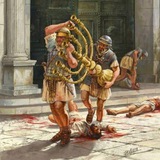
Forwarded from 70 A.D.
I've read almost every version/translation of the Wars of the Judeans, including the Slavonic. This is by far the most descriptive, and also my favorite. It is the only translation that says that Nero was killed by fire from the Lord, while hunting in the country. I've uploaded the 1706 and 1567 translations.
The Wonderful and Most Deplorable History of the Later Times of the Jews
(James Howell's edition of Peter Morwen's translation of Abraham ben David's abstract of Joseph Ben Gorion's Yosippon)
https://archive.org/details/wonderful-most-deplorable
The Wonderful and Most Deplorable History of the Later Times of the Jews
(James Howell's edition of Peter Morwen's translation of Abraham ben David's abstract of Joseph Ben Gorion's Yosippon)
https://archive.org/details/wonderful-most-deplorable
👍4
Forwarded from 70 A.D.
Julian the Apostate and the Rebuilding of the Third Temple - in Three Parts
When Flavius Claudius Julianus, Emperor Julian, the Apostate, died in Persia, his supporters failed to maintain support for Hellenism (paganism) as the official state religion, and Christianity re-emerged as dominant.
Julian (born A.D. 332), the nephew of the first Christian emperor, Constantine, was trained as a Christian, yet he is known as the apostate because when he became emperor (A.D. 360) he opposed Christianity.
In his attempt to revive Hellenism, he promised the jews to help rebuild the temple. They hoped by this means to falsify the prophecies of Christ (since Jesus in the New Testament had prophesied the destruction of the Temple, its rebuilding would make of him a false prophet and a liar, thus, proving Christianity to be false).
When Flavius Claudius Julianus, Emperor Julian, the Apostate, died in Persia, his supporters failed to maintain support for Hellenism (paganism) as the official state religion, and Christianity re-emerged as dominant.
Julian (born A.D. 332), the nephew of the first Christian emperor, Constantine, was trained as a Christian, yet he is known as the apostate because when he became emperor (A.D. 360) he opposed Christianity.
In his attempt to revive Hellenism, he promised the jews to help rebuild the temple. They hoped by this means to falsify the prophecies of Christ (since Jesus in the New Testament had prophesied the destruction of the Temple, its rebuilding would make of him a false prophet and a liar, thus, proving Christianity to be false).
👍5❤2
Forwarded from 70 A.D.
Though the emperor hated and oppressed the Christians, he manifested benevolence and humanity towards the jews. He wrote to the jewish patriarchs and leaders, as well as to the people, requesting them to pray for him,
and for the prosperity of the empire. In taking this step he was not actuated, I am convinced, by any respect for their religion; for he was aware that it is, so to speak, the mother of the Christian religion, and he knew that both religions rest upon the authority of the [biblical] patriarchs and the prophets; but he thought to grieve the Christians by favoring the jews, who are their most inveterate enemies. But perhaps he also calculated upon persuading the jews to embrace paganism and sacrifices; for they were only acquainted with the mere letter of Scripture, and could not, like the Christians and a few of the wisest among the Hebrews, discern the hidden meaning [the allegorical meaning, through which the Christians could prove the validity of Christianity from the OT].
Events proved that this was his real motive; for he sent for some of the chiefs of the race and exhorted them to return to the observance of the laws of Moses and the customs of their fathers. On their replying that because the Temple in Jerusalem was overturned, it was neither lawful nor ancestral to do this in another place than the metropolis out of which they had been cast, he gave them public money, commanded them to rebuild the Temple, and to practice the cult similar to that of their ancestors, by sacrificing after the ancient way.
The jews entered upon the undertaking, without reflecting that, according to the prediction of the holy prophets, it could not be accomplished. They sought for the most skillful artisans, collected materials, cleared the ground, and entered so earnestly upon the task, that even the women carried heaps of earth, and brought their necklaces and other female ornaments towards defraying the expense.
The emperor, the other pagans, and all the jews, regarded every other undertaking as secondary in importance to this.
Although the pagans were not well-disposed towards the jews, yet they assisted them in this enterprise, because they reckoned upon its ultimate success, and hoped by this means to falsify the prophecies of Christ.
Besides this motive, the jews themselves [relying on the sympathy of Julian] were impelled by the consideration that the time had arrived for rebuilding their Temple.
When they had removed the ruins of the former building, they dug up the ground and cleared away its foundation; it is said that on the following day when they were about to lay the first foundation, a great earthquake occurred, and by the violent agitation of the earth, stones were thrown up from the depths, by which those of the jews who were engaged in the work were wounded, as likewise those who were merely looking on. The houses and public porticos, near the site of the Temple, in which they had diverted themselves, were suddenly thrown down; many were caught thereby, some perished immediately, others were found half dead and mutilated of hands or legs, others were injured in other parts of the body. When God caused the earthquake to cease, the workmen who survived again returned to their task, partly because such was the edict of the emperor, and partly because they were themselves interested in the undertaking. Men often, in endeavoring to gratify their own passions, seek what is injurious to them, reject what would be truly advantageous, and are deluded by the idea that nothing is really useful except what is agreeable to them.
When once led astray by this error, they are no longer able to act in a manner conducive to their own interests, or to take warning by the calamities which are visited upon them.
The jews, I believe, were just in this state; for, instead of regarding this unexpected earthquake as a manifest indication that God was opposed to the re-erection of their Temple, they proceeded to recommence the work.
and for the prosperity of the empire. In taking this step he was not actuated, I am convinced, by any respect for their religion; for he was aware that it is, so to speak, the mother of the Christian religion, and he knew that both religions rest upon the authority of the [biblical] patriarchs and the prophets; but he thought to grieve the Christians by favoring the jews, who are their most inveterate enemies. But perhaps he also calculated upon persuading the jews to embrace paganism and sacrifices; for they were only acquainted with the mere letter of Scripture, and could not, like the Christians and a few of the wisest among the Hebrews, discern the hidden meaning [the allegorical meaning, through which the Christians could prove the validity of Christianity from the OT].
Events proved that this was his real motive; for he sent for some of the chiefs of the race and exhorted them to return to the observance of the laws of Moses and the customs of their fathers. On their replying that because the Temple in Jerusalem was overturned, it was neither lawful nor ancestral to do this in another place than the metropolis out of which they had been cast, he gave them public money, commanded them to rebuild the Temple, and to practice the cult similar to that of their ancestors, by sacrificing after the ancient way.
The jews entered upon the undertaking, without reflecting that, according to the prediction of the holy prophets, it could not be accomplished. They sought for the most skillful artisans, collected materials, cleared the ground, and entered so earnestly upon the task, that even the women carried heaps of earth, and brought their necklaces and other female ornaments towards defraying the expense.
The emperor, the other pagans, and all the jews, regarded every other undertaking as secondary in importance to this.
Although the pagans were not well-disposed towards the jews, yet they assisted them in this enterprise, because they reckoned upon its ultimate success, and hoped by this means to falsify the prophecies of Christ.
Besides this motive, the jews themselves [relying on the sympathy of Julian] were impelled by the consideration that the time had arrived for rebuilding their Temple.
When they had removed the ruins of the former building, they dug up the ground and cleared away its foundation; it is said that on the following day when they were about to lay the first foundation, a great earthquake occurred, and by the violent agitation of the earth, stones were thrown up from the depths, by which those of the jews who were engaged in the work were wounded, as likewise those who were merely looking on. The houses and public porticos, near the site of the Temple, in which they had diverted themselves, were suddenly thrown down; many were caught thereby, some perished immediately, others were found half dead and mutilated of hands or legs, others were injured in other parts of the body. When God caused the earthquake to cease, the workmen who survived again returned to their task, partly because such was the edict of the emperor, and partly because they were themselves interested in the undertaking. Men often, in endeavoring to gratify their own passions, seek what is injurious to them, reject what would be truly advantageous, and are deluded by the idea that nothing is really useful except what is agreeable to them.
When once led astray by this error, they are no longer able to act in a manner conducive to their own interests, or to take warning by the calamities which are visited upon them.
The jews, I believe, were just in this state; for, instead of regarding this unexpected earthquake as a manifest indication that God was opposed to the re-erection of their Temple, they proceeded to recommence the work.
Forwarded from 70 A.D.
But all parties relate that they had scarcely returned to the undertaking, when fire burst suddenly from the foundations of the Temple, and consumed several of the workmen.
This fact is fearlessly stated, & believed by all; the only discrepancy in the narrative is that some maintain that flame burst from the interior of the Temple, as the workmen were striving to force an entrance, while others say that the fire proceeded - directly from the earth.
In whichever way the phenomenon might have occurred, it is equally wonderful. A more tangible and still more extraordinary miracle ensued; suddenly the sign of the cross appeared spontaneously on the garments of the persons engaged in the undertaking.
These crosses looked like stars, and appeared the work of art. Many were hence led to confess that Christ is God, and that the rebuilding of the Temple was not pleasing to Him; others presented themselves in the church, were initiated, and besought Christ, with hymns and supplications, to pardon their transgression. If any one does not feel disposed to believe my narrative, let him go and be convinced by those who heard the facts I have related from the eyewitnesses of them, for they are still alive.
Let him inquire, also, of the jews and pagans who left the work in an incomplete state, or who, to speak more accurately, were unable to commence it.
The story of this attempted rebuilding of the Temple is found in the Ecclesiastical History written in Greek by Salamanius Hermias Sozomenus about 443-450. Sozomen was a native Palestinian and claimed to have his knowledge from eye-witnesses.
He was a conservative Christian without sympathy for the jews or for Julian.
The End
This fact is fearlessly stated, & believed by all; the only discrepancy in the narrative is that some maintain that flame burst from the interior of the Temple, as the workmen were striving to force an entrance, while others say that the fire proceeded - directly from the earth.
In whichever way the phenomenon might have occurred, it is equally wonderful. A more tangible and still more extraordinary miracle ensued; suddenly the sign of the cross appeared spontaneously on the garments of the persons engaged in the undertaking.
These crosses looked like stars, and appeared the work of art. Many were hence led to confess that Christ is God, and that the rebuilding of the Temple was not pleasing to Him; others presented themselves in the church, were initiated, and besought Christ, with hymns and supplications, to pardon their transgression. If any one does not feel disposed to believe my narrative, let him go and be convinced by those who heard the facts I have related from the eyewitnesses of them, for they are still alive.
Let him inquire, also, of the jews and pagans who left the work in an incomplete state, or who, to speak more accurately, were unable to commence it.
The story of this attempted rebuilding of the Temple is found in the Ecclesiastical History written in Greek by Salamanius Hermias Sozomenus about 443-450. Sozomen was a native Palestinian and claimed to have his knowledge from eye-witnesses.
He was a conservative Christian without sympathy for the jews or for Julian.
The End
👍7❤1🔥1
Forwarded from 70 A.D.
First century Laodicea was a renowned centre of banking, finance, fashion, and pharmaceuticals. However, in spite of its great wealth, the city had one major problem. It had no ready source of water.
As such, water had to be piped in through aqueducts from two different sources.
One came from the hot springs in Hierapolis six miles to the north. The other came from a cooler source in Colossae, which was located 10 miles to the east. But, regardless of whether the original water source was hot or cold, it was lukewarm by the time it reached the city of Laodicea.
"So then because thou art lukewarm, and neither cold nor hot, I will spew thee out of my mouth. Because thou sayest, I am rich, and increased with goods, and have need of nothing." Revelation 3:16-17
Laodicea was destroyed by a disastrous earthquake in 62 AD (Tacitus, Annals, 14.27), under the reign of Nero. The only other cities to sustain significant damage, were Colossae and Hierapolis. (Eusebius, Chron. Olymp. 210.4).
As such, water had to be piped in through aqueducts from two different sources.
One came from the hot springs in Hierapolis six miles to the north. The other came from a cooler source in Colossae, which was located 10 miles to the east. But, regardless of whether the original water source was hot or cold, it was lukewarm by the time it reached the city of Laodicea.
"So then because thou art lukewarm, and neither cold nor hot, I will spew thee out of my mouth. Because thou sayest, I am rich, and increased with goods, and have need of nothing." Revelation 3:16-17
Laodicea was destroyed by a disastrous earthquake in 62 AD (Tacitus, Annals, 14.27), under the reign of Nero. The only other cities to sustain significant damage, were Colossae and Hierapolis. (Eusebius, Chron. Olymp. 210.4).
🔥2👍1🤔1
Forwarded from 70 A.D.
“For behold, the Lord will come in fire and His chariots like the whirlwind, to render His anger with fury, and His rebuke with flames of fire.” Isaiah 66:15
“This will happen when the Lord Jesus is revealed from heaven in blazing fire with his powerful angels.” 2 Thessalonians 1:7
"And I saw, and behold a white horse: and he that sat on him had a bow; and a crown was given unto him: and he went forth conquering, and to conquer."
Revelation 6:2
"And I saw heaven opened, and behold a white horse; and he that sat upon him was called Faithful and True, and in righteousness he doth judge and make war. And the armies which were in heaven followed him upon white horses, clothed in fine linen, white and clean."
Revelation 19:11, 14
Be sure and read those historic accounts. Fascinating stuff.
“This will happen when the Lord Jesus is revealed from heaven in blazing fire with his powerful angels.” 2 Thessalonians 1:7
"And I saw, and behold a white horse: and he that sat on him had a bow; and a crown was given unto him: and he went forth conquering, and to conquer."
Revelation 6:2
"And I saw heaven opened, and behold a white horse; and he that sat upon him was called Faithful and True, and in righteousness he doth judge and make war. And the armies which were in heaven followed him upon white horses, clothed in fine linen, white and clean."
Revelation 19:11, 14
Be sure and read those historic accounts. Fascinating stuff.
❤2🔥1
Forwarded from 70 A.D.
The third oldest Bible in the world features the four Gospels written in Koine Greek. It is known as the Codex Washingtonianus, the Codex Freerianus or the Washington Gospels, and is over 1,600 years old.
What makes this Codex special, is the passage inserted at the end of the gospel of Mark, known as the "Freer Logion".
In this passage, Jesus tells the disciples that the term of years of satan's power has been fulfilled, but that other terrible things draw near.
St. Jerome not only quoted this passage, but also reported that the Freer Logion appeared in the Gospel of Mark after 16:14 “especially in Greek codices.”
The number of these manuscripts that exist today and which are known to contain this interpolation is exactly one: Codex Washingtonianus
"Now is the judgment of this world: now shall the prince of this world be cast out."
(John 12:31)
What makes this Codex special, is the passage inserted at the end of the gospel of Mark, known as the "Freer Logion".
In this passage, Jesus tells the disciples that the term of years of satan's power has been fulfilled, but that other terrible things draw near.
St. Jerome not only quoted this passage, but also reported that the Freer Logion appeared in the Gospel of Mark after 16:14 “especially in Greek codices.”
The number of these manuscripts that exist today and which are known to contain this interpolation is exactly one: Codex Washingtonianus
"Now is the judgment of this world: now shall the prince of this world be cast out."
(John 12:31)
👍6🤔1