توضیح دکتر وفا راجع به کشف پاد ماده توسط دیراک ، دانشکده فیزیک و مهندسی انرژی ....
📋گزارش سخنرانی دکتر کامران وفا، دانشگاه امیرکبیر، چهارشنبه ۸ اردیبهشت
@cafeastro
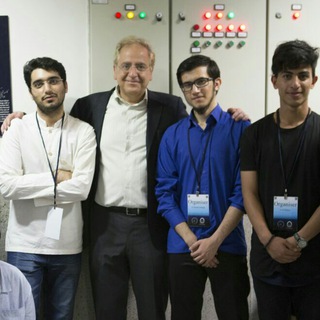
دکتر کامران وفا، استاد دانشگاه هاروارد و دارنده مدال دیراک، چهارشنبه ۸ اردیبهشت در دانشگاه امیرکبیر (پلی تکنیک) سخنرانی کردند.
✨✨✨✨✨✨✨✨✨✨✨
شما می توانید گزارش کامل این سخنرانی را در آدرس زیر بخوانید.
همچنین فایل صوتی سخنرانی برای دانلود در سایت قرار گرفته است.
🌐http://bit.ly/24riYjr
@cafeastro
دکتر کامران وفا، استاد دانشگاه هاروارد و دارنده مدال دیراک، چهارشنبه ۸ اردیبهشت در دانشگاه امیرکبیر (پلی تکنیک) سخنرانی کردند.
✨✨✨✨✨✨✨✨✨✨✨
شما می توانید گزارش کامل این سخنرانی را در آدرس زیر بخوانید.
همچنین فایل صوتی سخنرانی برای دانلود در سایت قرار گرفته است.
🌐http://bit.ly/24riYjr
Forwarded from انجمن علمی فیزیک و نجوم دانشگاه صنعتی امیرکبیر

Forwarded from معرفی جاذبه گردشگری ایران
☀️🌱 @gonbadmina
☀️با دوربین های عکاسی و تلسکوپهای خود به جمع ما بپیوندید.
وعده ما دوشنبه 20 اردیبهشت ماه بر فراز پل طبیعت (پارک آب و آتش)
ساعت 15:30
☀️Gonbad mina Planetarium☀️
☀️با دوربین های عکاسی و تلسکوپهای خود به جمع ما بپیوندید.
وعده ما دوشنبه 20 اردیبهشت ماه بر فراز پل طبیعت (پارک آب و آتش)
ساعت 15:30
☀️Gonbad mina Planetarium☀️
انجمن علمی فیزیک و نجوم دانشگاه صنعتی امیرکبیر
Photo
How better to learn the Special Theory of Relativity and the General Theory of Relativity than directly from their creator, Albert Einstein himself? In Relativity: The Special and the General Theory, Einstein describes the theories that made him famous, illuminating his case with numerous examples and a smattering of math (nothing more complex than high-school algebra). Einstein's book is not casual reading, but for those who appreciate his work without diving into the arcana of theoretical physics, Relativity will prove a stimulating read. --This text refers to an alternate Paperback edition.
From Scientific American
"The present book is intended," Einstein wrote in 1916, "as far as possible, to give an exact insight into the theory of Relativity to those readers who, from a general scientific and philosophical point of view, are interested in the theory, but who are not conversant with the mathematical apparatus of theoretical physics.... In the interest of clearness, it appeared to me inevitable that I should repeat myself frequently, without paying the slightest attention to the elegance of the presentation. I adhered scrupulously to the precept of that brilliant theoretical physicist L. Boltzmann, according to whom matters of elegance ought to be left to the tailor and to the cobbler." But it is elegant, in part because of the 1920 translation, by Robert W. Lawson, a British physicist who had polished his German while a prisoner of war in Austria. The introduction, by science writer Nigel Calder, guides the reader through the work section by section, even giving advice on which sections to skip, or at least not to worry about, if you can't "accompany Einstein through the forest of tricky ideas contained in this slim volume." Okay, this book isn't easy--again, in the master's elegant words, it "lays no small claims on the patience and on the power of abstraction of the reader"--but it is well worth the try.
From Scientific American
"The present book is intended," Einstein wrote in 1916, "as far as possible, to give an exact insight into the theory of Relativity to those readers who, from a general scientific and philosophical point of view, are interested in the theory, but who are not conversant with the mathematical apparatus of theoretical physics.... In the interest of clearness, it appeared to me inevitable that I should repeat myself frequently, without paying the slightest attention to the elegance of the presentation. I adhered scrupulously to the precept of that brilliant theoretical physicist L. Boltzmann, according to whom matters of elegance ought to be left to the tailor and to the cobbler." But it is elegant, in part because of the 1920 translation, by Robert W. Lawson, a British physicist who had polished his German while a prisoner of war in Austria. The introduction, by science writer Nigel Calder, guides the reader through the work section by section, even giving advice on which sections to skip, or at least not to worry about, if you can't "accompany Einstein through the forest of tricky ideas contained in this slim volume." Okay, this book isn't easy--again, in the master's elegant words, it "lays no small claims on the patience and on the power of abstraction of the reader"--but it is well worth the try.