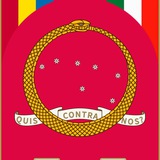
“One day on the hotel stairs I met the aviator Guido Keller, the Commander's action secretary. I looked at this man with a strange face in which his black eyes shone very sharply, which scrutinized me from head to toe. When we were close, he held out his hand and we immediately started talking. [...] We talked about making a revolution that would begin to change the organization of the army, of abolishing the ranks above the captain, of recreating the ancient companies of fortune of Italian tradition, of taking the bravest as an exemplary type of the true Italian soldier and to change the uniform, abolishing the closed collar and the useless sword".
-Giovanni Comisso, My seasons, Longanesi, 1963
"It's you, Guido Keller, comrade who knows how to talk to the eagle and know how to persuade the chest, comrade who knows how to keep the eagle in prison and load the chest with patience, did you come to my bedside?"
-Gabriele D'Annunzio, The Italian wing is liberated, Rome, La Fionda, 1919
-Giovanni Comisso, My seasons, Longanesi, 1963
"It's you, Guido Keller, comrade who knows how to talk to the eagle and know how to persuade the chest, comrade who knows how to keep the eagle in prison and load the chest with patience, did you come to my bedside?"
-Gabriele D'Annunzio, The Italian wing is liberated, Rome, La Fionda, 1919
❤2
In the Italian province of Carnaro, music is a social and religious institution. [...] music, the language of ritual, has power, above all else, to exalt the achievement and the life of man. [...] In every commune of the province there will be a choral society and an orchestra subsidized by the State.
In the city of Fiume, the College of Aediles will be commissioned to erect a great concert hall, accommodating an audience of at least ten thousand with tiers of seats and ample space for choir and orchestra.
The great orchestral and choral celebrations will be entirely free — in the language of the Church — a gift of God.
(Charter of Carnaro, Music, Article n. 64)
In the city of Fiume, the College of Aediles will be commissioned to erect a great concert hall, accommodating an audience of at least ten thousand with tiers of seats and ample space for choir and orchestra.
The great orchestral and choral celebrations will be entirely free — in the language of the Church — a gift of God.
(Charter of Carnaro, Music, Article n. 64)
❤10💩3
https://www.youtube.com/watch?v=M1HJhS5Y5iw
The funeral of D'Annunzio
The funeral of D'Annunzio
YouTube
Gabriele D'Annunzio nella luce dell'immortalità
Il documentario, che si apre con alcune immagini di repertorio relative alla vita trascorsa da D'Annunzio nel ritiro del Vittoriale, riguarda la solenne cerimonia funebre, che, morto il poeta nel marzo 1938, venne celebrata a Gardone alla presenza delle più…
🔥5
Forwarded from 𝕭𝖊𝖆𝖚𝖙𝖎𝖋𝖚𝖑 𝕸𝖔𝖓𝖘𝖙𝖊𝖗𝖘 (Don Giovanni)
Cool comic I found on Luisa Casati. http://readallcomics.com/casati-the-selfish-muse-tpb/
🔥3❤1👍1
On the occasion of the conquest of Fiume by Gabriele D'annunzio, the club dada sent the following telegram
"Please phone the Club Dada, Berlin, if the allies protest. Conquest is a great Dadaist action, and we will employ all means to ensure its recognition. The Dadaist city of Dadaco already recognizes Fiume as an Italian city."
- Dada Berlin Club Telegram to D'annunzio
"Please phone the Club Dada, Berlin, if the allies protest. Conquest is a great Dadaist action, and we will employ all means to ensure its recognition. The Dadaist city of Dadaco already recognizes Fiume as an Italian city."
- Dada Berlin Club Telegram to D'annunzio
❤12
"Cabaret Voltaire was the first of the 'Dada' reviews but bore the name of the literary and artistic cabaret opened by Hugo Ball in Zurich on March 5, 1916.
Written and visual contributions from Futurists, Cubists and Expressionists appear in Cabaret Voltaire and in the first two issues of Dada, as well as work of the Dada group itself. One of the Italian Futurist F.T. Marinetti's parole in libertà, 'Dune', which combined visual, aural and written dimensions and was a significant influence on the Dada phonetic poem, was printed in Cabaret Voltaire."
Written and visual contributions from Futurists, Cubists and Expressionists appear in Cabaret Voltaire and in the first two issues of Dada, as well as work of the Dada group itself. One of the Italian Futurist F.T. Marinetti's parole in libertà, 'Dune', which combined visual, aural and written dimensions and was a significant influence on the Dada phonetic poem, was printed in Cabaret Voltaire."