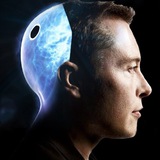
Neuralink
Neuralink is building a world-class "brain-machine interface." The "machine" part of that could be a variety of different devices.
Anyone with a Neuralink could wirelessly connect via Bluetooth to their:
- Video game controller
- Cell phone
- Mouse
- Keyboard
- Console
- Robotic arm
- Wheelchair
- And so much more!
- Video game controller
- Cell phone
- Mouse
- Keyboard
- Console
- Robotic arm
- Wheelchair
- And so much more!
🔥8❤5🤮2
This media is not supported in your browser
VIEW IN TELEGRAM
Neuralink Recipient Lee Martin:
“With ALS, as you said, eventually you’re fully paralyzed. I can still manipulate my right hand a little bit, but my left hand is almost completely gone.
“Now, anything I do on a computer—WhatsApp, Facebook, Instagram, playing games, or sending emails—I can do just by thinking about moving the cursor. I’m still getting used to charging the implant every couple of days. It lasts about 8 to 10 hours, so I attach a MagSafe charger to my skull, and it charges my head. It’s crazy.”
INTERVIEWER: “It does sound crazy. It’s just fantastic—it sounds almost like something out of a movie.”
“With ALS, as you said, eventually you’re fully paralyzed. I can still manipulate my right hand a little bit, but my left hand is almost completely gone.
“Now, anything I do on a computer—WhatsApp, Facebook, Instagram, playing games, or sending emails—I can do just by thinking about moving the cursor. I’m still getting used to charging the implant every couple of days. It lasts about 8 to 10 hours, so I attach a MagSafe charger to my skull, and it charges my head. It’s crazy.”
INTERVIEWER: “It does sound crazy. It’s just fantastic—it sounds almost like something out of a movie.”
👍7❤2🙈1
NEURALINK: NP26, Lee Marten's tattoo after his N1 implant surgery. I hear there are more Neuralnauts with this tattoo.
As reported before, Lee was the first not to have the dura peeled back, the protective layer around the brain. Instead, the robot inserted the chip through the dura.
Per Lisa Marten, Lee's wife, "They didn't tell us until just before he went in that he was going to be the first person in the world to have the new procedure done. That's where it got a little scary."
Per Lee, "I'm like, let's get 'er done." An hour after waking up, Lee was working with Neuralink engineers to try out the device. "They told me I was the first out of all the participants to do that so soon after surgery. And I'm like, well, Canadians are just built tougher."
As reported before, Lee was the first not to have the dura peeled back, the protective layer around the brain. Instead, the robot inserted the chip through the dura.
Per Lisa Marten, Lee's wife, "They didn't tell us until just before he went in that he was going to be the first person in the world to have the new procedure done. That's where it got a little scary."
Per Lee, "I'm like, let's get 'er done." An hour after waking up, Lee was working with Neuralink engineers to try out the device. "They told me I was the first out of all the participants to do that so soon after surgery. And I'm like, well, Canadians are just built tougher."
❤7🔥3
Neuralink patient Eoin is able to move his wheelchair simply by using his implant paired with HomeBrace
👍3❤2😁1
Media is too big
VIEW IN TELEGRAM
We've been exploring how clinical trial participants can control a powered wheelchair — with their minds.
Here's how we’re doing it 🧵
Here's how we’re doing it 🧵
❤8👍3😢1
This media is not supported in your browser
VIEW IN TELEGRAM
The Neuralink implant has over 1,000 electrodes sitting across over 100 threads, each thinner than a human hair and inserted into the motor cortex by our surgical robot. The electrodes record the activity of neurons that fire as a participant intends to move.
❤11👍1😢1
This media is not supported in your browser
VIEW IN TELEGRAM
A machine learning model maps that neural activity to a computer cursor moving up, down, left, and right. The result is a decoding algorithm that enables the participant to control the cursor with their thoughts.
❤7🔥2😢2
This media is not supported in your browser
VIEW IN TELEGRAM
Our participants see a live video feed from a wheelchair mounted camera. As they move the cursor with their thoughts, they can drive forward, reverse, steer, and even adjust seating positions.
👍4👏1💯1
This media is not supported in your browser
VIEW IN TELEGRAM
We're studying how participants can navigate real-world environments using this system.
There’s more to do, but this provides a glimpse into how Neuralink can help restore independent mobility for people with paralysis.
There’s more to do, but this provides a glimpse into how Neuralink can help restore independent mobility for people with paralysis.
❤6🔥2
Neuralink
We're studying how participants can navigate real-world environments using this system. There’s more to do, but this provides a glimpse into how Neuralink can help restore independent mobility for people with paralysis.
Neuralink devices are investigational and have not been approved by the FDA or other regulatory authorities. This video features voluntary clinical trial participants sharing their personal experiences, which may not reflect all participants or future outcomes.
👍6❤3
This media is not supported in your browser
VIEW IN TELEGRAM
Neuralink patients are now controlling a robotic arm just by thinking. 🧠🦾
No hands. No joystick. Just thought. ✨
No hands. No joystick. Just thought. ✨
❤8🔥2
Neuralink could completely change how humans interact with technology. Would you ever try it?”
👏6👍4❤2