This media is not supported in your browser
VIEW IN TELEGRAM
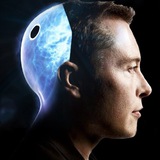
Elon Musk discusses uploading human consciousness to a Tesla Optimus robot.
Made possible by Neuralink!
Made possible by Neuralink!
❤10👍9🤔3🔥2
This media is not supported in your browser
VIEW IN TELEGRAM
🗣 Alex Conley:
I used the Neuralink to write code for an Arduino to allow me to control an RC airplane with a quad stick. The possibilities are truly endless. Thank you Elon and the entire team at Neuralink. I am honored to be part of such a great program.
I used the Neuralink to write code for an Arduino to allow me to control an RC airplane with a quad stick. The possibilities are truly endless. Thank you Elon and the entire team at Neuralink. I am honored to be part of such a great program.
❤16👍3
Neuralink
🗣 Alex Conley: I used the Neuralink to write code for an Arduino to allow me to control an RC airplane with a quad stick. The possibilities are truly endless. Thank you Elon and the entire team at Neuralink. I am honored to be part of such a great program.
News: Neuralink's 2nd patient, Alex Conley has shared a video of himself flying a Radio Controlled (RC) airplane.
Prior to getting a Neuralink, Alex was diagnosed with a complete spinal cord injury after fracturing his C4/ C5 vertebrae.
In July 2024, he completed his implant surgery and has been working alongside the Neuralink team to improve the devices. The freedom and joy from this fun outdoor activity are made possible by Neuralink allowing him to program the controller!
Prior to getting a Neuralink, Alex was diagnosed with a complete spinal cord injury after fracturing his C4/ C5 vertebrae.
In July 2024, he completed his implant surgery and has been working alongside the Neuralink team to improve the devices. The freedom and joy from this fun outdoor activity are made possible by Neuralink allowing him to program the controller!
🔥6❤3💯1
This media is not supported in your browser
VIEW IN TELEGRAM
How does the Neuralink implant connect to the brain? Tiny threads smaller than a human hair get inserted into your brain by a surgical robot. The idea is that the small and flexible threads minimize trauma and allow the brain to move naturally. Zack was one of the most passionate people at Neuralink
👍10❤3💯2🖕1
Media is too big
VIEW IN TELEGRAM
After injury paralyzed him from the neck down, Rocky Hands tested many assistive technologies to reconnect with the world. He re-learned how to play video games with a mouth-operated controller and is now a pro gamer with multiple Guinness World Records and a significant following.
We invited Rocky to Neuralink to share his story, learn about our technology, and discuss the possibilities of brain interfaces for paralysis and other unmet medical needs.
We invited Rocky to Neuralink to share his story, learn about our technology, and discuss the possibilities of brain interfaces for paralysis and other unmet medical needs.
❤9👍8
This media is not supported in your browser
VIEW IN TELEGRAM
NEURALINK’S FIRST PATIENT SPARKS FOR NEXT STEP TO PHYSICAL RESTORATION
Noland Arbaugh is fired up for a second Neuralink implant - this one aims at movement, not just digital control!
Anticipation:
• Second chip planned to bypass damaged spinal signals
• Routing brain activity straight to muscle
• From hands-free computing to real-world motion
• A pathway to restoring limb control
Amped with hope, he's practically sparking for what's next - and Neuralink is running on hype for a reason!
Noland Arbaugh is fired up for a second Neuralink implant - this one aims at movement, not just digital control!
Anticipation:
• Second chip planned to bypass damaged spinal signals
• Routing brain activity straight to muscle
• From hands-free computing to real-world motion
• A pathway to restoring limb control
Amped with hope, he's practically sparking for what's next - and Neuralink is running on hype for a reason!
❤11🔥4⚡2🤔1
This media is not supported in your browser
VIEW IN TELEGRAM
It finally happened! Neuralink Bring computer interfacing alongside my quad stick gaming controller at the same time it actually feels like I'm using a controller!
Please open Telegram to view this post
VIEW IN TELEGRAM
❤8👍5
Neuralink's "neural shunt" will enable paralyzed people to walk again.
They will implant Neuralink(s) in the brain, capture the neural signals, and then send them wirelessly via Bluetooth to other Neuralinks implanted in the spinal cord.
Those Neuralinks will then stimulate movement!
This is a great topic to discuss at Thanksgiving dinner (not kidding 😉).
They will implant Neuralink(s) in the brain, capture the neural signals, and then send them wirelessly via Bluetooth to other Neuralinks implanted in the spinal cord.
Those Neuralinks will then stimulate movement!
This is a great topic to discuss at Thanksgiving dinner (not kidding 😉).
❤9🔥3👏3⚡2🤔1
Media is too big
VIEW IN TELEGRAM
🇺🇸 NEURALINK JUST MADE MULTIPLAYER GAMING A REALITY FOR PARALYZED PATIENTS
Two Prime Study participants -both with severe paralysis- are now playing the same video games together, in real time, using only their thoughts through the Neuralink brain-computer interface.
One controls the cursor by thinking about moving his hand. The other uses eye movements for aiming and mental focus to click. They’re not just moving a pointer; they’re competing head-to-head in multiplayer sessions, fully independently.
These are the same patients who previously regained the ability to browse the web, send messages, and control devices, all with the N1 implant. Now that same technology has reached a milestone many thought belonged to science fiction: restoring the social, competitive experience of gaming for people who haven’t moved their bodies in years.
This isn’t a demo. It’s daily life for them now.
The gap between human and machine keeps shrinking, and for the first time, it’s giving people back something deeply human: the chance to play, connect, and compete with friends, exactly like before everything changed.
The future isn’t coming.
It’s already in their heads.
Two Prime Study participants -both with severe paralysis- are now playing the same video games together, in real time, using only their thoughts through the Neuralink brain-computer interface.
One controls the cursor by thinking about moving his hand. The other uses eye movements for aiming and mental focus to click. They’re not just moving a pointer; they’re competing head-to-head in multiplayer sessions, fully independently.
These are the same patients who previously regained the ability to browse the web, send messages, and control devices, all with the N1 implant. Now that same technology has reached a milestone many thought belonged to science fiction: restoring the social, competitive experience of gaming for people who haven’t moved their bodies in years.
This isn’t a demo. It’s daily life for them now.
The gap between human and machine keeps shrinking, and for the first time, it’s giving people back something deeply human: the chance to play, connect, and compete with friends, exactly like before everything changed.
The future isn’t coming.
It’s already in their heads.
❤11👍3⚡1
This media is not supported in your browser
VIEW IN TELEGRAM
NEURALINK IS CUTTING OUT EVERY MIDDLEMAN: NOW BUILDING ITS OWN FACTORIES AND ROBOTS
Neuralink co-founder DJ Seo just dropped the mic: the company is pouring “tons and tons of money” into owning the entire stack.
From microfabrication and implant manufacturing to robotics, surgery, pathology, animal care, neuroengineering, next-gen apps, imaging, and even their own construction crews building a custom HQ in Austin.
It’s SpaceX/Tesla playbook, no suppliers, no middlemen, like Henry Ford envisioned, just pure speed and control.
Cheaper parts, faster iterations, and 0 outside bottlenecks while the rest of the BCI world waits on fabs and contractors.
Neuralink isn’t just making brain chips. They’re building the entire cyborg factory from the ground up, and they’re not slowing down for anyone.
Source: @neuralink
Neuralink co-founder DJ Seo just dropped the mic: the company is pouring “tons and tons of money” into owning the entire stack.
From microfabrication and implant manufacturing to robotics, surgery, pathology, animal care, neuroengineering, next-gen apps, imaging, and even their own construction crews building a custom HQ in Austin.
It’s SpaceX/Tesla playbook, no suppliers, no middlemen, like Henry Ford envisioned, just pure speed and control.
Cheaper parts, faster iterations, and 0 outside bottlenecks while the rest of the BCI world waits on fabs and contractors.
Neuralink isn’t just making brain chips. They’re building the entire cyborg factory from the ground up, and they’re not slowing down for anyone.
Source: @neuralink
❤8👍4🔥1
🚨NEURALINK JUST DROPPED A “WELCOME TO THE NEXT VERSION OF HUMAN” UPDATE
Neuralink posted a boundary shift this week: paralysed volunteers using pure thought to control robotic limbs with a level of precision that, only a few years ago, belonged to DARPA labs and science fiction.
The patient that matters here is Rocky Stoutenburgh - paralysed since 2006 - guiding a robotic arm toward his face and kissing it.
That’s a full-stack demonstration of signal acquisition, noise filtering, adaptive decoding, and real-time actuation working seamlessly in a civilian environment.
According to engineers familiar with the program, Neuralink’s implant isn’t just detecting intention - it’s predicting motor patterns, filling in gaps left by damaged neural pathways, and learning with the user.
That’s the milestone every BCI lab has been chasing for 20 years.
What makes this different from every other BCI Demo:
Plenty of research groups have shown robotic arms controlled by brain signals - Caltech, Pitt, Stanford.
The difference here is not capability; it’s miniaturization, implant longevity, and integration with consumer-grade hardware.
Neuralink is attempting something the academic world never could scale:
— a fully implantable wireless system
— a standardized surgical robot
— a path to mass deployment, not just clinical novelty
12 volunteers have now been implanted since 2024. That’s not experimentation - that’s a pipeline.
Real-world function is the turning point.
The 2nd participant, ALS patient Nick Wray, used a robotic arm to lift a cup and drink from it.
That’s the kind of everyday action that separates lab tech from life-changing tech. Once users can manipulate household devices, comms interfaces, and mobility tools, the utility curve shoots upward fast.
No wonder more than 10,000 people are already on Neuralink’s patient registry. The demand is visceral.
Paralysis strips people of autonomy. A working BCI gives it back.
The part that Elon cares about?
He keeps hinting at one thing: medical BCIs are Phase One.
Neuralink posted a boundary shift this week: paralysed volunteers using pure thought to control robotic limbs with a level of precision that, only a few years ago, belonged to DARPA labs and science fiction.
The patient that matters here is Rocky Stoutenburgh - paralysed since 2006 - guiding a robotic arm toward his face and kissing it.
That’s a full-stack demonstration of signal acquisition, noise filtering, adaptive decoding, and real-time actuation working seamlessly in a civilian environment.
According to engineers familiar with the program, Neuralink’s implant isn’t just detecting intention - it’s predicting motor patterns, filling in gaps left by damaged neural pathways, and learning with the user.
That’s the milestone every BCI lab has been chasing for 20 years.
What makes this different from every other BCI Demo:
Plenty of research groups have shown robotic arms controlled by brain signals - Caltech, Pitt, Stanford.
The difference here is not capability; it’s miniaturization, implant longevity, and integration with consumer-grade hardware.
Neuralink is attempting something the academic world never could scale:
— a fully implantable wireless system
— a standardized surgical robot
— a path to mass deployment, not just clinical novelty
12 volunteers have now been implanted since 2024. That’s not experimentation - that’s a pipeline.
Real-world function is the turning point.
The 2nd participant, ALS patient Nick Wray, used a robotic arm to lift a cup and drink from it.
That’s the kind of everyday action that separates lab tech from life-changing tech. Once users can manipulate household devices, comms interfaces, and mobility tools, the utility curve shoots upward fast.
No wonder more than 10,000 people are already on Neuralink’s patient registry. The demand is visceral.
Paralysis strips people of autonomy. A working BCI gives it back.
The part that Elon cares about?
He keeps hinting at one thing: medical BCIs are Phase One.
❤6👏5🔥2
Neuralink
🚨NEURALINK JUST DROPPED A “WELCOME TO THE NEXT VERSION OF HUMAN” UPDATE Neuralink posted a boundary shift this week: paralysed volunteers using pure thought to control robotic limbs with a level of precision that, only a few years ago, belonged to DARPA labs…
What he wants is:
— music streamed directly into auditory cortex
— silent, thought-only communication
— memory extraction and storage
— and, in his most speculative mood, mind transfer into synthetic bodies
He’s talking about cognitive continuity - a digital backup of selfhood. Whether that ever becomes real is beside the point.
Neuralink’s current trials are laying the substrate for whatever comes next: a brain-machine bandwidth upgrade.
If Neuralink’s safety data holds through 2026, the pivot begins:
assistive devices → commercial neuro-interfaces → regulatory fights no one is prepared for.
Because once a paralysed patient can control a robotic limb with thought, the next question is inevitable:
Why stop at restoring function when you can expand it?
Neuralink cleared a milestone. And, simultaneously, announced the start of a new category of human capability.
Source: Orbital Today
— music streamed directly into auditory cortex
— silent, thought-only communication
— memory extraction and storage
— and, in his most speculative mood, mind transfer into synthetic bodies
He’s talking about cognitive continuity - a digital backup of selfhood. Whether that ever becomes real is beside the point.
Neuralink’s current trials are laying the substrate for whatever comes next: a brain-machine bandwidth upgrade.
If Neuralink’s safety data holds through 2026, the pivot begins:
assistive devices → commercial neuro-interfaces → regulatory fights no one is prepared for.
Because once a paralysed patient can control a robotic limb with thought, the next question is inevitable:
Why stop at restoring function when you can expand it?
Neuralink cleared a milestone. And, simultaneously, announced the start of a new category of human capability.
Source: Orbital Today
❤6🔥6⚡2
News: Neuralink has announced David McMullen will begin leading Medical Affairs beginning later this month.
David has previously worked at DARPA and the NIH. He most recently worked at the FDA as Director, Office of Neurological and Physical Medicine Devices.
Neuralink has initiated human trials in the US, Canada, UK, and UAE. Their next product, Blindsight- built to restore vision, will begin trials next year.
David has previously worked at DARPA and the NIH. He most recently worked at the FDA as Director, Office of Neurological and Physical Medicine Devices.
Neuralink has initiated human trials in the US, Canada, UK, and UAE. Their next product, Blindsight- built to restore vision, will begin trials next year.
❤8👍7⚡1
This media is not supported in your browser
VIEW IN TELEGRAM
NEURALINK: THE BRAIN CHIP GAME FIRED ITS SUPPLY CHAIN
Everyone else is stuck waiting for parts. Neuralink built the whole factory instead.
The Takeover:
• Chips, implants, robots, surgery tools built in-house
• Labs, imaging, animal care all under one roof
• Even the HQ is custom-built for speed
No middlemen. No bottlenecks. Just pure vertical momentum!
Source: @neuralink
Everyone else is stuck waiting for parts. Neuralink built the whole factory instead.
The Takeover:
• Chips, implants, robots, surgery tools built in-house
• Labs, imaging, animal care all under one roof
• Even the HQ is custom-built for speed
No middlemen. No bottlenecks. Just pure vertical momentum!
Source: @neuralink
👍9❤3🔥2⚡1👏1
Media is too big
VIEW IN TELEGRAM
Brad Smith, Neuralink’s third patient and the first with ALS, got his brain implant in November 2024
ALS left him fully paralyzed and unable to speak, so the implant is now his only way to communicate
Using only his thoughts, he now moves a cursor on a MacBook, edited an entire video in iMovie (the first ever done purely by mind), and speaks through an AI voice cloned from his pre-ALS recordings
All this was made possible by Neuralink
ALS left him fully paralyzed and unable to speak, so the implant is now his only way to communicate
Using only his thoughts, he now moves a cursor on a MacBook, edited an entire video in iMovie (the first ever done purely by mind), and speaks through an AI voice cloned from his pre-ALS recordings
All this was made possible by Neuralink
👍12❤5🔥2😱2⚡1
NEURALINK 2025:
- Received FDA Breakthrough Device Designation for its speech restoration technology targeting severe speech impairments.
- Launched its first clinical trial in the Middle East (UAE-PRIME) at Cleveland Clinic Abu Dhabi in partnership with the Department of Health Abu Dhabi.
- Raised $650 million in Series E funding, led by investors including ARK Invest, Sequoia Capital, and Founders Fund, valuing the company at approximately $9 billion.
- Launched clinical trials in the United Kingdom in partnership with University College London Hospitals and Newcastle Hospitals.
- Performed its first procedures outside the United States, implanting devices in two patients with cervical spinal cord injuries at Toronto's University Health Network in Canada.
- Received FDA Breakthrough Device Designation for its speech restoration technology targeting severe speech impairments.
- Launched its first clinical trial in the Middle East (UAE-PRIME) at Cleveland Clinic Abu Dhabi in partnership with the Department of Health Abu Dhabi.
- Raised $650 million in Series E funding, led by investors including ARK Invest, Sequoia Capital, and Founders Fund, valuing the company at approximately $9 billion.
- Launched clinical trials in the United Kingdom in partnership with University College London Hospitals and Newcastle Hospitals.
- Performed its first procedures outside the United States, implanting devices in two patients with cervical spinal cord injuries at Toronto's University Health Network in Canada.
👍7❤3🔥1
Neuralink
NEURALINK 2025: - Received FDA Breakthrough Device Designation for its speech restoration technology targeting severe speech impairments. - Launched its first clinical trial in the Middle East (UAE-PRIME) at Cleveland Clinic Abu Dhabi in partnership with…
- Completed two surgeries in Canada, marking the first non-US procedures.
- The first UK participant, Paul, received an implant and controlled a computer with thoughts hours after surgery at University College London Hospitals.
- Convoy project testing with participants controlling robotic arms with their BCIs.
- Introduced an upgraded next-generation surgical robot with improved electrode thread insertion time of 1.5 seconds per thread, greater insertion depths over 50mm, enhances compatibility with 99% of anatomical variations globally, and lowers manufacturing costs for needle cartridges by 95%.
- Announced goals for faster LASIK-like implant procedures in minutes and emphasized flexible electrode threads for safer neuron placement.
- As of now it is estimated that Neuralink as 20 participants. Know are Noland Arbaug, Alex Conley, Bradford Smith, Michael Melgarejo, RJ Tanner, Rob Greiner, Jake Schneider, Nick Wray, Audrey Crews, Paul, and Jon L. Noble
- The first UK participant, Paul, received an implant and controlled a computer with thoughts hours after surgery at University College London Hospitals.
- Convoy project testing with participants controlling robotic arms with their BCIs.
- Introduced an upgraded next-generation surgical robot with improved electrode thread insertion time of 1.5 seconds per thread, greater insertion depths over 50mm, enhances compatibility with 99% of anatomical variations globally, and lowers manufacturing costs for needle cartridges by 95%.
- Announced goals for faster LASIK-like implant procedures in minutes and emphasized flexible electrode threads for safer neuron placement.
- As of now it is estimated that Neuralink as 20 participants. Know are Noland Arbaug, Alex Conley, Bradford Smith, Michael Melgarejo, RJ Tanner, Rob Greiner, Jake Schneider, Nick Wray, Audrey Crews, Paul, and Jon L. Noble
👍8❤1🔥1
🗣 Noland Arbaugh:
How a freak accident in 2016 left me paralyzed.
When I was 22, right after graduating from Texas A&M, I was working at a summer camp in the Pocono Mountains. On our first day off, a group of us went to a man-made lake in upstate New York.
We all ran into the water. We weren’t drunk or doing anything stupid. I didn’t even dive headfirst. I just ran into the water and swam underwater for a few seconds. At some point, I got hit on the left side of my head. My C4 and C5 vertebrae popped out of place, and I woke up face-down in the water. I tried to move, but nothing happened. Immediately, I knew I was paralyzed.
I held my breath, hoping someone would pull me out. No one did. After about 10–15 seconds, I couldn’t hold it anymore and thought, “Whatever happens, happens.” That’s when I took a big sip of water…
How a freak accident in 2016 left me paralyzed.
When I was 22, right after graduating from Texas A&M, I was working at a summer camp in the Pocono Mountains. On our first day off, a group of us went to a man-made lake in upstate New York.
We all ran into the water. We weren’t drunk or doing anything stupid. I didn’t even dive headfirst. I just ran into the water and swam underwater for a few seconds. At some point, I got hit on the left side of my head. My C4 and C5 vertebrae popped out of place, and I woke up face-down in the water. I tried to move, but nothing happened. Immediately, I knew I was paralyzed.
I held my breath, hoping someone would pull me out. No one did. After about 10–15 seconds, I couldn’t hold it anymore and thought, “Whatever happens, happens.” That’s when I took a big sip of water…
❤8👍2😱2
Neuralink
🗣 Noland Arbaugh: How a freak accident in 2016 left me paralyzed. When I was 22, right after graduating from Texas A&M, I was working at a summer camp in the Pocono Mountains. On our first day off, a group of us went to a man-made lake in upstate New York.…
Eventually, my friends noticed something was wrong and reached out to pull me out of the water. I was in and out of consciousness for about an hour — waking up on the beach, in an ambulance, in a helicopter, and finally in the hospital, just before learning I was about to go into emergency surgery. I even cracked jokes to calm the people around me. That’s just how I cope.
The surgery went well, but the weeks — and years — that followed were brutal. I was in a lot of pain. Nerve pain, to be precise, and for those of you who’ve experienced that kind of pain, you know how unbearable it is. Not to mention the emotional pain that came with grieving the loss of my mobility and learning how to live life as a quadriplegic.
Now, reading this might make you feel sad. But don’t.
My accident was the best thing that ever happened to me. It saved me. I often joke (sort of) that the life path I was on would have either killed me or landed me in jail. I wasn’t being a good man or making smart life choices.
Becoming paralyzed forced me to confront myself, my choices, and reflect on the kind of man I truly wanted to become. Even more importantly, my accident allowed me to deepen my relationship with God — and through that, He shaped me into the man I am today.
For that, I am forever grateful.
I truly love my life. I’m blessed with the most incredible family and friends, and now, thanks to Neuralink, I’ve found renewed hope and purpose in helping others discover this life-changing technology that has helped redefine my human potential.
The surgery went well, but the weeks — and years — that followed were brutal. I was in a lot of pain. Nerve pain, to be precise, and for those of you who’ve experienced that kind of pain, you know how unbearable it is. Not to mention the emotional pain that came with grieving the loss of my mobility and learning how to live life as a quadriplegic.
Now, reading this might make you feel sad. But don’t.
My accident was the best thing that ever happened to me. It saved me. I often joke (sort of) that the life path I was on would have either killed me or landed me in jail. I wasn’t being a good man or making smart life choices.
Becoming paralyzed forced me to confront myself, my choices, and reflect on the kind of man I truly wanted to become. Even more importantly, my accident allowed me to deepen my relationship with God — and through that, He shaped me into the man I am today.
For that, I am forever grateful.
I truly love my life. I’m blessed with the most incredible family and friends, and now, thanks to Neuralink, I’ve found renewed hope and purpose in helping others discover this life-changing technology that has helped redefine my human potential.
❤7👍6⚡3