Forwarded from OpenAI Chat GPT
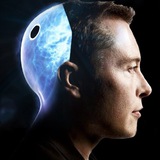
On the Lex Fridman Podcast, Elon Musk outlined his vision for Neuralink, aiming to enhance AI-human symbiosis by boosting communication bandwidth.
Musk highlighted the disparity in communication speeds between AI and humans, stating that AI could operate at terabits per second while humans communicate at much lower rates.
He noted that this gap could lead to AI becoming “bored” waiting for human responses.
Musk believes Neuralink brain implants would enable humans to “think and communicate at the speed of AI,” fostering closer integration of human and machine intelligence.
Musk highlighted the disparity in communication speeds between AI and humans, stating that AI could operate at terabits per second while humans communicate at much lower rates.
He noted that this gap could lead to AI becoming “bored” waiting for human responses.
Musk believes Neuralink brain implants would enable humans to “think and communicate at the speed of AI,” fostering closer integration of human and machine intelligence.
❤9👍6⚡2😱2
Forwarded from OpenAI Chat GPT
Neuralink has successfully implanted its brain chip into a second patient as part of its ongoing clinical trials.
Elon Musk announced this during a podcast with Lex Fridman, where he shared details about the procedure and the device’s functionality.
The first patient, Noland Arbaugh, who is quadriplegic, received his implant earlier this year, allowing him to control computer movements with his mind.
This device has enhanced Arbaugh’s independence, enabling him to play video games, browse the internet, and interact with digital devices without physical assistance.
The second patient, who also has a spinal cord injury, now has 400 working electrodes in their brain. Musk mentioned that Neuralink plans to implant a total of 10 patients this year, with eight more to go. Each implant will offer valuable insights into neurobiology, signal decoding, and processing.
Elon Musk announced this during a podcast with Lex Fridman, where he shared details about the procedure and the device’s functionality.
The first patient, Noland Arbaugh, who is quadriplegic, received his implant earlier this year, allowing him to control computer movements with his mind.
This device has enhanced Arbaugh’s independence, enabling him to play video games, browse the internet, and interact with digital devices without physical assistance.
The second patient, who also has a spinal cord injury, now has 400 working electrodes in their brain. Musk mentioned that Neuralink plans to implant a total of 10 patients this year, with eight more to go. Each implant will offer valuable insights into neurobiology, signal decoding, and processing.
👍16❤5👏4🔥2🥰1🖕1
Forwarded from OpenAI Chat GPT
The Humane AI Pin, a $699 wearable device launched in April 2024, is facing significant challenges.
According to a report from The Verge, returns of the AI Pin have surpassed sales between May and August 2024, with only around 7,000 to 8,000 units remaining unreturned.
The AI Pin, designed by former Apple employees Imran Chaudhri and Bethany Bongiorno, received overwhelmingly negative reviews. Critics like Marques Brownlee called it “the worst product” he’s ever reviewed.
Humane generated $9 million in sales, but over $1 million worth of products have been returned. Due to technical limitations with T-Mobile, these returned devices cannot be refurbished, turning them into e-waste.
The situation worsened when Humane issued a warning for customers to stop using the charging case due to a fire hazard, further damaging consumer confidence.
Despite initial ambitions to sell 100,000 units in the first year, only about 10,000 have been shipped, and the company is now in talks with potential acquirers like HP.
Source: The Verge
According to a report from The Verge, returns of the AI Pin have surpassed sales between May and August 2024, with only around 7,000 to 8,000 units remaining unreturned.
The AI Pin, designed by former Apple employees Imran Chaudhri and Bethany Bongiorno, received overwhelmingly negative reviews. Critics like Marques Brownlee called it “the worst product” he’s ever reviewed.
Humane generated $9 million in sales, but over $1 million worth of products have been returned. Due to technical limitations with T-Mobile, these returned devices cannot be refurbished, turning them into e-waste.
The situation worsened when Humane issued a warning for customers to stop using the charging case due to a fire hazard, further damaging consumer confidence.
Despite initial ambitions to sell 100,000 units in the first year, only about 10,000 have been shipped, and the company is now in talks with potential acquirers like HP.
Source: The Verge
👍13🤬1
Forwarded from OpenAI Chat GPT
Big Tech companies are investing heavily in artificial intelligence.
👉 Google is spending significantly on infrastructure, including $3 billion for data centers and $60 million for training AI models.
👉 Google is spending significantly on infrastructure, including $3 billion for data centers and $60 million for training AI models.
👍8👏3
Forwarded from OpenAI Chat GPT
👉 Elon Musk's xAI is reportedly spending between $3 billion and $4 billion on Nvidia H100 GPUs, which are critical for AI processing.
👉 According to a report from The Information, OpenAI's operating costs for the year are estimated at $8.5 billion. This includes $4 billion for server capacity rented from Microsoft and $3 billion for training AI models.
👉 According to a report from The Information, OpenAI's operating costs for the year are estimated at $8.5 billion. This includes $4 billion for server capacity rented from Microsoft and $3 billion for training AI models.
👍10👏3💩1💯1
Forwarded from OpenAI Chat GPT
👉 According to a Business Insider report citing leaked company documents, Microsoft has reportedly directed nearly all of its $19 billion capital expenditure toward AI-related infrastructure.
👉 Meta aims to spend between $37 billion and $40 billion in 2024 on technological infrastructure, with total AI-related costs potentially reaching $50 billion by 2025, according to a Quartz report citing a JPMorgan analyst.
👉 Meta aims to spend between $37 billion and $40 billion in 2024 on technological infrastructure, with total AI-related costs potentially reaching $50 billion by 2025, according to a Quartz report citing a JPMorgan analyst.
👍5🤔3💩2❤1🥰1👏1
Forwarded from OpenAI Chat GPT
👉 Apple has allocated $100 billion to research and development over the past five years, according to a MarketWatch report citing Apple CFO Luca Maestri during the company's first-quarter earnings call.
Despite these reports, exact figures on internal AI expenditures remain unclear. However, AI investments are projected to reach $1 trillion in the coming years.
Source: Business Insider
Despite these reports, exact figures on internal AI expenditures remain unclear. However, AI investments are projected to reach $1 trillion in the coming years.
Source: Business Insider
👍12🤔4💩2👏1
Forwarded from OpenAI Chat GPT
Swiss scientists at FinalSpark have developed the world’s first “living computer” by connecting 16 lab-grown human brain organoids, which are clusters of brain cells.
👍8🤯7😐5
Forwarded from OpenAI Chat GPT
This project, named Neuroplatform, utilizes these organoids to perform computational tasks traditionally handled by silicon chips. This technology could potentially help address the world’s growing energy crisis, especially as AI systems become more power-hungry.
👍10😐2
Forwarded from OpenAI Chat GPT
The organoids are grown from stem cells and trained using doses of dopamine. They are housed in a Multi-Electrode Array (MEA) special incubator and surrounded by electrodes that stimulate them, record their activity, provide them with nutrients for survival, and interact with them for data processing.
While the cells only live for about 100 days, they function similarly to neurons in the human brain.
While the cells only live for about 100 days, they function similarly to neurons in the human brain.
👍13😐4❤2
Forwarded from Earn Money
There’s one thing you should know about AI👇
It’s not cheap.
But don’t just take my word for it—listen to the CEOs of the biggest tech companies in the world.
In their most recent earnings calls, Microsoft CEO Satya Nadella stated, “To meet the growing demand signal for our AI and cloud products, we will scale our infrastructure investments with FY25 CapEx expected to be higher than FY24.”
Similarly, Mark Zuckerberg of Meta remarked, “…we currently expect significant CapEx growth in 2025 as we invest to support our AI research and our product development efforts.”
But perhaps the most telling quote came from Sundar Pichai, Alphabet’s CEO, who said, “When we go through a curve like this, the risk of under-investing is dramatically greater than the risk of over-investing for us here, even in scenarios where it turns out that we are over-investing.”
The numbers back up these statements.
Big tech’s CapEx spending has skyrocketed from $18B in 2015 to $118B in 2024 as companies pour resources into data centers, cloud infrastructure, AI hardware, and more to fuel the AI revolution.
With these massive investments come concerns from investors.
There’s ongoing debate about whether the CapEx required for Generative AI will ultimately lead to substantial returns.
Only time will tell if this spending will pay off.
It’s not cheap.
But don’t just take my word for it—listen to the CEOs of the biggest tech companies in the world.
In their most recent earnings calls, Microsoft CEO Satya Nadella stated, “To meet the growing demand signal for our AI and cloud products, we will scale our infrastructure investments with FY25 CapEx expected to be higher than FY24.”
Similarly, Mark Zuckerberg of Meta remarked, “…we currently expect significant CapEx growth in 2025 as we invest to support our AI research and our product development efforts.”
But perhaps the most telling quote came from Sundar Pichai, Alphabet’s CEO, who said, “When we go through a curve like this, the risk of under-investing is dramatically greater than the risk of over-investing for us here, even in scenarios where it turns out that we are over-investing.”
The numbers back up these statements.
Big tech’s CapEx spending has skyrocketed from $18B in 2015 to $118B in 2024 as companies pour resources into data centers, cloud infrastructure, AI hardware, and more to fuel the AI revolution.
With these massive investments come concerns from investors.
There’s ongoing debate about whether the CapEx required for Generative AI will ultimately lead to substantial returns.
Only time will tell if this spending will pay off.
👍14
Elon Musk unveils a future where Neuralink and Optimus robotics merge, offering new hope and unprecedented capabilities to those who have lost limbs. With Neuralink implants, the simple thought can control robotic arms or legs, restoring not just movement but a sense of complete freedom and power. 🦾🧠
🚀 Watch as Elon Musk explains how this innovative technology could grant what he calls ‘cybernetic superpowers,’ turning science fiction into science fact.
🚀 Watch as Elon Musk explains how this innovative technology could grant what he calls ‘cybernetic superpowers,’ turning science fiction into science fact.
This media is not supported in your browser
VIEW IN TELEGRAM
🔥10❤6👍6💯4
Elon Musk confirmed Tesla could start selling its humanoid Optimus robot by the end of next year and predicted it could drive the carmaker to a $25 trillion valuation, another ambitious claim from the billionaire that experts said might just be within the realm of possibility.
Optimus, which is still being developed, will move into production next year and the company could have as many as “a few thousand” units working in its factories, Musk said at the company’s annual shareholder meeting in Texas, doubling down on a very ambitious timeline for the bot he floated earlier this year.
Optimus, which is still being developed, will move into production next year and the company could have as many as “a few thousand” units working in its factories, Musk said at the company’s annual shareholder meeting in Texas, doubling down on a very ambitious timeline for the bot he floated earlier this year.
This media is not supported in your browser
VIEW IN TELEGRAM
👍24❤7👏1🖕1
Forwarded from OpenAI Chat GPT
Elon Musk’s xAI has just unveiled “Colossus,” the most powerful AI cluster yet, featuring 100,000 liquid-cooled Nvidia H100 GPUs.
This groundbreaking system was constructed and brought online in just 122 days.
Plans are already in motion to expand Colossus to 200,000 GPUs, including 50,000 H200s.
Grok 2, xAI’s latest model, was trained with only 15,000 GPUs and is already rivaling GPT-4, highlighting the immense potential of this new system.
With Colossus pushing the boundaries of AI, industry leaders like OpenAI and Google are under increasing pressure to innovate and compete at even higher levels.
This groundbreaking system was constructed and brought online in just 122 days.
Plans are already in motion to expand Colossus to 200,000 GPUs, including 50,000 H200s.
Grok 2, xAI’s latest model, was trained with only 15,000 GPUs and is already rivaling GPT-4, highlighting the immense potential of this new system.
With Colossus pushing the boundaries of AI, industry leaders like OpenAI and Google are under increasing pressure to innovate and compete at even higher levels.
👍13❤6🔥4