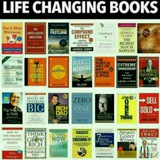
Habits with a high return in life:
✅ Planning your day/week/month
✅ Sleeping 7–8 hours daily
✅ Moving your body (gym, sport, or running)
✅ Walking at least once a day
✅ Saving 10% or more of your income
✅ Reading daily (even 10 minutes)
✅ Staying close to friends & family
✅ Drinking more water, less of everything else
✅ Leaving your phone outside while working
✅ Eating whole foods, not just fast ones
✅ Reflecting weekly (journaling or thinking time)
✅ Being on time
✅ Choosing discomfort over regret
❎ Finishing what you start!
📚 @LifeChangingBook
✅ Planning your day/week/month
✅ Sleeping 7–8 hours daily
✅ Moving your body (gym, sport, or running)
✅ Walking at least once a day
✅ Saving 10% or more of your income
✅ Reading daily (even 10 minutes)
✅ Staying close to friends & family
✅ Drinking more water, less of everything else
✅ Leaving your phone outside while working
✅ Eating whole foods, not just fast ones
✅ Reflecting weekly (journaling or thinking time)
✅ Being on time
✅ Choosing discomfort over regret
❎ Finishing what you start!
📚 @LifeChangingBook
❤21👍5
This media is not supported in your browser
VIEW IN TELEGRAM
Why not see who you can become?
Why pay the price?
Why work so hard?
Why go so far?
Jim Rohn's answer was simple —
✅ "Why not?"
Why not see how much you can learn?
Why not see how far you can go?
Why not discover how strong you really are?
Why not find out who you can become?
That’s why Jim Rohn remains one of the best.
His words remind us:
Don’t limit your potential — explore it.
📚 @LifeChangingBook
Why pay the price?
Why work so hard?
Why go so far?
Jim Rohn's answer was simple —
✅ "Why not?"
Why not see how much you can learn?
Why not see how far you can go?
Why not discover how strong you really are?
Why not find out who you can become?
That’s why Jim Rohn remains one of the best.
His words remind us:
Don’t limit your potential — explore it.
📚 @LifeChangingBook
❤12
One book. One idea. One decision.
That’s all it takes to change your direction.
Some books entertain you.
But life-changing books?
They interrupt you.
They challenge your excuses.
They plant seeds you can't unsee.
The right book at the right moment doesn’t just give you answers —
it asks better questions.
It shifts your mindset.
It dares you to grow.
That’s why you keep reading.
Because you never know which book will be the one that changes everything.
📚 @LifeChangingBook
That’s all it takes to change your direction.
Some books entertain you.
But life-changing books?
They interrupt you.
They challenge your excuses.
They plant seeds you can't unsee.
The right book at the right moment doesn’t just give you answers —
it asks better questions.
It shifts your mindset.
It dares you to grow.
That’s why you keep reading.
Because you never know which book will be the one that changes everything.
📚 @LifeChangingBook
❤14🔥5
Don’t rush to the finish line.
Growth doesn’t happen there — it happens on the way.
We often obsess over the destination: the job, the money, the “success.”
But what if the real win is falling in love with the process?
As Mark Manson says:
When you’re obsessed with the end goal, the journey feels like a burden.
But when you learn to enjoy the daily discipline, the effort, the ups and downs,
you become unstoppable.
Success isn’t just about arriving. It’s about becoming.
Enjoy the path — it’s the only part you truly live.
📚 @LifeChangingBook
Growth doesn’t happen there — it happens on the way.
We often obsess over the destination: the job, the money, the “success.”
But what if the real win is falling in love with the process?
As Mark Manson says:
The struggle is the meaning.
Happiness comes from solving problems, not avoiding them.
When you’re obsessed with the end goal, the journey feels like a burden.
But when you learn to enjoy the daily discipline, the effort, the ups and downs,
you become unstoppable.
Success isn’t just about arriving. It’s about becoming.
Enjoy the path — it’s the only part you truly live.
📚 @LifeChangingBook
👍11❤7
📘 LIFE'S TOUGHEST MOMENTS — THINK BIG
From The Magic of Thinking Big by David J. Schwartz
In life’s hardest situations, our mind tends to shrink — and that’s exactly when we must expand it.
When you Think Big, your world grows with it. 💭✨
Here’s how to stay mentally strong when it matters most:
🔹 When people try to bring you down
– Don’t fight with petty people. It shrinks you.
– Their hate is proof you’re growing.
– Feel sorry for them — not angry.
🔹 When self-doubt kicks in
– Look important. Act important. Feel important.
– Focus on your strengths — build your inner commercial.
– Others are just people. You are not less.
🔹 When conflict seems unavoidable
– Ask: “Is it even worth it?”
– You never win an argument — you always lose peace.
– Big thinkers don’t waste time in fights.
🔹 When you feel defeated
– Learn the lesson. Rebuild with new energy.
– Failure is only a mindset — not a fact.
– Think: “I’m just getting started.”
🔹 When love starts fading
– Focus on your partner’s best qualities.
– Do something thoughtful — often.
– Small minds hold grudges. Big hearts choose love.
🔹 When your progress slows down
– Say: “I can do better.”
– The best is never finished.
– Serve first. Money follows value.
🎯 The size of your thinking determines the size of your life.
Save this post for tough days. Reread it when you feel small.
Big thinking is a habit, and doesn’t cost anything — just positivity and courage. 💡💪
📚 @LifeChangingBook
From The Magic of Thinking Big by David J. Schwartz
In life’s hardest situations, our mind tends to shrink — and that’s exactly when we must expand it.
When you Think Big, your world grows with it. 💭✨
Here’s how to stay mentally strong when it matters most:
🔹 When people try to bring you down
– Don’t fight with petty people. It shrinks you.
– Their hate is proof you’re growing.
– Feel sorry for them — not angry.
🔹 When self-doubt kicks in
– Look important. Act important. Feel important.
– Focus on your strengths — build your inner commercial.
– Others are just people. You are not less.
🔹 When conflict seems unavoidable
– Ask: “Is it even worth it?”
– You never win an argument — you always lose peace.
– Big thinkers don’t waste time in fights.
🔹 When you feel defeated
– Learn the lesson. Rebuild with new energy.
– Failure is only a mindset — not a fact.
– Think: “I’m just getting started.”
🔹 When love starts fading
– Focus on your partner’s best qualities.
– Do something thoughtful — often.
– Small minds hold grudges. Big hearts choose love.
🔹 When your progress slows down
– Say: “I can do better.”
– The best is never finished.
– Serve first. Money follows value.
🎯 The size of your thinking determines the size of your life.
Save this post for tough days. Reread it when you feel small.
Big thinking is a habit, and doesn’t cost anything — just positivity and courage. 💡💪
📚 @LifeChangingBook
❤12👍8
📘 What does it really take to learn something difficult?
Not talent. Not motivation.
The answer is: Deep, focused practice.
According to research by Anders Ericsson and books like The Talent Code, here’s what actually helps you master a skill:
1️⃣ Focus completely on one skill at a time.
2️⃣ Get feedback, improve, and repeat.
But here’s the vital part:
Deliberate practice does not work with distractions.
If you're half-focused, you train the wrong brain circuits.
🧠 When you focus deeply, your brain builds myelin — a layer around your brain cells that helps them fire faster and stronger.
💡 Myelin = brain insulation. More myelin = better performance.
If you’re checking your phone while learning something hard (like coding, writing, or a math problem), your brain fires in random directions — no growth happens.
🎯 To learn fast, go deep.
No multitasking. No noise. Just full attention.
Deep work isn’t just productive — it literally rewires your brain to become better and smarter.
📚 @LifeChangingBook
Not talent. Not motivation.
The answer is: Deep, focused practice.
According to research by Anders Ericsson and books like The Talent Code, here’s what actually helps you master a skill:
1️⃣ Focus completely on one skill at a time.
2️⃣ Get feedback, improve, and repeat.
But here’s the vital part:
Deliberate practice does not work with distractions.
If you're half-focused, you train the wrong brain circuits.
🧠 When you focus deeply, your brain builds myelin — a layer around your brain cells that helps them fire faster and stronger.
💡 Myelin = brain insulation. More myelin = better performance.
If you’re checking your phone while learning something hard (like coding, writing, or a math problem), your brain fires in random directions — no growth happens.
🎯 To learn fast, go deep.
No multitasking. No noise. Just full attention.
Deep work isn’t just productive — it literally rewires your brain to become better and smarter.
📚 @LifeChangingBook
👍16❤5🔥3
Confidence
If you don’t have confidence, build skills.
If you lack skills, build discipline.
If discipline is hard, create accountability.
If you can’t stay accountable, change your environment.
Every step leads to the next.
Don’t wait for confidence — build your way up to it.
📚 @LifeChangingBook
If you don’t have confidence, build skills.
If you lack skills, build discipline.
If discipline is hard, create accountability.
If you can’t stay accountable, change your environment.
Every step leads to the next.
Don’t wait for confidence — build your way up to it.
📚 @LifeChangingBook
👍15❤5
Life Changing Books pinned «Habits with a high return in life: ✅ Planning your day/week/month ✅ Sleeping 7–8 hours daily ✅ Moving your body (gym, sport, or running) ✅ Walking at least once a day ✅ Saving 10% or more of your income ✅ Reading daily (even 10 minutes) ✅ Staying…»
Control What You Can. Let Go of the Rest.
From The Daily Stoic — Ryan Holiday
— Epictetus, Discourses 2.5.4–5
One of the most powerful ideas in Stoic philosophy — and in life — is learning the difference between what we can change and what we can’t.
We can’t control the weather.
We can’t change where we were born.
We can’t force others to like or understand us.
But we can control our reactions, our choices, and how we respond to every situation.
When we waste energy trying to move the immovable, we lose time we could use to shape our own path.
The Serenity Prayer says it perfectly:
⚖️ Wisdom starts with this simple act:
Stop fighting battles outside your control.
Start mastering what is within your power — your mindset, your words, your decisions.
That’s where peace begins. That’s where strength grows.
📚 @LifeChangingBook
From The Daily Stoic — Ryan Holiday
“The chief task in life is simply this: to separate what is in our control from what is not.”
— Epictetus, Discourses 2.5.4–5
One of the most powerful ideas in Stoic philosophy — and in life — is learning the difference between what we can change and what we can’t.
We can’t control the weather.
We can’t change where we were born.
We can’t force others to like or understand us.
But we can control our reactions, our choices, and how we respond to every situation.
When we waste energy trying to move the immovable, we lose time we could use to shape our own path.
The Serenity Prayer says it perfectly:
“God, grant me the serenity to accept the things I cannot change,
the courage to change the things I can,
and the wisdom to know the difference.”
⚖️ Wisdom starts with this simple act:
Stop fighting battles outside your control.
Start mastering what is within your power — your mindset, your words, your decisions.
That’s where peace begins. That’s where strength grows.
📚 @LifeChangingBook
❤13👍7
Envy: Turning Heartburn into Fuel 🔥
Envy is universal. Even towards friends or relatives—especially when they succeed at something we desire. But how we respond to envy defines us.
In The Laws of Human Nature, Robert Greene writes:
This means envy isn't entirely negative. It reveals what we deeply value. When you envy someone, pause and reflect:
Why did they succeed while you didn’t?
Maybe they dedicated time to study, practice, and growth, while you chose immediate comfort.
Or perhaps they received help from others—but remember, achievements gained without genuine effort often lack fulfillment, like receiving a medal for a race you never ran.
As Mark Manson says in The Subtle Art of Not Giving a F*ck:
Real satisfaction isn't found in simply “having,” but in the growth, challenge, and personal development along the way.
Instead of letting envy burn your heart, let it ignite your drive. Focus less on their results and more on your own journey.
That’s where lasting satisfaction truly lies.
📚 @LifeChangingBook
Envy is universal. Even towards friends or relatives—especially when they succeed at something we desire. But how we respond to envy defines us.
In The Laws of Human Nature, Robert Greene writes:
“Envy is the shadow side of admiration.”
This means envy isn't entirely negative. It reveals what we deeply value. When you envy someone, pause and reflect:
Why did they succeed while you didn’t?
Maybe they dedicated time to study, practice, and growth, while you chose immediate comfort.
Or perhaps they received help from others—but remember, achievements gained without genuine effort often lack fulfillment, like receiving a medal for a race you never ran.
As Mark Manson says in The Subtle Art of Not Giving a F*ck:
“Happiness comes from solving problems.”
Real satisfaction isn't found in simply “having,” but in the growth, challenge, and personal development along the way.
Instead of letting envy burn your heart, let it ignite your drive. Focus less on their results and more on your own journey.
That’s where lasting satisfaction truly lies.
📚 @LifeChangingBook
❤12👍4
Life Changing Books
📘 What does it really take to learn something difficult? Not talent. Not motivation. The answer is: Deep, focused practice. According to research by Anders Ericsson and books like The Talent Code, here’s what actually helps you master a skill: 1️⃣ Focus…
🧠 Andrew Huberman on Building Focus (without drugs)
Andrew Huberman, a neuroscientist at Stanford University, often gets asked about medications or supplements for focus. His advice is clear:
“You can train focus. It’s like a workout.”
Here’s his practical approach:
✅ Set a timer for 2–3 hours.
✅ Force yourself to focus on one task.
✅ Every distraction adds 10 minutes.
✅ Allow yourself only one quick bathroom break.
✅ The next session gets easier.
People may dislike this solution, but it’s the only non-pharmacological method that reliably builds deep, lasting focus.
Stop waiting for ideal conditions. Feeling distracted or uncomfortable means your mental muscles are growing.
Some might call this tough or extreme, but that’s missing the point. Unless you truly love the task, deep focus is difficult at first. The power comes when you do it anyway.
Most people drift into distraction. Don’t be one of them.
📚 @LifeChangingBook
Andrew Huberman, a neuroscientist at Stanford University, often gets asked about medications or supplements for focus. His advice is clear:
“You can train focus. It’s like a workout.”
Here’s his practical approach:
✅ Set a timer for 2–3 hours.
✅ Force yourself to focus on one task.
✅ Every distraction adds 10 minutes.
✅ Allow yourself only one quick bathroom break.
✅ The next session gets easier.
People may dislike this solution, but it’s the only non-pharmacological method that reliably builds deep, lasting focus.
Stop waiting for ideal conditions. Feeling distracted or uncomfortable means your mental muscles are growing.
Some might call this tough or extreme, but that’s missing the point. Unless you truly love the task, deep focus is difficult at first. The power comes when you do it anyway.
Most people drift into distraction. Don’t be one of them.
📚 @LifeChangingBook
❤19
Life Changing Books
Photo
🧠 Is AI Hurting Our Brains? MIT Study Says Yes
Study proves AI is dulling our cognitive abilities. Brain scans show AI use reduces your memory and critical thinking.
A recent MIT study has raised serious concerns about the long-term cognitive effects of relying on AI tools like ChatGPT.
Using EEG brain scans, researchers tracked 54 students over four months and found that those who consistently used ChatGPT for writing tasks showed significantly reduced brain activity, memory retention, and critical thinking compared to peers using Google or no tools at all. Dubbed “The Cognitive Cost of Using LLMs,” the study revealed that AI users not only produced less original work but also struggled to recall their own writing shortly after completing it.
While ChatGPT offered speed and ease, this came at a cost—what researchers called “mental passivity.” The study also warned of AI-induced echo chambers, where users accept algorithm-generated responses without questioning their validity. Interestingly, even when AI users switched to unaided tasks, their cognitive engagement remained low. In contrast, those who began without assistance later showed heightened brain activity when introduced to tools, suggesting that AI works best as a support—not a substitute—for human thinking.
more
📚 @LifeChangingBook
Study proves AI is dulling our cognitive abilities. Brain scans show AI use reduces your memory and critical thinking.
A recent MIT study has raised serious concerns about the long-term cognitive effects of relying on AI tools like ChatGPT.
Using EEG brain scans, researchers tracked 54 students over four months and found that those who consistently used ChatGPT for writing tasks showed significantly reduced brain activity, memory retention, and critical thinking compared to peers using Google or no tools at all. Dubbed “The Cognitive Cost of Using LLMs,” the study revealed that AI users not only produced less original work but also struggled to recall their own writing shortly after completing it.
While ChatGPT offered speed and ease, this came at a cost—what researchers called “mental passivity.” The study also warned of AI-induced echo chambers, where users accept algorithm-generated responses without questioning their validity. Interestingly, even when AI users switched to unaided tasks, their cognitive engagement remained low. In contrast, those who began without assistance later showed heightened brain activity when introduced to tools, suggesting that AI works best as a support—not a substitute—for human thinking.
more
📚 @LifeChangingBook
👍7❤3👏2
🚫 “Work smarter, not harder?” I’ve never liked that advice.
Here’s why:
“Work smarter” suggests you already know what “smart” looks like—that there’s a shortcut, a quick trick, or an easy solution waiting to be picked up.
But in reality, anything worthwhile is rarely obvious or easy. Most times, you don’t even know what “smart” is until you've done the hard work first.
The truth is:
Working hard teaches you what “smart” really means.
There’s no shortcut to discovering smarter methods—you earn them by experience.
When you finally learn to work smart after working hard, the results become powerful and lasting.
Forget “work smarter, not harder.”
Embrace “Work hard, get smart.”
Because smart is never a shortcut—it’s something you earn along the way.
📚 @LifeChangingBook
Here’s why:
“Work smarter” suggests you already know what “smart” looks like—that there’s a shortcut, a quick trick, or an easy solution waiting to be picked up.
But in reality, anything worthwhile is rarely obvious or easy. Most times, you don’t even know what “smart” is until you've done the hard work first.
The truth is:
Working hard teaches you what “smart” really means.
There’s no shortcut to discovering smarter methods—you earn them by experience.
When you finally learn to work smart after working hard, the results become powerful and lasting.
Forget “work smarter, not harder.”
Embrace “Work hard, get smart.”
Because smart is never a shortcut—it’s something you earn along the way.
📚 @LifeChangingBook
❤21👍2🔥2👏2
🌍 Everyone wants rules—until those rules apply to them.
We all desire fairness and order in society. We expect others to follow the rules, making our lives predictable and safe.
But often, when the rules aren’t in our favor, we secretly hope for exceptions. Suddenly, fairness feels unfair—when it applies to us.
Yet the truth remains:
The world doesn't give you what you want—it gives you what you deserve.
If you want better outcomes, become someone who deserves better outcomes.
Respect rules, even when it’s hard.
Hold yourself to the same standards you demand from others.
Fairness starts with you.
📚 @LifeChangingBook
We all desire fairness and order in society. We expect others to follow the rules, making our lives predictable and safe.
But often, when the rules aren’t in our favor, we secretly hope for exceptions. Suddenly, fairness feels unfair—when it applies to us.
Yet the truth remains:
The world doesn't give you what you want—it gives you what you deserve.
If you want better outcomes, become someone who deserves better outcomes.
Respect rules, even when it’s hard.
Hold yourself to the same standards you demand from others.
Fairness starts with you.
📚 @LifeChangingBook
❤18👍1🔥1
🛡 Resistance: Inner Conflict
Most of us live two lives: the one we're currently living, and the unlived life within us. Standing between these two is RESISTANCE.
➖Every person encounters an invisible force working against their best interests. Steven Pressfield names this force Resistance—a subtle, internal obstacle blocking positive change.
➖ You can't see or touch Resistance, but you definitely feel it. It emerges as negative energy pushing back against your efforts, whether it's reading, learning a new language, taking an extra course, dieting, exercising, or pursuing meaningful goals.
➖ Resistance is universal—it resides in all of us. Yet, it holds no power on its own; it draws strength from our hesitation and fear, strongest at the very beginning and end of our endeavors.
➖ Often, Resistance disguises itself as procrastination. Instead of outright saying, “I'll never read this book,” we simply postpone: “I'll start tomorrow.”
➖ The greater your goal, the more intense the Resistance.
➖Rationalization (excuse-making) is Resistance’s greatest ally. Daily, we convince ourselves why we delay action: “I’m tired,” “I'll start next week,” “I'm not ready,” or “What will others think?”
➖ Self-deception is part of human nature, but real problems begin when we start believing our own excuses.
➖ Above all, Resistance is the ultimate enemy of inner peace.
— Inspired by The War of Art by Steven Pressfield
📚 @LifeChangingBook
Most of us live two lives: the one we're currently living, and the unlived life within us. Standing between these two is RESISTANCE.
➖Every person encounters an invisible force working against their best interests. Steven Pressfield names this force Resistance—a subtle, internal obstacle blocking positive change.
➖ You can't see or touch Resistance, but you definitely feel it. It emerges as negative energy pushing back against your efforts, whether it's reading, learning a new language, taking an extra course, dieting, exercising, or pursuing meaningful goals.
➖ Resistance is universal—it resides in all of us. Yet, it holds no power on its own; it draws strength from our hesitation and fear, strongest at the very beginning and end of our endeavors.
➖ Often, Resistance disguises itself as procrastination. Instead of outright saying, “I'll never read this book,” we simply postpone: “I'll start tomorrow.”
➖ The greater your goal, the more intense the Resistance.
➖Rationalization (excuse-making) is Resistance’s greatest ally. Daily, we convince ourselves why we delay action: “I’m tired,” “I'll start next week,” “I'm not ready,” or “What will others think?”
➖ Self-deception is part of human nature, but real problems begin when we start believing our own excuses.
➖ Above all, Resistance is the ultimate enemy of inner peace.
— Inspired by The War of Art by Steven Pressfield
📚 @LifeChangingBook
❤10👍2
Don’t Major in Minor Things
Some people spend the best hours of their life on small distractions.
Their main focus?
🍔 What to eat next.
💸 How to save a few cents while shopping.
⚽ Memorizing every football score.
📺 Knowing every celebrity update.
Yes — these can be fun in moderation. But when minor things become your major focus, something bigger is lost.
You have only so much energy, attention, and time. If most of it goes to chasing entertainment, gossip, or tiny savings… what’s left for your real goals?
Achieving financial freedom.
Helping your family.
Finding your why.
Developing your skills.
Enjoy life’s little pleasures — but don’t let them take the space reserved for what truly matters.
Major in what matters.
Minor in what doesn’t.
— Inspired by the principles of The 7 Habits of Highly Effective People
📚 @LifeChangingBook
Some people spend the best hours of their life on small distractions.
Their main focus?
🍔 What to eat next.
💸 How to save a few cents while shopping.
⚽ Memorizing every football score.
📺 Knowing every celebrity update.
Yes — these can be fun in moderation. But when minor things become your major focus, something bigger is lost.
You have only so much energy, attention, and time. If most of it goes to chasing entertainment, gossip, or tiny savings… what’s left for your real goals?
Achieving financial freedom.
Helping your family.
Finding your why.
Developing your skills.
Enjoy life’s little pleasures — but don’t let them take the space reserved for what truly matters.
Major in what matters.
Minor in what doesn’t.
— Inspired by the principles of The 7 Habits of Highly Effective People
📚 @LifeChangingBook
❤20
💫 Atmosphere Helps Ambition
While writing my master’s thesis related startups, something unexpected happened:
I started thinking about launching a startup myself—even though it isn’t in my near-term plans. Why? Atmosphere. When you study founders, interview them, read their books, and spend time in builder spaces, your mind begins to tilt toward building.
But I also believe in sequence. People I follow says: you truly master a field after 7–8 years of deep work. I want to master a craft first, then consider my own company. Still, the lesson is clear: the people and places around you quietly rewrite your goals.
You become what you’re around.
If your circle trains, you’ll train.
If your circle reads, you’ll read.
If your circle ships projects, you’ll start shipping, too.
Some say, “My friends are lazy.” Don’t blame the atmosphere—change it, you are not a tree. You’re the one steering your life. You’re the one here.
How to engineer a better atmosphere (practical):
1. Change places, change habits. Go to libraries, co-working spaces, founder meetups, gyms. Places have gravity.
2. Filter your inputs. Unfollow noise. Follow builders, researchers, and authors who make you think.
3. Find “quiet allies.” You don’t need 20 motivated friends—2–3 serious people are enough.
4. Let books mentor you. If you can’t find the right people yet, read the greats. Books will talk to you.
5. Do not fill your mind with noise. Listen to podcast/people you admire, not 100 times a meaningless song.
6. Accept the lonely stretch. Upgrading your atmosphere can feel isolating at first. That’s normal—and temporary.
7. Respect sequence. Learn → practice → ship small things → then scale. Mastery before moonshots.
Remember: environment > motivation. If you place your body in the right rooms often enough, your mind will follow—and your actions will, too.
Not everyone will change with you. That’s okay. If you keep choosing the right atmosphere, you’ll do the uncommon work that creates uncommon results.
Major in what matters. Let your atmosphere help you do it.
📚 @LifeChangingBook
While writing my master’s thesis related startups, something unexpected happened:
I started thinking about launching a startup myself—even though it isn’t in my near-term plans. Why? Atmosphere. When you study founders, interview them, read their books, and spend time in builder spaces, your mind begins to tilt toward building.
But I also believe in sequence. People I follow says: you truly master a field after 7–8 years of deep work. I want to master a craft first, then consider my own company. Still, the lesson is clear: the people and places around you quietly rewrite your goals.
You become what you’re around.
If your circle trains, you’ll train.
If your circle reads, you’ll read.
If your circle ships projects, you’ll start shipping, too.
Some say, “My friends are lazy.” Don’t blame the atmosphere—change it, you are not a tree. You’re the one steering your life. You’re the one here.
How to engineer a better atmosphere (practical):
1. Change places, change habits. Go to libraries, co-working spaces, founder meetups, gyms. Places have gravity.
2. Filter your inputs. Unfollow noise. Follow builders, researchers, and authors who make you think.
3. Find “quiet allies.” You don’t need 20 motivated friends—2–3 serious people are enough.
4. Let books mentor you. If you can’t find the right people yet, read the greats. Books will talk to you.
5. Do not fill your mind with noise. Listen to podcast/people you admire, not 100 times a meaningless song.
6. Accept the lonely stretch. Upgrading your atmosphere can feel isolating at first. That’s normal—and temporary.
7. Respect sequence. Learn → practice → ship small things → then scale. Mastery before moonshots.
Remember: environment > motivation. If you place your body in the right rooms often enough, your mind will follow—and your actions will, too.
Not everyone will change with you. That’s okay. If you keep choosing the right atmosphere, you’ll do the uncommon work that creates uncommon results.
Major in what matters. Let your atmosphere help you do it.
📚 @LifeChangingBook
❤18
✨ Everything is beautiful depending on the situation.
The same school bell that feels irritating at 9:00 AM sounds melodious at 4:00 PM.
It’s not the sound that changes, it’s our perspective. 🌿
Life often works the same way — moments, people, and challenges may seem heavy or annoying in one situation, yet precious and meaningful in another.
🕊️ Sometimes, beauty is not in the thing itself, but in when and how we experience it.
📖 “Change the way you look at things, and the things you look at change.” – Wayne Dyer
📚 @LifeChangingBook
The same school bell that feels irritating at 9:00 AM sounds melodious at 4:00 PM.
It’s not the sound that changes, it’s our perspective. 🌿
Life often works the same way — moments, people, and challenges may seem heavy or annoying in one situation, yet precious and meaningful in another.
🕊️ Sometimes, beauty is not in the thing itself, but in when and how we experience it.
📖 “Change the way you look at things, and the things you look at change.” – Wayne Dyer
📚 @LifeChangingBook
❤12👍4😁1
💫 Change Is an Inside Job
Many of us battle with unwanted habits – extra weight, digital distractions, or spending beyond our means – yet find ourselves stuck in the same patterns. These patterns are not merely a result of laziness; they often serve to protect our current identity. Psychology shows that change requires more than a new routine: it requires breaking an old belief and forming a new one.
Two Forces Driving Change: Pain vs Choice
1. Outside-in (pain): crisis, loss, failure push you forward—usually short-lived.
2. Inside-out (choice): understand why you do things, then choose knowledge, discipline, and conscious action—this lasts.
If an egg breaks from the outside, life ends.
If it breaks from the inside, life begins.
Great things start within. ✨
You can’t control the first.
You fully control the second.
60-second self-audit:
Which belief must die for my life to grow?
What single skill would raise income/health/peace in 90 days?
Who will hold me accountable this week?
7-Day “Pull-Up” Challenge
Each day, when life pulls you down, do one tiny action that pulls you up:
- 10 minutes of study before screens
- 5,000 extra steps
- One hard conversation
- 15 minutes of journaling/quiet reflection
Small ≠ weak. Small = repeatable. Repeatable becomes identity.
📚 @LifeChangingBook
Many of us battle with unwanted habits – extra weight, digital distractions, or spending beyond our means – yet find ourselves stuck in the same patterns. These patterns are not merely a result of laziness; they often serve to protect our current identity. Psychology shows that change requires more than a new routine: it requires breaking an old belief and forming a new one.
Two Forces Driving Change: Pain vs Choice
1. Outside-in (pain): crisis, loss, failure push you forward—usually short-lived.
2. Inside-out (choice): understand why you do things, then choose knowledge, discipline, and conscious action—this lasts.
If an egg breaks from the outside, life ends.
If it breaks from the inside, life begins.
Great things start within. ✨
You can’t control the first.
You fully control the second.
60-second self-audit:
Which belief must die for my life to grow?
What single skill would raise income/health/peace in 90 days?
Who will hold me accountable this week?
7-Day “Pull-Up” Challenge
Each day, when life pulls you down, do one tiny action that pulls you up:
- 10 minutes of study before screens
- 5,000 extra steps
- One hard conversation
- 15 minutes of journaling/quiet reflection
Small ≠ weak. Small = repeatable. Repeatable becomes identity.
📚 @LifeChangingBook
❤5🔥5👏1😁1