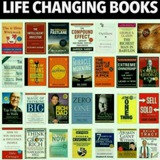
7 Habits for Success:
1. Read every day.
2. Make your health a priority.
3. Learn from people you admire.
4. Plan your day the night before.
5. Keep your goals in front of you.
6. Take action, even when it's scary.
7. Have an attitude of gratitude.
📚 @LifeChangingBook
1. Read every day.
2. Make your health a priority.
3. Learn from people you admire.
4. Plan your day the night before.
5. Keep your goals in front of you.
6. Take action, even when it's scary.
7. Have an attitude of gratitude.
📚 @LifeChangingBook
❤26👍6🥰4🔥2
Reading books vs. watching TV — is one really better for us?
All the research says reading a book is good for you. Better even than listening to an audiobook or reading one on an e-reader. It reduces stress, promotes comprehension and imagination, alleviates depression, helps you sleep and may contribute to preventing Alzheimer’s (Alzheimer's is a disease the most common type of dementia).
Reading is active; watching TV is passive. The act of physically turning a page creates a momentary pause for understanding to sink in. Our brains have to work to translate the black squiggles on the page into words and then interpret the meaning and intent of those words. When a character is described as tall with brown hair, a reader creates her own picture. TV takes all that imagination away.
Reading is better than watching TV
Reading is a whole lot better than watching TV in more ways than you can imagine. Even from an early age, the use of screens brings massive disadvantages when compared to time spent reading. Not only because reading is an incredibly useful learning tool, while the TV has a main entertainment purpose, but also because of the effect both have on our brains.
Reading has a positive effect on our mental health while watching TV has the exact opposite effect. Reading can reduce stress, and lower our blood pressure, our heart rate, and muscle tension.
On top of the knowledge boost reading provides us with, it also has a healing effect on our mental state. Especially if we approach reading with mindfulness, there is a lot for us to gain if we spend more time reading and less time watching TV. Reading allows us to live less stressful, wiser, and more empathetic lives.
Why is reading better than watching TV?
Now that we have established that reading is a much healthier, more useful and rewarding activity than watching TV, let’s have a look at a couple of important aspects that differentiate the two and some of the most relevant benefits of reading vs watching TV.
Reading benefits
First, let’s explore some of the most important benefits that those of us who have the habit of reading can enjoy.
Reading improves general knowledge: there is no better way of acquiring information on pretty much any subject than through reading.
Reading makes us better people: by helping us relax, making us wiser and better informed, improving our ability to empathize with others, and teaching us countless life lessons, reading makes us better people in countless aspects.
Reading helps us live longer and healthier lives: the benefits of reading books go well beyond our mental health. Reading can lower your blood pressure, slow your heart rate, delay the onset of age-related cognitive diseases like Alzheimer’s or dementia, and can even extend our life expectancy.
Reading is like cardio for your brain: even though anatomically they have almost nothing in common, your brain and your muscles share a couple of similarities to a certain extent. More precisely, your brain will function a lot better the more you exercise it, just like your muscles. Reading is a great exercise for your brain and people who read constantly not only have better learning performance but also have a much healthier brain, which allows them to have a young and sharp mind even in old age.
📚 @LifeChangingBook
All the research says reading a book is good for you. Better even than listening to an audiobook or reading one on an e-reader. It reduces stress, promotes comprehension and imagination, alleviates depression, helps you sleep and may contribute to preventing Alzheimer’s (Alzheimer's is a disease the most common type of dementia).
Reading is active; watching TV is passive. The act of physically turning a page creates a momentary pause for understanding to sink in. Our brains have to work to translate the black squiggles on the page into words and then interpret the meaning and intent of those words. When a character is described as tall with brown hair, a reader creates her own picture. TV takes all that imagination away.
Reading is better than watching TV
Reading is a whole lot better than watching TV in more ways than you can imagine. Even from an early age, the use of screens brings massive disadvantages when compared to time spent reading. Not only because reading is an incredibly useful learning tool, while the TV has a main entertainment purpose, but also because of the effect both have on our brains.
Reading has a positive effect on our mental health while watching TV has the exact opposite effect. Reading can reduce stress, and lower our blood pressure, our heart rate, and muscle tension.
On top of the knowledge boost reading provides us with, it also has a healing effect on our mental state. Especially if we approach reading with mindfulness, there is a lot for us to gain if we spend more time reading and less time watching TV. Reading allows us to live less stressful, wiser, and more empathetic lives.
Why is reading better than watching TV?
Now that we have established that reading is a much healthier, more useful and rewarding activity than watching TV, let’s have a look at a couple of important aspects that differentiate the two and some of the most relevant benefits of reading vs watching TV.
Reading benefits
First, let’s explore some of the most important benefits that those of us who have the habit of reading can enjoy.
Reading improves general knowledge: there is no better way of acquiring information on pretty much any subject than through reading.
Reading makes us better people: by helping us relax, making us wiser and better informed, improving our ability to empathize with others, and teaching us countless life lessons, reading makes us better people in countless aspects.
Reading helps us live longer and healthier lives: the benefits of reading books go well beyond our mental health. Reading can lower your blood pressure, slow your heart rate, delay the onset of age-related cognitive diseases like Alzheimer’s or dementia, and can even extend our life expectancy.
Reading is like cardio for your brain: even though anatomically they have almost nothing in common, your brain and your muscles share a couple of similarities to a certain extent. More precisely, your brain will function a lot better the more you exercise it, just like your muscles. Reading is a great exercise for your brain and people who read constantly not only have better learning performance but also have a much healthier brain, which allows them to have a young and sharp mind even in old age.
📚 @LifeChangingBook
👍10❤2
What is dopamine?
Dopamine is a chemical released in the brain that makes you feel good. Having the right amount of dopamine is important both for your body and your brain. Dopamine helps nerve cells to send messages to each other.
What does dopamine do to a person?
What is the role of dopamine? Dopamine is responsible for allowing you to feel pleasure, satisfaction, and motivation. When you feel good that you have achieved something, it's because you have a surge of dopamine in the brain.
Does dopamine help you study?
New research suggests that dopamine, the chemical which controls pleasure and memory in the brain, can be used to hijack motivation and increase attention spans among learners – and when used correctly, it can even make your learning courses addicting.
📚 @LifeChangingBook
Dopamine is a chemical released in the brain that makes you feel good. Having the right amount of dopamine is important both for your body and your brain. Dopamine helps nerve cells to send messages to each other.
What does dopamine do to a person?
What is the role of dopamine? Dopamine is responsible for allowing you to feel pleasure, satisfaction, and motivation. When you feel good that you have achieved something, it's because you have a surge of dopamine in the brain.
Does dopamine help you study?
New research suggests that dopamine, the chemical which controls pleasure and memory in the brain, can be used to hijack motivation and increase attention spans among learners – and when used correctly, it can even make your learning courses addicting.
📚 @LifeChangingBook
🆒8❤5👍5
Sometimes life doesn't give you what you want, Not because you don't deserve it, but because you deserve more !
📚 @LifechangingBook
📚 @LifechangingBook
👍11❤4👏2💔1
An 88-year-old man died in Germany recently. He had a private library that contained 70,000 books that no one knew about, and he had built all the furniture for the books himself. ❤️
(Source: BRICO ET DÉCO)
📚 @LifechangingBook
(Source: BRICO ET DÉCO)
📚 @LifechangingBook
👏22❤12👍4
Your confidence is an exact measure of your expertise.
There are many, possibly infinite, potential actions that you can take at any moment. And at every moment, one action has to be singled out as the best possible action that you can take. And your confidence is the degree of certainty you have that the action you took is truly the best possible one. To put it simply, your confidence is a measure of how correct you think you are.
For example, let’s assume that you’re a waiter, and you’re trying to remember what drink one of your customers ordered. Let’s say they ordered an iced tea, but you think they ordered a coke. So the best possible action to take is to get them iced tea, but you think it’s to get them a coke. And if you’re highly certain that they ordered a coke, we would say you’re highly confident, even though that confidence is misguided. And confidence, even if it's misguided, leads to action. Lack of confidence, on the other hand, leads to hesitation. See, if you’re not confident that your customer ordered a coke, you would hesitate to get it for them. You’d probably go back and ask them what they ordered. You would do more research and refine your hypothesis. They tell you that they ordered an iced tea.
So you refine your hypothesis, and your confidence in this hypothesis goes up. And with increased confidence, comes an increased desire to take action. A life without confidence is a life unlived because a life without confidence is a life full of hesitation. It’s a life full of plans that were never acted on. It’s a life full of dreams that were never realized. It’s a life spent in study and research, without any action. It’s a life full of wasted potential and regret. On the other hand, a life of overconfidence is reckless and short-sighted. It’s a life full of failures and poorly executed plans.
It’s a life spent acting impulsively, never reflecting on how to act better. And so similar to a life without confidence, overconfidence leads to a life of wasted potential. Achieving your greatest potential starts with true confidence.
The true confidence is neither unconfident nor overconfident. True confidence is when how correct you think you overlap with how correct you actually are. In other words, you are correct about how correct you think you are.
Your confidence is an exact measure of your expertise. You have an accurate view of your own knowledge. You have self-awareness.
For example, a brain surgeon with true confidence knows the limits of his own knowledge and that makes him a great surgeon. When he comes across problems that are outside of his domain of expertise, he passes the problem on to someone more qualified. He’s not reckless. And when he comes across problems that are within his domain of expertise, he handles them without fear or hesitation. He’s neither overconfident or unconfident, but truly confident. The best way, then, to achieve your greatest potential is to focus on your expertise, not your confidence. True confidence will always walk hand-in-hand with your expertise.
Most people, for example, would be confident in getting a glass of water in their house, because they’ve done it a hundred times before. They’re certain that they could do it. And the more times you’ve solved a problem in the past, the more certain you are that you can solve it in the future. Expertise is what leads to true confidence, and expertise comes from solving a problem so many times that you can’t help but believe in your ability to solve it. And expertise is natural and inevitable when you consistently overcome the tests that life gives you. A man who has to grow his business in difficult times—through recessions, times of cultural and technological transition, and changing consumer demands—will have to become an expert in order to succeed.
📚 @LifechangingBook
There are many, possibly infinite, potential actions that you can take at any moment. And at every moment, one action has to be singled out as the best possible action that you can take. And your confidence is the degree of certainty you have that the action you took is truly the best possible one. To put it simply, your confidence is a measure of how correct you think you are.
For example, let’s assume that you’re a waiter, and you’re trying to remember what drink one of your customers ordered. Let’s say they ordered an iced tea, but you think they ordered a coke. So the best possible action to take is to get them iced tea, but you think it’s to get them a coke. And if you’re highly certain that they ordered a coke, we would say you’re highly confident, even though that confidence is misguided. And confidence, even if it's misguided, leads to action. Lack of confidence, on the other hand, leads to hesitation. See, if you’re not confident that your customer ordered a coke, you would hesitate to get it for them. You’d probably go back and ask them what they ordered. You would do more research and refine your hypothesis. They tell you that they ordered an iced tea.
So you refine your hypothesis, and your confidence in this hypothesis goes up. And with increased confidence, comes an increased desire to take action. A life without confidence is a life unlived because a life without confidence is a life full of hesitation. It’s a life full of plans that were never acted on. It’s a life full of dreams that were never realized. It’s a life spent in study and research, without any action. It’s a life full of wasted potential and regret. On the other hand, a life of overconfidence is reckless and short-sighted. It’s a life full of failures and poorly executed plans.
It’s a life spent acting impulsively, never reflecting on how to act better. And so similar to a life without confidence, overconfidence leads to a life of wasted potential. Achieving your greatest potential starts with true confidence.
The true confidence is neither unconfident nor overconfident. True confidence is when how correct you think you overlap with how correct you actually are. In other words, you are correct about how correct you think you are.
Your confidence is an exact measure of your expertise. You have an accurate view of your own knowledge. You have self-awareness.
For example, a brain surgeon with true confidence knows the limits of his own knowledge and that makes him a great surgeon. When he comes across problems that are outside of his domain of expertise, he passes the problem on to someone more qualified. He’s not reckless. And when he comes across problems that are within his domain of expertise, he handles them without fear or hesitation. He’s neither overconfident or unconfident, but truly confident. The best way, then, to achieve your greatest potential is to focus on your expertise, not your confidence. True confidence will always walk hand-in-hand with your expertise.
Most people, for example, would be confident in getting a glass of water in their house, because they’ve done it a hundred times before. They’re certain that they could do it. And the more times you’ve solved a problem in the past, the more certain you are that you can solve it in the future. Expertise is what leads to true confidence, and expertise comes from solving a problem so many times that you can’t help but believe in your ability to solve it. And expertise is natural and inevitable when you consistently overcome the tests that life gives you. A man who has to grow his business in difficult times—through recessions, times of cultural and technological transition, and changing consumer demands—will have to become an expert in order to succeed.
📚 @LifechangingBook
👍16❤4🔥3🤯1
1. Never stop learning.
2. See failure as a beginning.
3. Teach others what you know.
4. Assume nothing, question everything.
5. Analyze objectively.
6. Practice humility.
7. Respect constructive criticism.
8. Love what you do.
9. Give credit where it's due.
10. Take initiative
📚 @LifechangingBook
2. See failure as a beginning.
3. Teach others what you know.
4. Assume nothing, question everything.
5. Analyze objectively.
6. Practice humility.
7. Respect constructive criticism.
8. Love what you do.
9. Give credit where it's due.
10. Take initiative
📚 @LifechangingBook
❤20👍5
Two cold hard truths:
1) Buying books and reading books are two very different hobbies.
2) Reading books and applying books are two very different activities.
📚 @LifeChangingBook
1) Buying books and reading books are two very different hobbies.
2) Reading books and applying books are two very different activities.
📚 @LifeChangingBook
🔥13❤4👍2👏1🎉1
Sunk-cost bias
Sunk-cost bias is the tendency to continue to invest time, money, or energy into something we know is a losing proposition simply because we have already incurred, or sunk, a cost that cannot be recouped. But of course, this can easily become a vicious cycle: the more we invest, the more determined we become to see it through and see our investment pay off. The more we invest in something, the harder it is to let go.
In one study demonstrating the power of the endowment effect, the Nobel Prize–winning researcher Daniel Kahneman and colleagues randomly gave coffee mugs to only half the subjects in an experiment. The first group was asked how much they would be willing to sell their mug for, while the second group was asked what they would be willing to pay for it. It turned out the students who “owned” the mugs refused to sell for less than $5.25, while those without the cups were willing to pay only $2.25 to $2.75. The mere fact of ownership, in other words, caused the mug owners to value the objects more highly and made them less willing to part with them.
(From Greg Mckeown. Essentialism)
📚 @LifeChangingBook
Sunk-cost bias is the tendency to continue to invest time, money, or energy into something we know is a losing proposition simply because we have already incurred, or sunk, a cost that cannot be recouped. But of course, this can easily become a vicious cycle: the more we invest, the more determined we become to see it through and see our investment pay off. The more we invest in something, the harder it is to let go.
In one study demonstrating the power of the endowment effect, the Nobel Prize–winning researcher Daniel Kahneman and colleagues randomly gave coffee mugs to only half the subjects in an experiment. The first group was asked how much they would be willing to sell their mug for, while the second group was asked what they would be willing to pay for it. It turned out the students who “owned” the mugs refused to sell for less than $5.25, while those without the cups were willing to pay only $2.25 to $2.75. The mere fact of ownership, in other words, caused the mug owners to value the objects more highly and made them less willing to part with them.
(From Greg Mckeown. Essentialism)
📚 @LifeChangingBook
👍4❤3🤔1